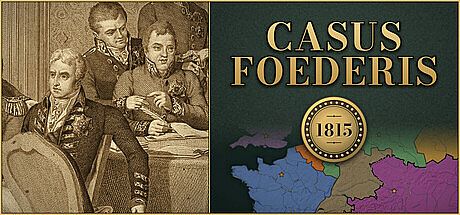


Casus Foederis: 1815 is a single-player turn-based strategy game focused on European diplomacy and the balance of power from 1815 onward. Set after the Congress of Vienna and the defeat of Napoleon at Waterloo, it places players in charge of one of twelve historical powers and challenges them to navigate treaties, alliances, and rivalries rather than pursue outright conquest.
Gameplay
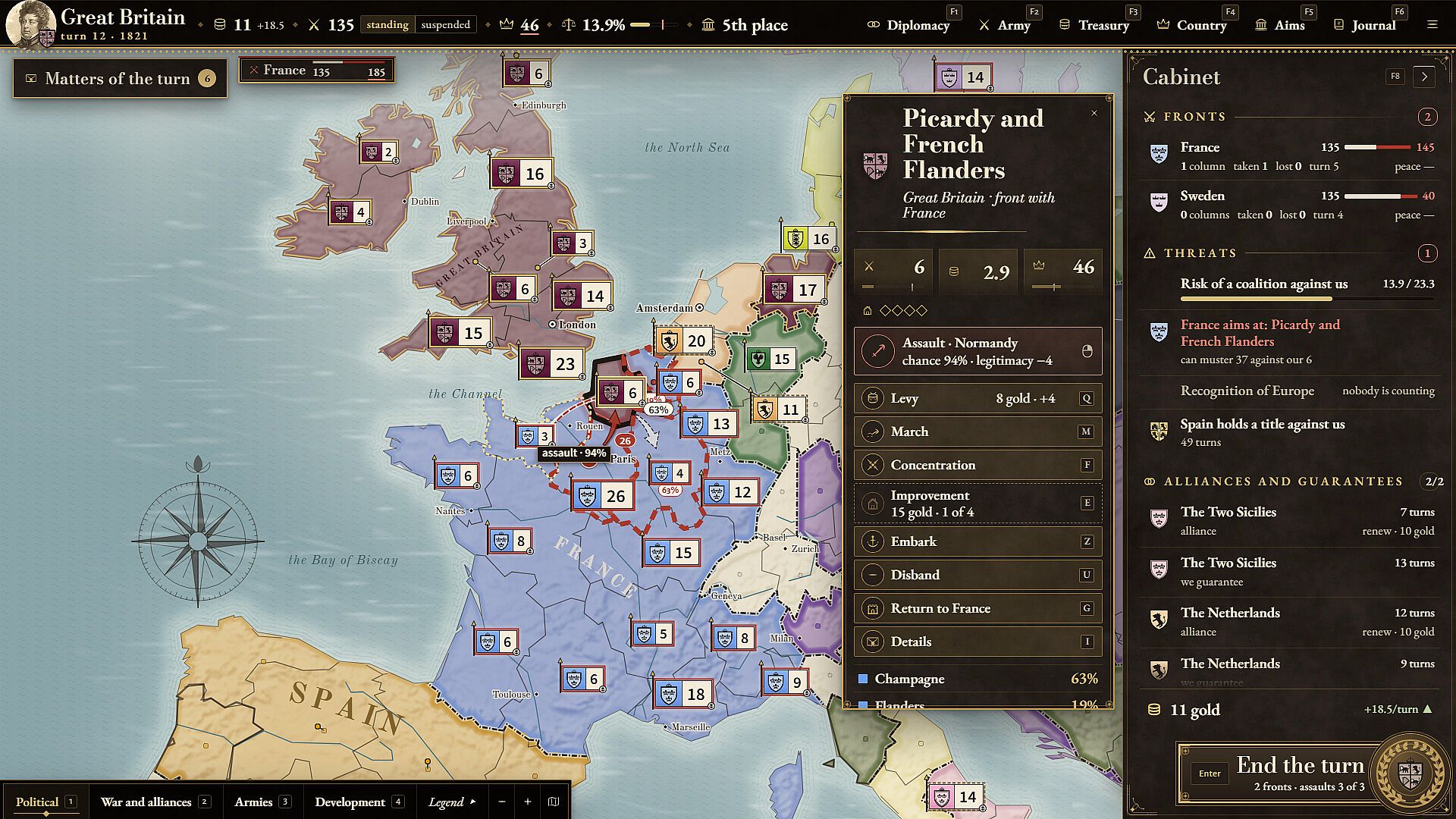
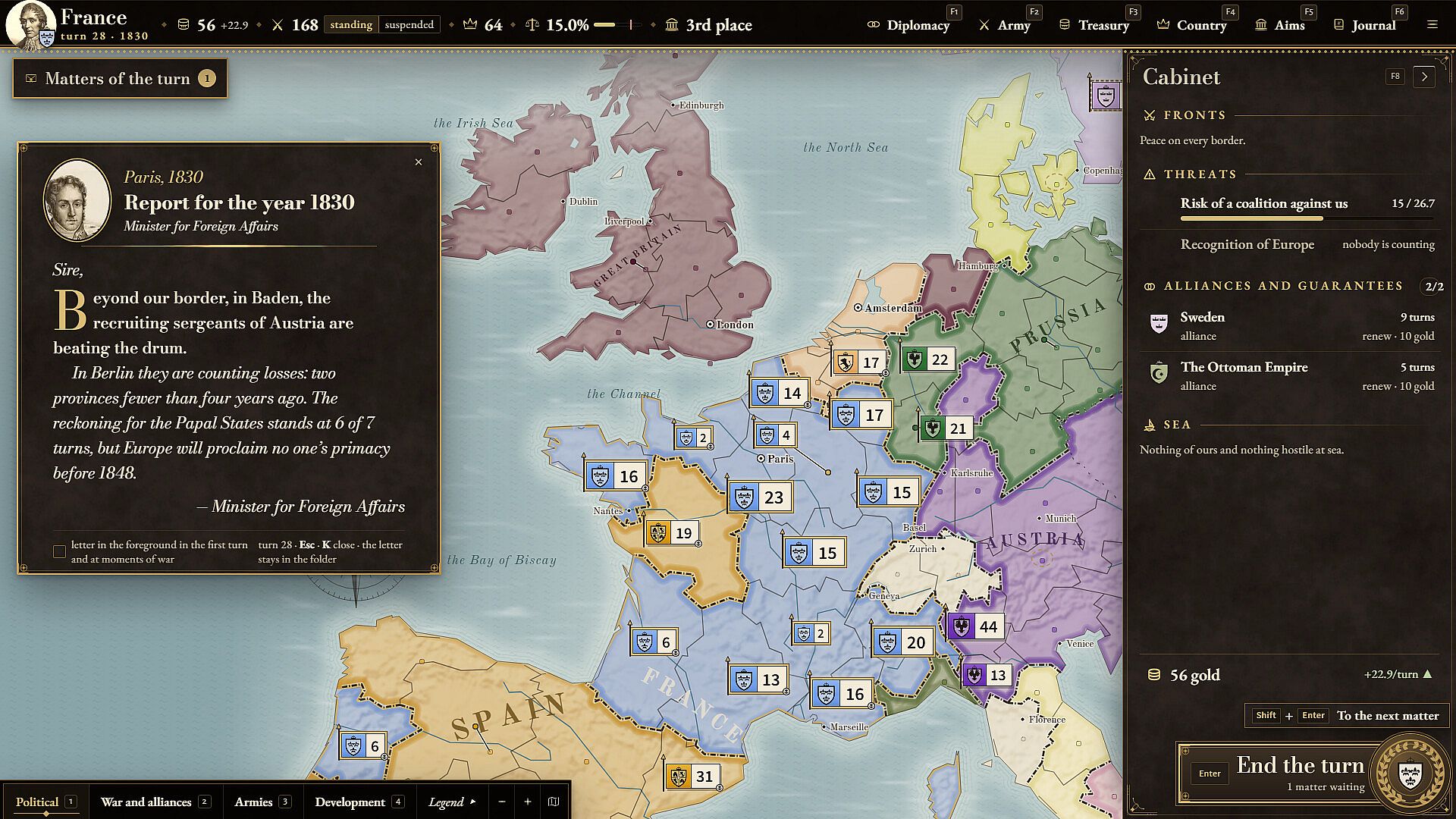
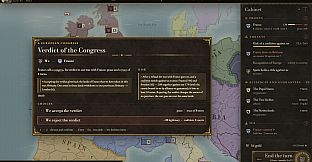
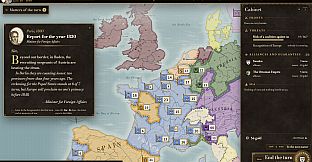
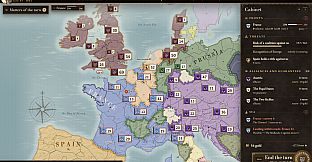
The core loop revolves around managing legitimacy, a score from 0 to 100 that reflects how Europe views a power's rule as legitimate or merely factual. Actions such as declaring war without a valid reason, breaking treaties, or refusing allied calls lower this value, while honoring commitments and returning provinces at conferences raise it. Players issue orders each turn through a chancellor's report that summarizes recent events without offering advice, leaving all decisions to the user. Provinces change hands through military force, which in turn raises threat levels and can trigger coalitions from other courts.
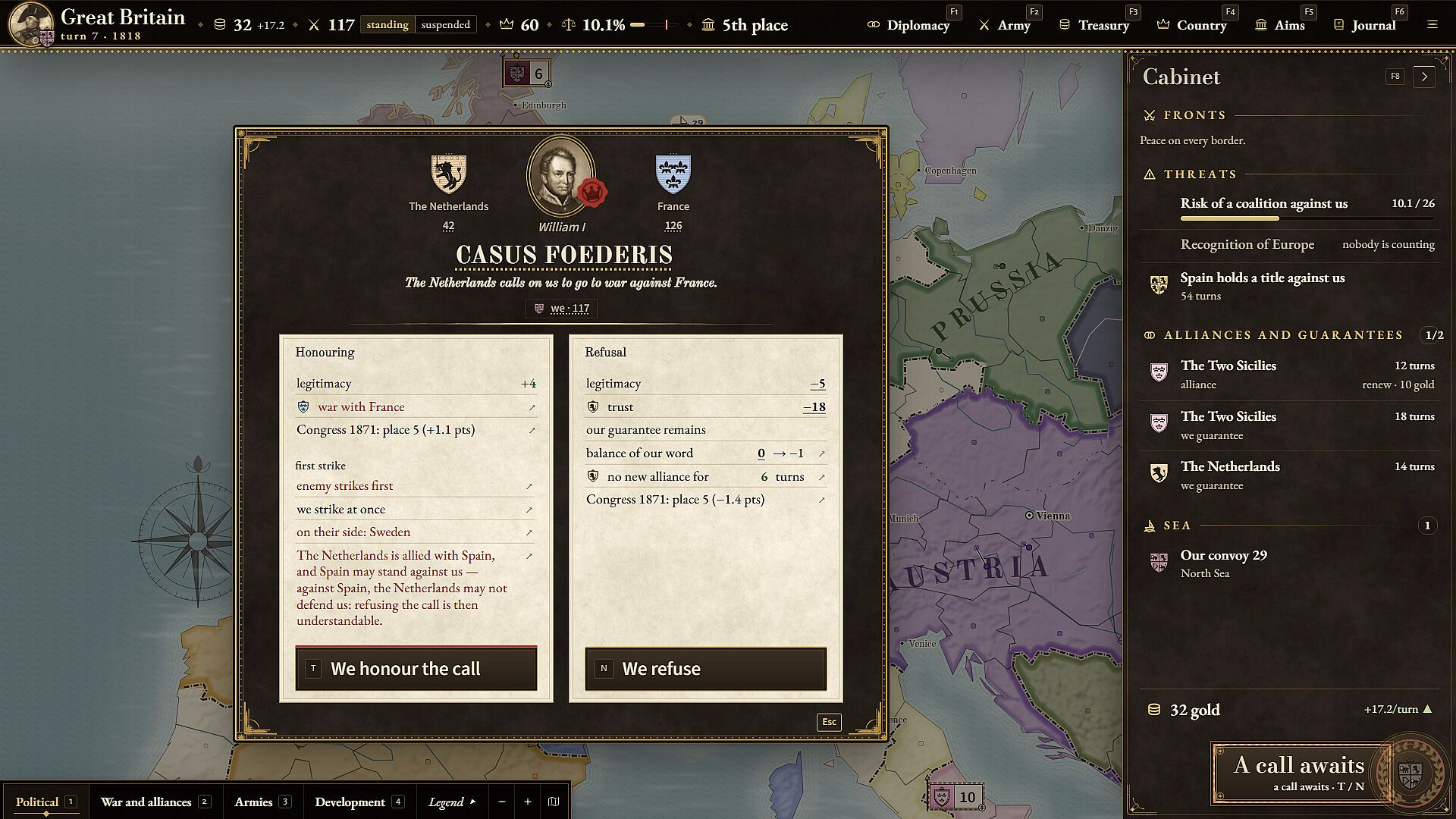
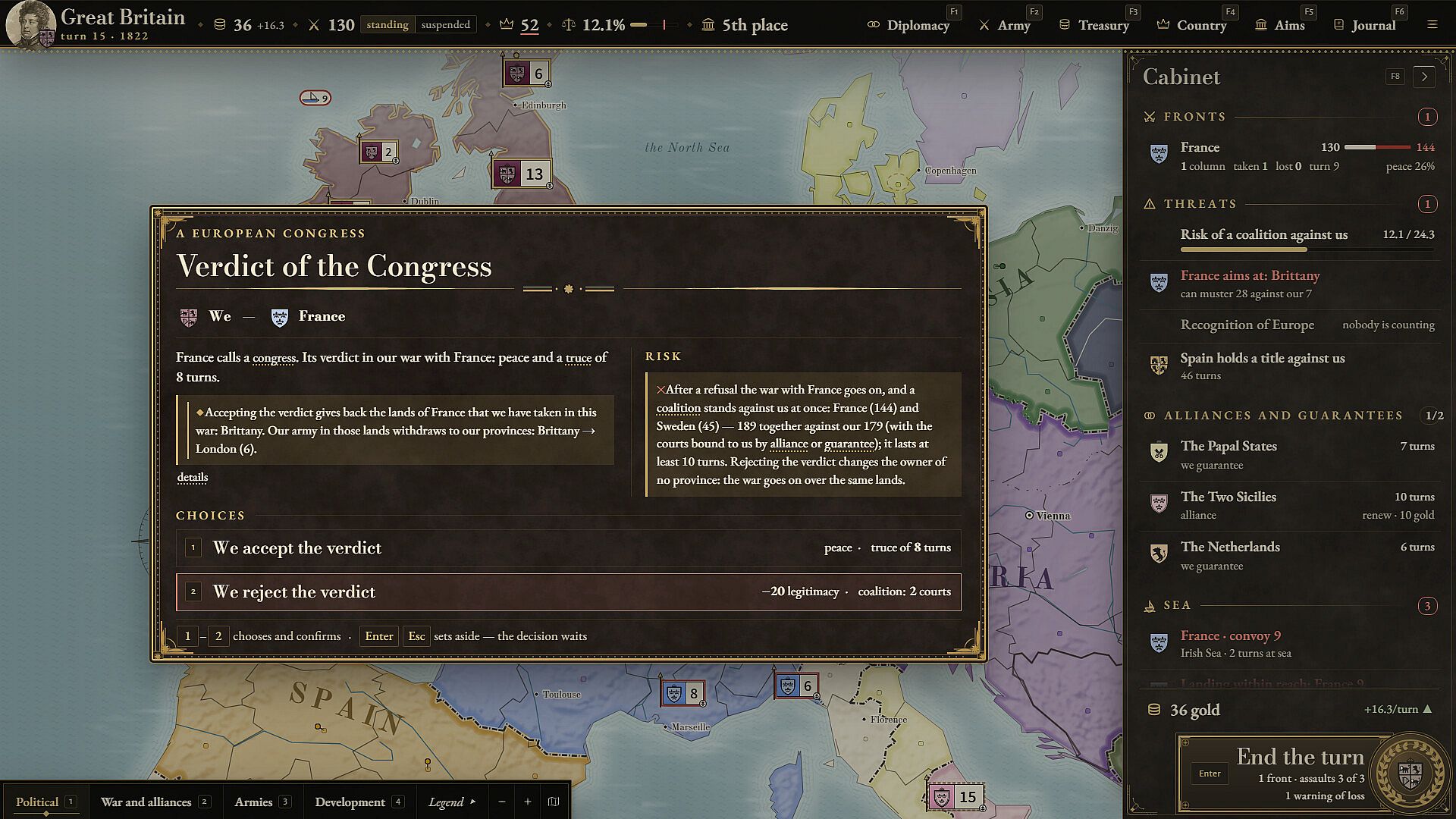
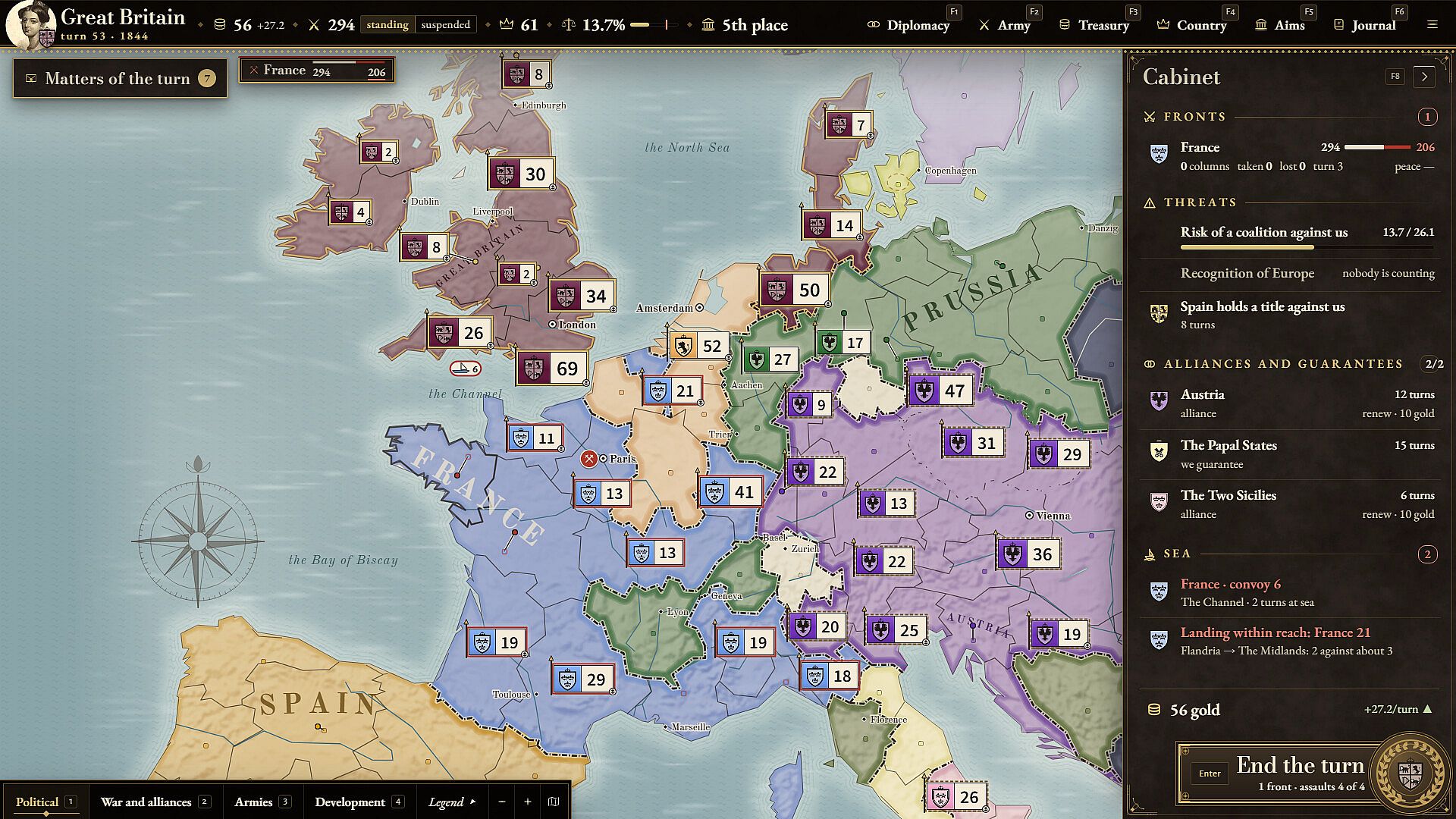
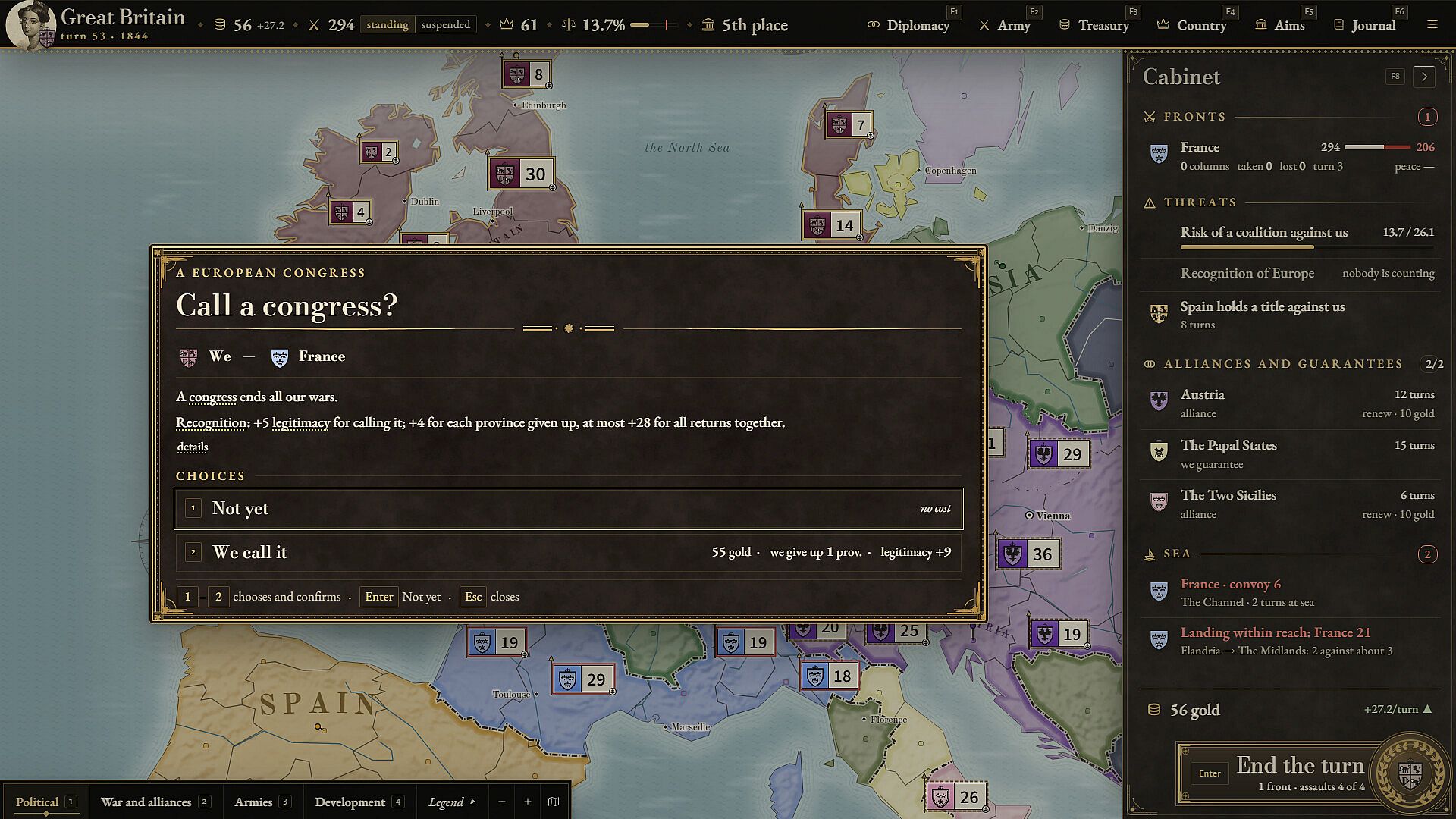
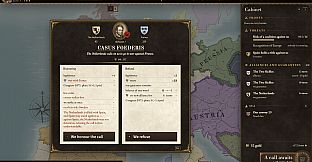
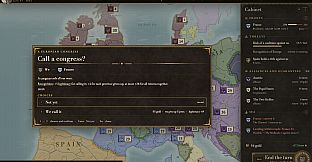
Diplomacy centers on the casus foederis mechanic. When an ally comes under attack, the player must decide whether to honor the treaty and join the war or refuse and accept the resulting drop in trust and legitimacy. The game tracks the exact date of any refusal, which courts remember. A coalition forms automatically when one power grows too quickly, with visible threat thresholds and participating members shown in advance. Breaking a coalition requires either defeating members individually, negotiating at a congress, or restoring legitimacy.
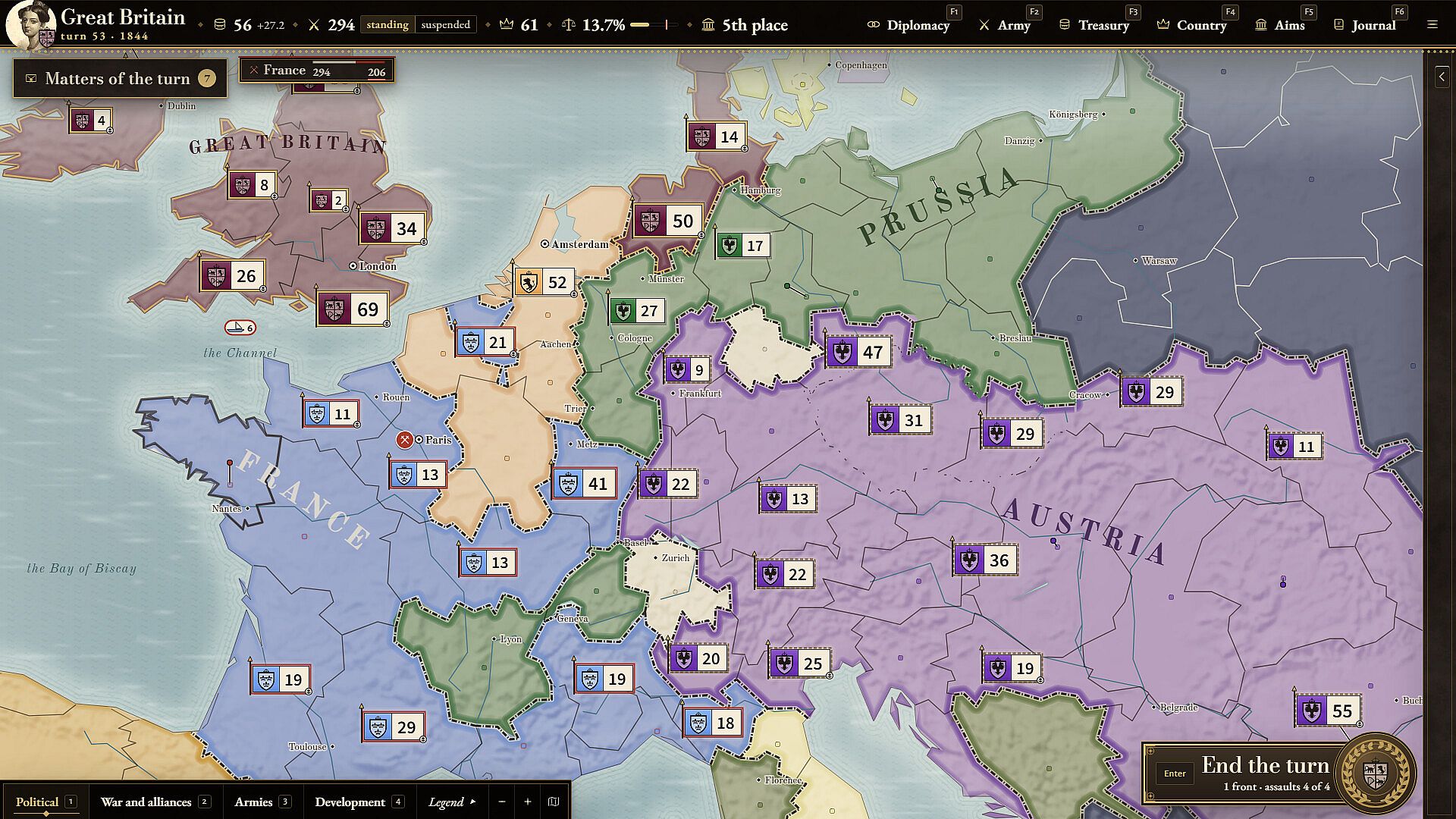
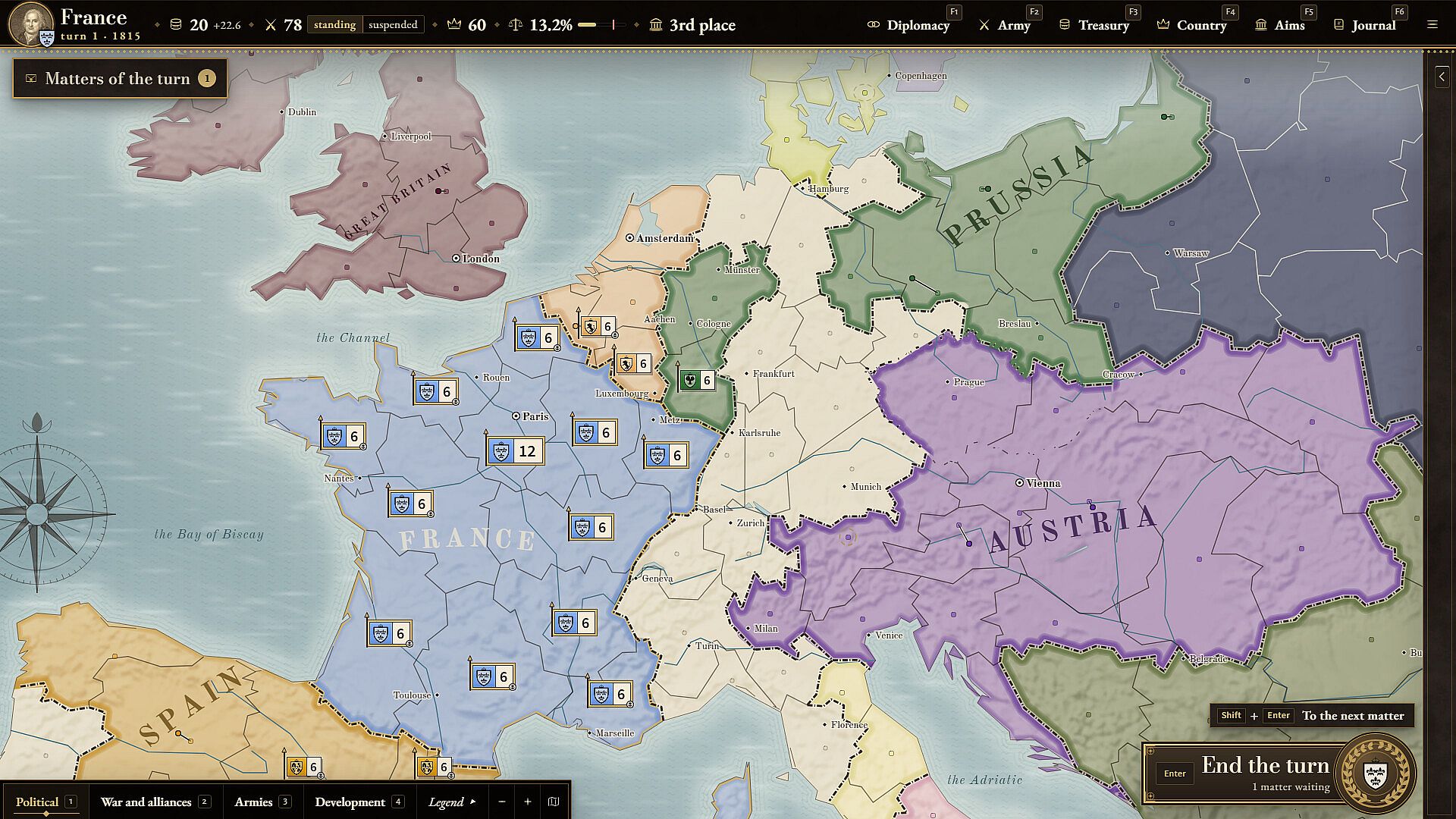
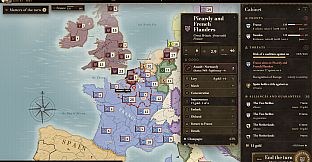
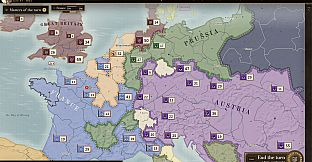
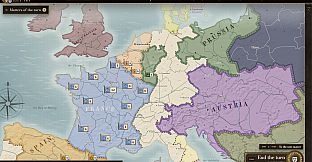
Events and questions of the age arise based on the current map state rather than a fixed calendar. These range from revolutions and national unifications to loans or territorial disputes, each splitting Europe into opposing camps with costs in gold, trust, and legitimacy. The map itself covers 126 provinces and 14 seas in a period atlas style, with visual indicators for front lines and enemy territory during wartime. Music draws from public-domain classical recordings, and artwork uses historical paintings and engravings.
Game Modes
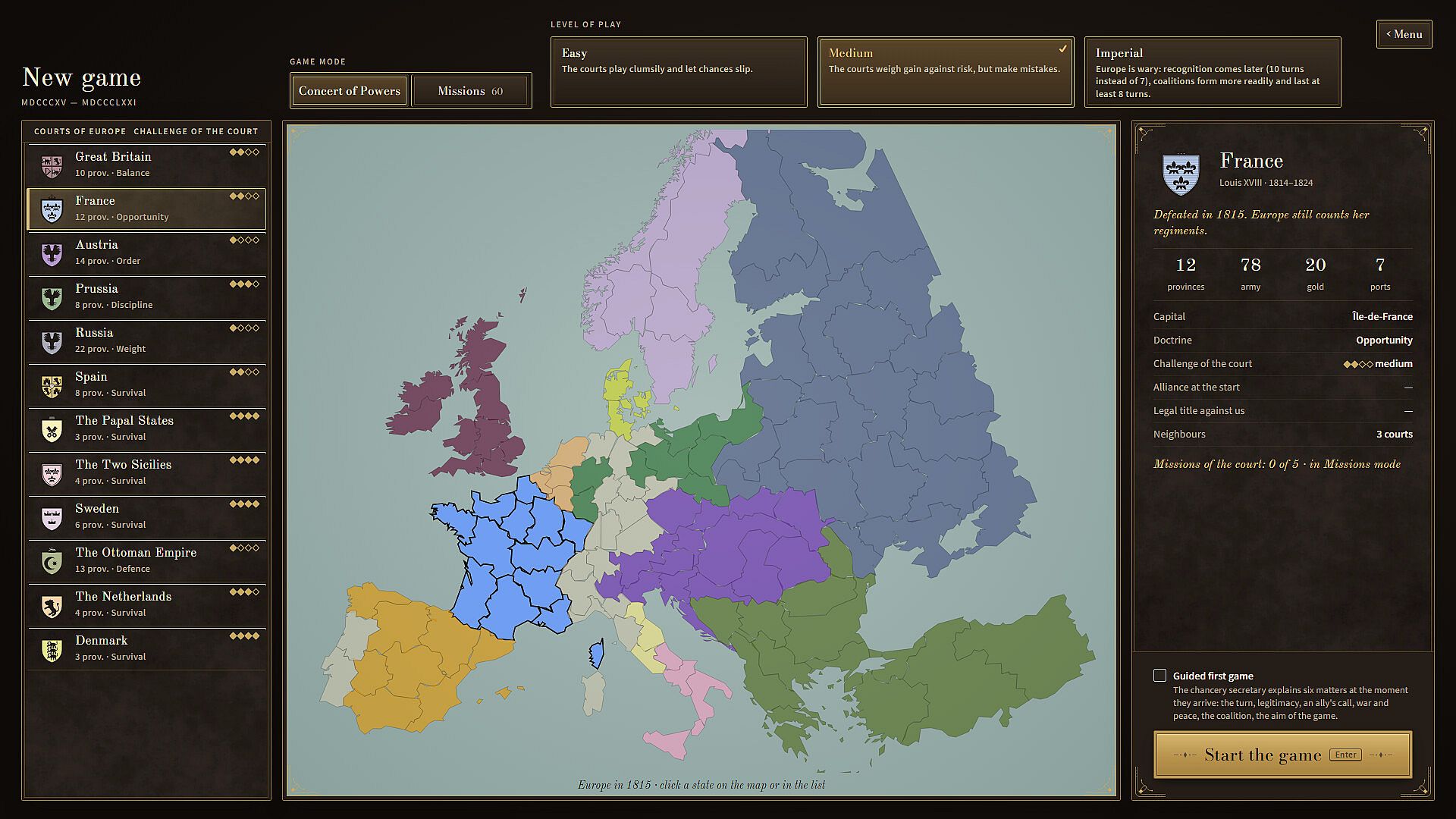
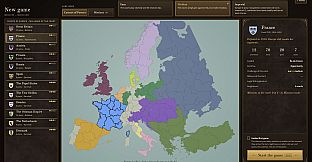
Two primary modes structure play. The Concert of Powers offers an open-ended campaign spanning up to 100 turns from 1815 to 1871, allowing players to pursue long-term goals without strict deadlines. Mission mode provides 60 individual scenarios, five for each of the twelve powers, each with a time limit and specific objectives. A guided first game option explains key systems over the initial ten turns without dictating moves.
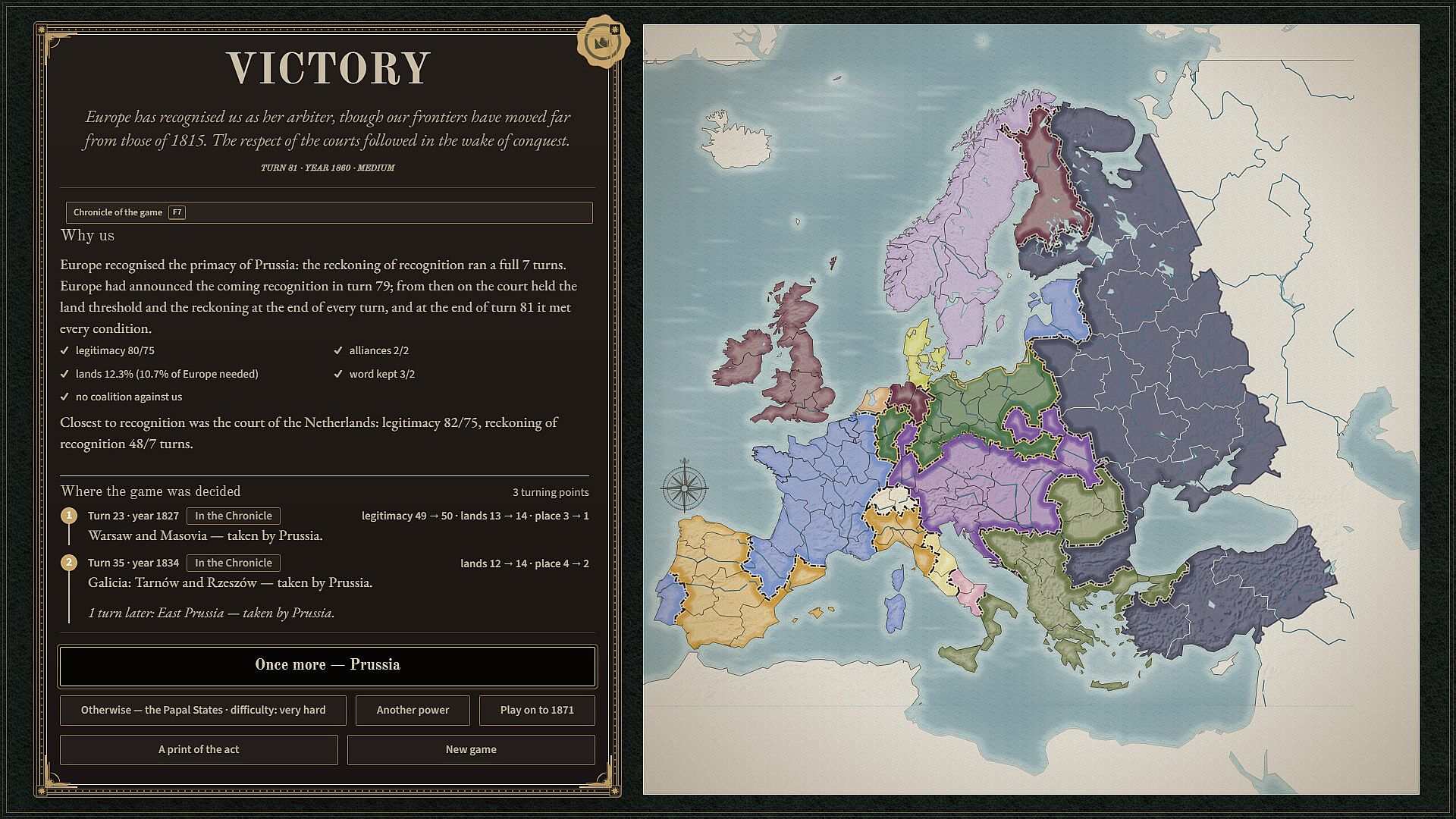
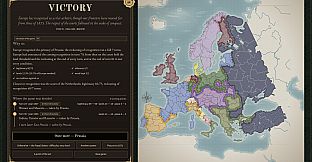
Three distinct paths lead to victory. Recognition by Europe requires legitimacy of at least 70, two active alliances, a history of honoring calls, sufficient territory, and no coalition opposing the player, sustained for seven turns after 1848. Conquest demands control of 37 percent of Europe's lands along with legitimacy of 20 or higher and no active coalition. The Congress of 1871 serves as a fallback, ranking all courts by a combination of land controlled and European recognition if no other victory occurs earlier.
Difficulty and Accessibility
Three difficulty settings adjust AI behavior. Easy and Medium allow more predictable court actions, while Imperial increases shrewdness and wariness, delaying recognition gains. Each of the twelve powers starts with unique map positions and rivalries, from major states like Great Britain, France, Austria, Prussia, and Russia down to smaller ones such as the Papal States, Denmark, and the Two Sicilies. A full session typically fits into one evening, and the game saves automatically after every action.
Additional features include 12 unique orders earned by completing missions at Medium or Imperial difficulty, 60 Steam achievements, and support for 11 languages. The experience excludes tactical combat resolution, deep economic systems, technology trees, colonies, and any form of multiplayer.
Is It Worth Playing?
This title suits players who enjoy deliberate, diplomacy-heavy strategy sessions centered on alliances, legitimacy, and coalition management rather than battlefield tactics or resource optimization. Its contained scope and single-evening playtime make it accessible for focused campaigns, while the event system and map-driven triggers encourage repeated playthroughs with different outcomes. The absence of microtransactions or additional content supports a complete, self-contained experience for those drawn to historical balance-of-power mechanics on PC.