


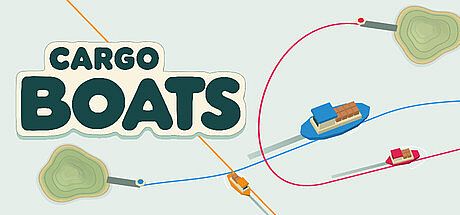


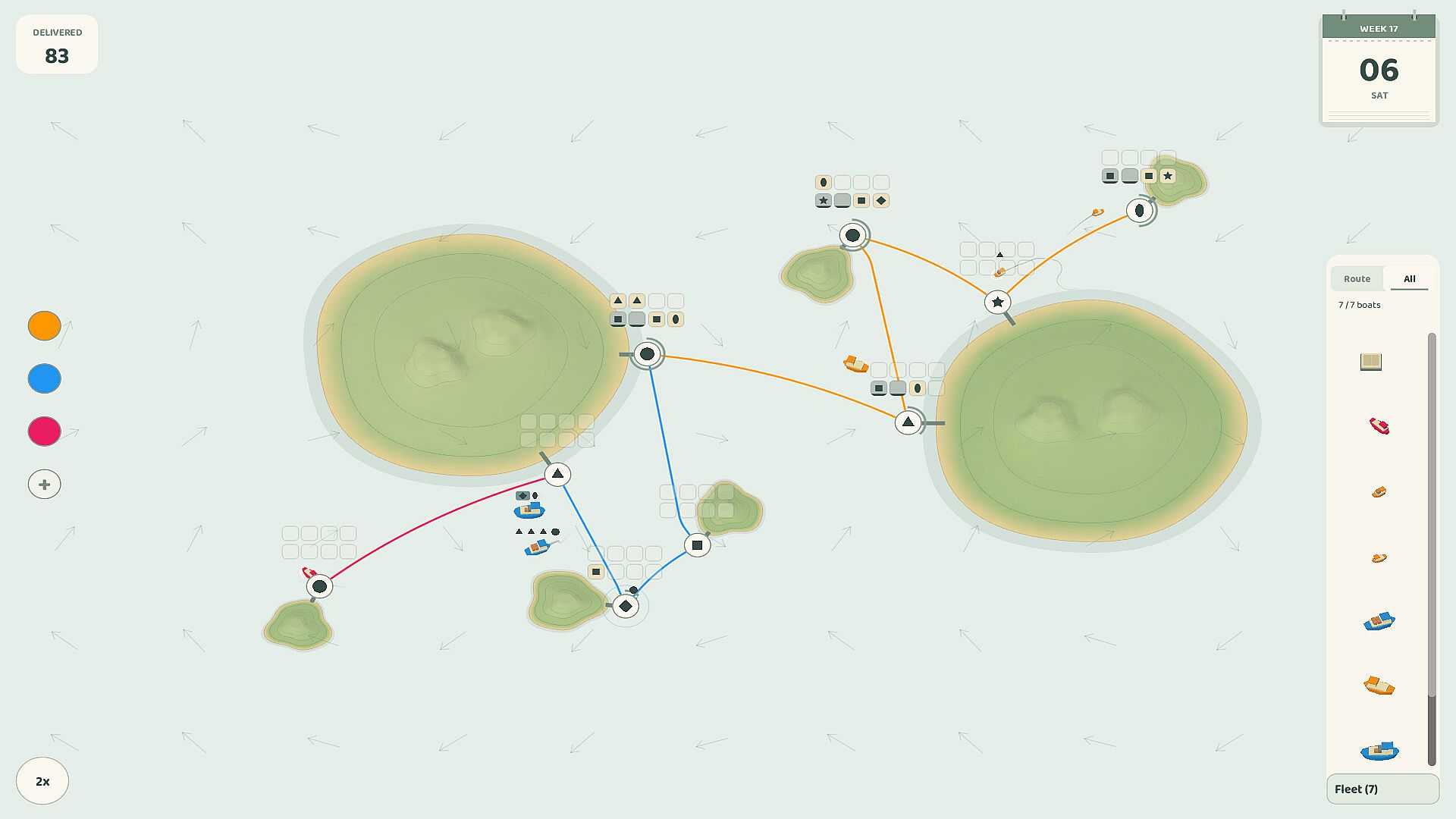
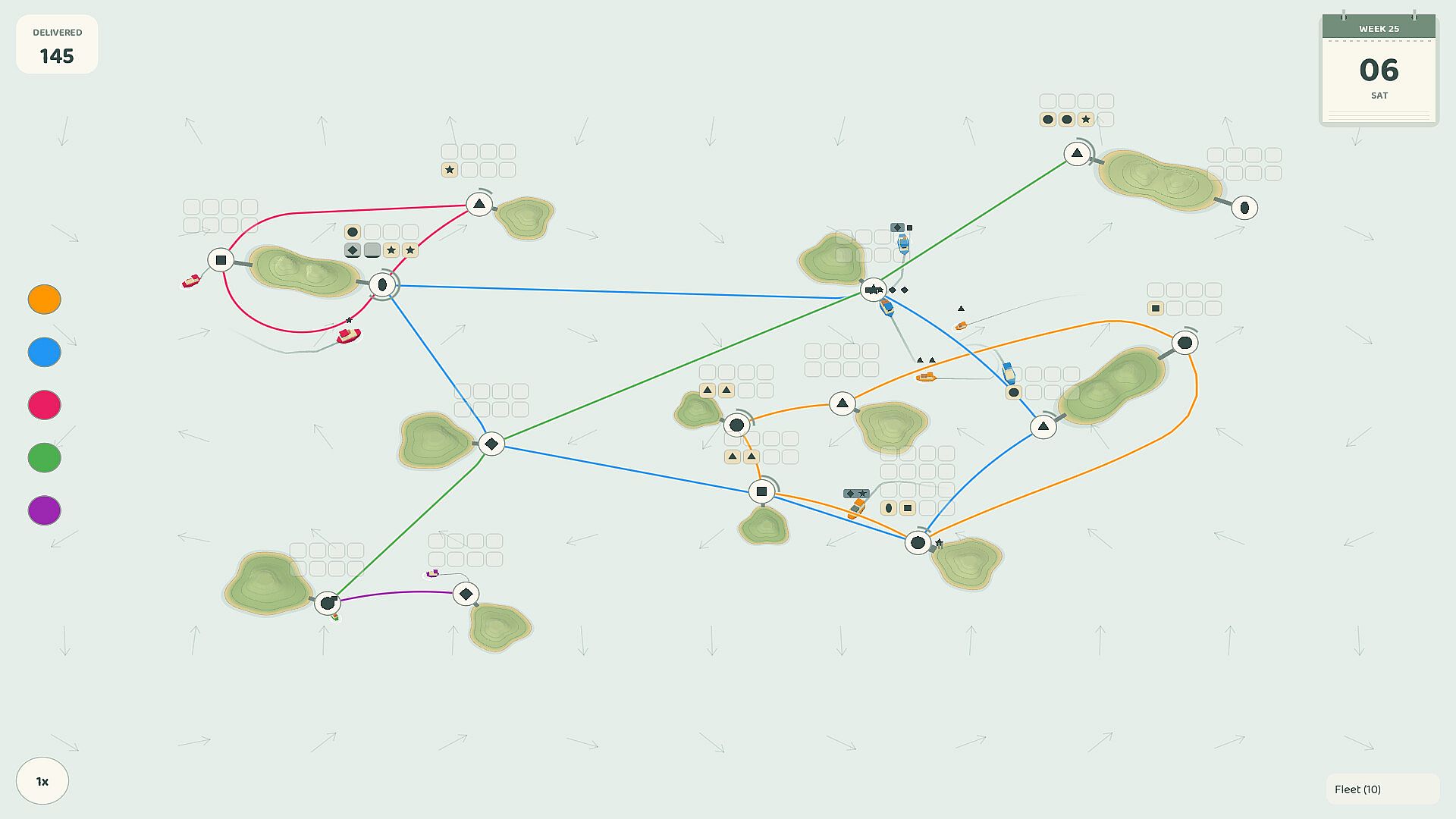
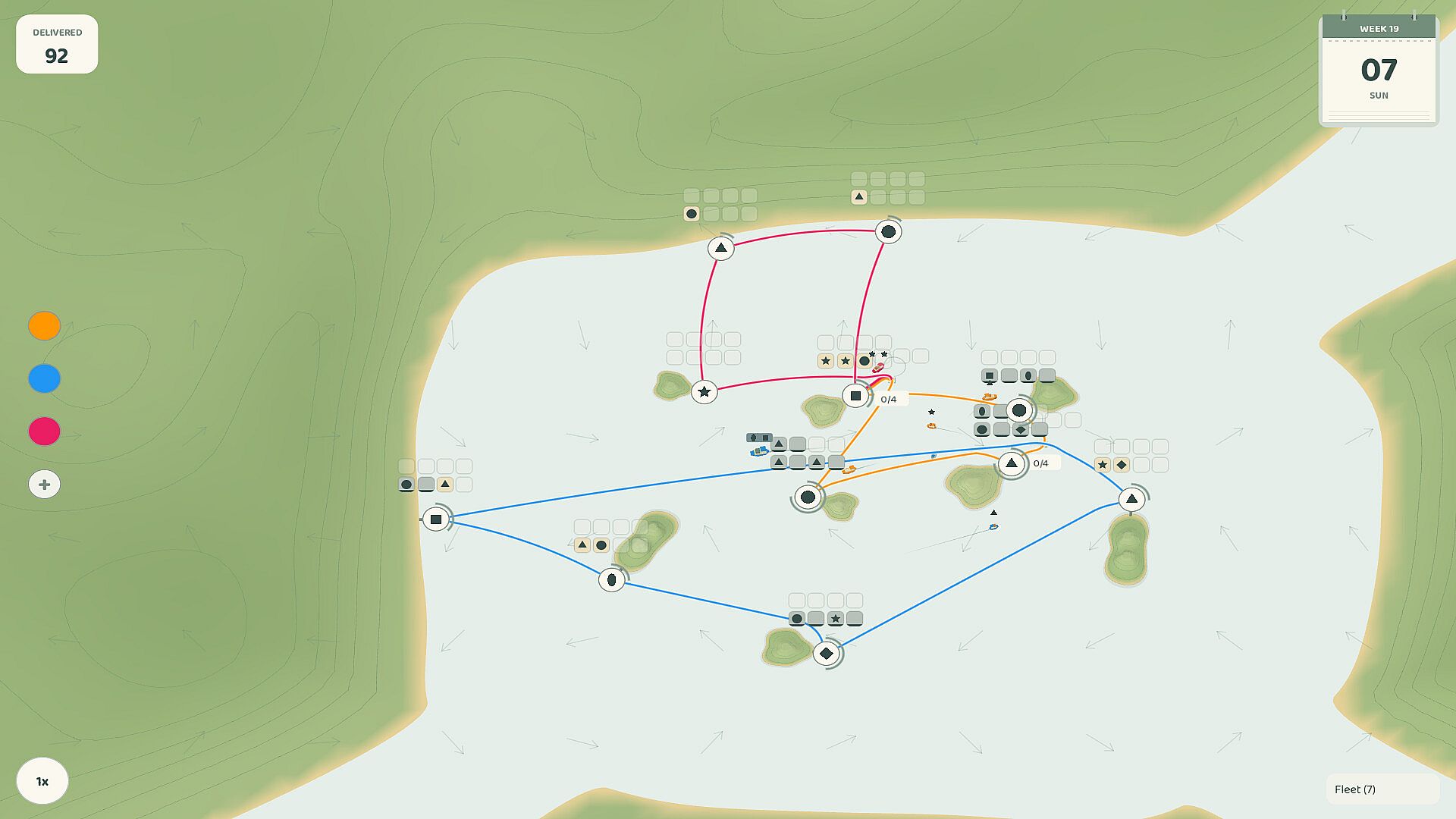
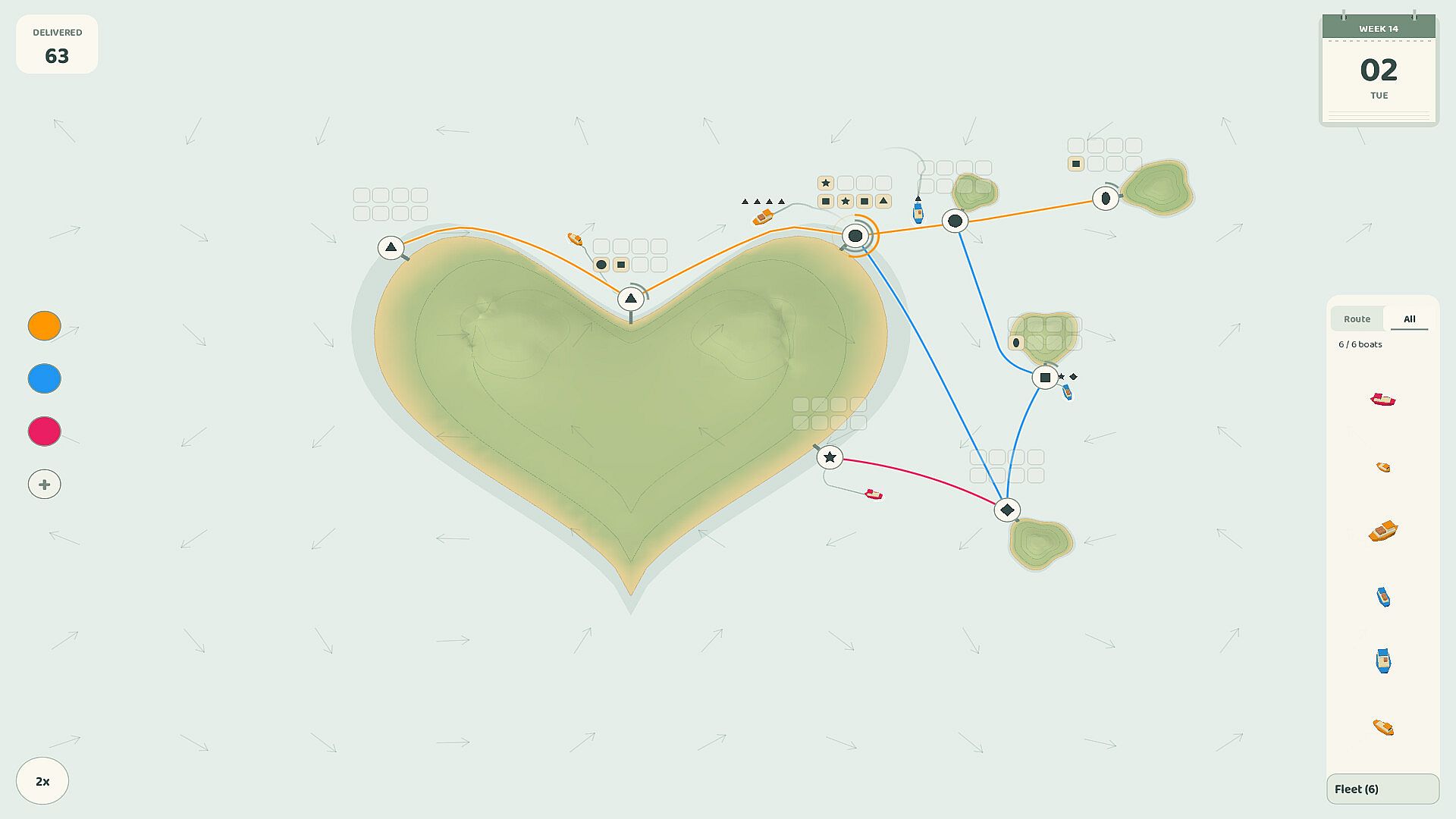
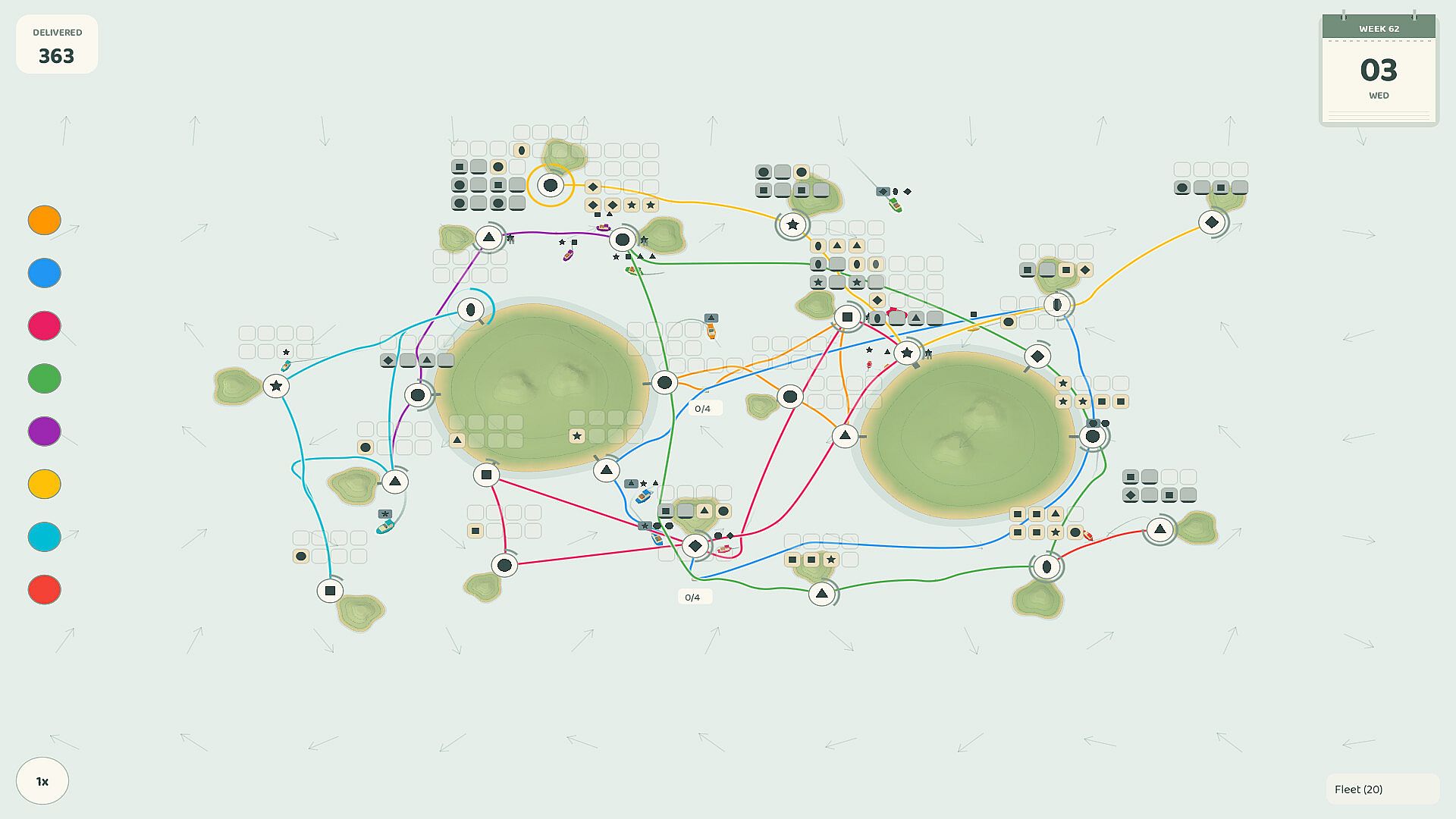
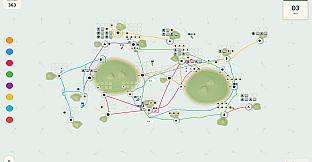
Cargo Boats is a strategy, casual, and simulation game for PC that puts players in charge of building and managing a shipping network across island chains and coastal areas. The core experience revolves around connecting ports, routing vessels, and keeping cargo flowing without letting harbors become overwhelmed.
Gameplay
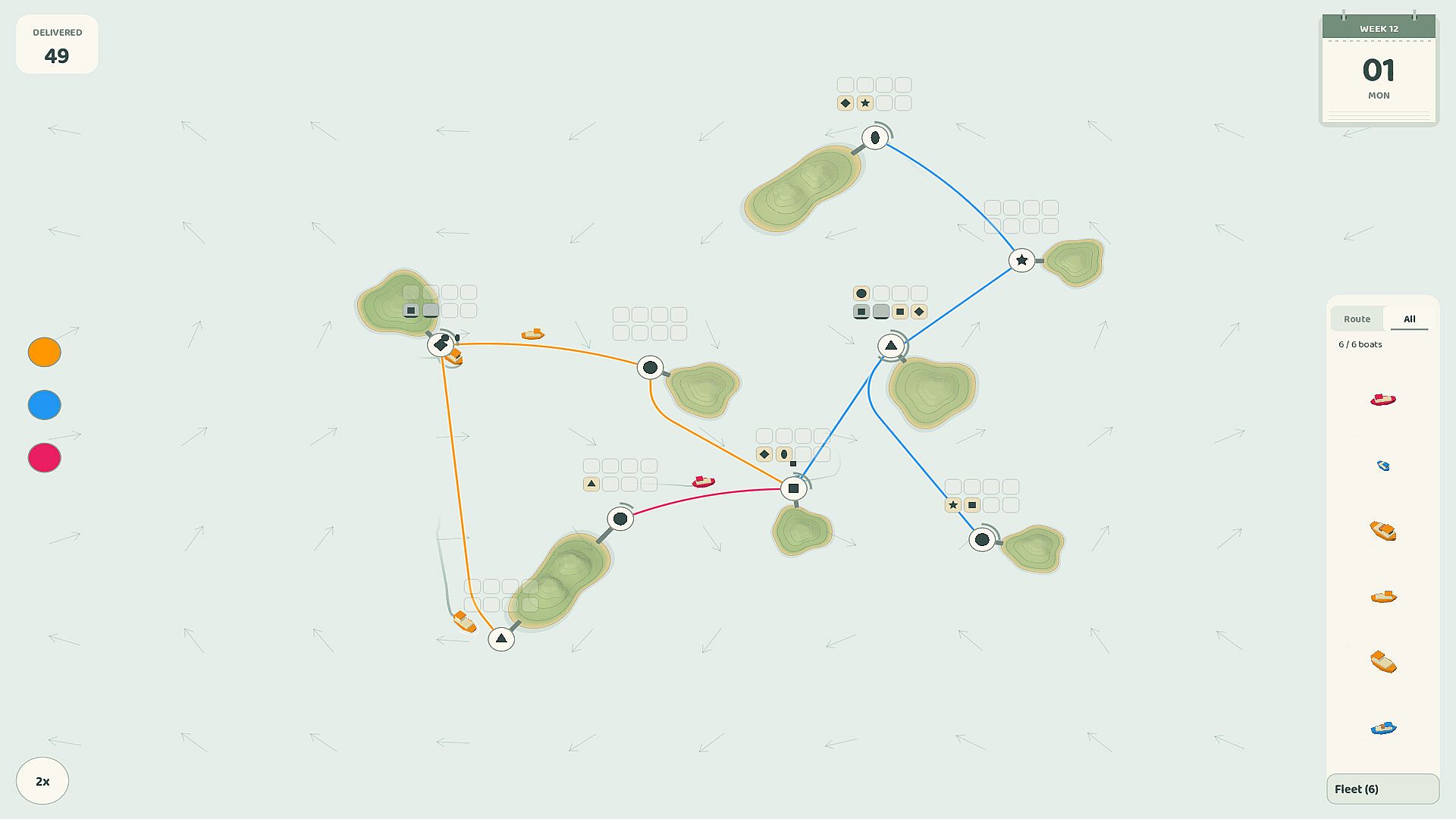
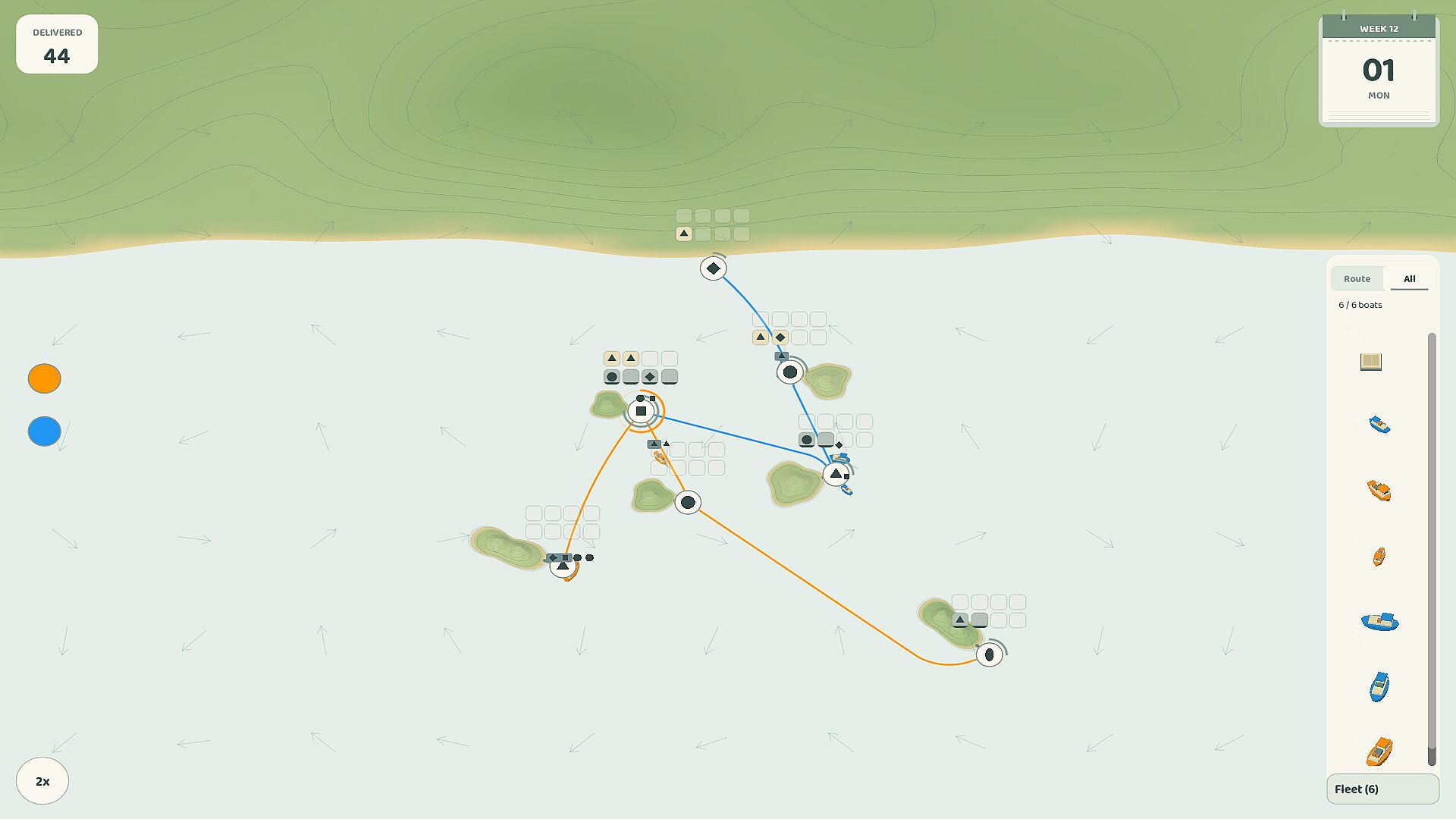
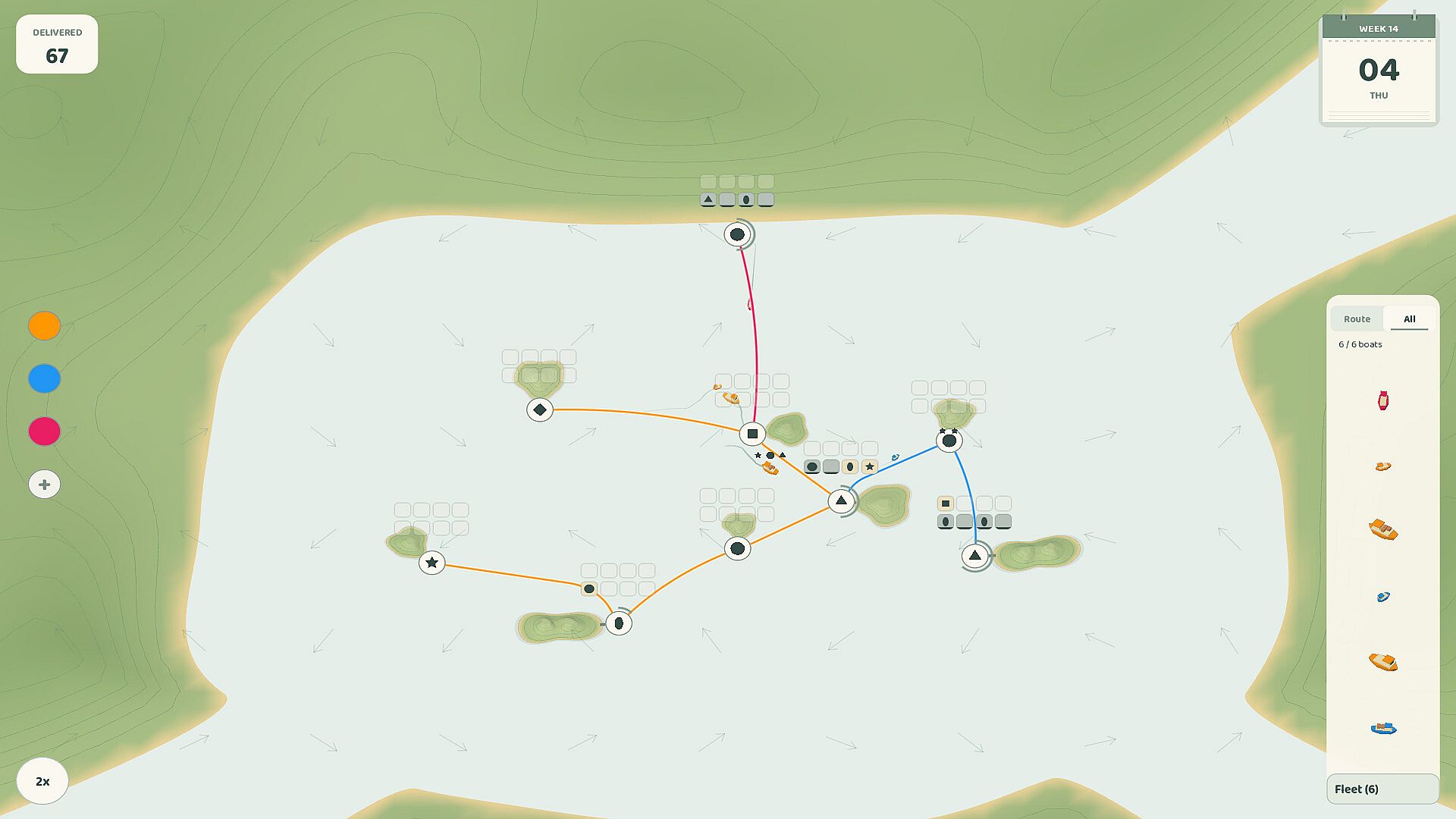
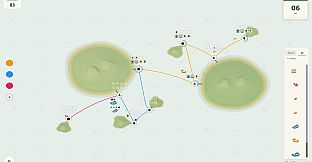
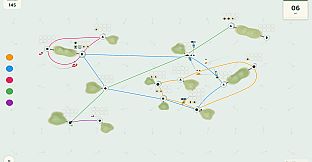
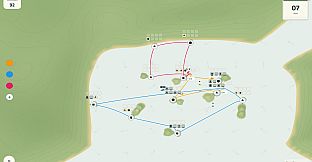
Players begin with a handful of islands, a small fleet, and cargo waiting at the docks. The main loop involves drawing routes across the water to link ports, then assigning ships to carry containers along those paths. Routes can be simple shuttle services between two points or more complex loops that visit multiple harbors. Waypoints help guide boats around obstacles like islands, and busy ports can be shared among several routes to improve efficiency.
Ship selection adds another layer of decision making. Smaller, nimble vessels handle tight spaces and quick turns well, while larger haulers move bigger loads at the cost of slower handling. Balancing capacity with maneuverability becomes important as the network grows and new harbors appear. The goal is to expand connections so cargo travels farther than any single ship could manage on its own.
Visual and audio details support the steady pace. Ships arrive at harbors, exchange containers one by one, and leave gentle wakes behind them. Soft colors and understated sound effects keep the focus on the growing network rather than on spectacle. Congestion at ports serves as the main challenge, requiring players to adjust routes or add capacity before licenses are at risk.
Game Modes
Cargo Boats operates as a single-player simulation without separate competitive or multiplayer modes. The experience centers on sandbox-style network building across several distinct maps. Each coastline presents its own layout of islands, shores, and landmasses that influence route planning and ship choices.
Progression comes from adapting to new ports as they appear and refining an existing network rather than completing scripted levels. Players can experiment with different route designs and fleet compositions on the same map or switch to another coastline for fresh challenges. The absence of time limits or failure states encourages relaxed experimentation while still rewarding careful management of harbor throughput.
Maps and Environments
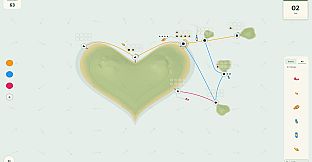
Several coastal settings are available, each with unique geography that shapes gameplay. Scattered islands require careful waypoint placement to avoid collisions and optimize paths. Continental shores offer longer stretches of open water where larger ships can excel. Maps such as Twin Islands feature broad landmasses that force routes around obstacles, while Island Heart provides a more sheltered inlet with tighter navigation demands.
These environments change the puzzle of route design. A map with many small islands rewards nimble boats and frequent stops, whereas open shorelines favor high-capacity vessels on longer hauls. Players learn to read each map's layout and adjust their network accordingly as new harbors emerge over time.
Is It Worth Playing?
Cargo Boats suits players who enjoy thoughtful strategy games with a casual pace and simulation depth. The combination of route drawing, fleet management, and congestion avoidance creates a satisfying loop that rewards planning without demanding constant attention. Those who like building systems that gradually grow more complex will find the expanding networks rewarding.
The game's relaxed presentation and focus on steady progress make it accessible for shorter sessions or longer play periods. Fans of other logistics or transport simulations will recognize the core appeal of keeping everything moving efficiently. Because the mechanics stay grounded in the provided source material and no unverified features are included, the experience remains consistent with the described shipping network gameplay.












