


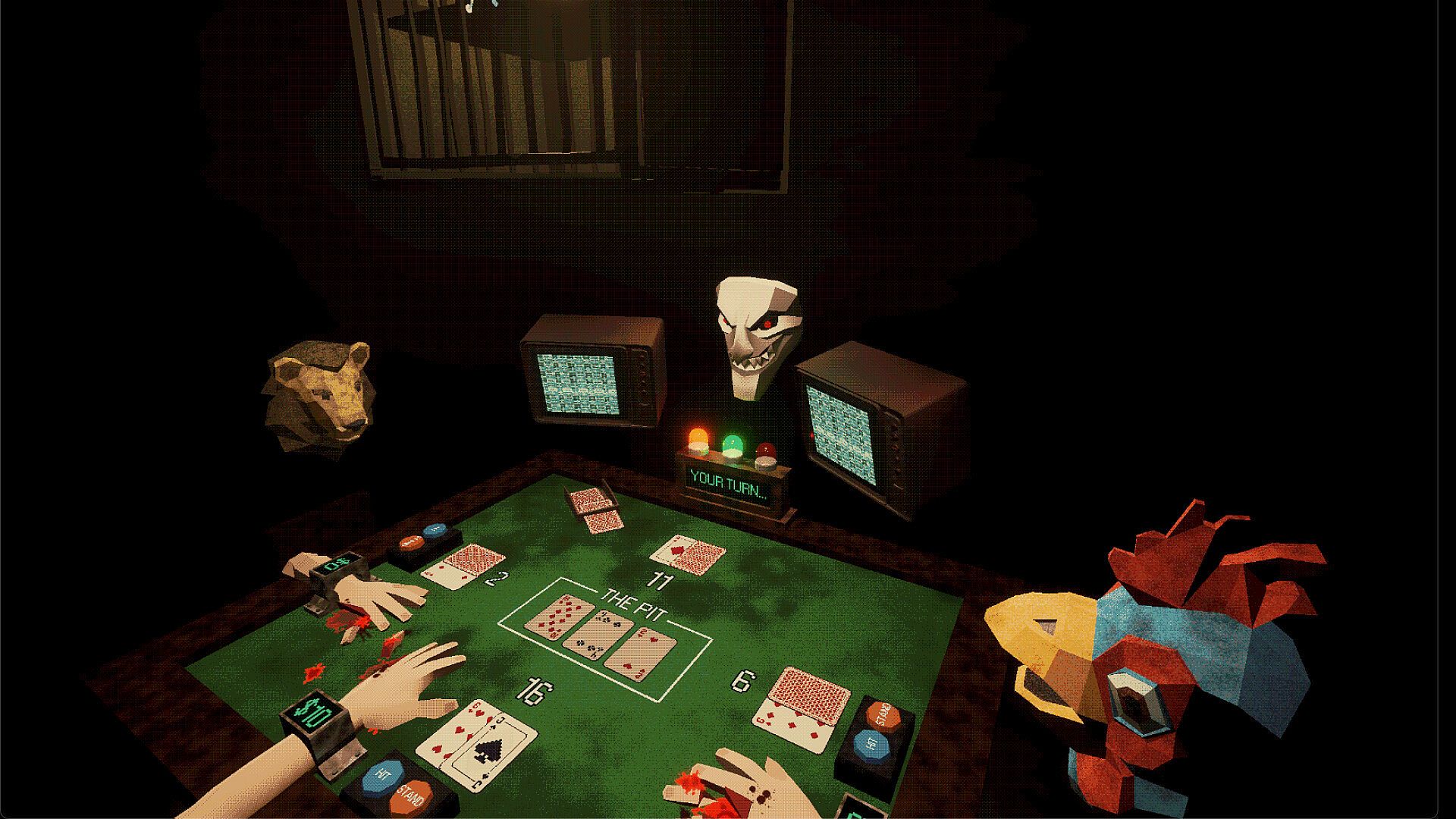







Cardsharp is a strategy game for PC that blends blackjack with high-stakes sabotage and resource management. Players sit at a shared table where each hand carries permanent consequences, turning every round into a tense contest of wits and timing.
Gameplay
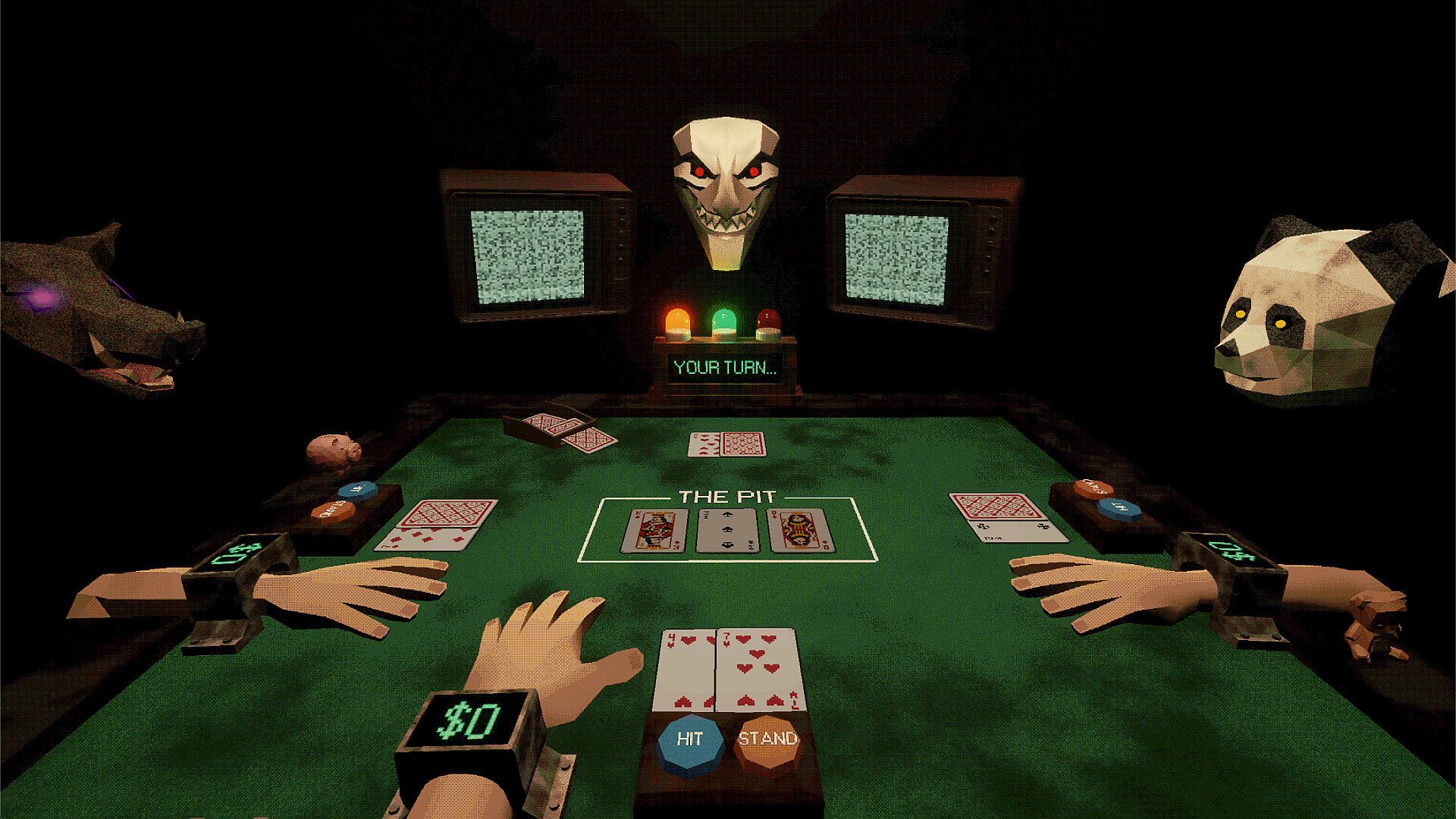
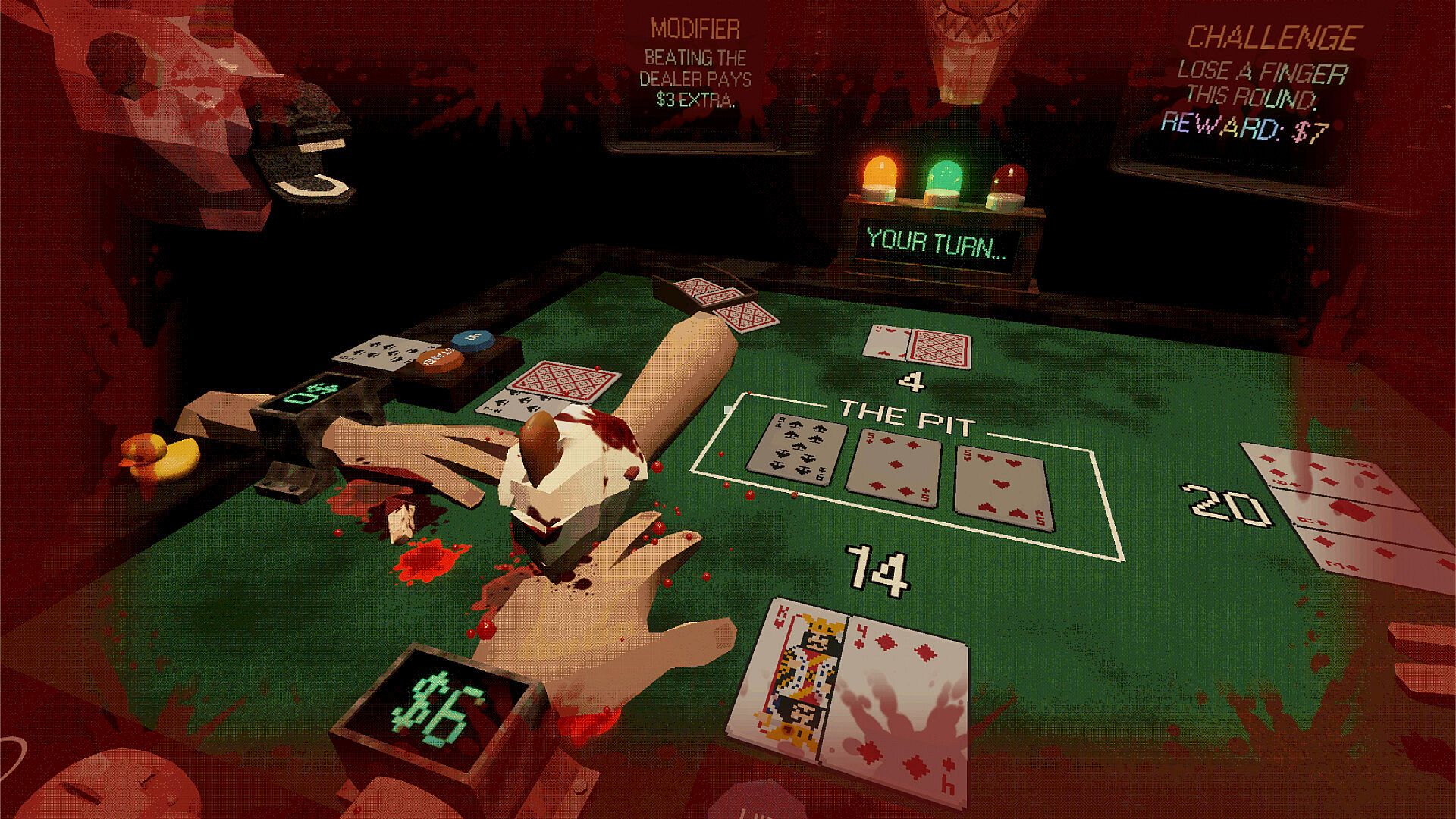
The core loop centers on standard blackjack rules modified by severe penalties. One hand rests flat on the table as the visible health bar, with five fingers representing remaining life. A loss hands a finger to the dealer, while a win brings cash rewards that fund further plays. This system forces careful decisions because each mistake reduces options permanently and alters future rounds.
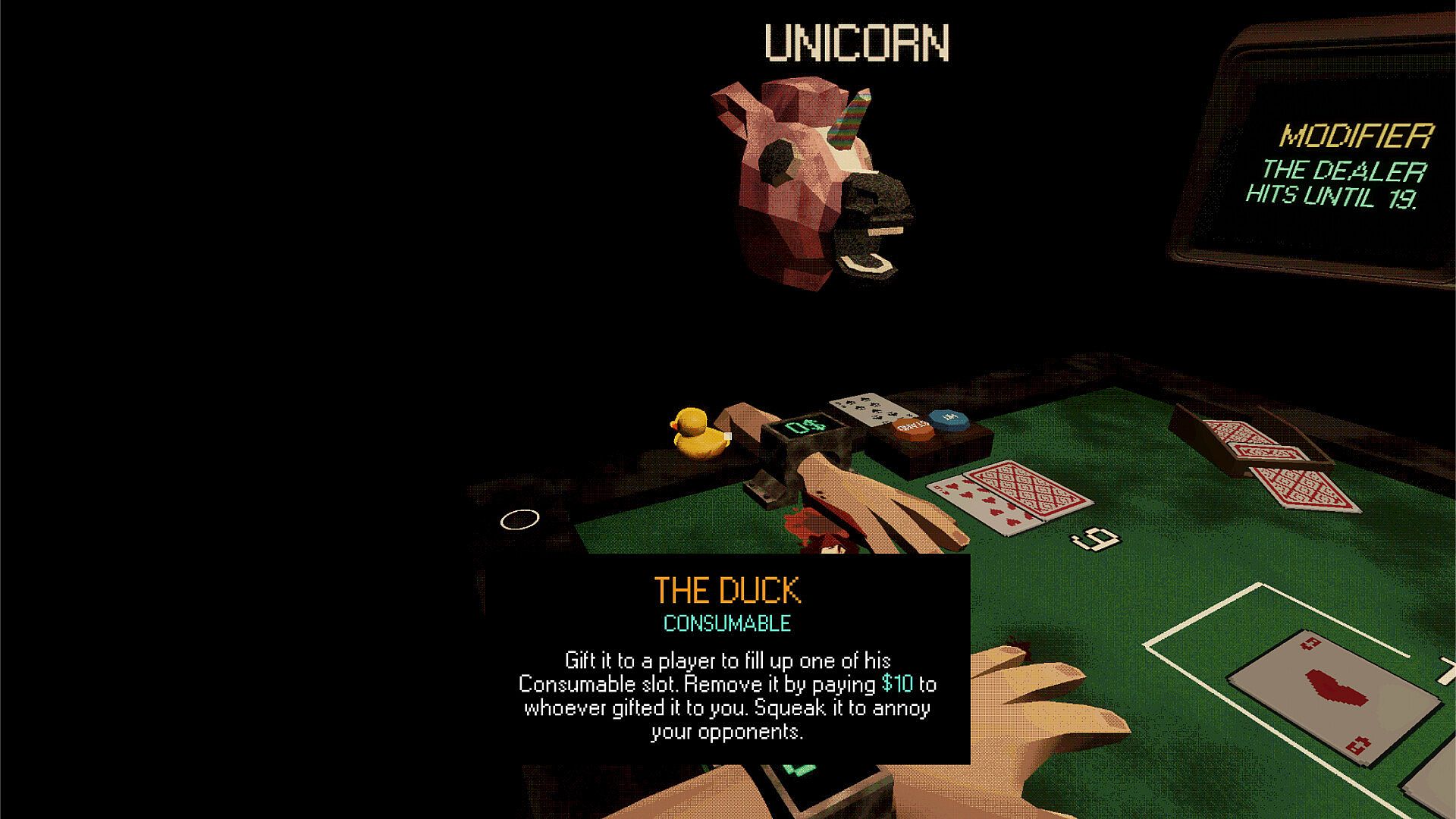
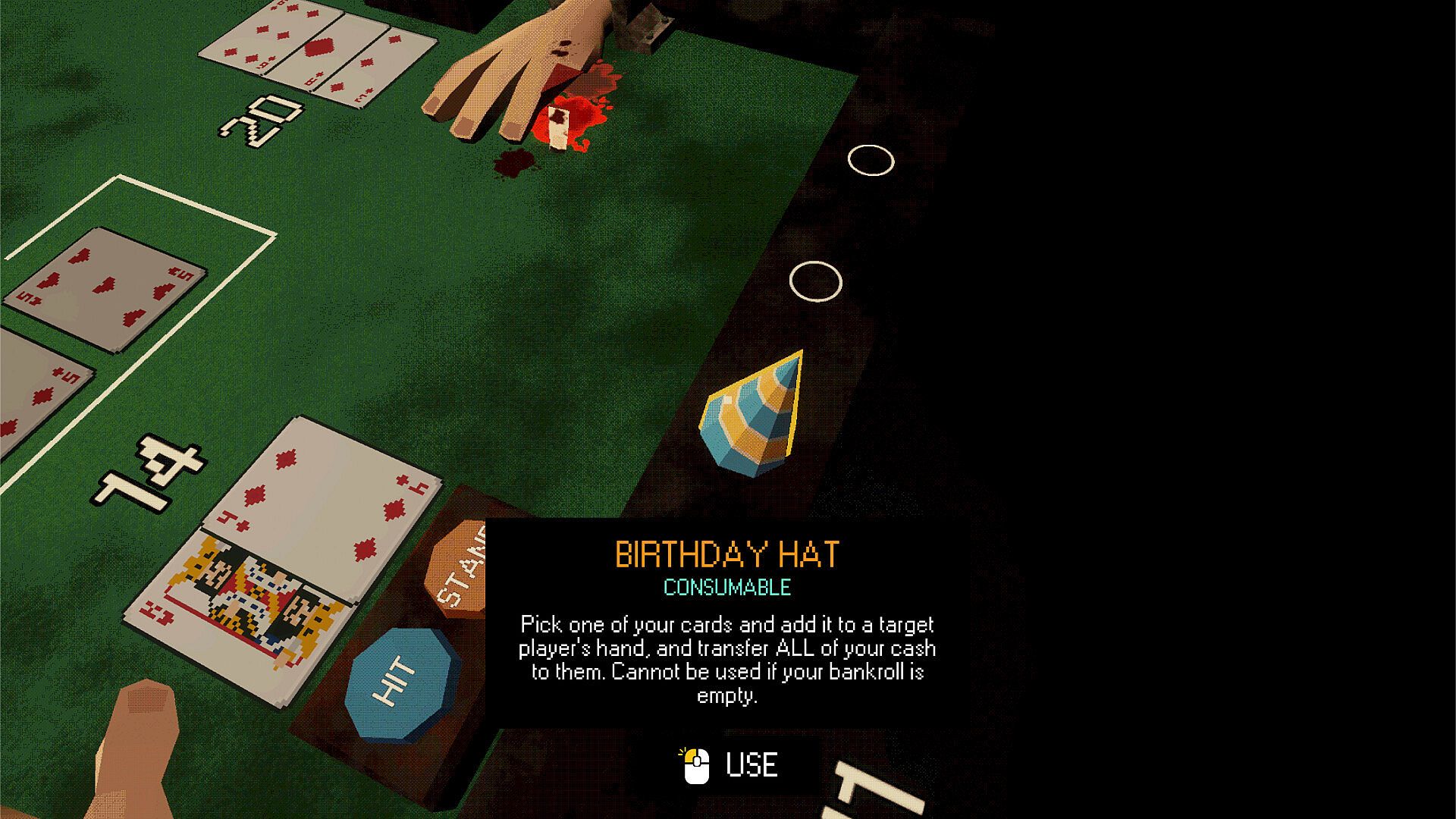
Items add layers of interference. The Zippo lighter destroys a card an opponent holds in reserve. The cursed ring transfers damage so that when one player loses a finger, another shares the pain. Romeo's ring and Juliette's ring link two participants in a shared fate, making their outcomes interdependent. The duck occupies an inventory slot permanently, resists removal or sale, and allows a distracting squeak at any moment. These tools encourage direct disruption of rivals rather than pure self-improvement.
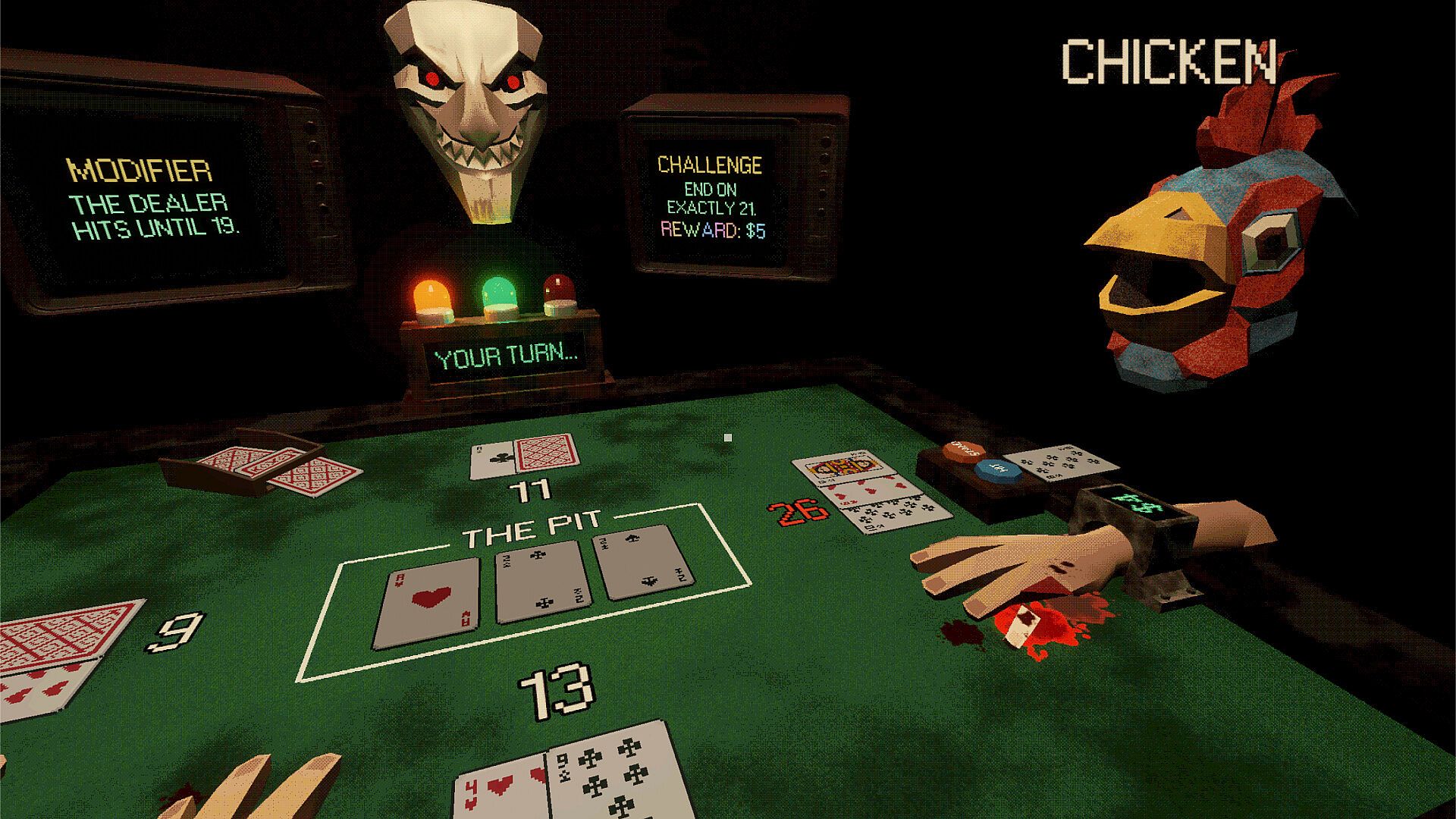
Additional table features expand choices each turn. The pit displays face-up cards that any player may claim. The sleeve holds a hidden card for later use, provided no opponent burns it first. Cash earned from wins purchases these effects during specific windows, creating a cycle of risk, reward, and retaliation.
Game Modes
Cardsharp focuses on a single core experience built around repeated rounds at the central table. The cage descends every third round to offer items for purchase, requiring players to spend accumulated winnings strategically. This recurring event structures pacing and rewards forward planning across multiple hands.
Turns revolve around drawing from the pit or managing sleeve cards while monitoring opponents' visible fingers and hidden resources. The absence of separate named modes keeps attention on the evolving table state, where item use and shared mechanics create shifting alliances and betrayals within the same session.
Key Mechanics and Strategy
Success demands attention to both personal cards and the broader table dynamics. Burning an opponent's saved card or applying a linking ring changes the risk profile for everyone involved. Managing limited inventory slots becomes critical once items like the duck enter play, as they consume space without providing removable benefits.
The cash economy ties directly to survival. Wins fund defensive or offensive purchases, while losses compound disadvantages by removing fingers and limiting future flexibility. Players must balance aggressive item deployment with the need to protect their own position in subsequent rounds.
Is It Worth Playing?
Cardsharp suits players who enjoy strategy games that combine familiar card rules with permanent consequences and direct player interaction. The finger-loss system and sabotage items create memorable tension absent from standard blackjack or most digital card experiences. Those seeking straightforward multiplayer competition or narrative-driven campaigns will find the focus narrower, centered entirely on table-based rounds and item timing. The mechanics reward repeated play to master item combinations and anticipate opponents' moves, making it a strong fit for fans of competitive strategy with a sharp edge.