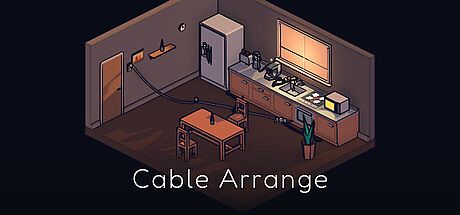


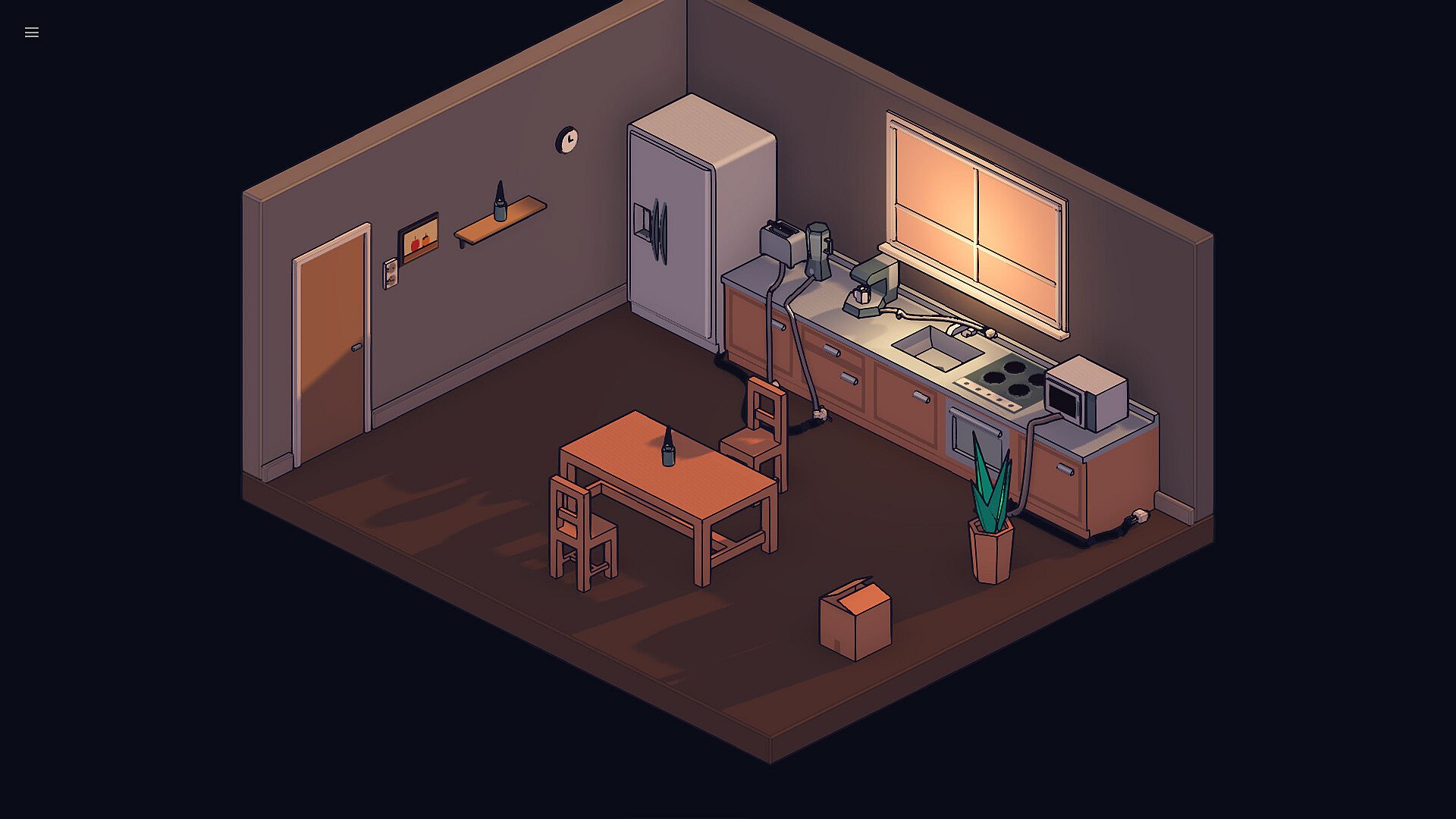
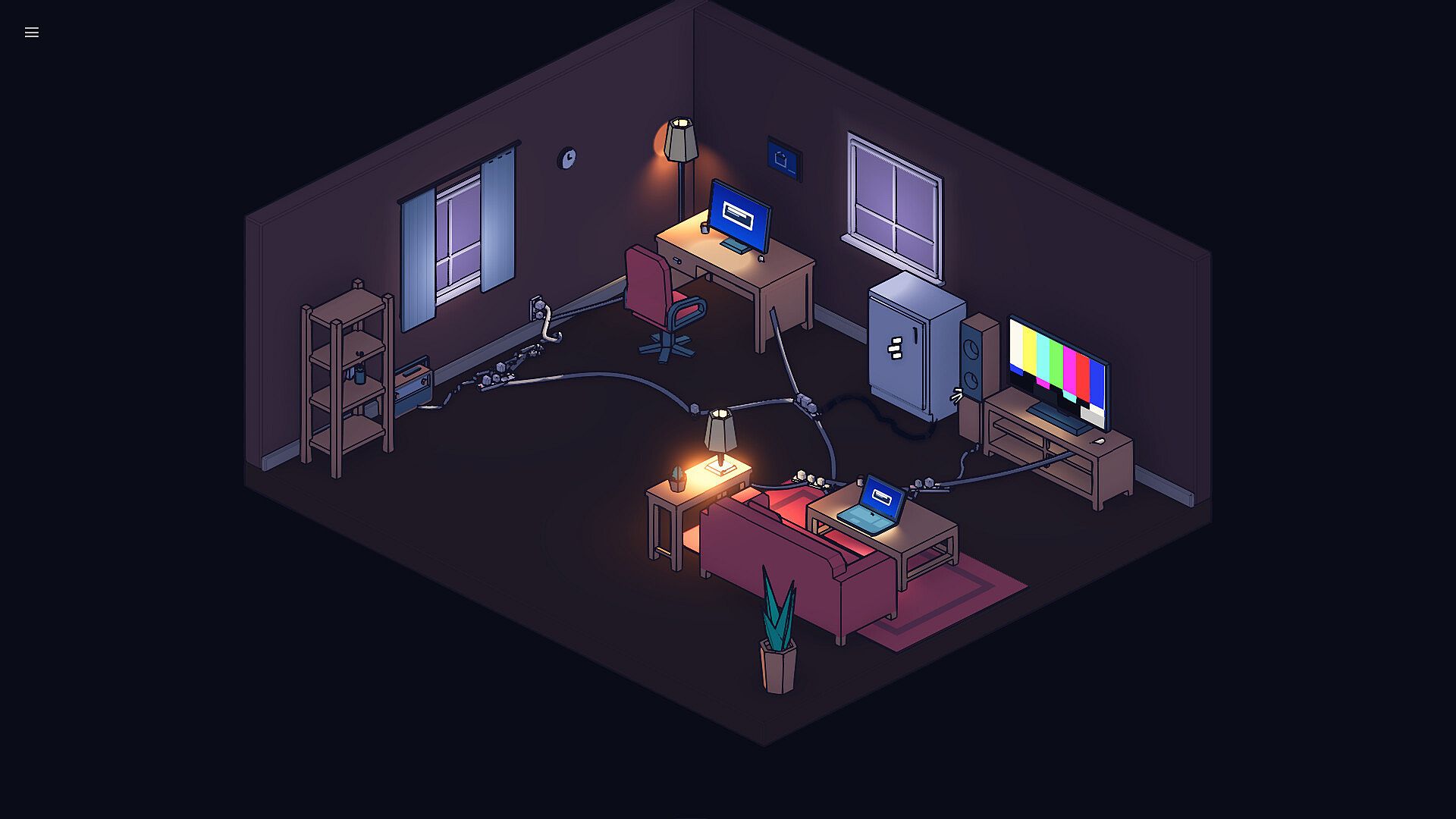
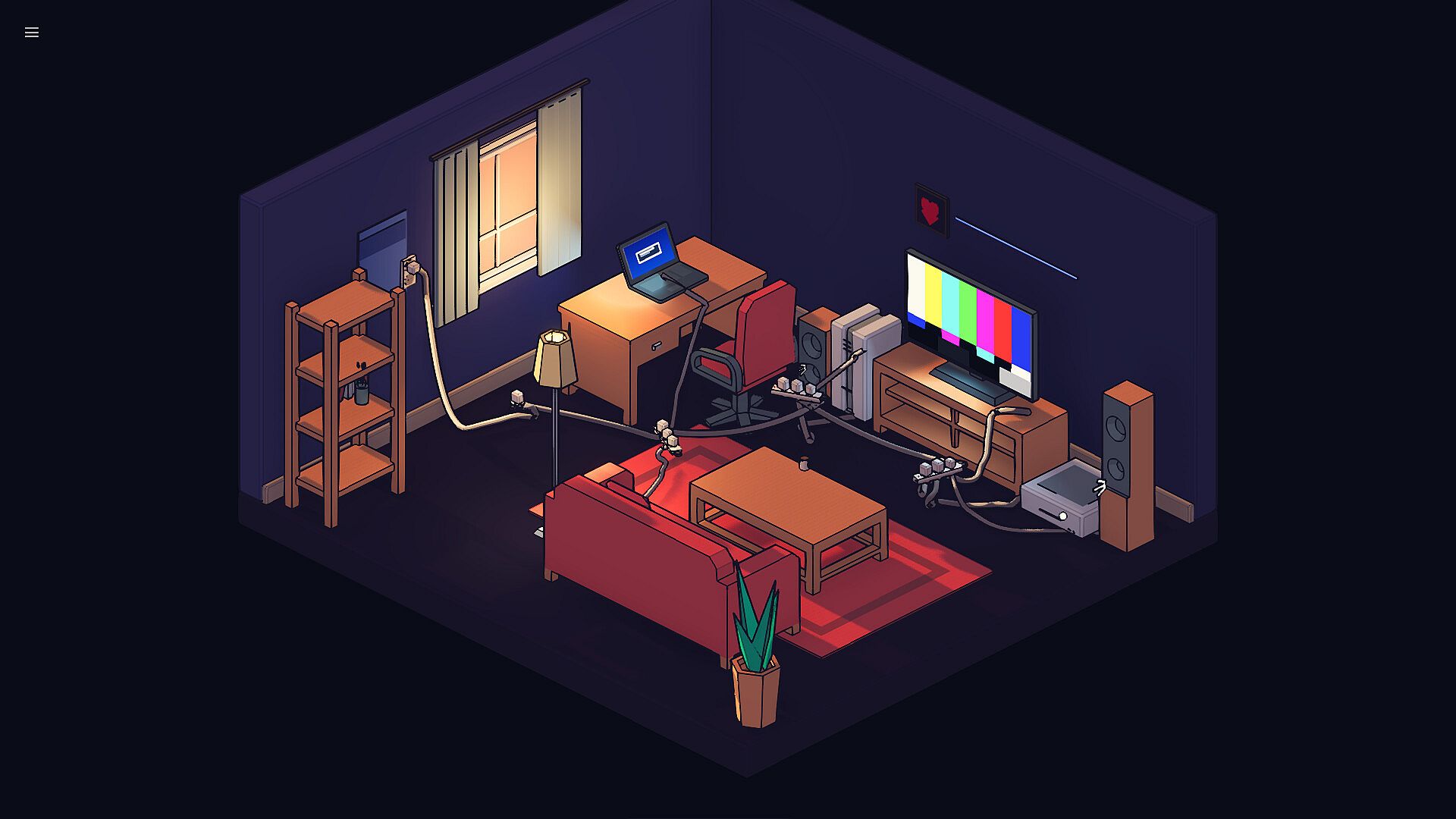
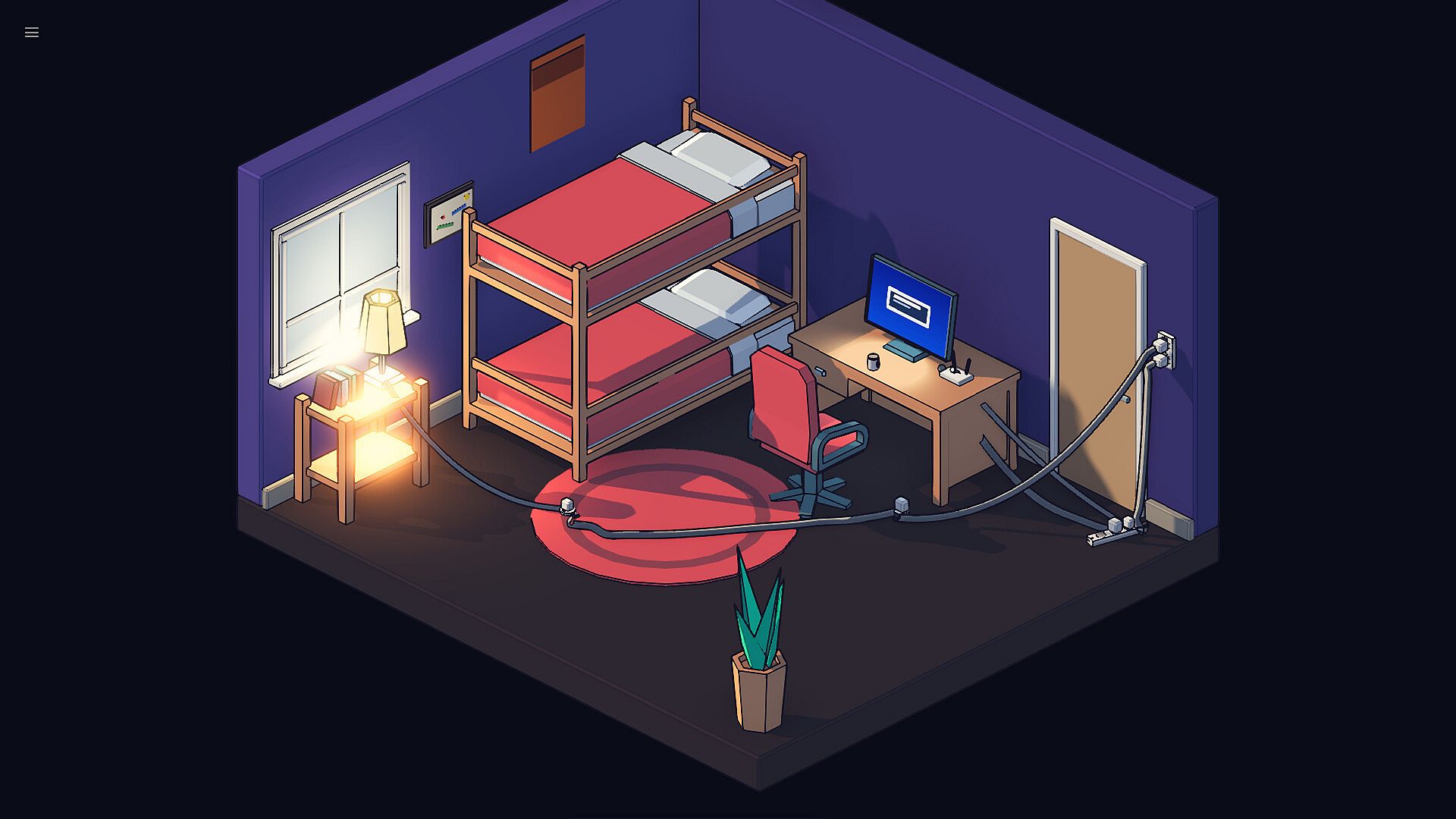
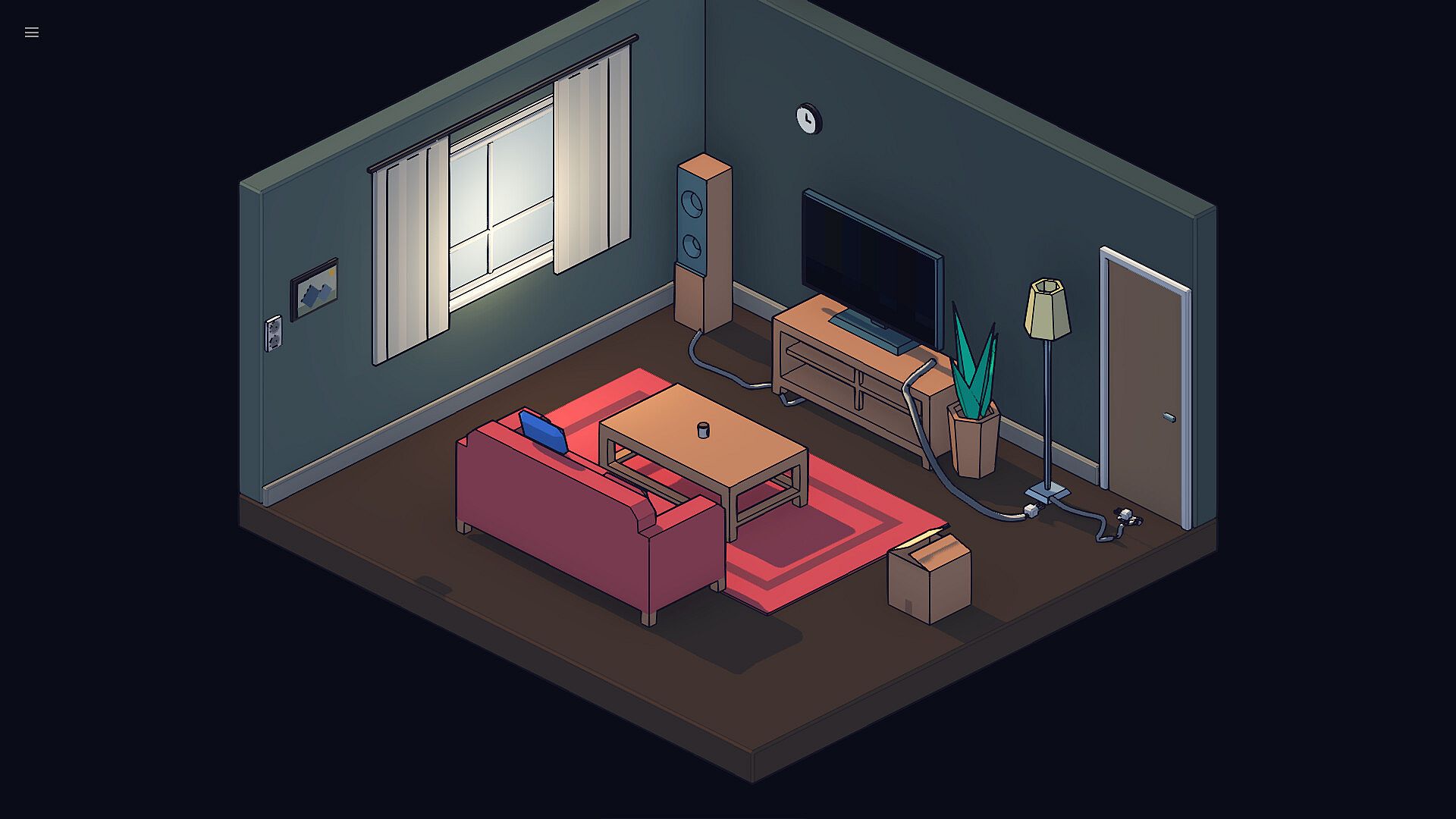



Cable Arrange is a casual strategy indie game for PC in which players connect appliances to a single wall outlet by dragging cables, power strips, and extension cords across a furnished room. The core challenge lies in extending reach without moving any furniture, creating one continuous power chain that brings every device to life.
Gameplay
Players begin in a room packed with unpacked boxes and everyday items such as a television, lamp, fan, computer, and coffee machine. The single outlet sits on the wall, often far from the appliances whose cords fall short. The task requires routing cables by hand, placing power strips to add extra sockets, and linking extension cords to bridge distances. Each connection must form part of an unbroken chain back to the outlet, and the placement of every strip influences what can plug in next.
Furniture stays fixed in position, so the only movable elements are the cables, strips, and cords themselves. Short appliance cords force careful planning of strip locations to maximize coverage while avoiding dead ends. The process builds gradually, with each successful plug activating its device in turn. A lamp begins to glow, the television screen flickers, a stovetop glows red, and a washing machine starts its cycle. The final connection triggers the entire room at once, delivering a clear moment of completion.
The experience emphasizes deliberate pacing. There is no timer, no points system, and no way to fail. Players simply experiment with cable paths until everything receives power. The satisfaction comes from watching the room activate piece by piece and then all together, without any need for electrical expertise.
Game Modes
Cable Arrange presents its content as a single, uninterrupted sequence of room-based puzzles. No separate game modes exist, and the design contains no competitive elements, time trials, or alternative rulesets. Every session follows the same relaxed structure of cable routing and chain completion, allowing players to focus entirely on spatial arrangement and logical progression through each room.
Core Mechanics and Progression
The central loop revolves around extending power through thoughtful placement rather than speed or precision timing. Players pick up cables, position power strips to multiply available outlets, and add extension cords to reach distant devices. Overlapping or inefficient routing quickly becomes apparent when a device remains unpowered, prompting adjustments to the chain. Because furniture cannot be relocated, each room presents a fixed layout that rewards careful observation of cord lengths and available wall space.
Progression occurs naturally as more appliances enter the chain. Early connections light individual items, while later ones complete the full circuit. The absence of scoring or penalties keeps attention on the visual and tactile feedback of successful routing. The game stays within the bounds of simple, repeatable actions that build toward the satisfying moment when the final plug activates everything simultaneously.
Who the Game Suits
Cable Arrange appeals to players seeking a low-pressure strategy experience in the casual and indie space. Those who enjoy methodical puzzle solving without combat, resource management, or failure states will find the steady rhythm of cable arrangement engaging. The game rewards patience and spatial reasoning over reflexes, making it suitable for short or extended sessions at any time of day.
Is It Worth Playing?
Cable Arrange delivers a focused, relaxing puzzle loop centered on cable routing and chain completion. Its lack of time pressure or scoring systems creates an environment where players can experiment freely until each room powers on completely. The steady progression from individual device activation to full-room illumination provides consistent, quiet satisfaction without added complexity. For anyone drawn to casual strategy titles that emphasize thoughtful arrangement over competition or speed, the game offers a straightforward and repeatable experience built around one clear objective per room.