

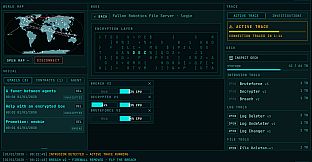
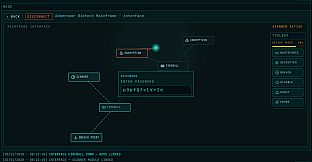
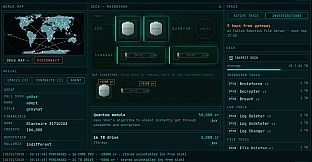
Blackwire is a single-player simulation game centered on hacking. Players take on the role of a freelance agent navigating a fictional digital network filled with servers, banks, and mainframes. The experience draws from classic hacking simulations, emphasizing careful planning, log management, and evasion tactics rather than direct confrontation.
Gameplay
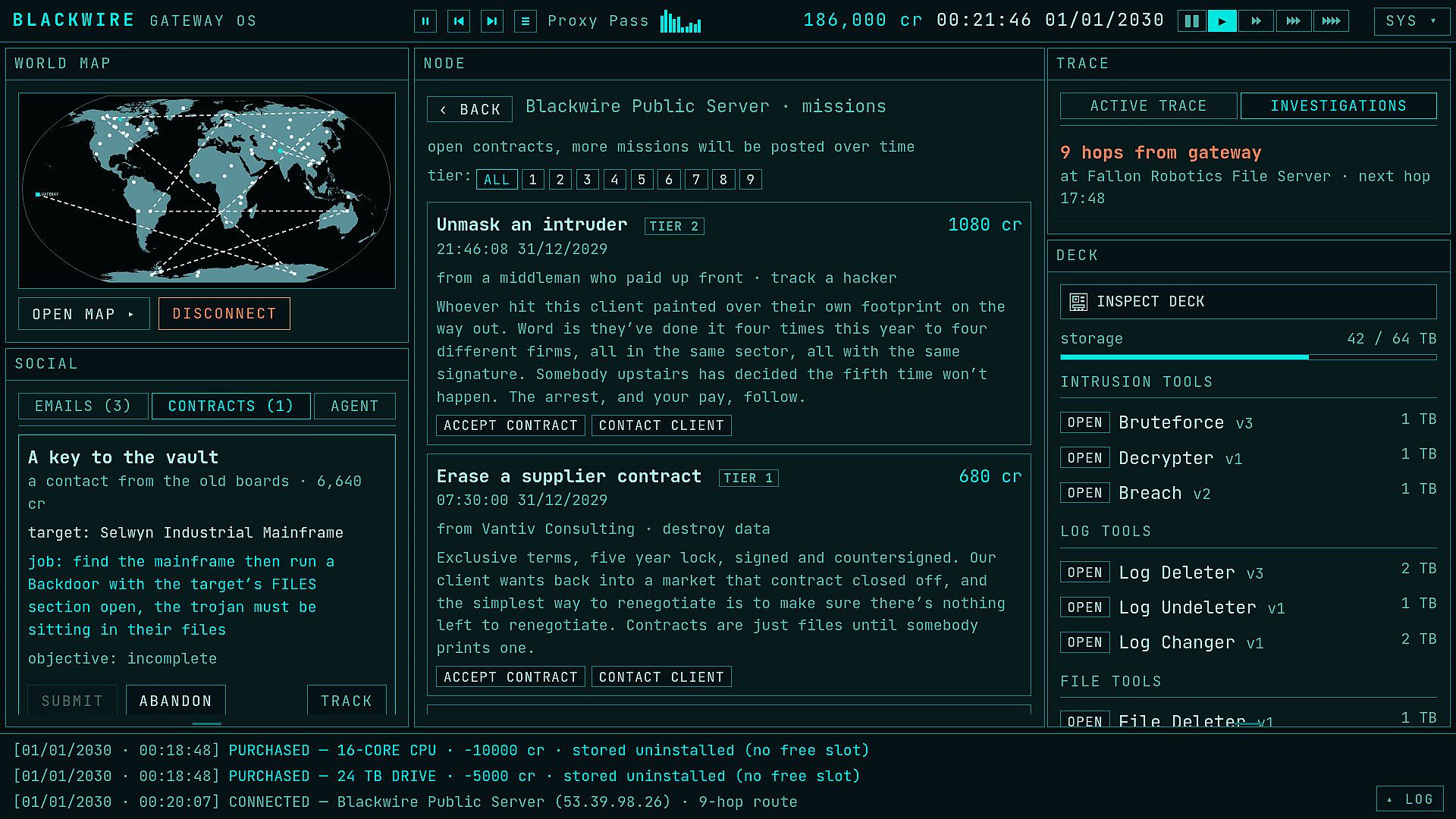
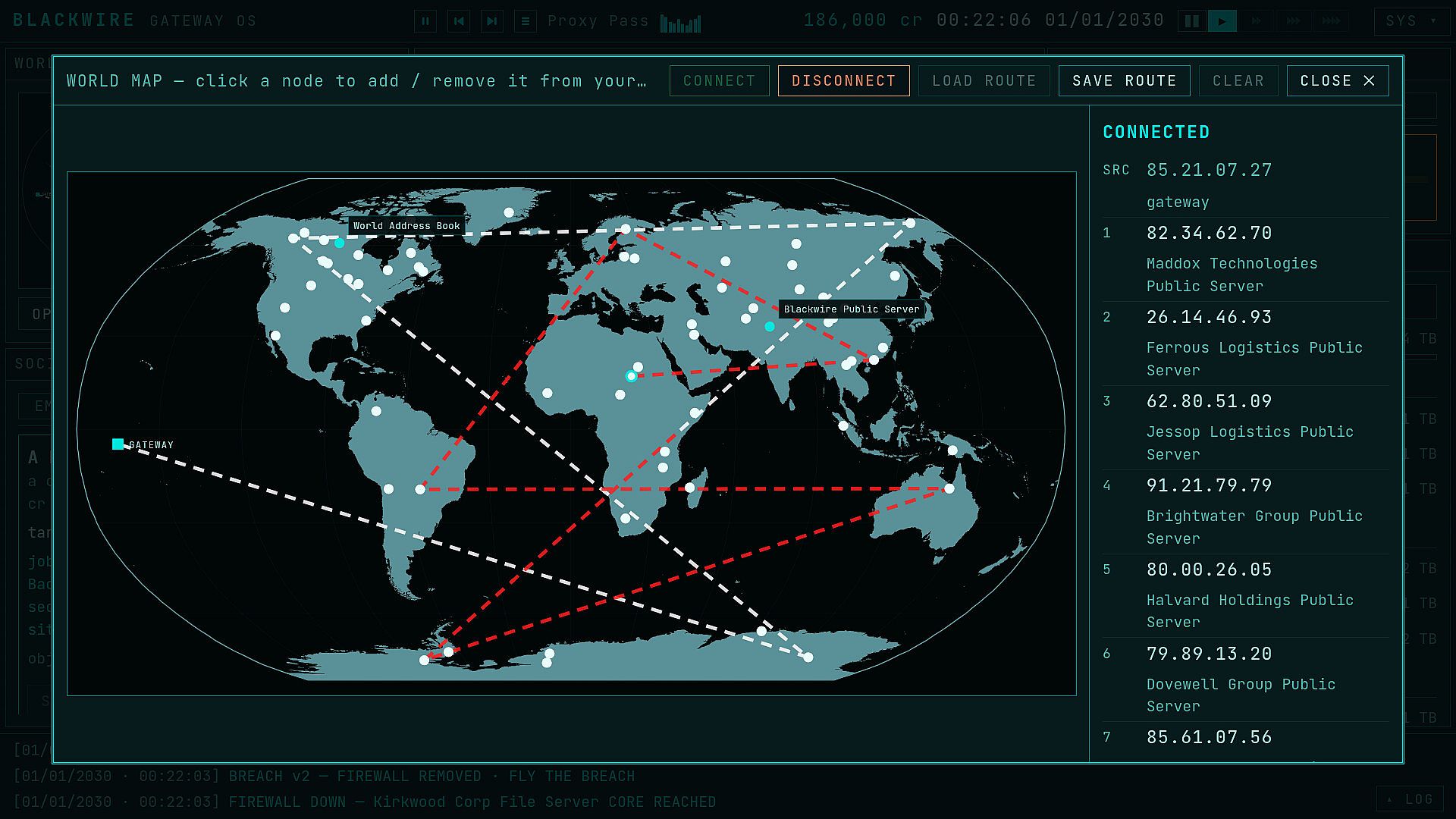
The core loop involves accepting contracts from rival corporations. These tasks range from copying sensitive files and emptying bank accounts to altering records or framing individuals. Success requires building extended bounce routes through multiple servers to mask the origin point. Each additional hop buys extra time once detection begins, but it also creates more logs that must be cleaned later.
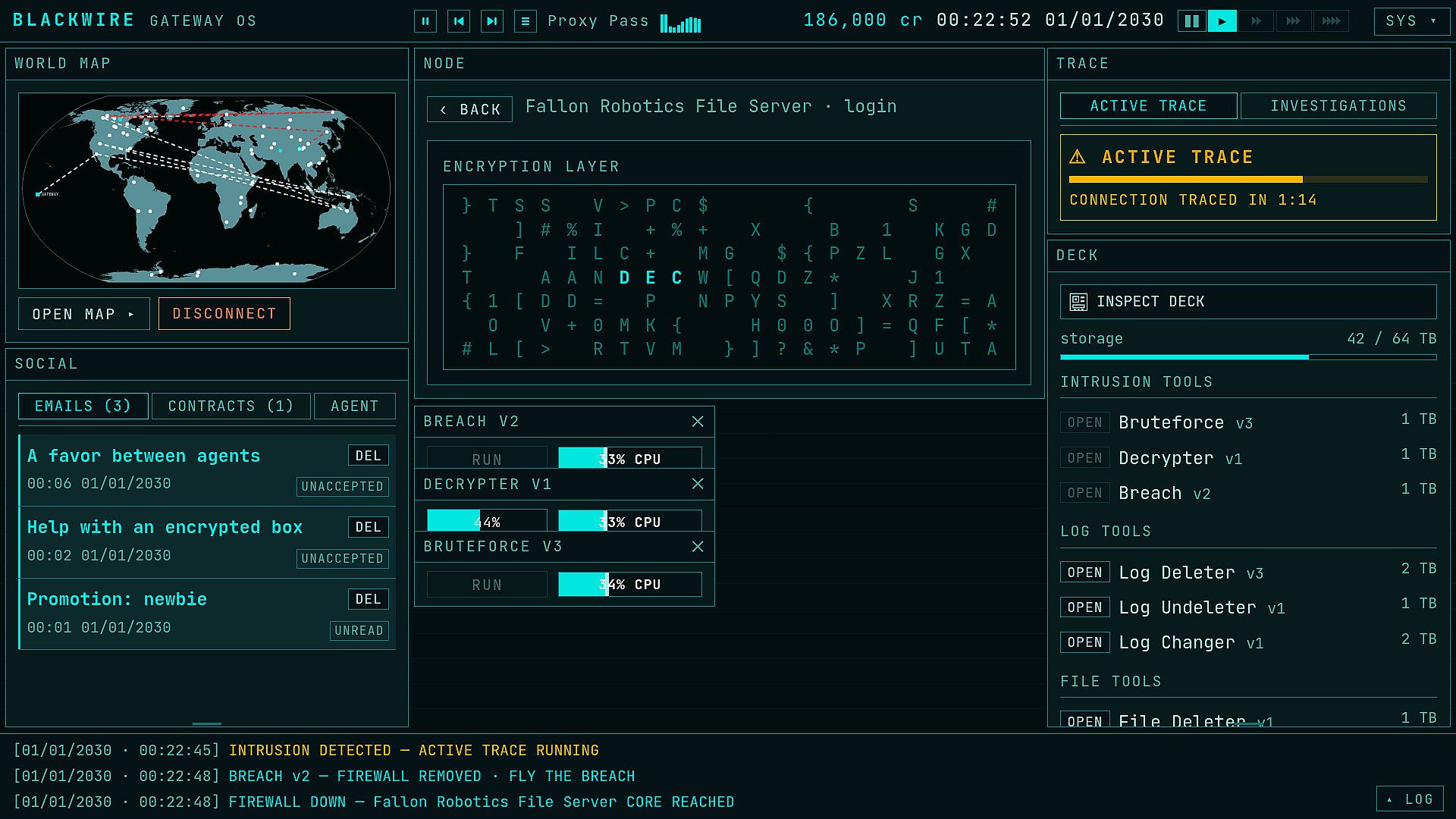
Traces operate on two levels. An active countdown runs during active intrusions, forcing quick decisions on resource allocation. After exiting a system, a passive investigation begins as administrators trace back through the route. Erasing evidence from every server along the path becomes essential to avoid identification and future repercussions.
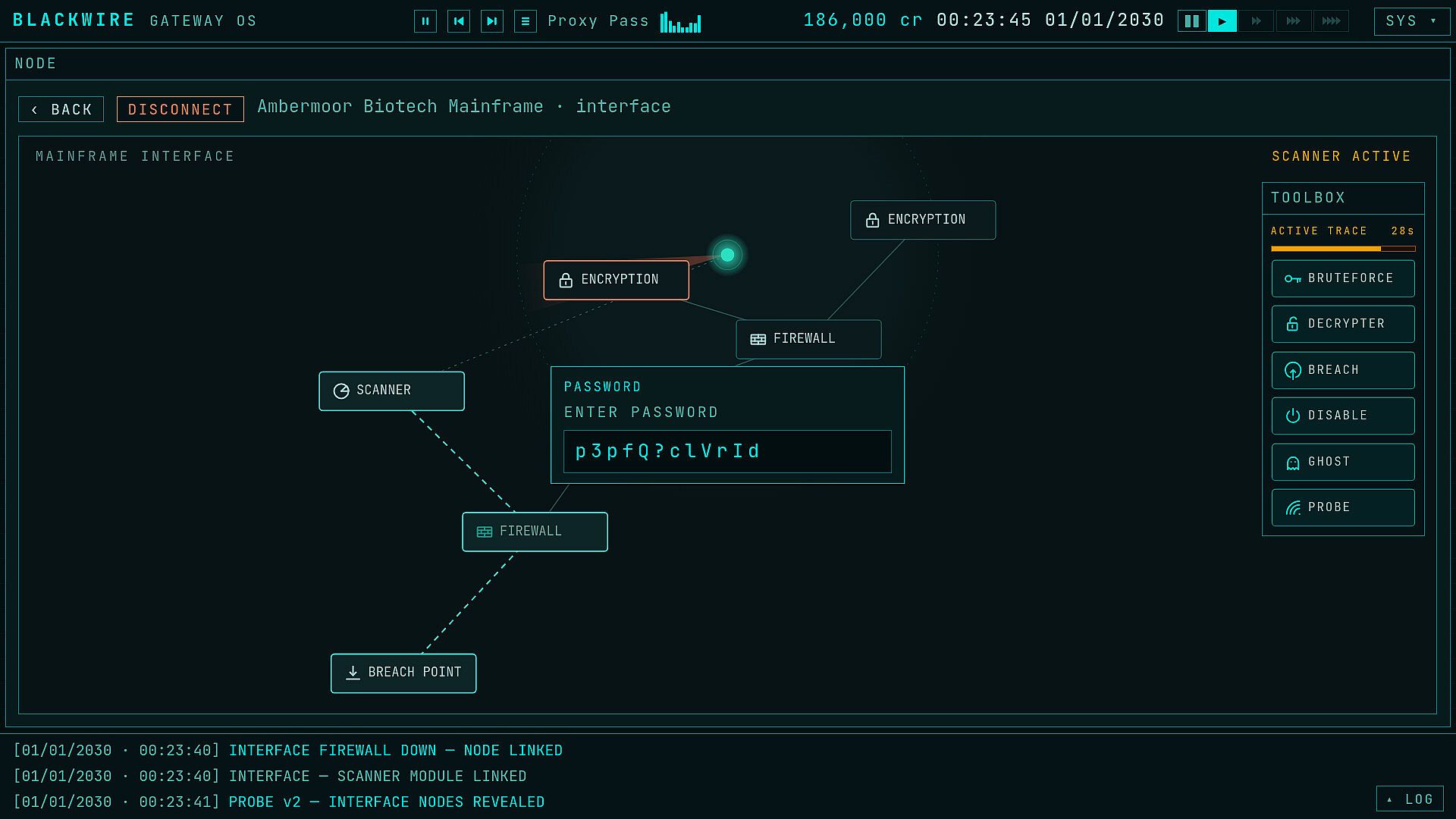
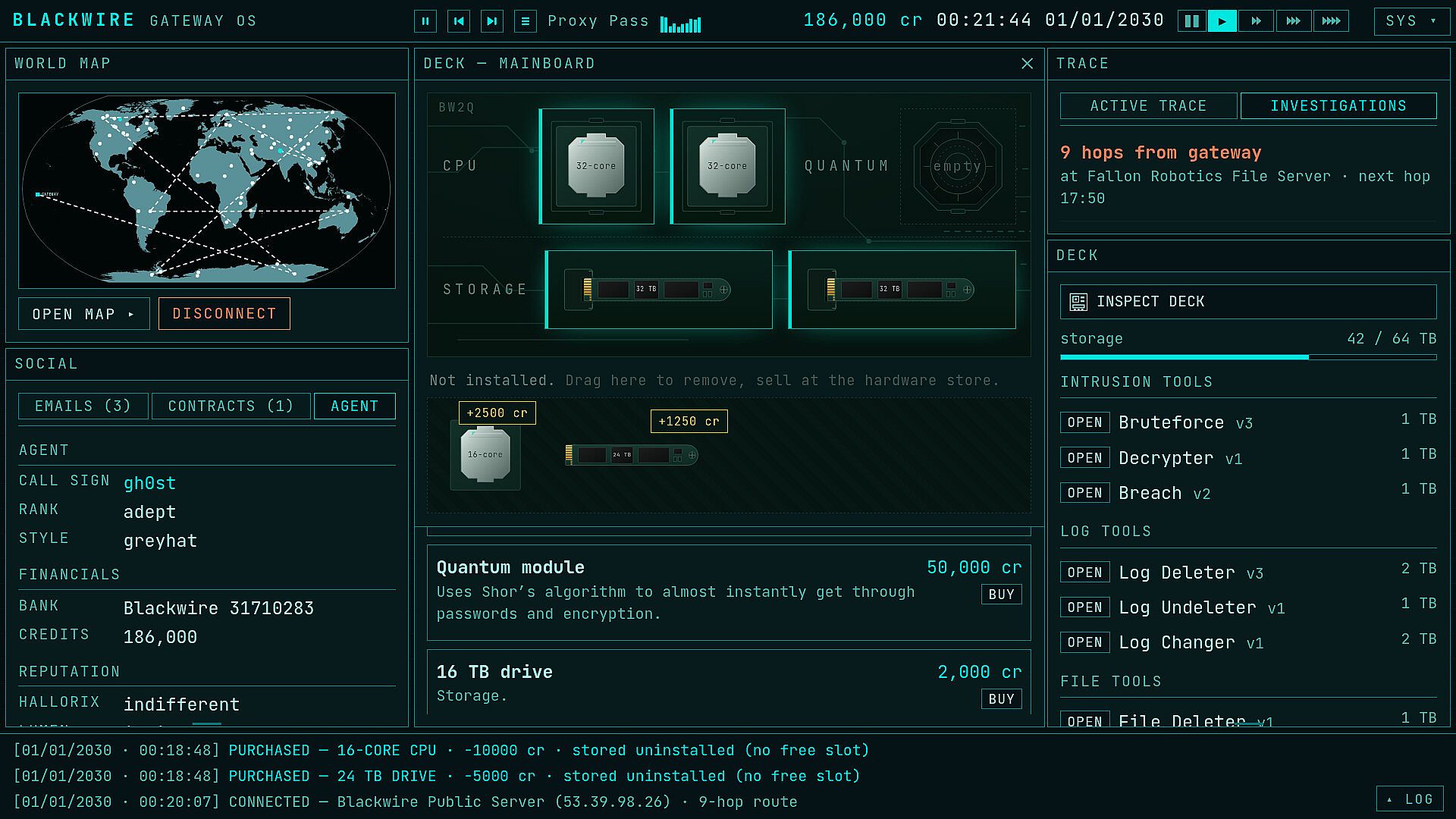
Progression centers on upgrading a personal rig with new hardware components and software tools. Mainboards, processors, and storage devices improve performance, while programs handle tasks such as brute-force attacks or stealth operations. CPU allocation between offensive cracking and defensive measures adds a layer of strategic choice during tense operations. Mainframe targets demand sequential lock bypassing, contending with scanners and retaliatory intrusion countermeasures that can target the player's own systems.
Financial elements integrate through bank account manipulations. Cracking one account may reveal transfer chains that lead to additional opportunities or risks. The two competing corporations provide ongoing work while maintaining their own records of past dealings, which can influence future contract availability.
Game Modes
Blackwire operates exclusively as a single-player experience with no multiplayer components. All activity revolves around the contract board and self-directed progression through the network. Players manage their own pace, choosing which jobs to pursue and how thoroughly to cover tracks afterward.
Contract variety encourages different approaches. Some focus on quick data extraction, while others involve deeper mainframe navigation or following money trails across multiple systems. The persistent network state means earlier actions can affect later opportunities, creating a sense of continuity without structured campaigns.
A narrative thread emerges organically from repeated play. Freelance agents face elimination by an unknown party, and uncovering the details requires stealing and examining specific files. This element unfolds through normal contract work rather than dedicated story missions.
Key Mechanics and Systems
The living network contains hundreds of individual machines, each maintaining its own logs. Every connection leaves traces that administrators can follow hop by hop. Effective play demands proactive log scrubbing on every server used during an operation, turning cleanup into a core survival requirement instead of an afterthought.
Software and hardware customization allows tailoring approaches to different contract types. Bruteforce tools suit direct assaults on weaker systems, while ghost programs support quieter infiltrations. Balancing these options against the trace timer creates repeated moments of risk assessment.
Offline design keeps everything contained within the game client. No external accounts or connections are involved, preserving the focus on the simulated hacking fantasy without real-world dependencies.
Is It Worth Playing?
Blackwire suits players interested in methodical, single-player simulation experiences that reward planning and attention to detail. The emphasis on route building, evidence removal, and resource management delivers a focused take on hacking themes drawn from older media portrayals.
Those who enjoy managing risk through preparation and iterative improvement will find the rig-building and contract system engaging. The absence of online features or live service elements means the game remains self-contained from launch onward.
With a planned release in September 2026 and no reviews available yet, potential players should monitor early feedback once it becomes accessible. The described systems align with a deliberate, offline simulation style that prioritizes internal consistency over broad accessibility features.