








![[Bober Bros] No Means Nothing](https://img.xd.deals/capsules_thumbs/a9/48/a94880cb7cebc06795fb3c860127f7545d292d562cda2e9f_120x68.jpg)
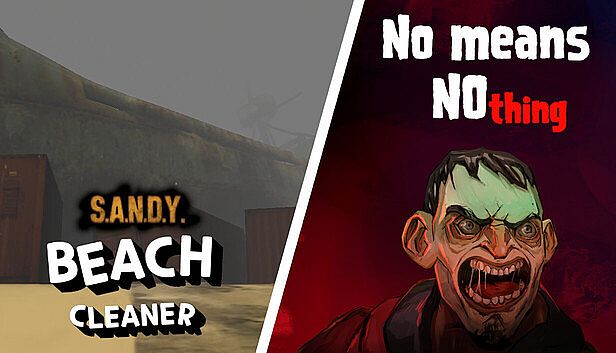
No Means Nothing + S.A.N.D.Y. - Beach Cleaner bundles two distinct short indie experiences on PC. One delivers a tense narrative about workplace pressure and personal boundaries. The other puts players in control of a small robot tasked with restoring polluted shorelines. Together they span simulation, adventure, and psychological elements in compact sessions that emphasize routine tasks mixed with unsettling undertones.
Gameplay
In S.A.N.D.Y. - Beach Cleaner the central loop involves driving a compact robot across marked sections of sand. Players sweep away oil stains and scattered debris while the robot's storage fills. Collected items then move to a sorting station where waste is separated for recycling or disposal. Animals trapped in the pollution require rescue before the player unlocks the next stretch of beach. Upgrades improve sorting speed, carrying capacity, and efficiency, allowing longer runs and access to additional zones. The process repeats across a handful of areas that gradually reveal environmental changes and quiet narrative details.
The companion title No Means Nothing centers on dialogue choices during a single shift at a warehouse. Every response or silence alters the power dynamic between the player character and a persistent colleague. Tension builds through repeated interactions that test limits and reveal consequences. The short runtime keeps focus on these branching conversations and their immediate effects on the outcome.
Game Modes
S.A.N.D.Y. - Beach Cleaner includes a structured story progression that advances through four distinct beach zones. Completion unlocks a separate free mode that lets players revisit cleaned areas without narrative constraints. No Means Nothing operates entirely through its choice-driven narrative structure, with decisions determining one of several possible endings. Both titles remain single-player only and run to completion in roughly one to three hours depending on pace and exploration.
Narrative and Atmosphere
The beach-cleaning game pairs straightforward mechanical satisfaction with a gradually darkening backdrop. Environmental storytelling hints at larger consequences beyond the immediate cleanup work. The robot protagonist continues its duties amid signs of broader decline, creating contrast between repetitive tasks and the implied world state. No Means Nothing builds discomfort through everyday workplace exchanges that turn increasingly intrusive. Multiple endings reflect how small concessions or refusals compound over time.
Is It Worth Playing?
Both components deliver focused, self-contained sessions suited to players who prefer short-form indie titles over extended campaigns. S.A.N.D.Y. appeals to those who enjoy methodical cleanup mechanics and light environmental themes, while No Means Nothing suits audiences interested in choice-based psychological stories. Recent player feedback highlights the relaxing yet grim tone of the simulation and the effective unease created by the narrative game. The bundle offers accessible entry points for casual or simulation fans and for those seeking brief, impactful narrative experiments. Positive reception centers on the charm of the robot character, the satisfying sorting loop, and the weight of decisions in the shorter title. Availability on PC makes it straightforward to try either experience independently or together depending on preferred length and tone.


![[Bober Bros] It's Just A Prank](https://img.xd.deals/capsules_thumbs/44/ef/44eff6a24def15904cf613b7d30edeb7ee79da37_280x160.jpg)
![[Bober Bros] The Hole](https://img.xd.deals/capsules_thumbs/f9/91/f99157e65746c177e625e7552e70061762651d71_280x160.jpg)
![[Bober Bros] Last Pill Bar](https://img.xd.deals/capsules_thumbs/90/b4/90b43390641f82d55e6245dee23e83d51f7e2b41a60f9599_280x160.jpg)
![[Bober Bros] No Means Nothing](https://img.xd.deals/capsules_thumbs/a9/48/a94880cb7cebc06795fb3c860127f7545d292d562cda2e9f_280x160.jpg)





