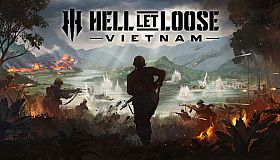




















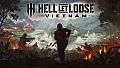

Hell Let Loose: Vietnam is a large-scale multiplayer first-person shooter set during the Vietnam War. Players join 50-versus-50 battles that emphasize tactics, communication, and resource management across dense jungle environments. The game runs on PC and focuses on realistic infantry combat with asymmetric faction abilities that shape how each side approaches objectives.
Gameplay
Matches unfold across wide maps where teams push and hold ground through coordinated squad movements. Each player selects from specialized roles that support different battlefield functions, such as infantry, support, or command positions. A commander oversees resources including manpower, munitions, and fuel, directing larger strategic decisions while squads handle frontline execution.
Communication between squad members drives success, as isolated players struggle against the map's scale and environmental challenges. The US side relies on helicopter transport for rapid repositioning, while the opposing North Vietnamese Army faction utilizes tunnel networks for concealment and surprise movements. These differences create distinct playstyles that reward preparation and awareness over raw speed.
Combat feels lethal and deliberate, with engagements often decided by positioning, suppression, and timely reinforcements rather than constant movement. Players must navigate thick vegetation, rivers, and varied terrain that limits visibility and encourages careful advances. The overall loop combines individual marksmanship with team-level planning, producing matches that can last extended periods as fronts shift gradually.
Game Modes
Warfare serves as the core experience, pitting two teams against each other in a back-and-forth contest for map sectors. Both sides start with control of their home areas while a central zone remains neutral, and capturing points gradually shifts the frontline until one team secures victory through territorial dominance.
Offensive alters the balance by assigning one team the role of attacker and the other as defender. The attacking side must push through successive sectors while the defenders attempt to hold key positions, creating a more directed flow of combat that tests sustained pressure and defensive setups.
Additional modes such as Conquest and Domination expand the options with variations on point control and area dominance, each requiring different levels of coordination to outmaneuver the opponent across the same large maps.
Factions and Mechanics
The two main factions bring clear mechanical distinctions to every match. American forces leverage air mobility through helicopters that enable quick insertions and extractions, altering how squads rotate between objectives. North Vietnamese Army units emphasize ground-based stealth and infrastructure, using tunnels to bypass open ground and launch ambushes from unexpected angles.
Role selection influences available equipment and responsibilities, with 17 specialized options spread across squads. Resource allocation by the commander adds a layer of macro strategy, where decisions on supplies directly affect available spawns, fortifications, and support options for the entire team.
These systems combine to reward players who adapt to the asymmetric tools rather than relying on uniform tactics. Building and maintaining outposts or tunnel entrances becomes a recurring task that supports longer-term map control.
Is It Worth Playing?
The game launched on August 13, 2026, and has received mixed player feedback on platforms where it is available. Review scores sit around 60 percent positive in aggregate user data, with critics noting stronger marks for the tactical depth and immersion in a Vietnam setting. Many appreciate the emphasis on squad coordination and the fresh faction asymmetry that differentiates it from faster-paced shooters.
Those who enjoy deliberate, communication-focused multiplayer experiences often find the steep learning curve rewarding once mechanics click. The title suits players comfortable with longer matches and team reliance, while those seeking constant action or simpler controls may find the pace and requirements less engaging. Cross-platform support broadens the player pool and helps maintain active matches across regions.
Current support centers on the initial release content, with the core loop centered on the verified modes and faction differences. Players interested in milsim-style large battles will find the most alignment with what the game delivers.