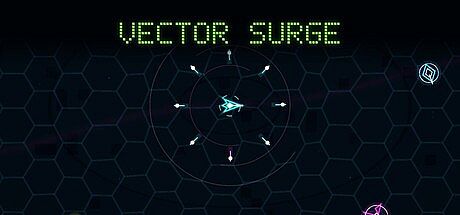



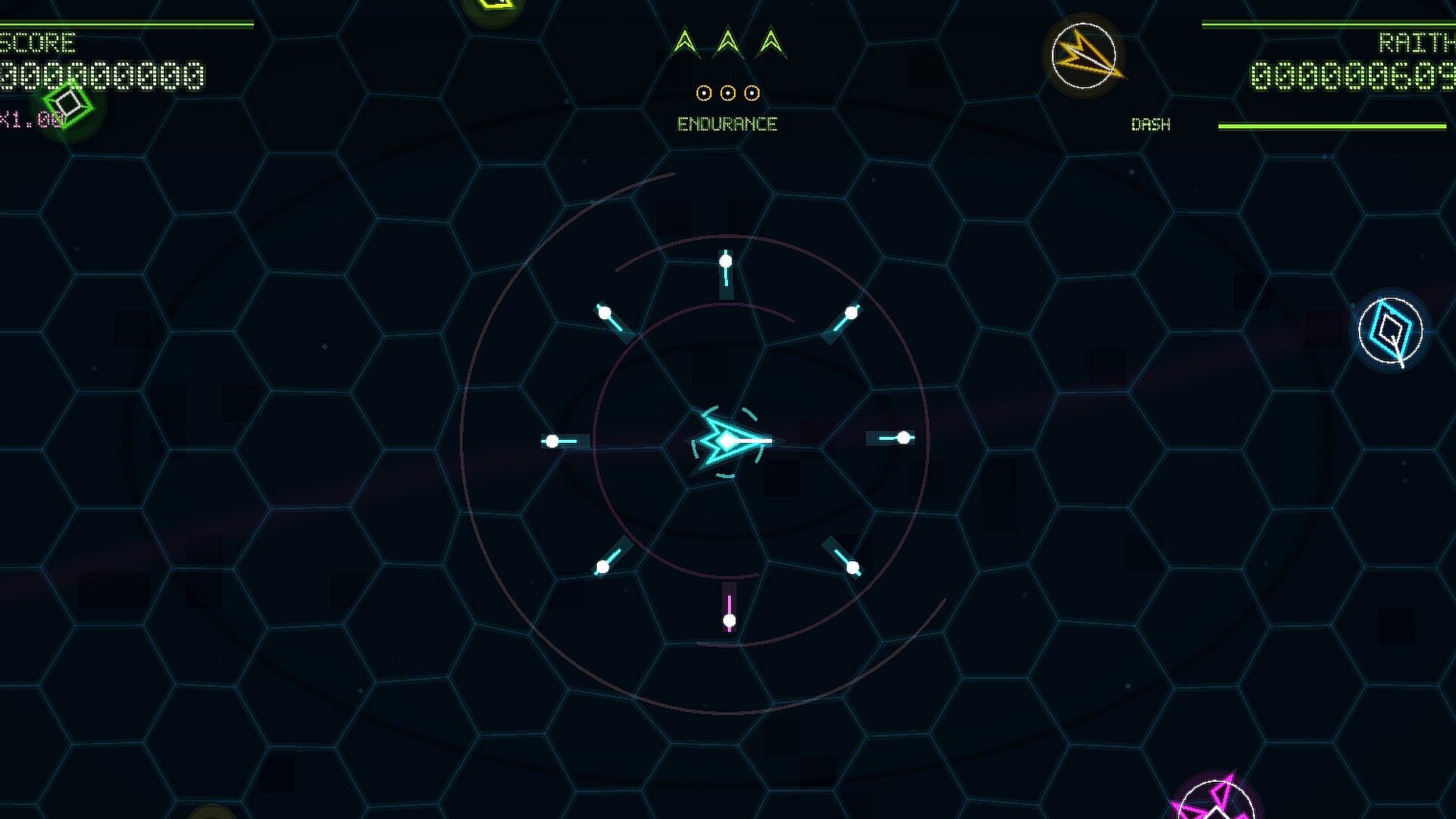
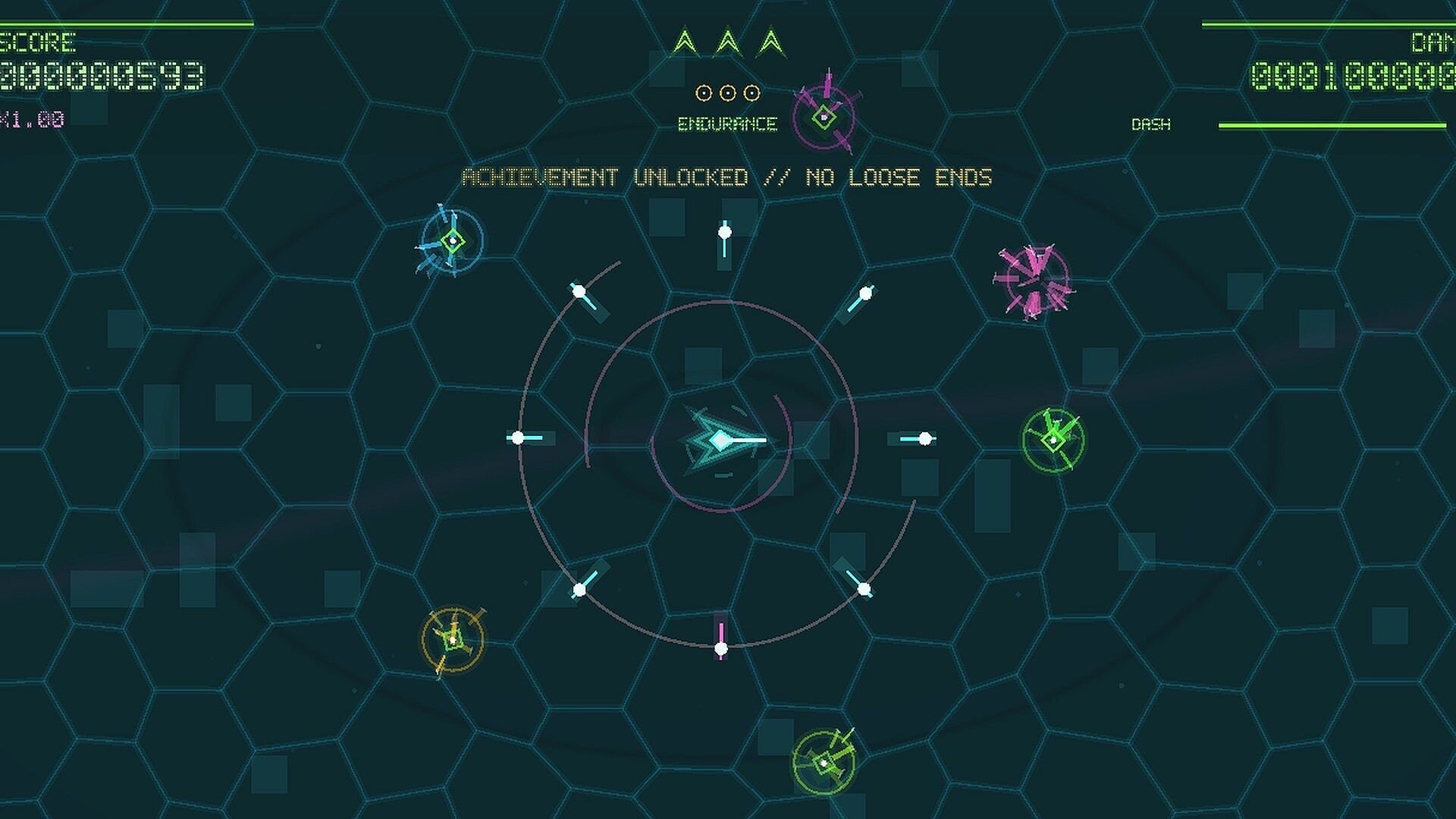

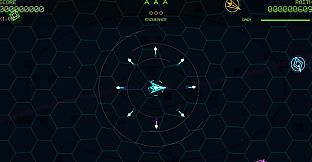
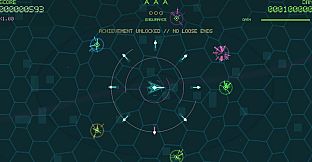
Vector Surge is a twin-stick arena shooter built around procedural vector geometry on PC. Players control a ship inside a reactive hexagonal grid where movement, aiming, dashing and detonating clear geometric swarms while the environment pulses and fractures in response to every collision.
Gameplay
The core loop centers on fast, precise twin-stick controls that support both keyboard and mouse or a controller. A brief invulnerability window accompanies each dash, while limited bombs provide occasional screen clears. Close-range kills and multi-kill chains feed a decaying score multiplier that rewards sustained aggression without safe zones to hide in. Enemy silhouettes remain distinct even under heavy fire, and attack telegraphs stay readable so players can react rather than memorize fixed patterns.
Everything on screen draws live from vector geometry instead of pre-made sprites. Ships, projectiles, formations and grid reactions assemble on the fly, creating encounters that remix enemy types, elites and hazards each time. The connected grid reacts to combat intensity, music cues and boss arrivals, keeping the arena visually coherent yet never static.
Game Modes
Six distinct score protocols reshape the rules of each session. Overclock limits play to three minutes with unlimited lives, pushing players to build momentum fast. Safehouse restricts players to one life and no bombs while shrinking sanctuaries force weapons to function only inside protected zones. Endurance removes the time limit but steadily worsens arena conditions with limited lives and bombs available.
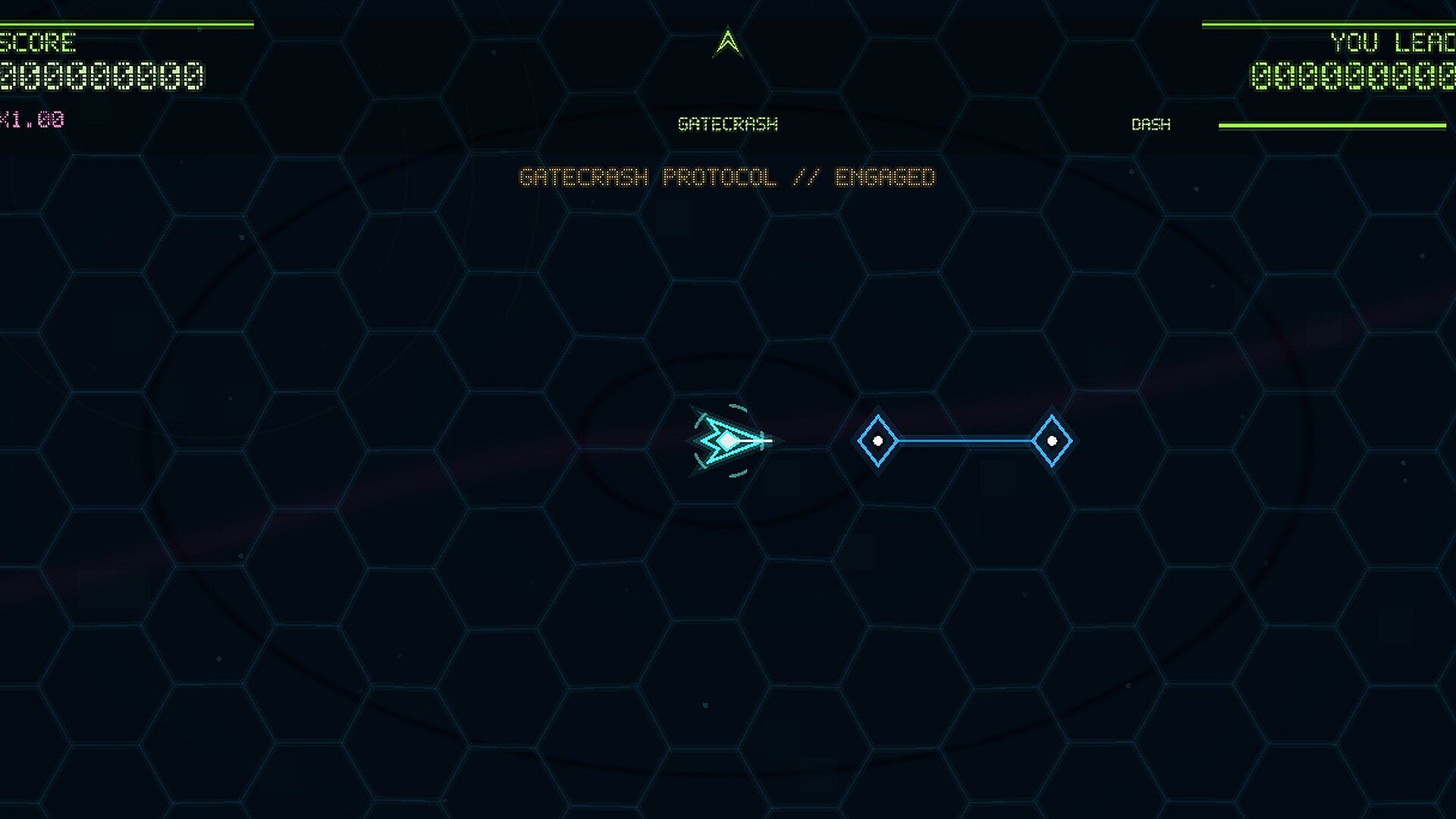
Gatecrash strips away weapons entirely, requiring survival through movement and signal-gate crossings alone. Crosscurrent tasks players with dismantling advancing horizontal and vertical rocket formations before the field collapses. Circuit 20 delivers a twenty-stage campaign with strict timers, three lives and brief salvage windows between encounters. Each protocol maintains its own online leaderboard for direct competition.
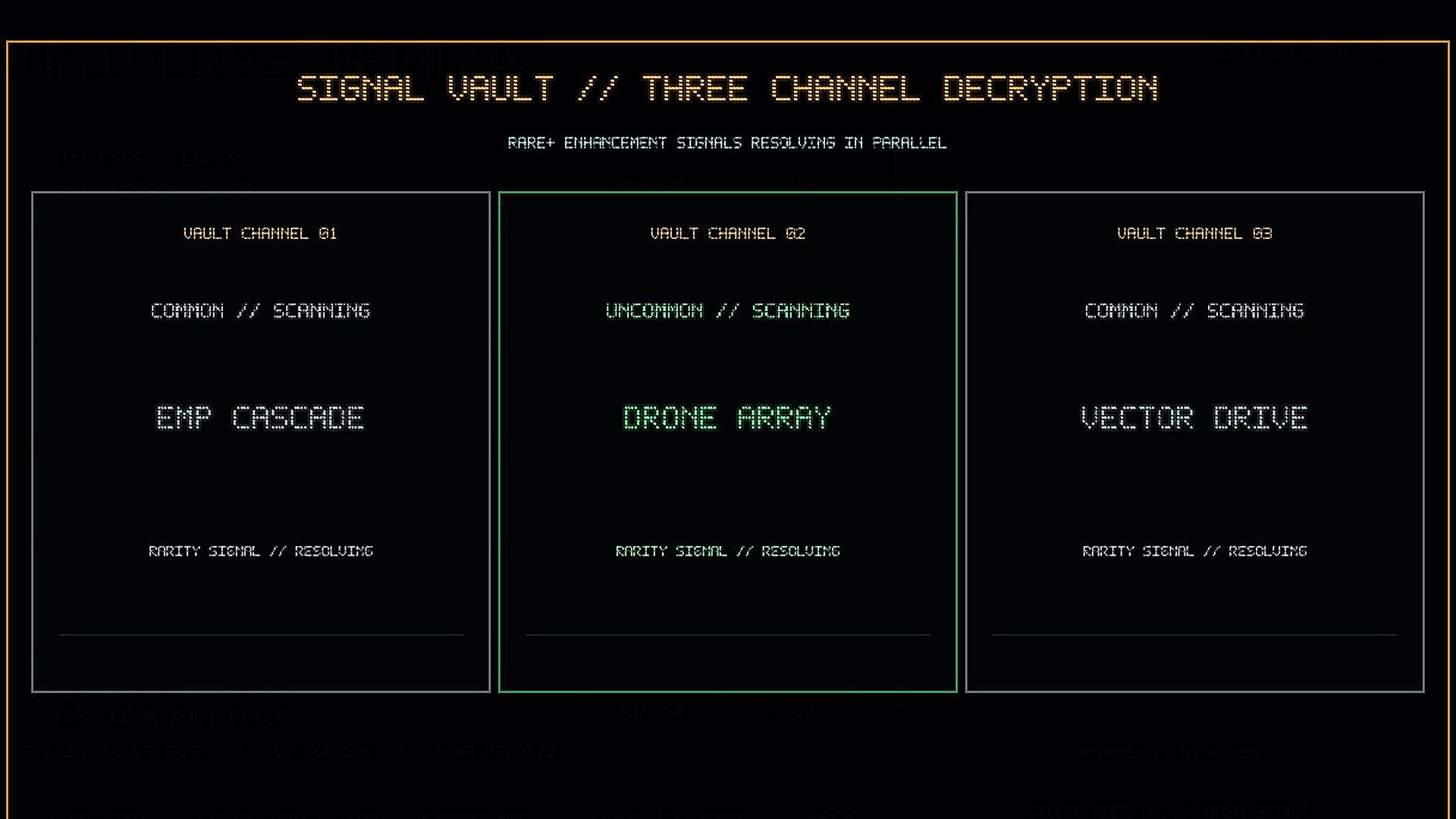
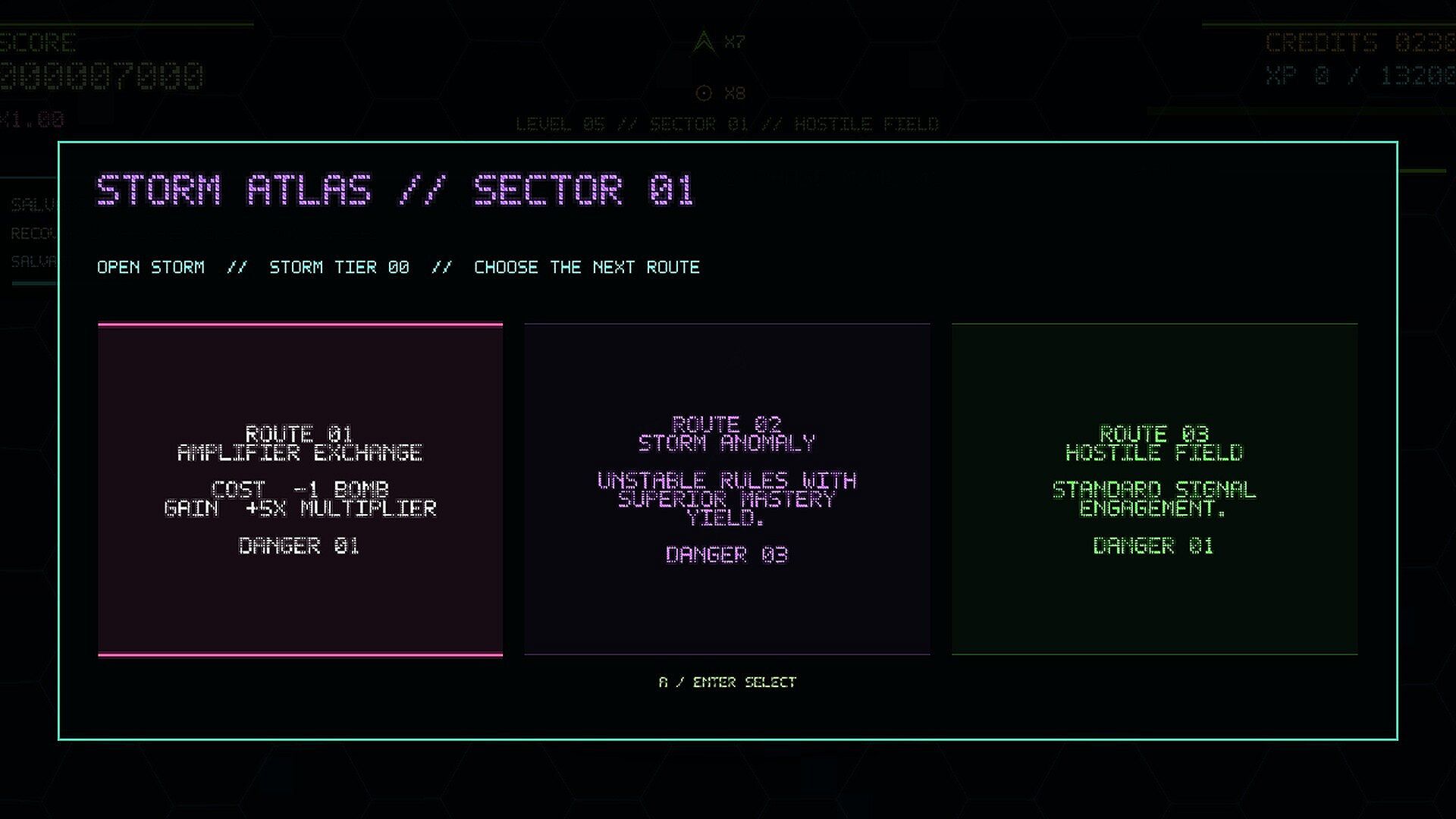
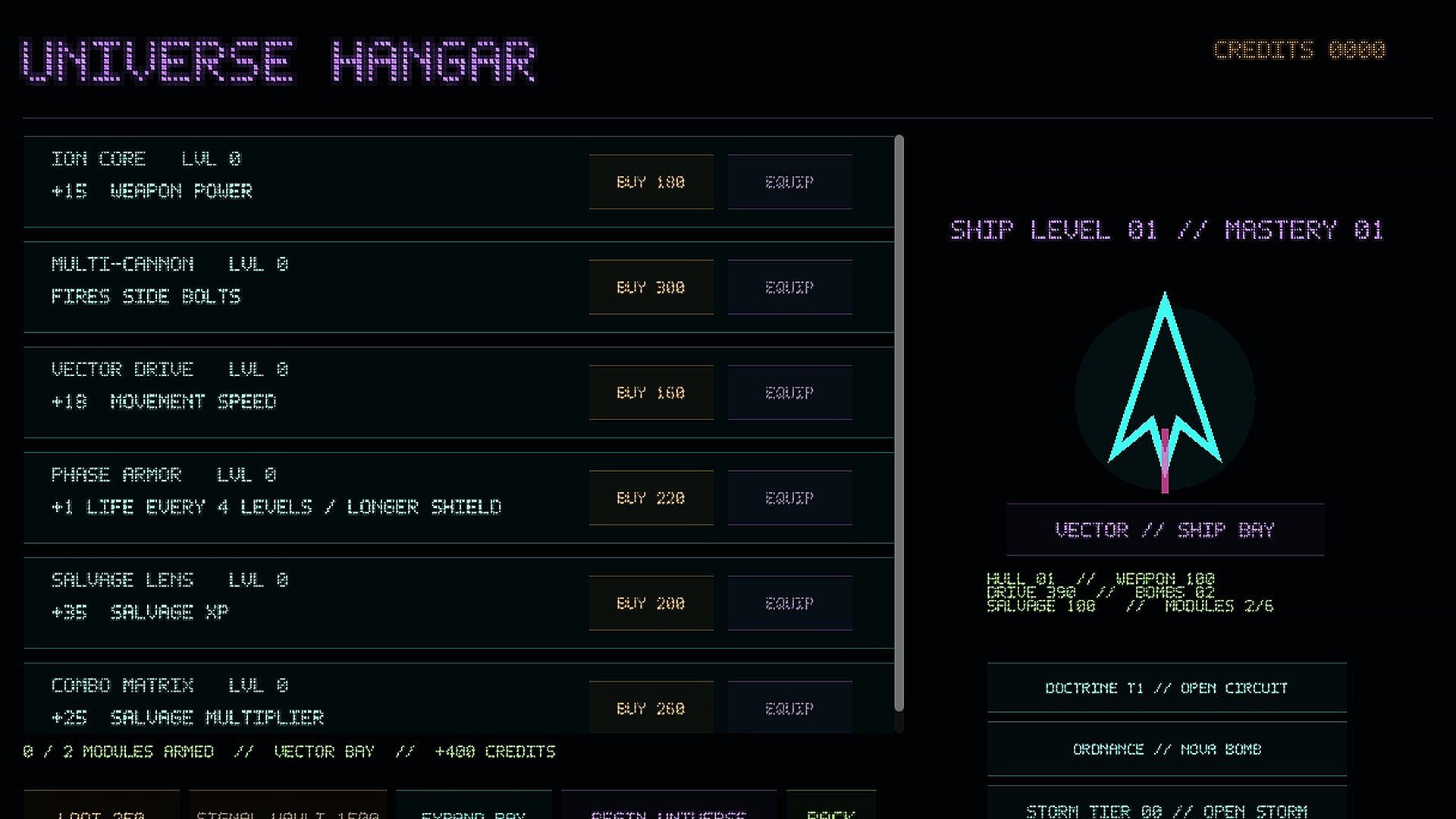
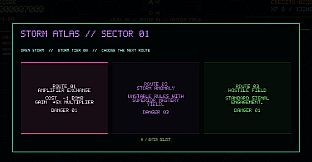
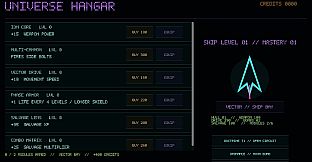
Universe mode expands the arena into a persistent campaign. Players select a hull, enter procedurally generated expeditions and progress through sectors that grow more hostile. Credits and XP fund permanent enhancements, while level-ups pause action to offer three temporary augments that can evolve into specialized weapons such as the Arc Caster or Gravity Bomb. Branching routes, timed objectives and capital victories open new paths through a Storm Atlas, with rare trader encounters providing additional equipment options.
Progression and Challenges
Each hull tracks its own mastery, doctrines, enhancements, prestige and records across runs. Four campaigns further remix expeditions, supported by rotating contracts and prestige systems that encourage repeated fleet rebuilding. Storm Tiers scale every pressure element together, from enemy speed and formation size to boss attack frequency. Tier 10 serves as a dedicated endgame test, with an even harsher terminal tier available beyond it.
Six capital boss families present unique movement and attack patterns: Dreadnova, Prism Warden, Rift Carrier, Grid Architect, Salvage Devourer and Null Engine. Higher tiers and later sectors apply mutations such as accelerated, armoured, mirrored, brood or volatile properties, creating fresh combinations. The Grid Breaker arrives with dramatic arena changes, including a shattered grid and shifted camera perspective.
Is It Worth Playing?
Vector Surge suits players who enjoy short, high-intensity arcade sessions or longer roguelite-style expeditions built on the same core systems. The free-to-play model on PC allows immediate access to both quick protocols and the deeper Universe campaign without upfront cost. Leaderboards across modes and hulls provide ongoing goals, while adjustable visual and audio options accommodate different play styles and hardware.
Because the game remains in development with a playtest available and no user reviews posted yet, interested players can form their own opinion by requesting access and testing the responsive controls and procedural variety firsthand. Those drawn to twin-stick shooters that emphasize readable threats, reactive environments and build experimentation will find the systems align closely with that preference.