

Tiny Shaders is a programming puzzle game in the simulation genre available on PC. Players construct shaders by linking simple components to form image processing algorithms that transform visual data efficiently.
Gameplay
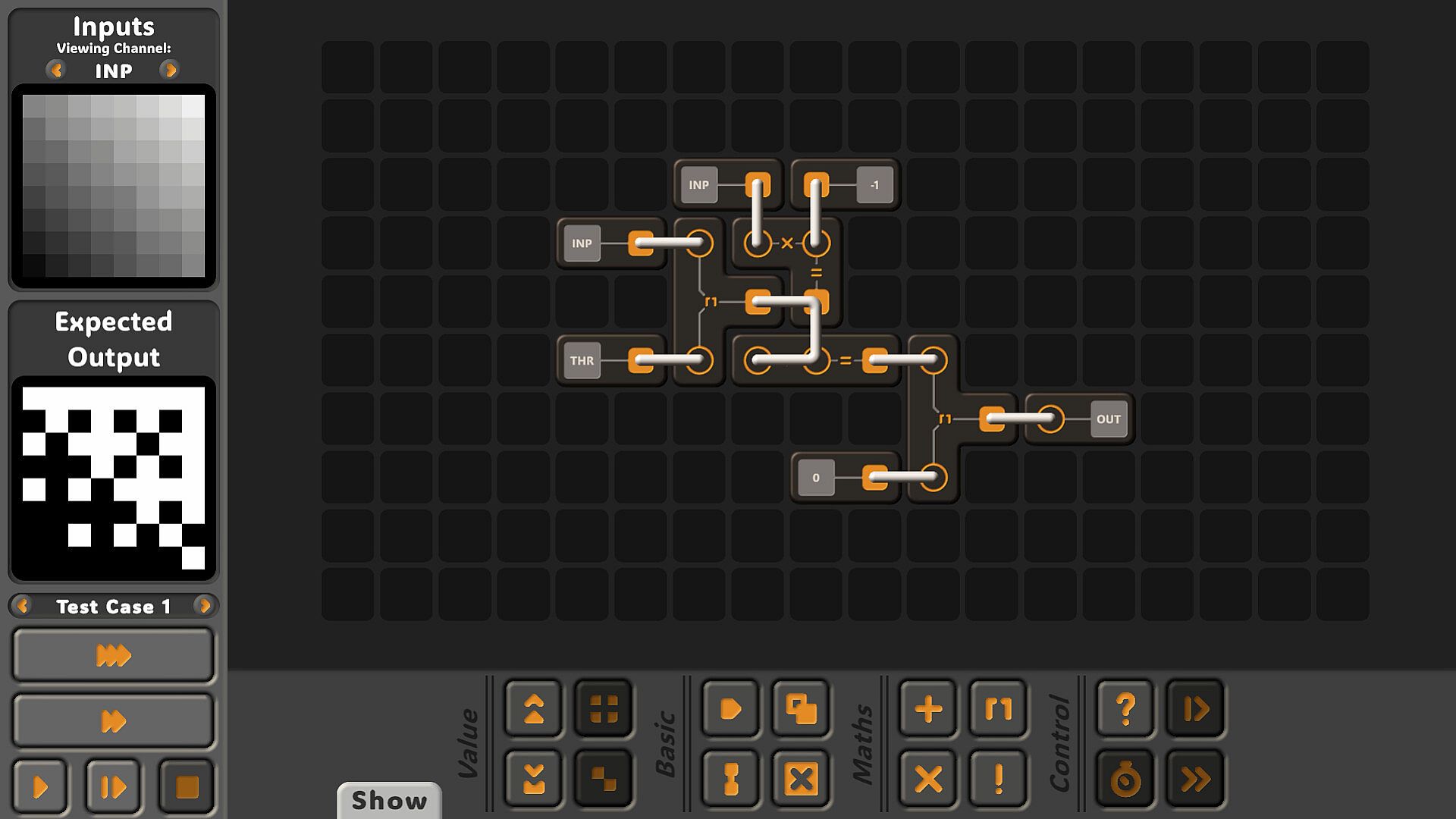
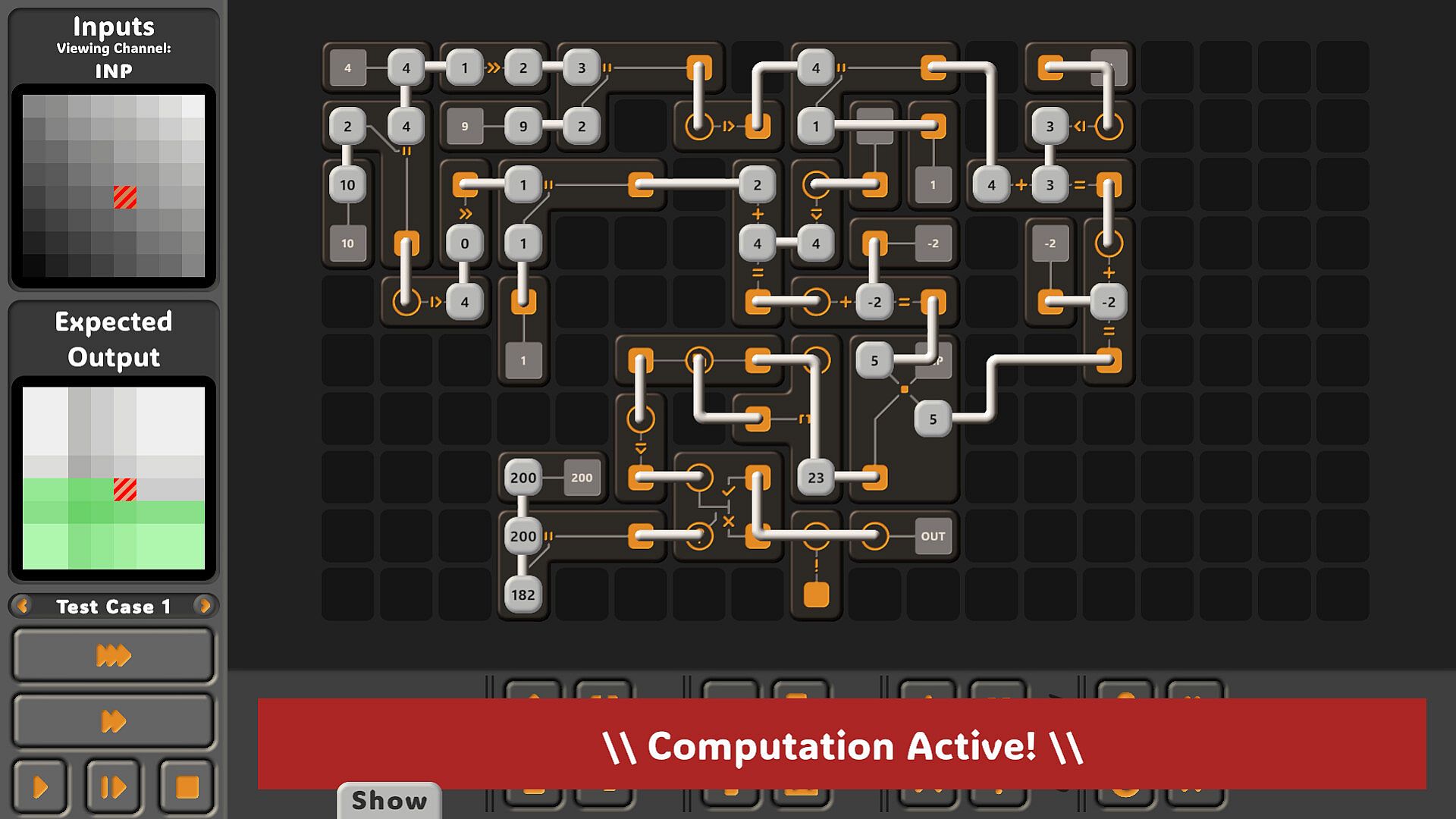
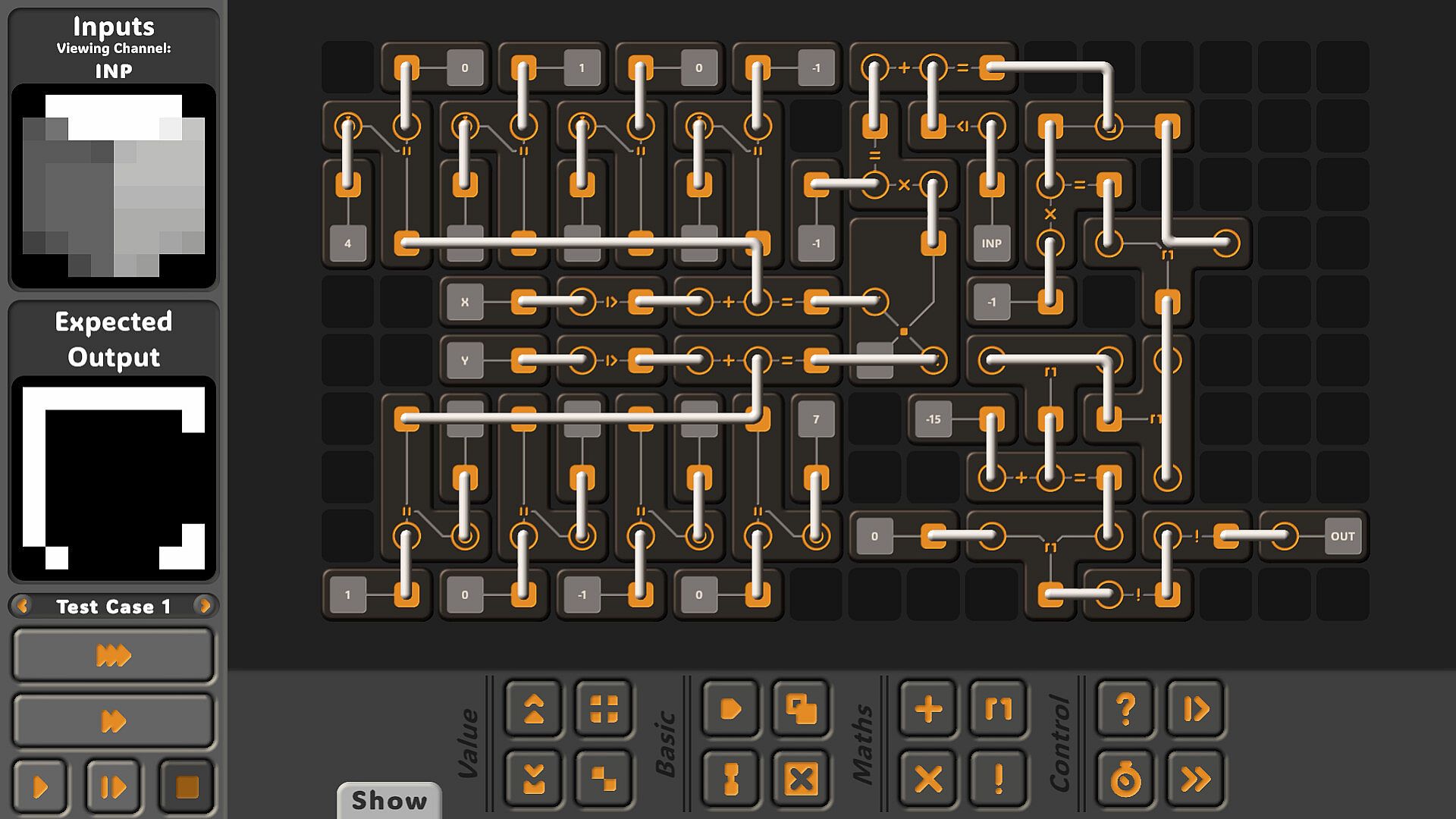
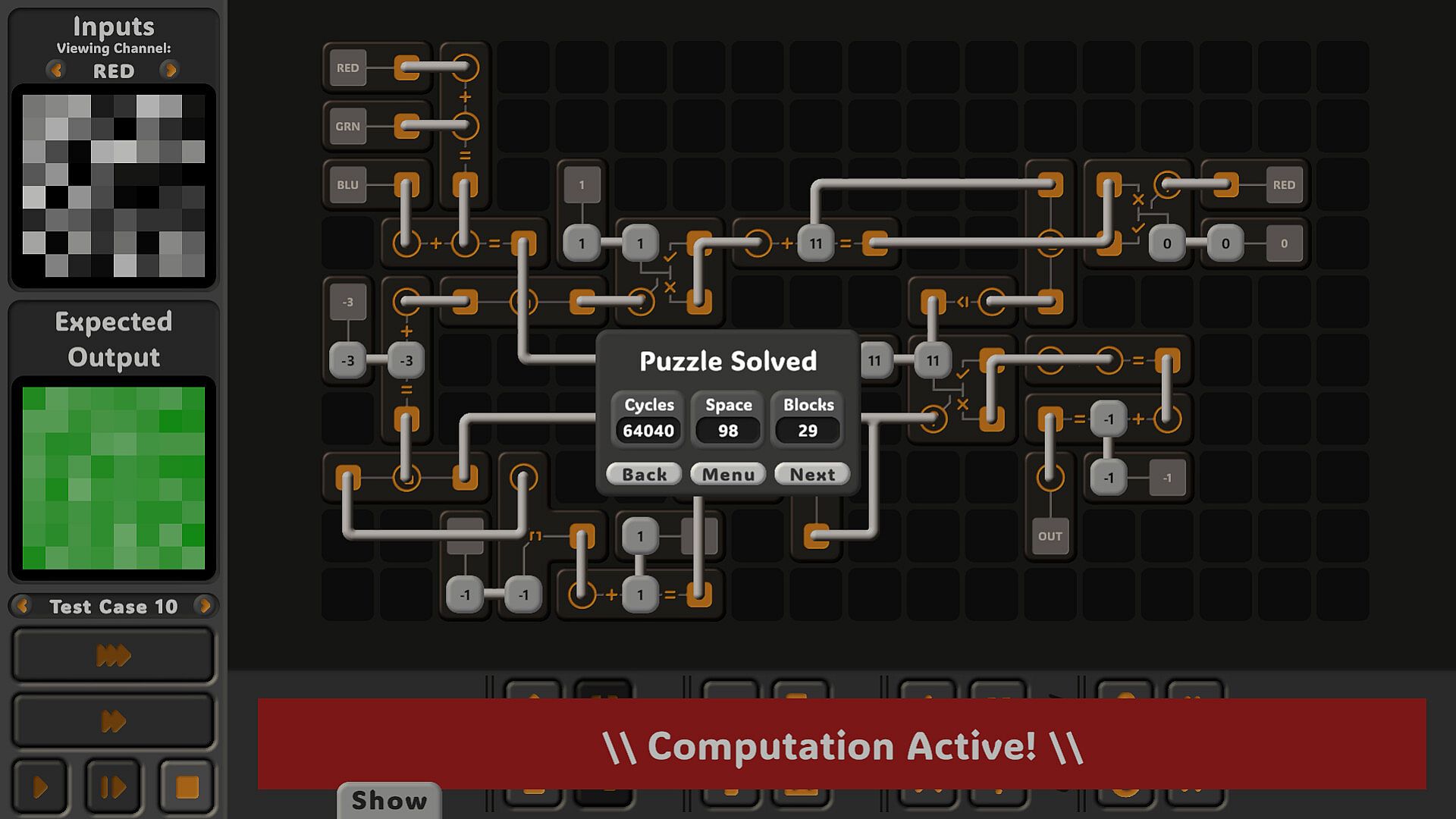
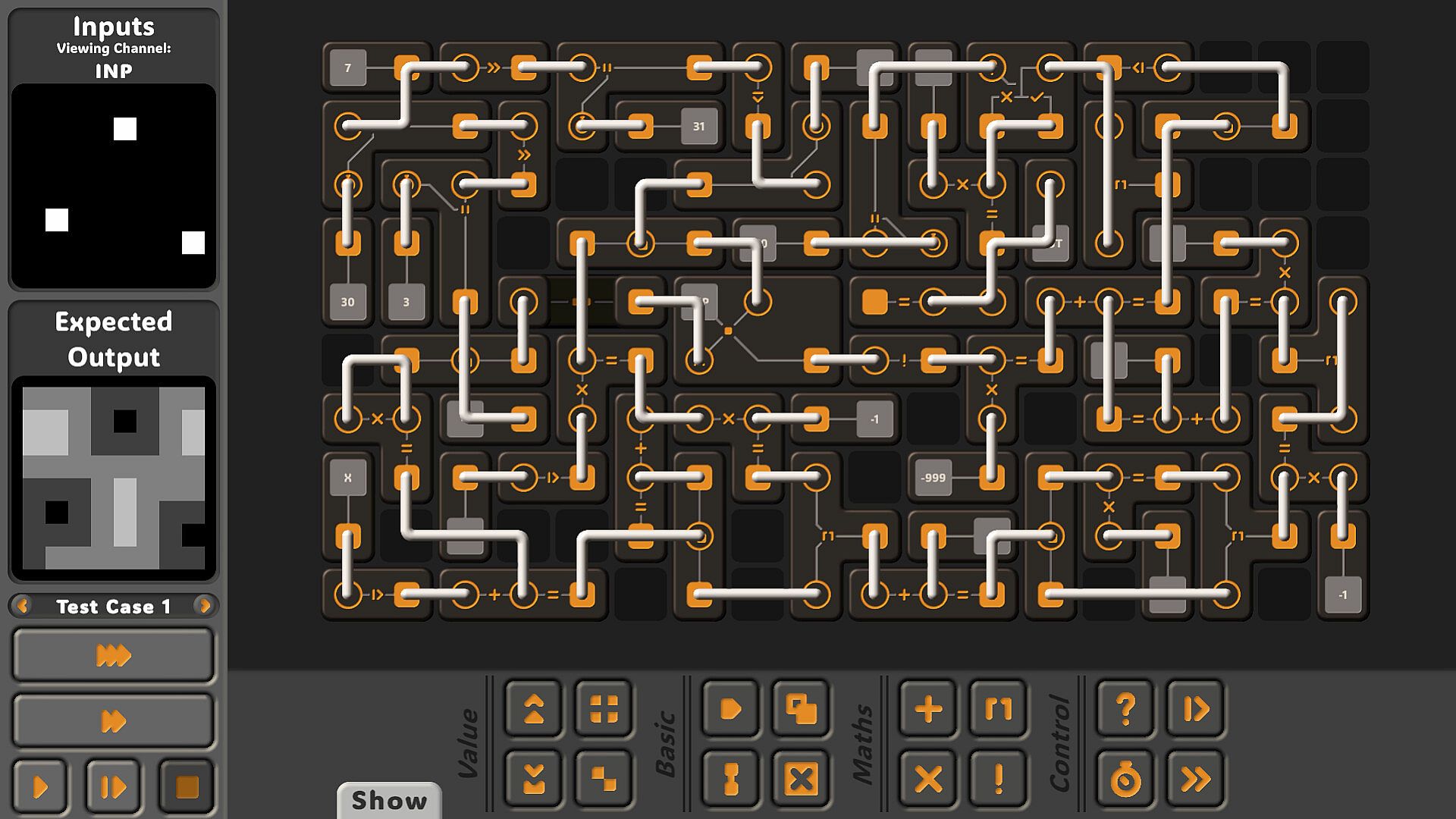
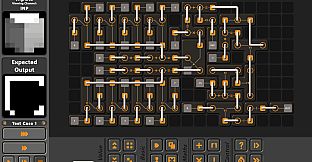
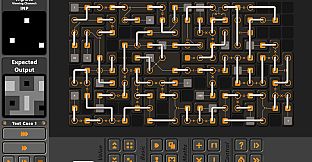
The core loop centers on connecting blocks with wires to create functional shader systems. Each block represents a basic operation, and the wires route data between them to process images in real time. Solutions start from minimal setups and grow into intricate networks capable of handling complex visual transformations. Efficiency matters because the same puzzle can be solved in multiple ways, and players refine their designs to meet performance goals.
Building these algorithms draws directly from the mechanics of shader programming without requiring prior coding experience. Simple components combine in creative sequences to achieve desired outputs, such as altering colors, applying filters, or generating patterns. The process rewards logical thinking and iterative testing as players observe how changes in the network affect the final image result.
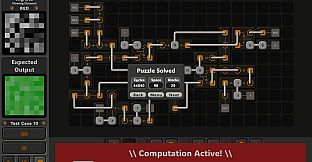
Optimization forms a key part of every session. Solutions improve across three distinct metrics that track different aspects of performance and resource use. Players experiment with alternative connections and block arrangements to lower scores in these areas while maintaining correct output. This creates a satisfying loop of trial, measurement, and refinement that keeps sessions engaging even after initial puzzles are cleared.
Game Modes
Puzzle solving forms the foundation, with individual challenges that present target images or effects for players to replicate through their shader networks. Each puzzle encourages exploration of different connection strategies using the available blocks and wires. Progress builds familiarity with how components interact, allowing more ambitious designs later on.
Competitive elements appear through leaderboards where players submit their optimized solutions for comparison. Scores reflect performance across the three metrics, turning personal refinement into a shared challenge. Friends or other players can view and compete against top entries, adding motivation to revisit completed puzzles and push for better results.
Visual and Technical Focus
The game emphasizes clear visual feedback so players immediately see the impact of their shader networks on sample images. This direct connection between design choices and output helps build understanding of image processing concepts through hands-on creation. The simulation style keeps the focus on the algorithmic construction rather than external distractions.
PC controls support precise placement and adjustment of blocks and wires, making it straightforward to test small changes and observe results. The interface highlights active connections and data flow, aiding quick diagnosis of issues in a network. This setup suits both short sessions of experimentation and longer periods spent perfecting a single solution.
Who the Game Appeals To
Tiny Shaders suits anyone drawn to puzzle games that involve logical construction and measurable improvement. Those with an interest in programming concepts or visual effects will find the block-based approach accessible yet deep. The emphasis on optimization and scoring appeals to players who enjoy refining systems and comparing results with others.
Single-player progression combines with the leaderboard system to support both solitary problem solving and light competition. The absence of time pressure in core puzzles allows thoughtful exploration, while the metrics provide clear targets for improvement.
Is It Worth Playing?
Tiny Shaders delivers a focused experience for players who enjoy building and optimizing systems through connected components. The gameplay loop of connecting blocks, testing outputs, and refining across three metrics provides consistent challenge and visible progress. Leaderboards extend the appeal by offering a way to measure solutions against others and revisit puzzles for better performance.
The game works well for those seeking a simulation-style puzzle title centered on algorithmic thinking rather than action or narrative. Its PC availability and straightforward mechanics make it easy to pick up and return to over multiple sessions. Players who value efficiency challenges and creative problem solving within defined rules will likely find the experience rewarding and replayable through the competitive scoring features.