




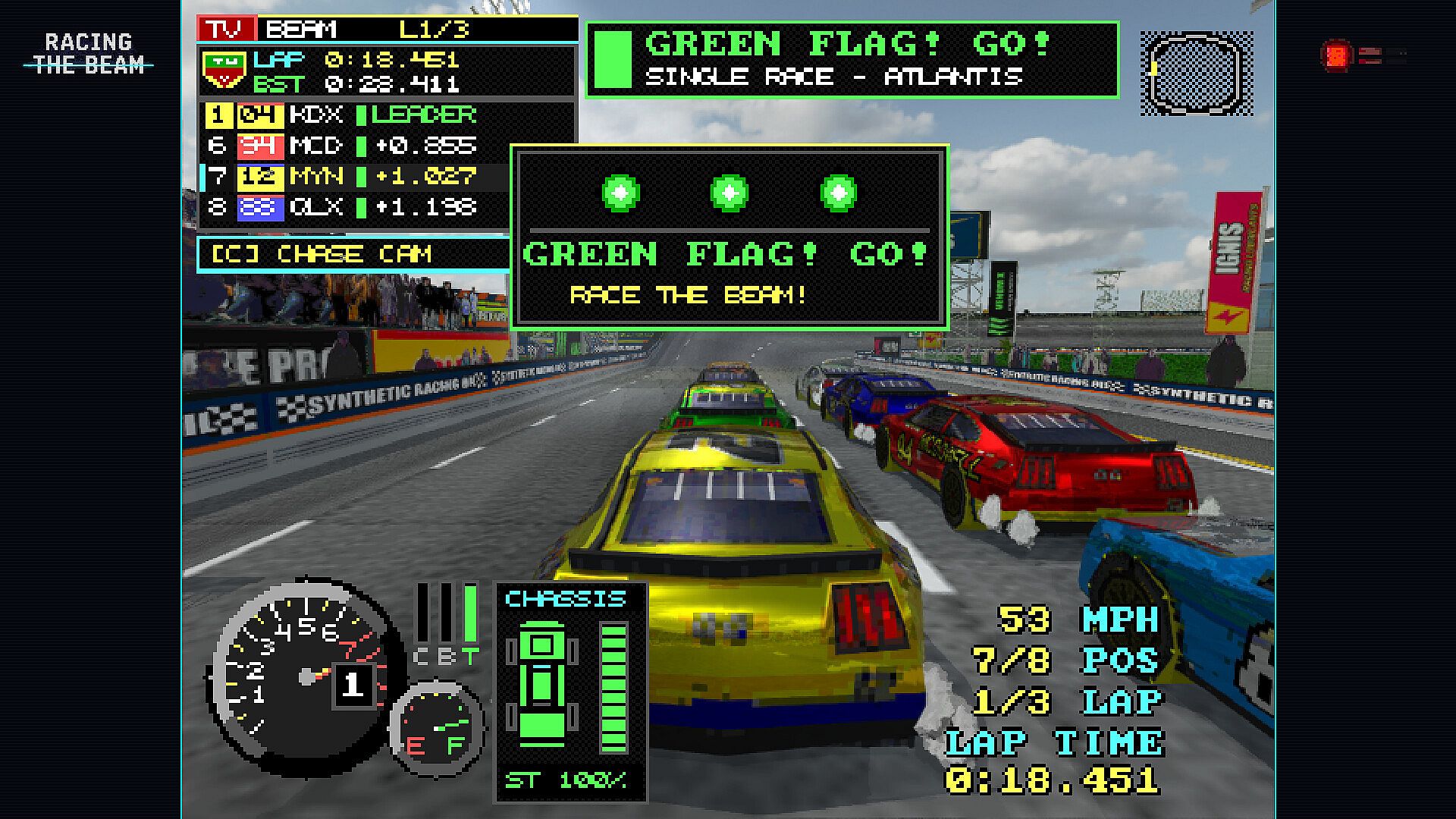
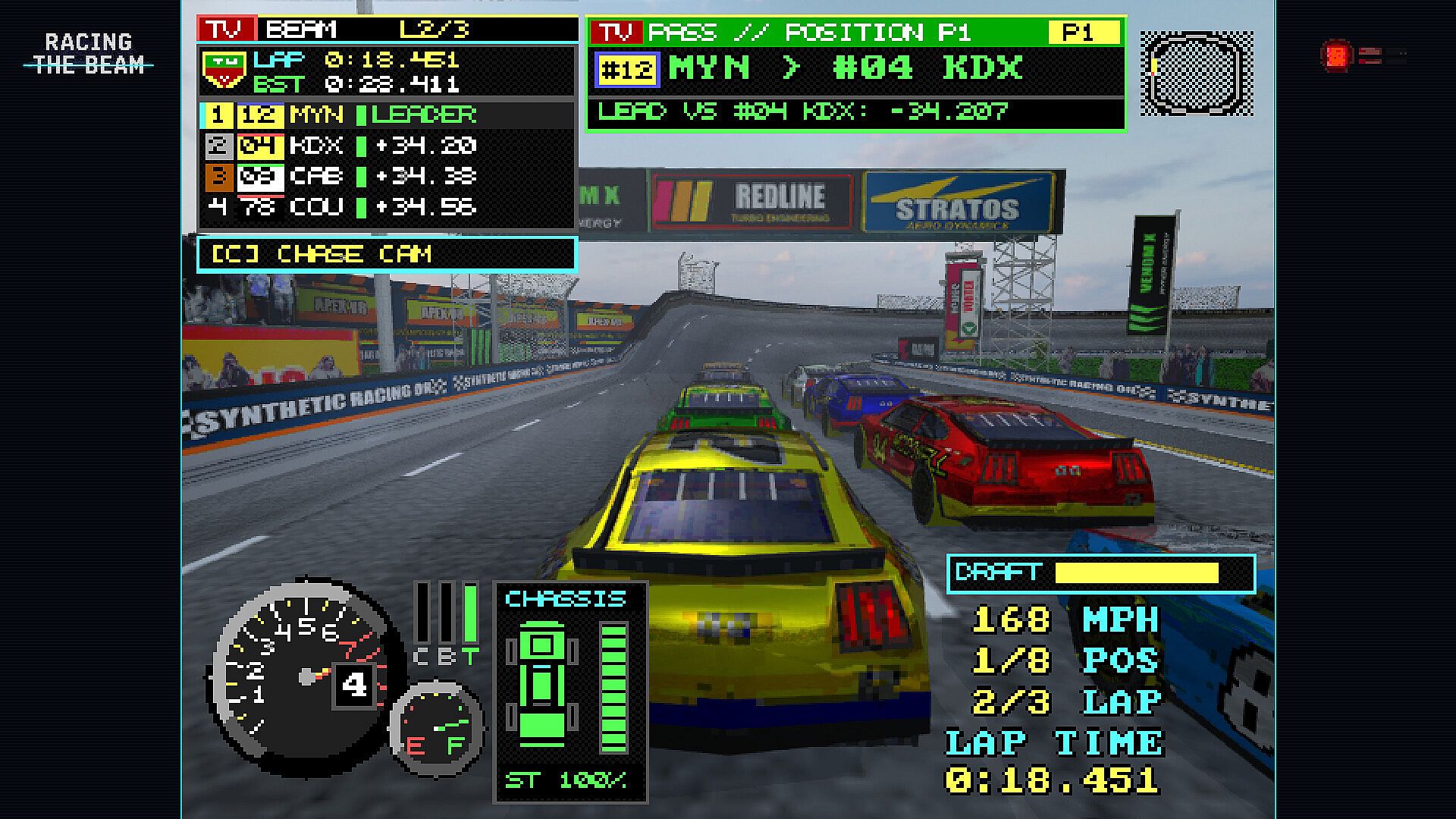
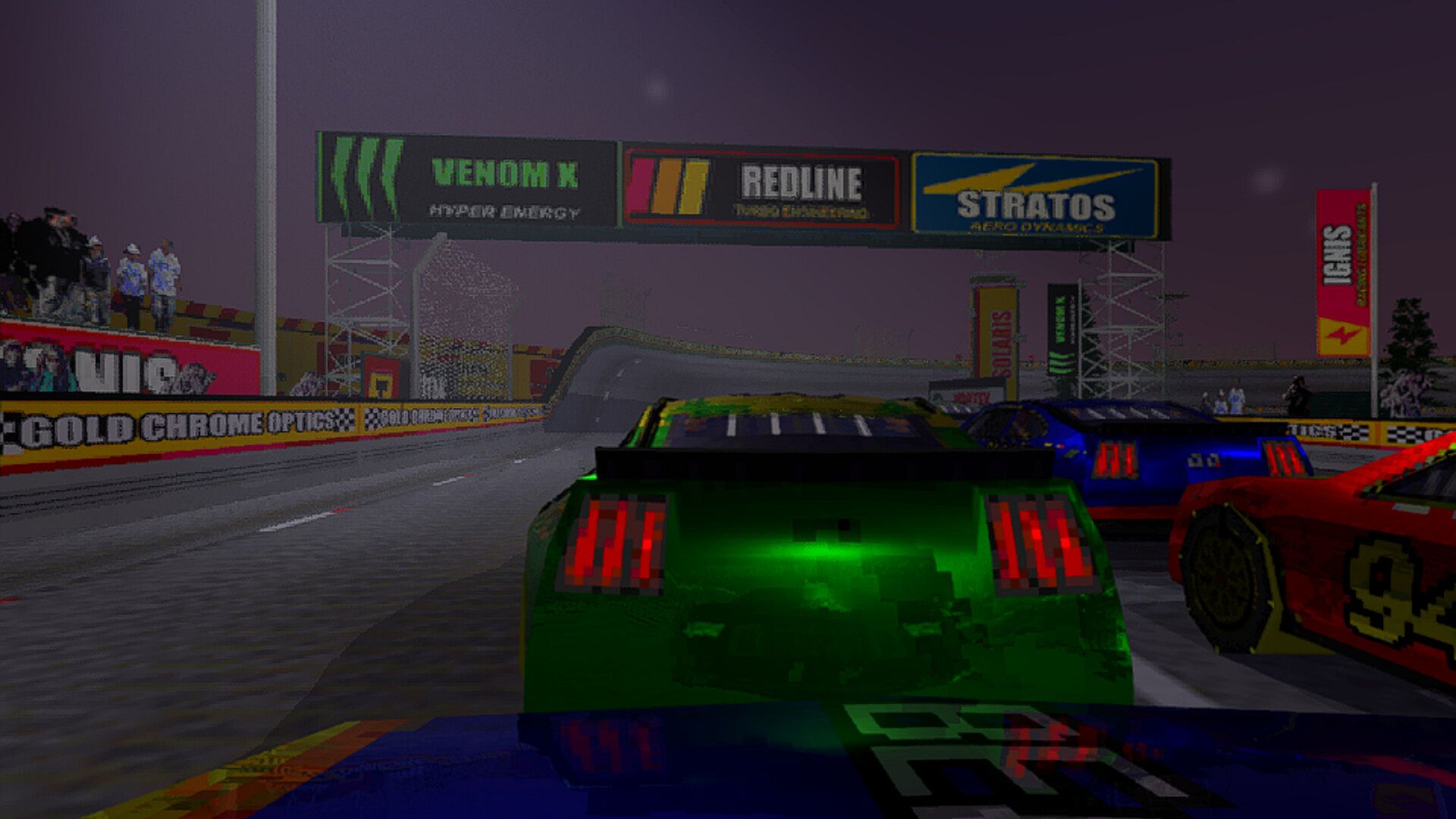
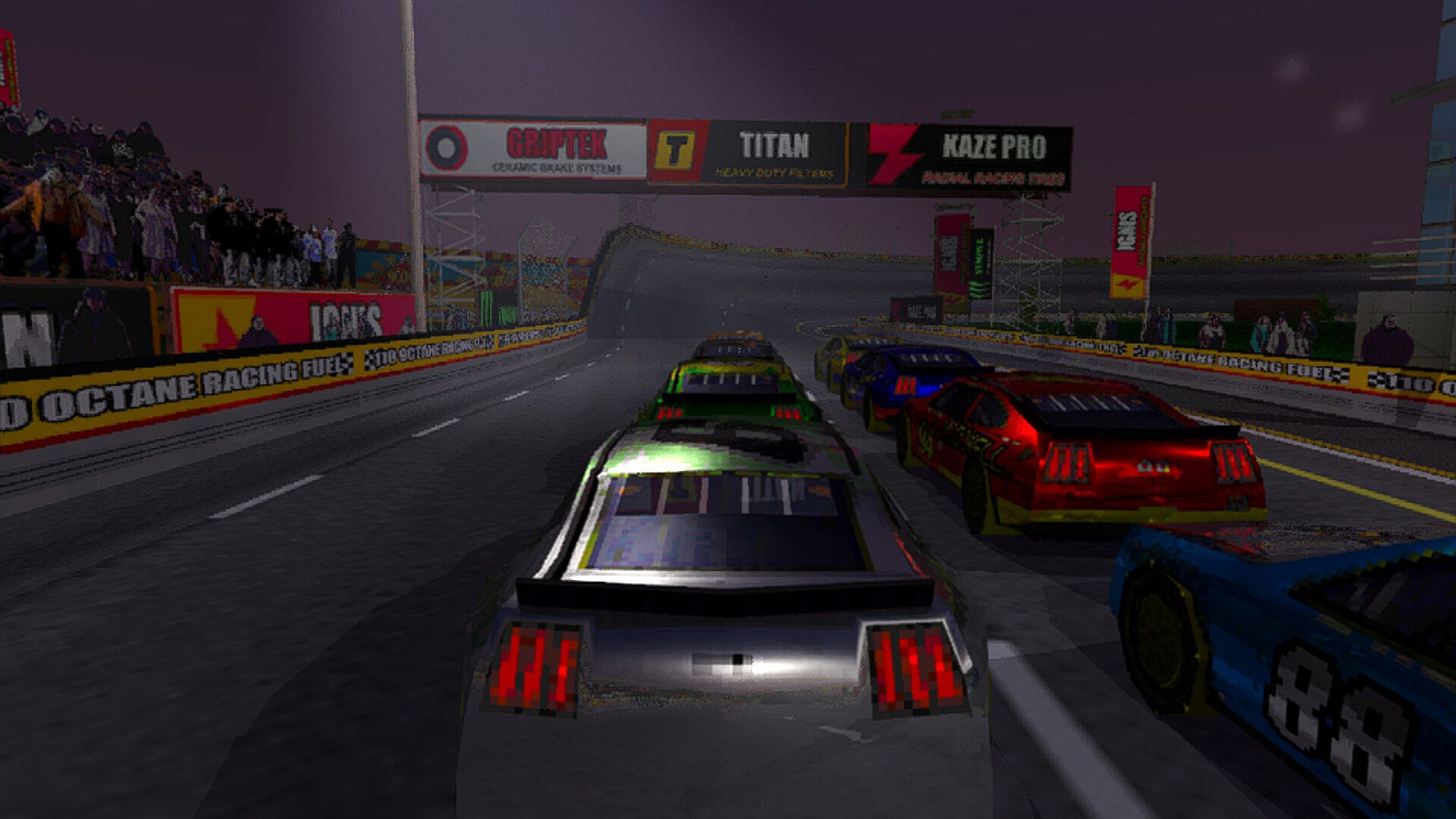
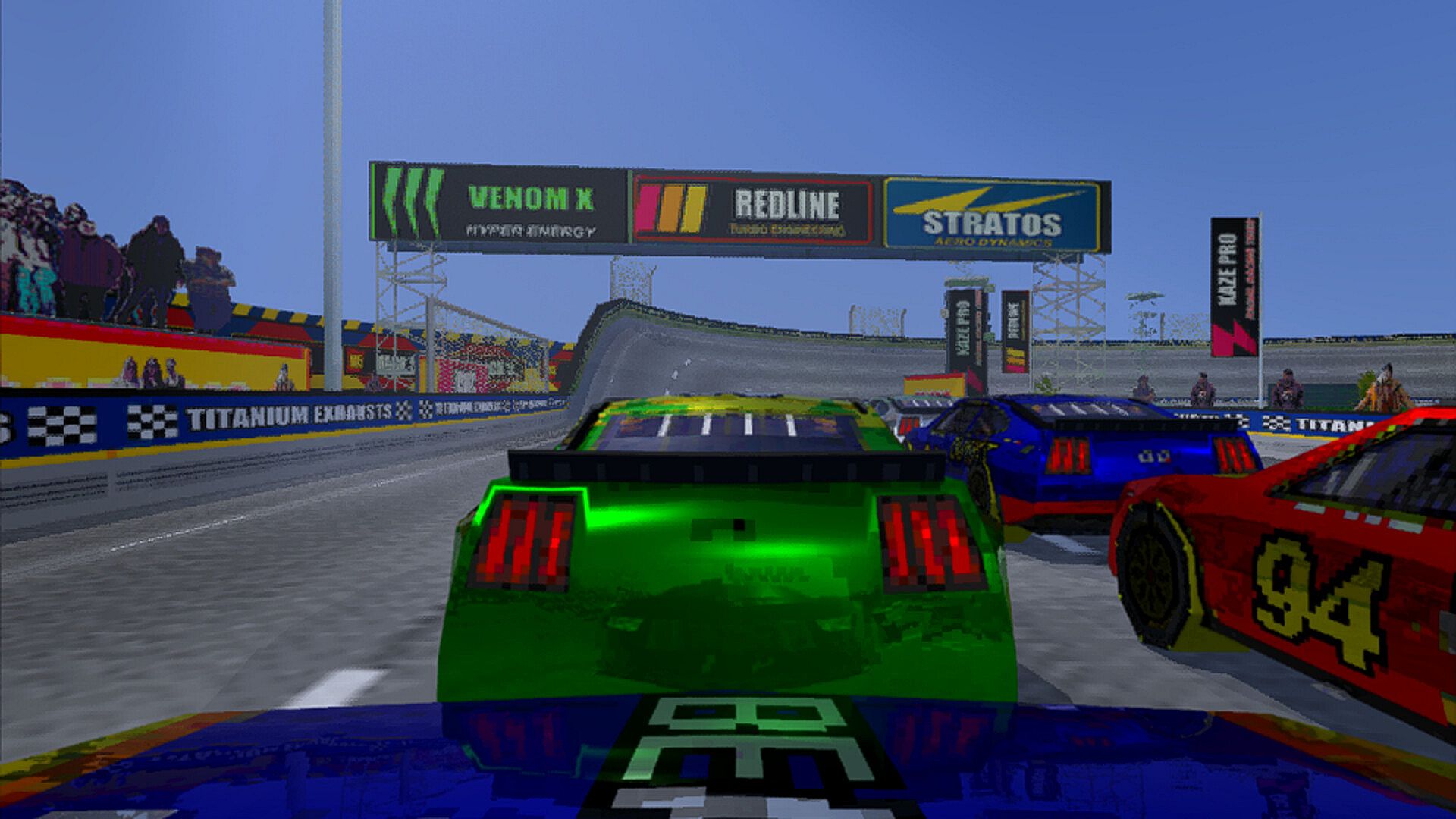
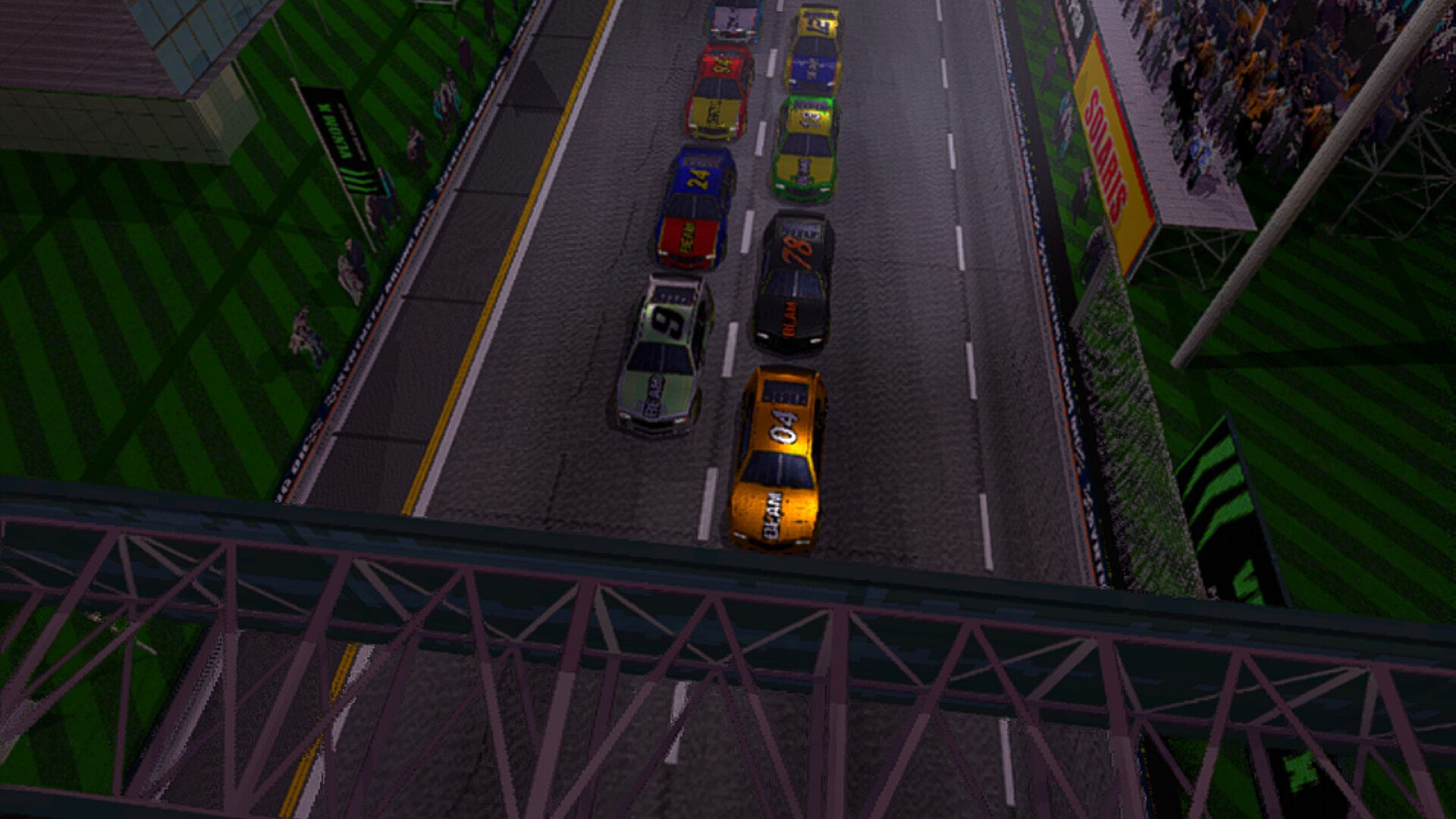
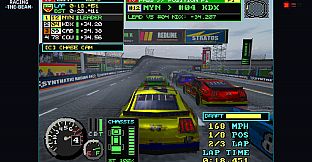
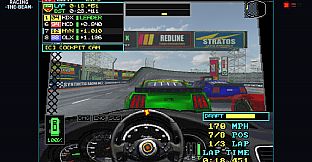
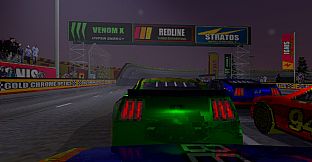
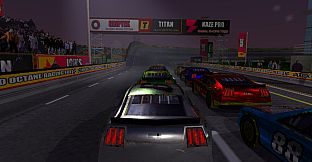
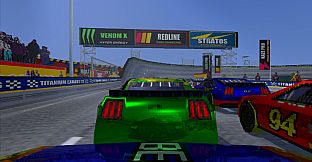
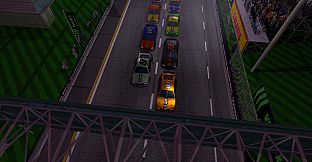
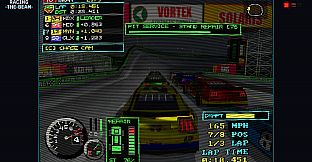
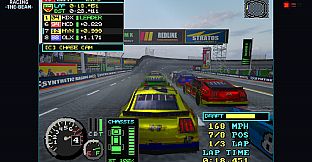
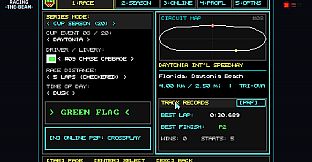
Racing The Beam is an indie simulation racing game focused on stock car competition across oval speedways. Players take control of vehicles on a fixed-point suspension model that delivers consistent and responsive handling while AI opponents maintain an aggressive pack dynamic. The title emphasizes pure driving fundamentals on twenty distinct tracks, with options to adjust race distance and camera views before each start.
Gameplay
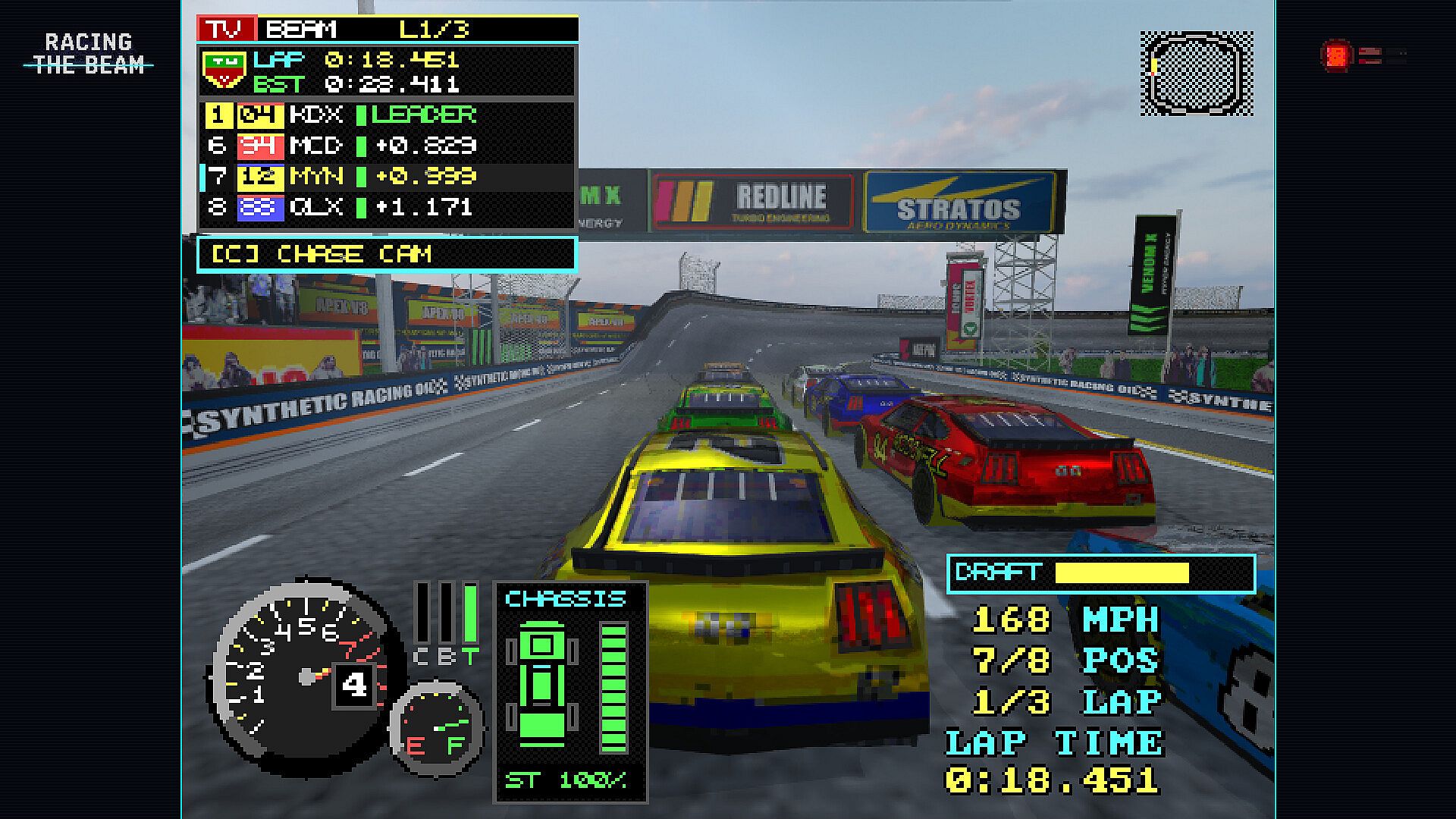
The core loop centers on stock car racing where precise throttle and steering inputs determine position amid close-quarters competition. Handling remains stable across laps, allowing drivers to focus on line choice and traffic management rather than unpredictable physics shifts. Recent refinements introduced more pronounced drift behavior during corner exits, added environmental details like stadium foliage, and implemented complete day-to-night transitions that alter visibility and track conditions.
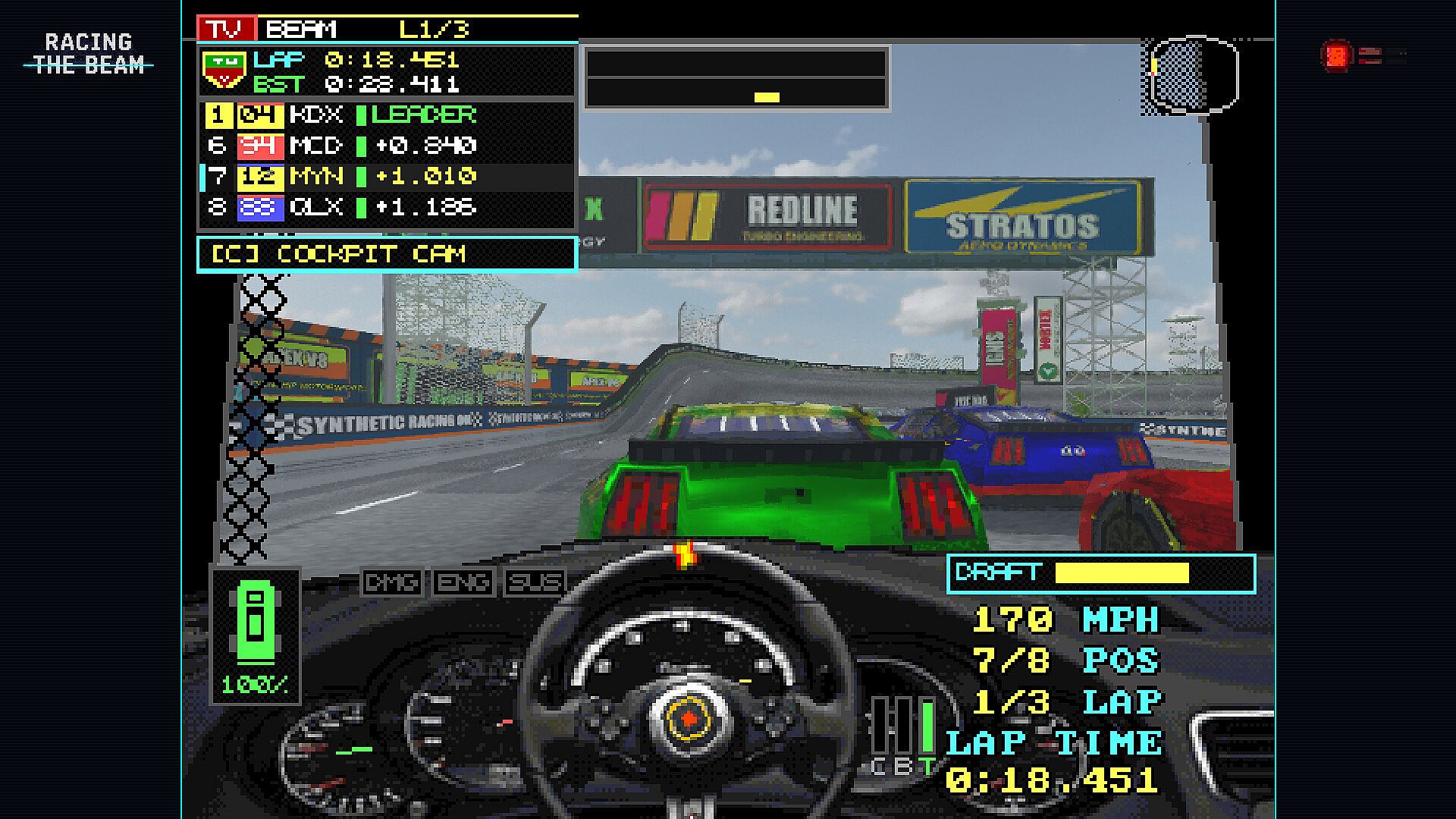
Controls accommodate keyboard, gamepad, or racing wheel setups, with seamless camera switching between chase, hood, and cockpit perspectives during a race. The simulation prioritizes consistency, making it suitable for repeated practice sessions aimed at shaving seconds off lap times or maintaining position in a crowded field.
Game Modes
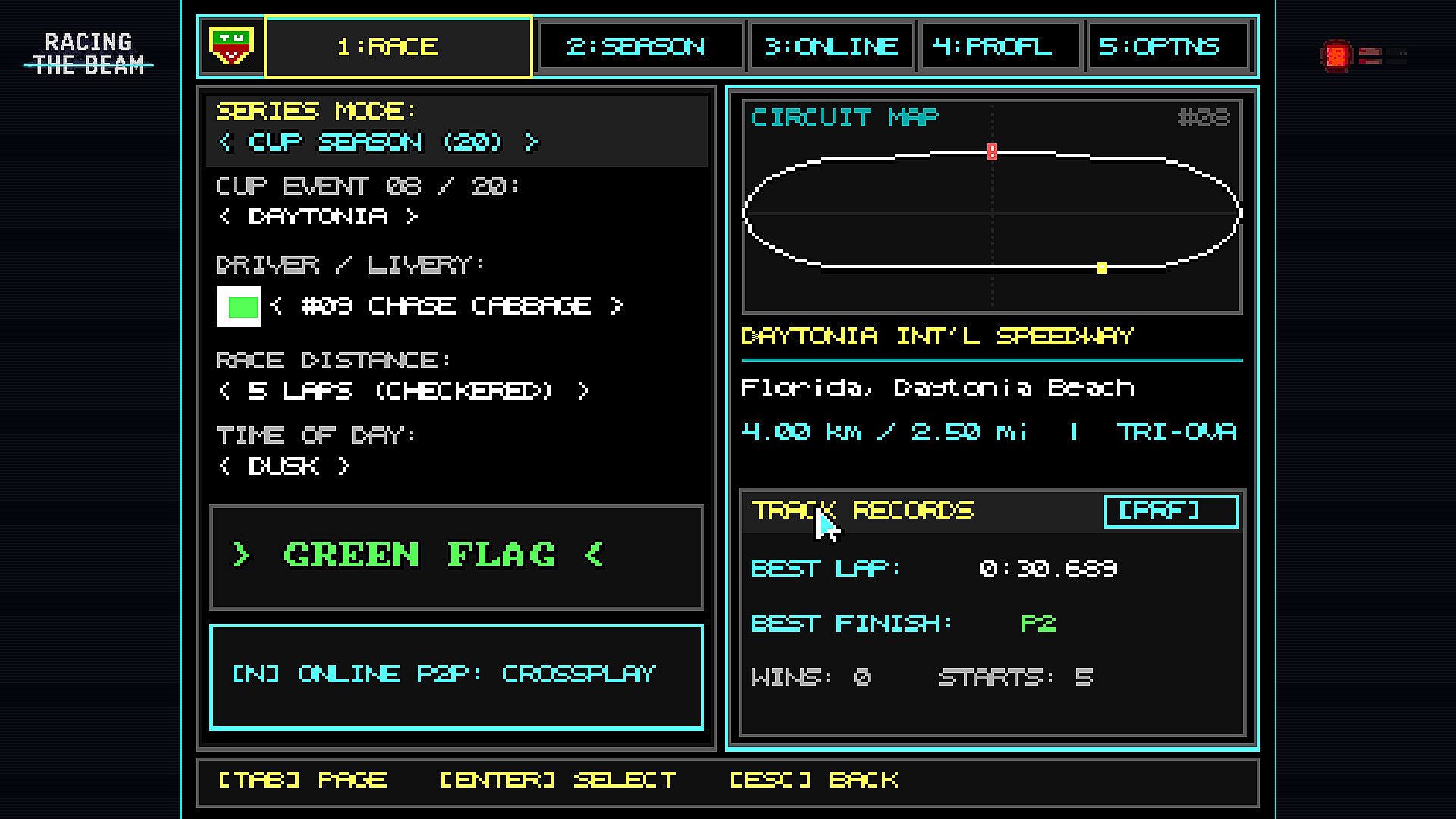
Single Race lets participants select any of the twenty tracks, set a custom distance, and compete against the AI pack under chosen conditions. Time Trial strips away traffic for focused pace work, recording best laps on each circuit for direct comparison.
Cup Season structures a full championship with accumulating points and final standings that persist across sessions. Survival mode challenges drivers to remain competitive as long as possible before the pack eliminates them through contact or position loss. Online Multiplayer supports invite-only sessions hosted peer-to-peer, accommodating friends through direct invites or shared codes without public matchmaking.
Graphics and Presentation
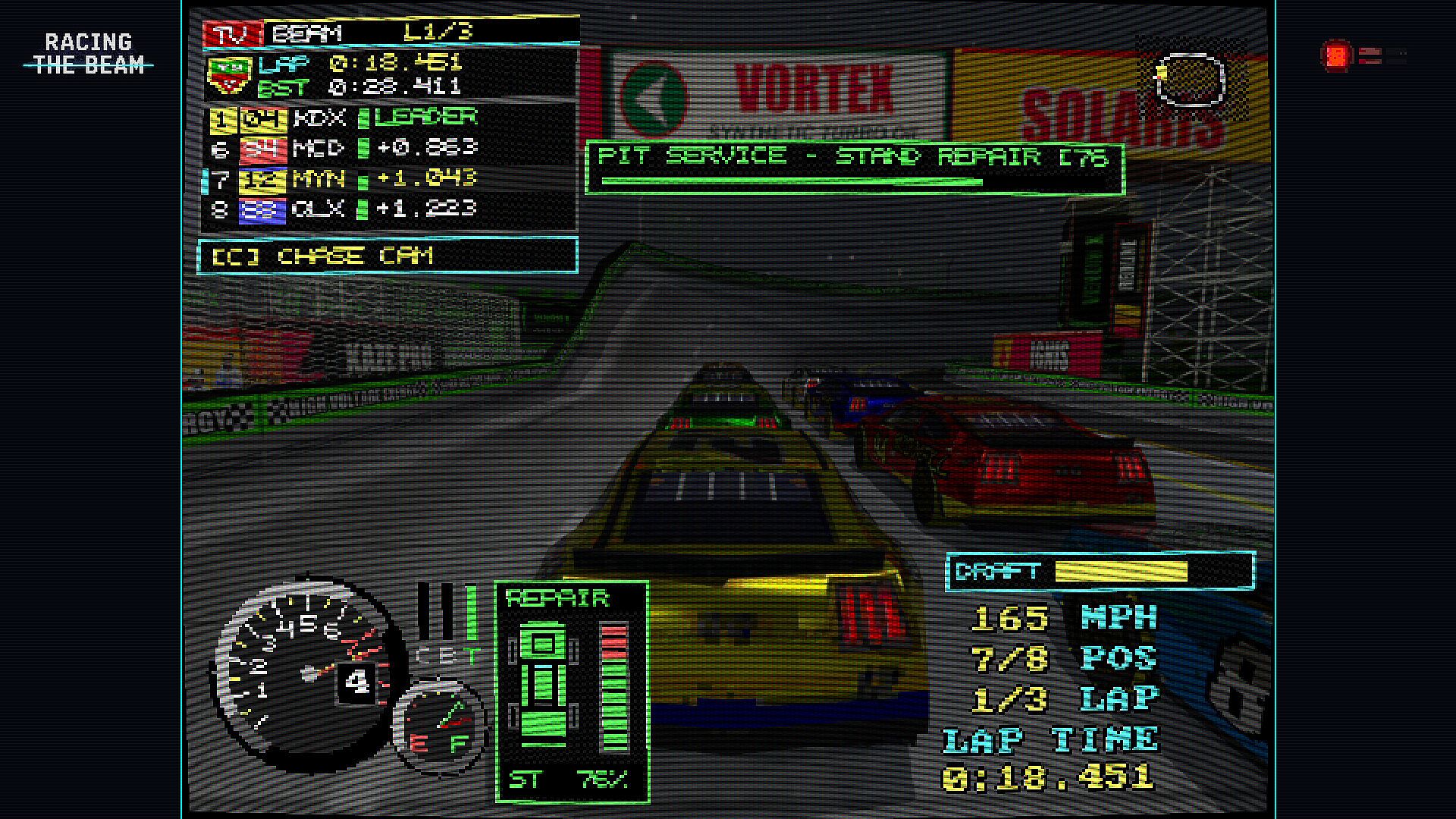
The CyberVGA engine powers the visuals, defaulting to a multi-core CPU raytracer with global illumination rendered at a base 320 by 240 resolution in Mode X style. Users can disable the raytracer for higher resolutions, activate FSR 2.0 upscaling, or revert to a classic 8-bit aesthetic at any time. Optional post-processing includes CRT curvature and scanline filters to enhance the retro presentation.
Every race generates deterministic replay files that support playback from any of the three camera angles. Post-race podium sequences feature motion-captured driver animations rendered at a deliberately reduced frame rate to align with the overall visual direction.
Multiplayer and Accessibility
Multiplayer relies exclusively on peer-to-peer connections through established services, requiring hosts to distribute lobby codes or direct invites. An in-game link to a community Discord provides an avenue for locating opponents when needed. The interface supports full localization across eleven languages, with the selected option saved to individual profiles.
Profile management tracks wins, total races, laps completed, personal best times, and per-track records. Six configurable profiles allow separate progress tracking, while standings from season play carry forward between launches.
Is It Worth Playing?
Racing The Beam appeals most to enthusiasts of simulation-style oval racing who value consistent handling and a focused feature set over expansive open-world elements. Its recent release brings a distinctive blend of modern raytraced options alongside toggleable retro rendering modes, creating a unique visual identity for players interested in technical presentation experiments.
The variety of modes supports both solitary improvement through time trials and structured competition via seasons or survival challenges. Multiplayer remains deliberately intimate through invite systems, suiting groups seeking private races rather than large public lobbies. Those drawn to stock car fundamentals on fixed tracks, combined with replay sharing and persistent records, will find substantial depth in the available systems.











