




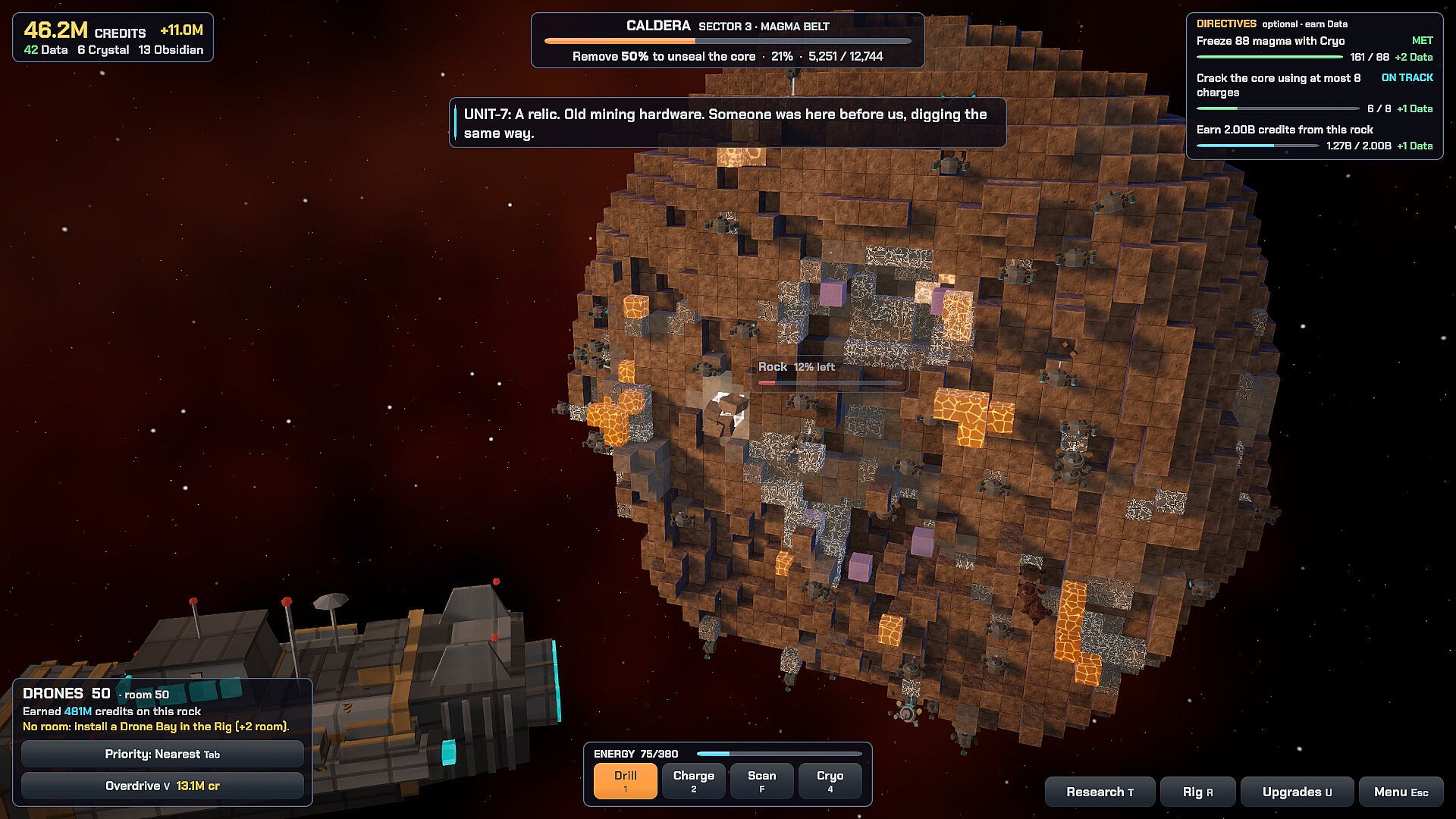
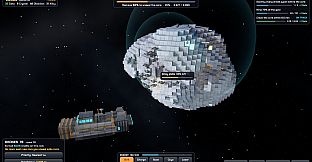
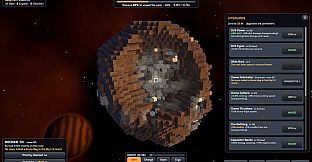
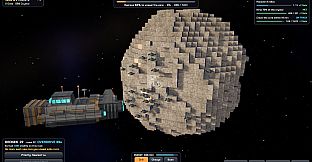
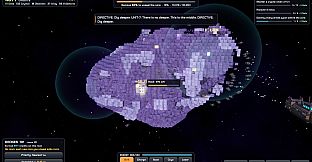
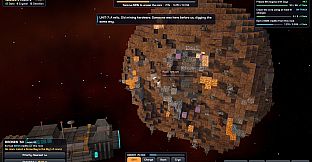
One More Asteroid is a casual simulation game built around voxel asteroid mining on PC. Players control a mining ship that breaks apart floating rocks block by block, earning credits to expand equipment and automate operations while progressing through a sequence of increasingly complex sectors.
Gameplay
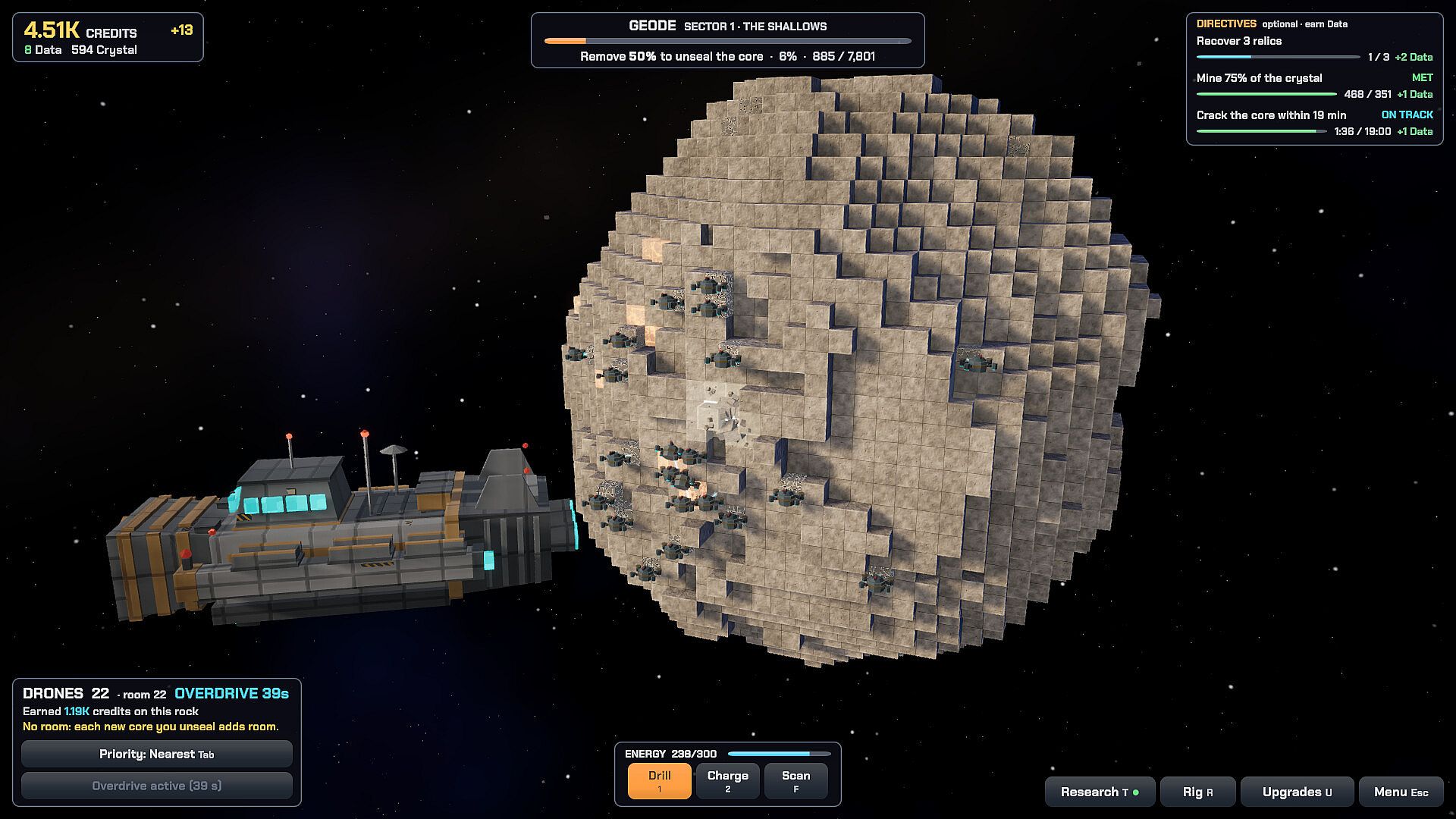
The core loop centers on holding a drill against voxel blocks to extract them one at a time. Common rock yields standard credits, while ore veins return higher rewards. Upgrades purchased with credits improve efficiency at any point during an asteroid run. Wide Bore expands each strike to remove multiple blocks, and later tools such as Seismic Charges, Cryo Charges, and the Mining Laser handle specialized obstacles like alloy plating or crystal formations.
Progression extends beyond the drill. Credits fund research into modules including the Deep Scanner and new drone commands. A 4x4 Rig on the ship holds placement-based modules like Drone Bays, Refineries, and Amplifiers that enhance adjacent equipment. Module positioning directly influences output because neighboring boosts stack.
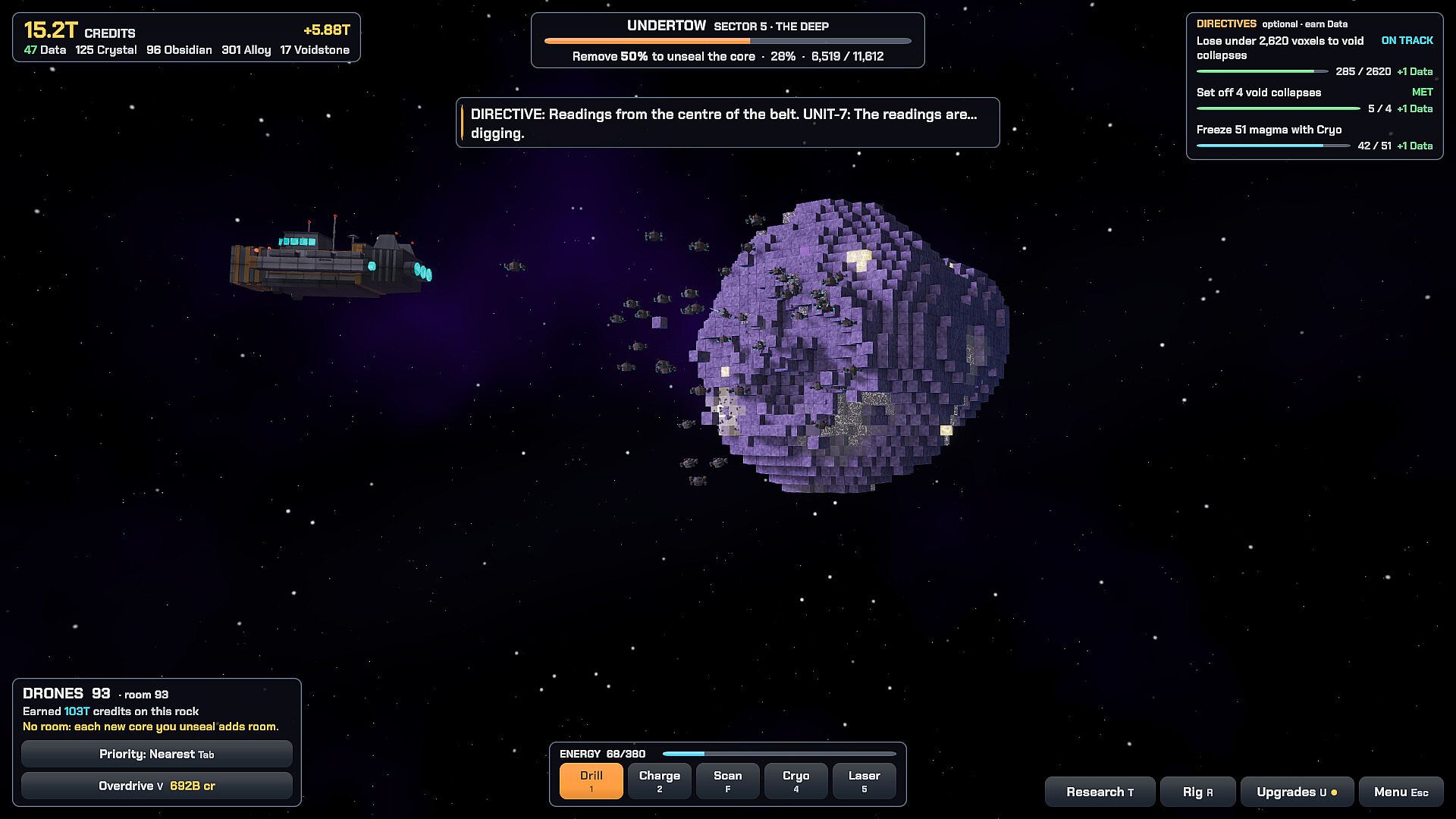
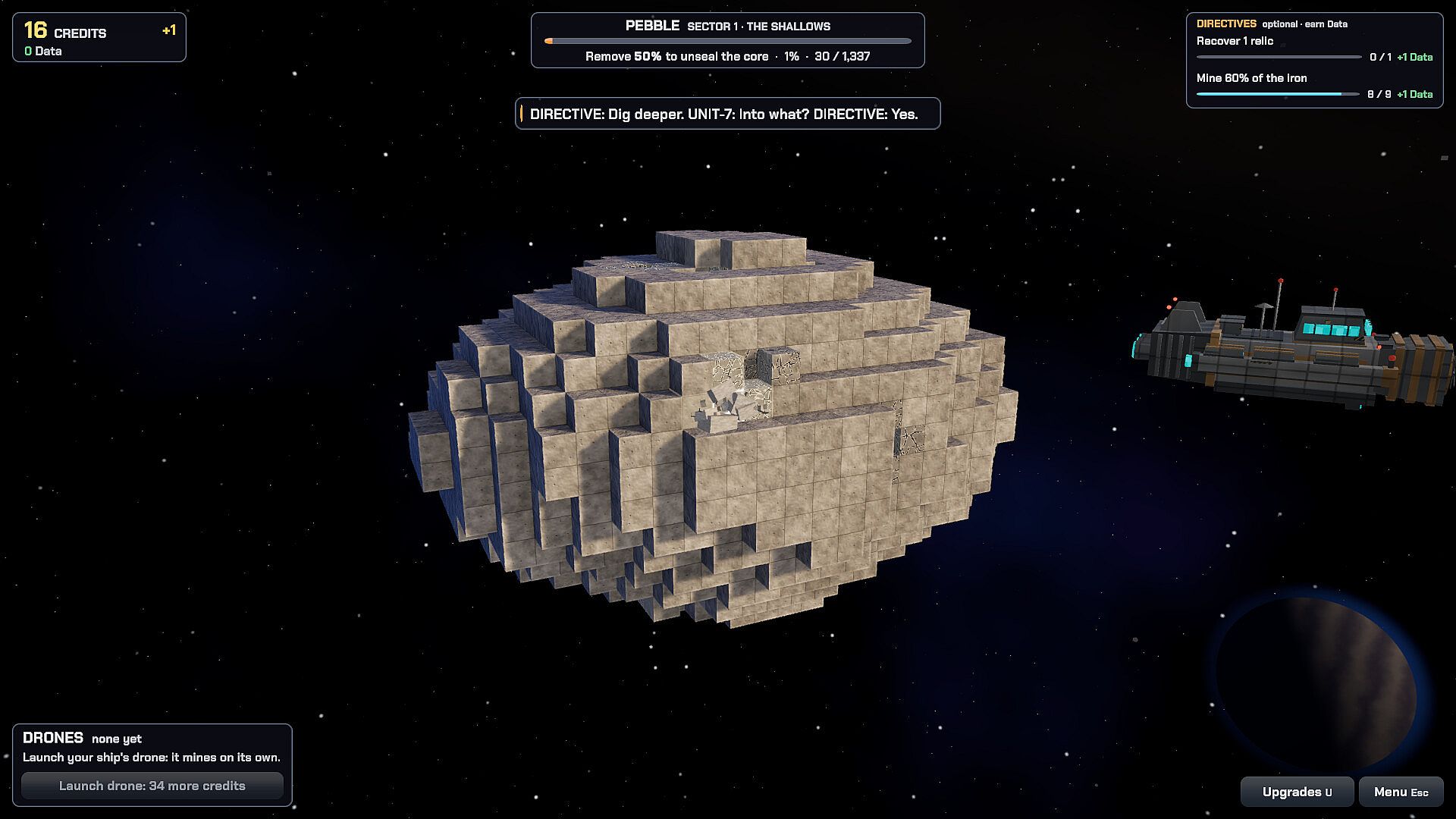
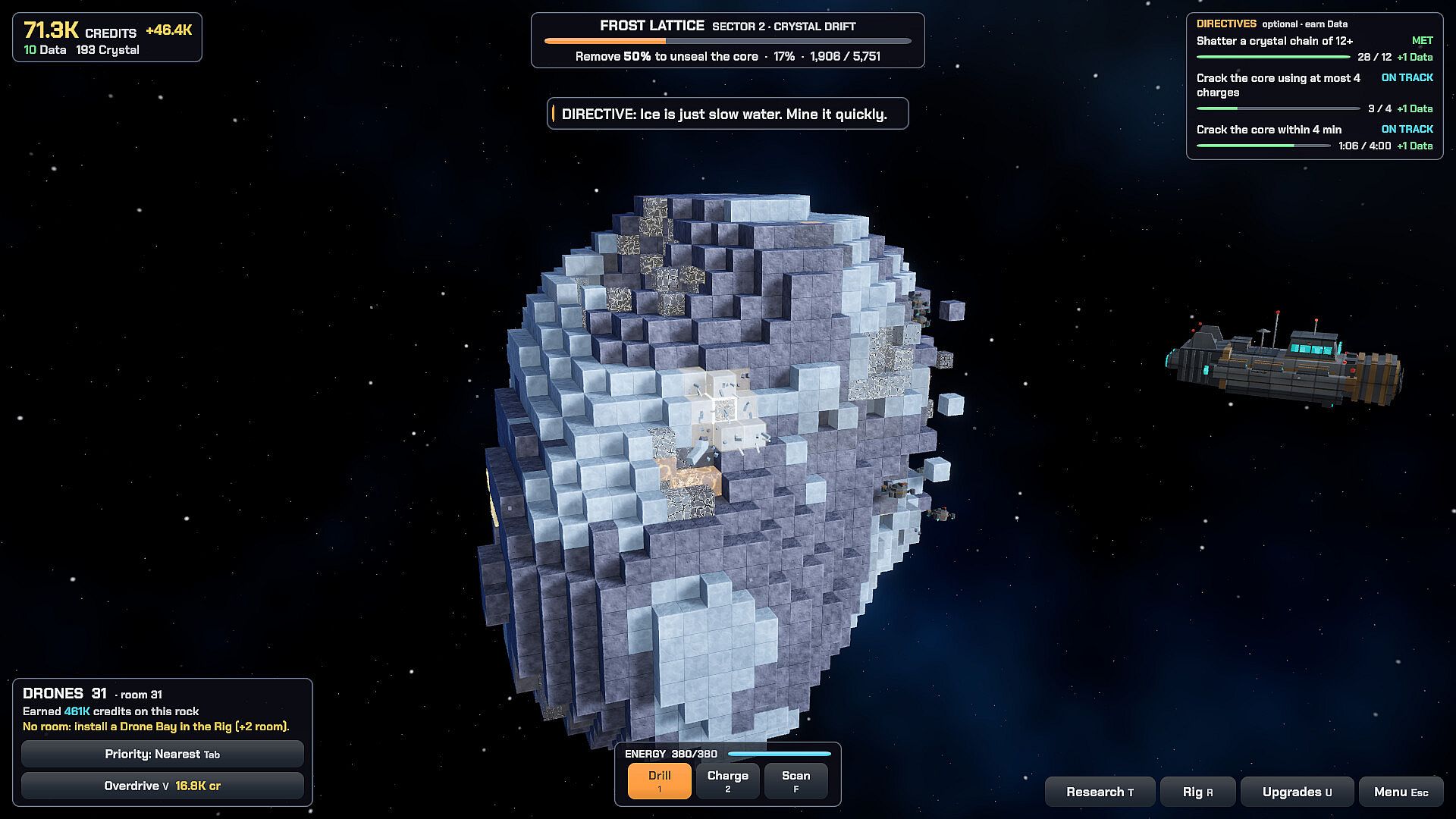
Drones begin as a single unit launched after early credit gains. Additional Drone Bays and targeted upgrades scale the fleet. Players assign priorities such as nearest blocks, ore veins, the core, or the cursor position. Drones mine faster near the player's active strikes, turning manual aiming into indirect control over the swarm. The fleet continues working even when the game runs minimized.
Game Modes
The game operates entirely in single-player. No separate competitive or cooperative modes exist. All activity occurs within the sequential asteroid progression system that spans 20 asteroids across five sectors. The first sector, The Shallows, serves as the baseline. Each subsequent sector introduces one new environmental rule that alters mining strategy.
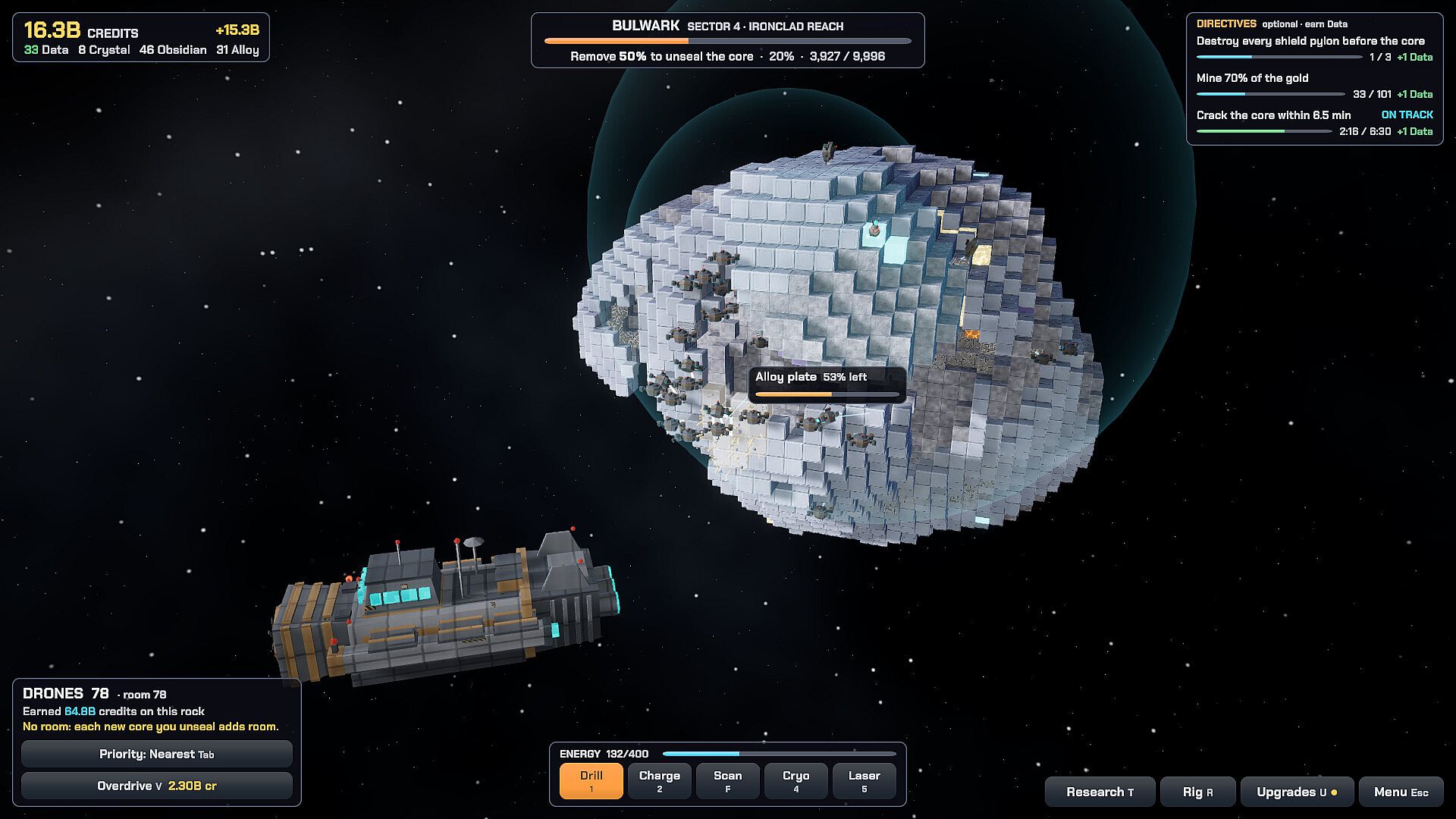
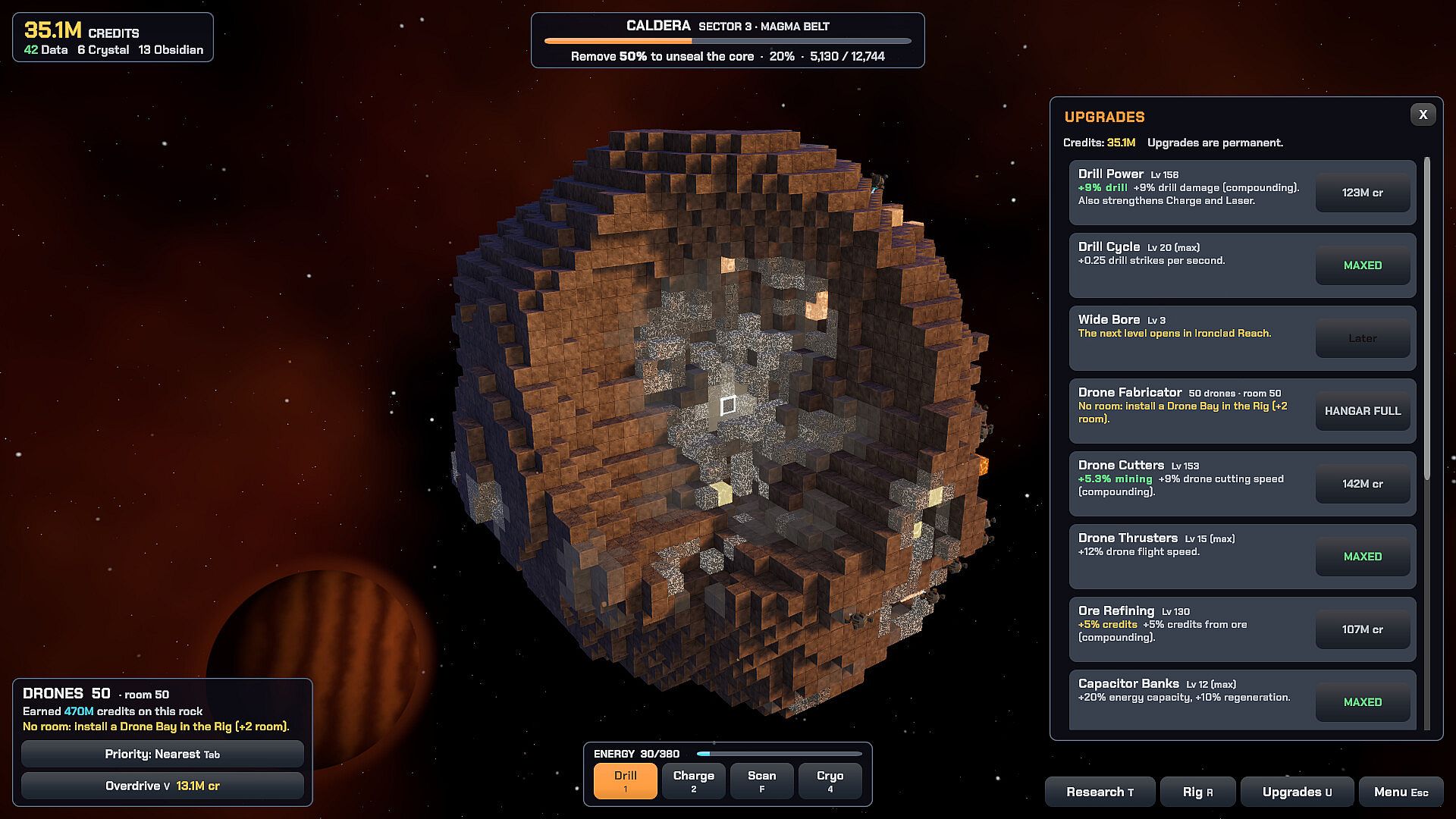
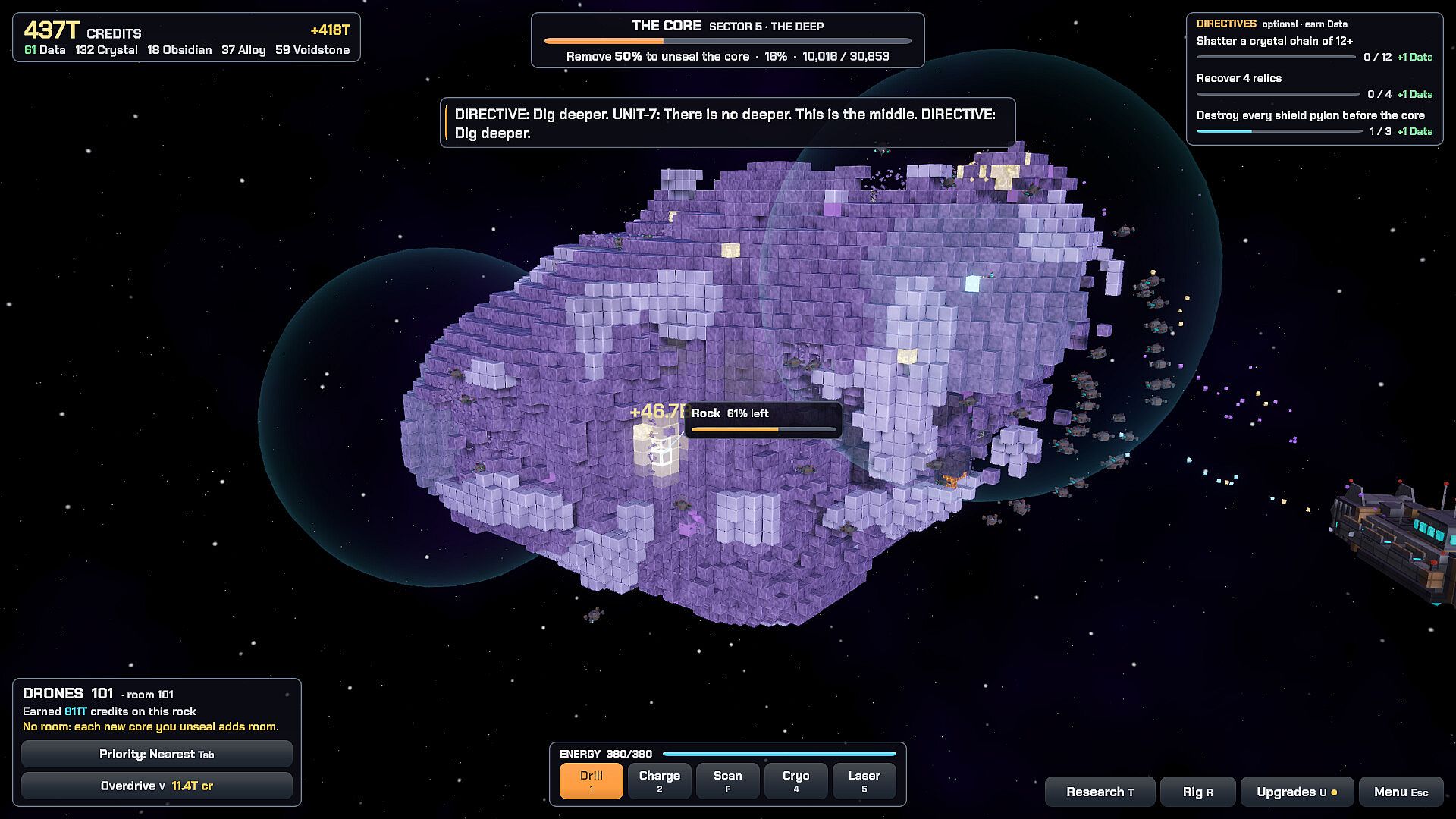
Crystal Drift features chain-reaction crystal clusters. Magma Belt exposes magma that overheats drones until countered with Cryo tools. Ironclad Reach adds alloy plating and shield pylons that protect surrounding rock. The Deep contains void pockets that collapse on exposure and remove nearby ore. These rules layer onto the same drilling, upgrading, and drone systems without changing the fundamental single-player structure.
Progression and Story
Each asteroid contains a sealed core that opens only after sufficient outer material is removed. Cracking the core triggers full collapse into salvage, unlocking the next rock. Data from completed cores, relics, and optional directives unlocks further research options. A narrative unfolds through short log entries that accompany the mining sessions and reach a defined conclusion after the final sector.
Background automation supports longer sessions. Once drones and refineries are active, the ship processes material while the player steps away, allowing steady credit accumulation without constant input. This idle element integrates directly with the upgrade and module systems rather than functioning as a separate mode.
Is It Worth Playing?
One More Asteroid suits players who enjoy methodical, incremental resource loops in a single-player casual simulation setting. The voxel drilling provides immediate tactile feedback, while drone fleets and module placement add layers of optimization. Sector-specific rules keep the 20-asteroid campaign varied without introducing unrelated mechanics.
Because the title remains unreleased, no aggregated player data exists yet. Those drawn to steady progression, background automation, and short-session accessibility will find the described systems align with typical strengths of the genre. The focused scope and clear ending make it a self-contained experience rather than an endless grind.











