





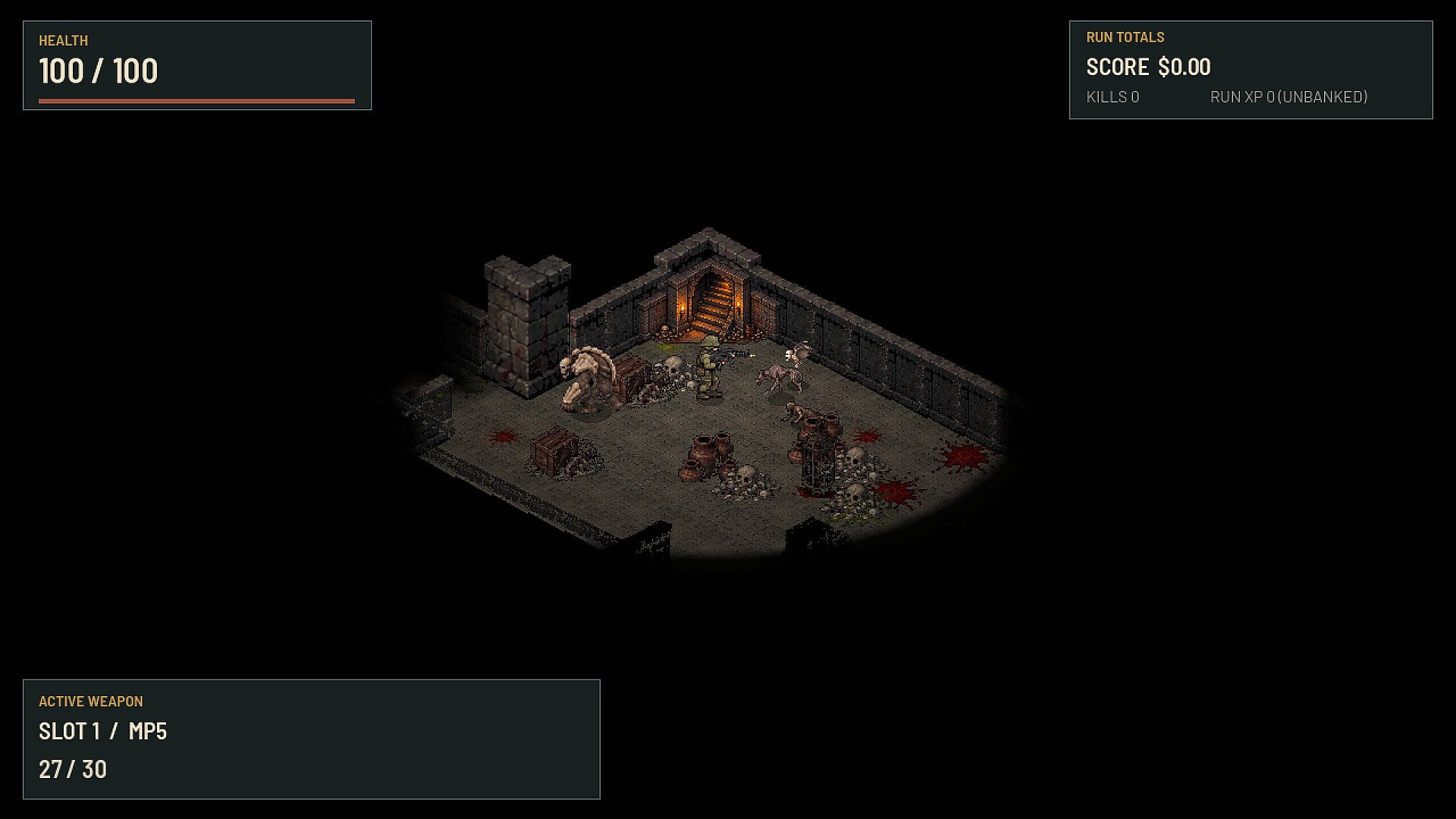
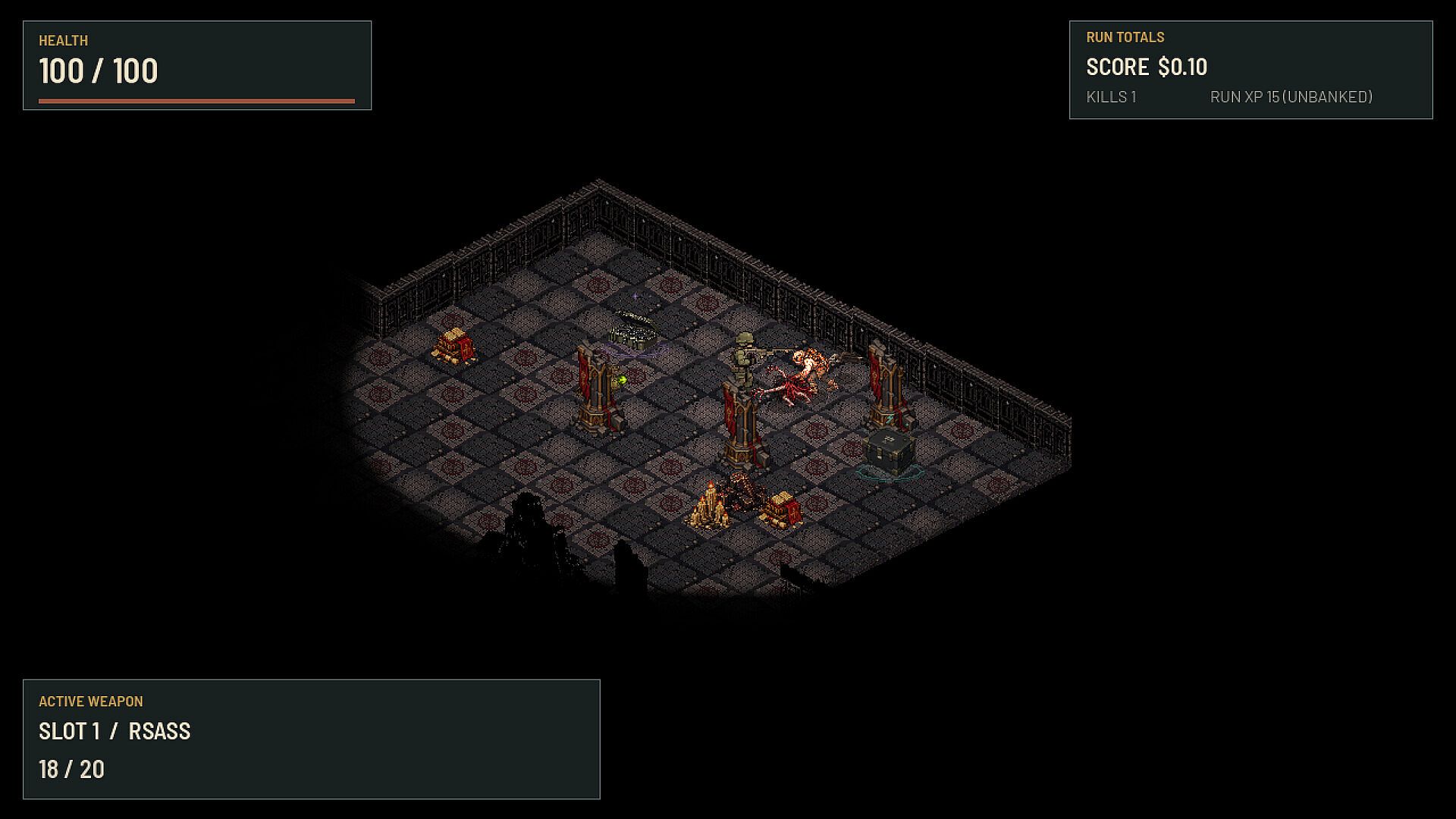
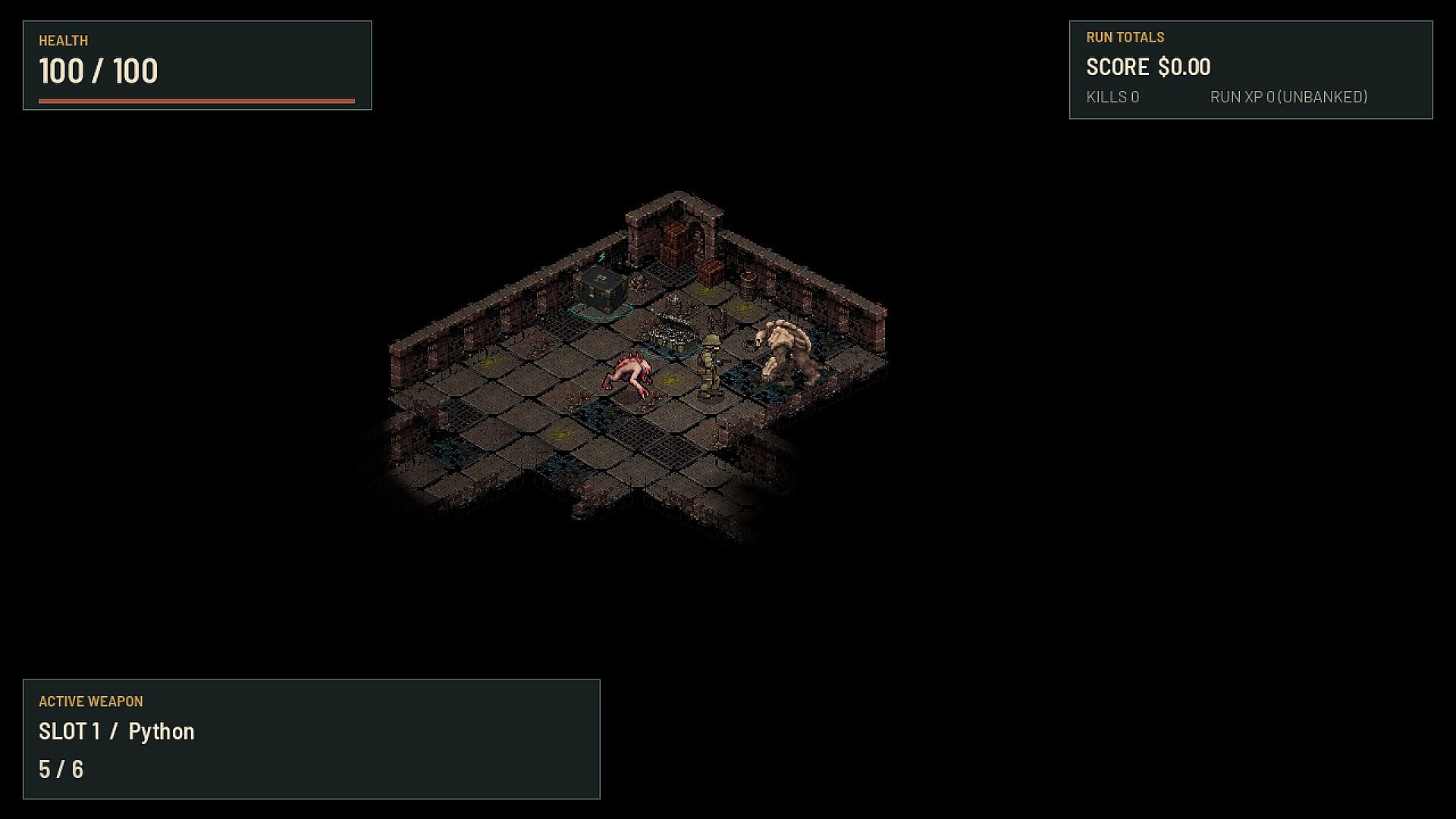
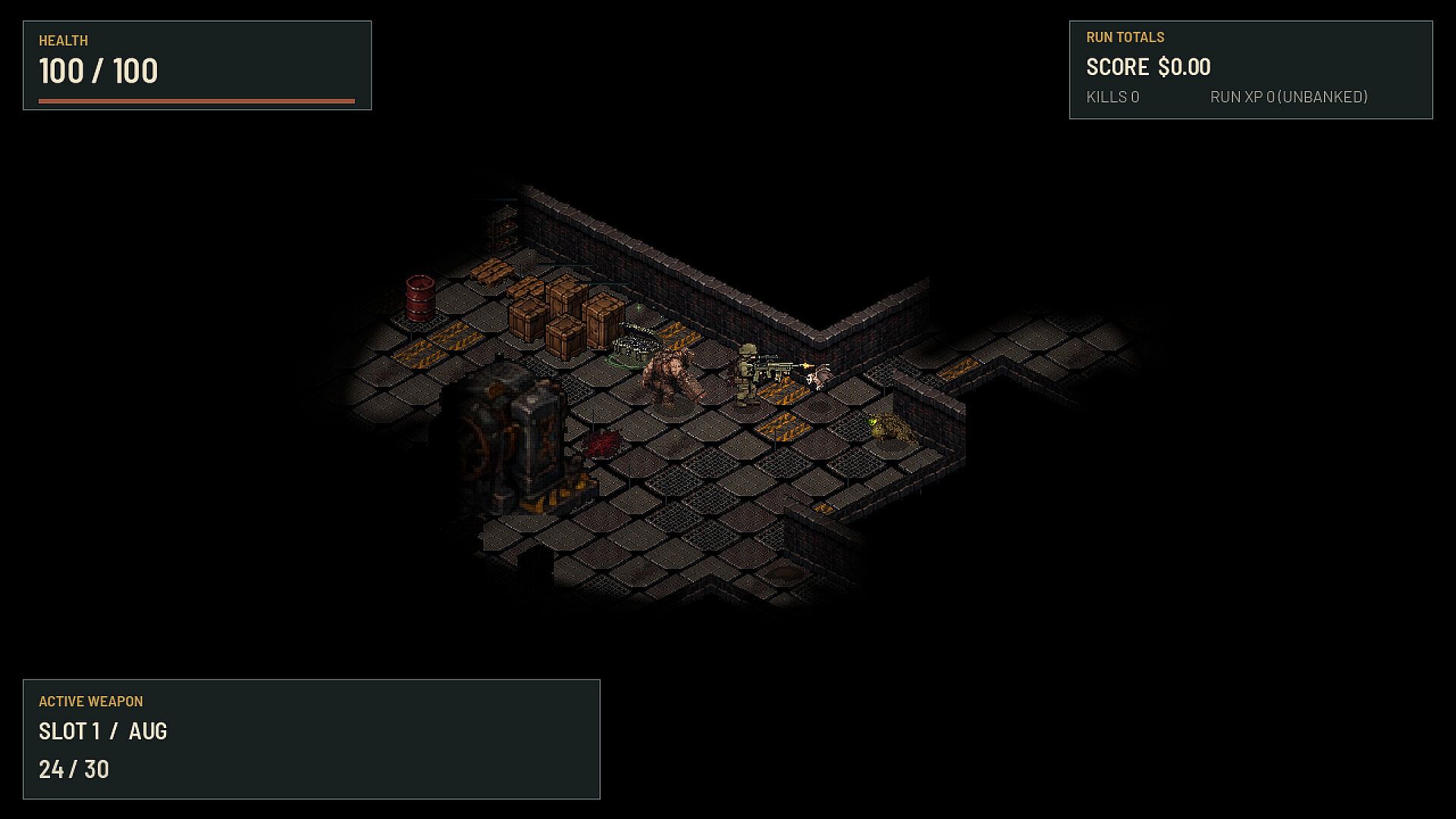
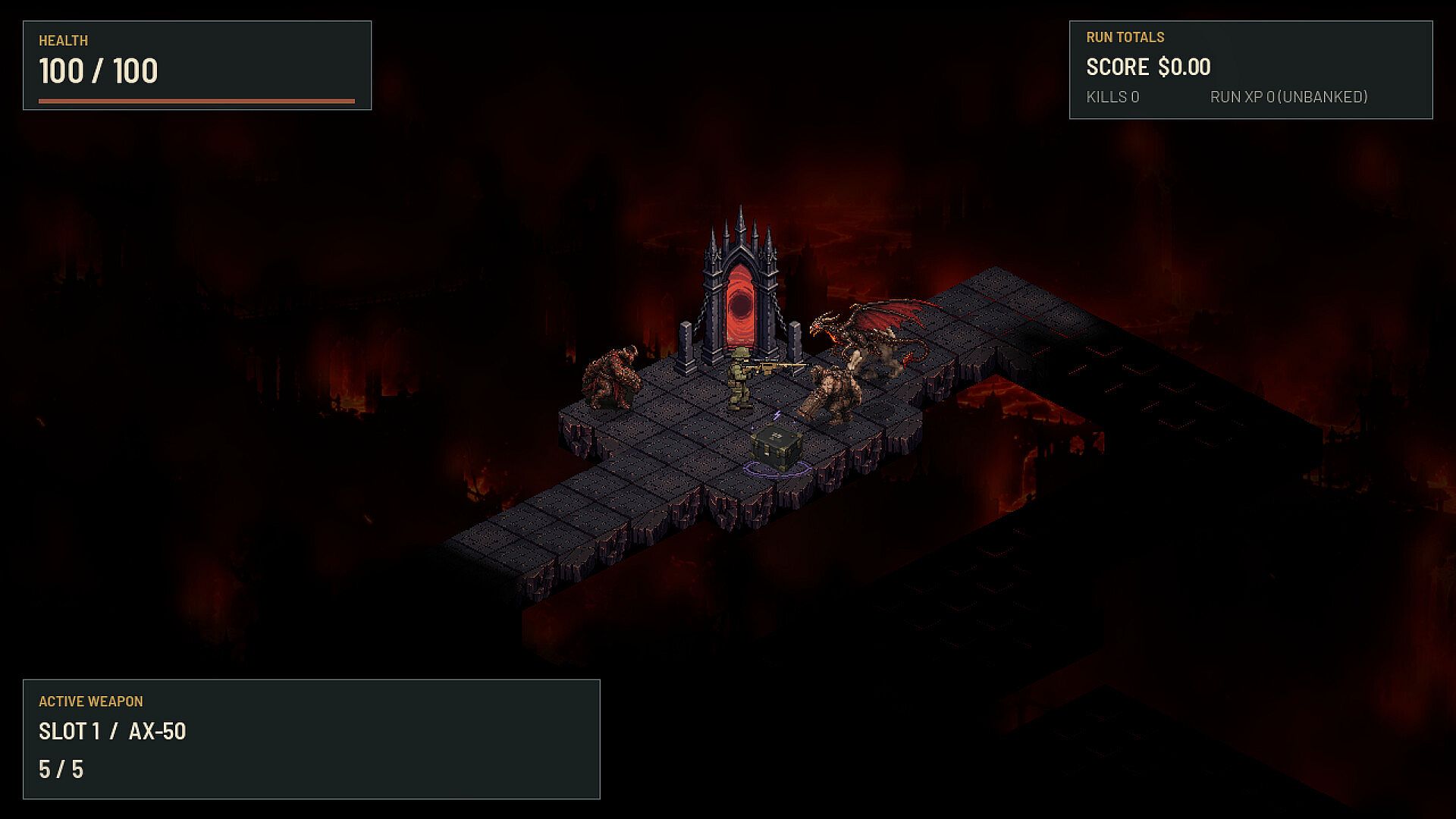
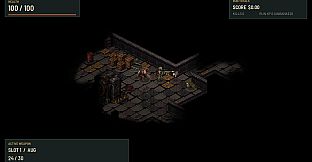
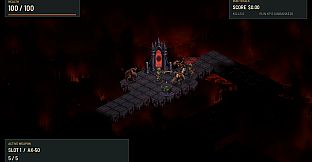
In for a Penny, In for a Pound is an isometric pixel-art action roguelite built around firearm combat and high-stakes dungeon runs on PC. Every floor presents fresh risks in procedurally generated layouts where limited visibility keeps threats hidden until they close in. The core loop centers on careful resource management, as each bullet matters and survival hinges on adapting to what each attempt reveals.
Gameplay
Players navigate dark, shifting environments while engaging enemies with a selection of firearms. Combat rewards precise shooting and positioning because ammunition remains limited throughout each attempt. Exploration uncovers temporary upgrade cards that alter weapons, add abilities, or change how builds function for the remainder of the run. These cards encourage experimentation with different combinations rather than relying on a single reliable setup.
Darkness plays a central role in tension. Visibility stays restricted, forcing constant awareness of surroundings and quick reactions when dangers appear. Permanent progression systems let players carry improvements forward between deaths, gradually strengthening future attempts without removing the roguelite challenge of starting each run from a baseline state.
Game Modes
The experience revolves around repeated runs through procedurally generated dungeons. Each attempt builds on the last through collected upgrades and permanent advancements, while the layout, enemy placements, and card availability change every time. There are no separate multiplayer or cooperative options described, keeping focus on solo progression and personal build choices.
Key Mechanics
Firearm-focused combat forms the foundation, with players selecting from available weapons and managing shots carefully across hostile floors. Upgrade cards appear as temporary power spikes that can be combined in varied ways to suit different play styles or overcome specific challenges. Procedural generation ensures no two runs feel identical, while the permanent progression layer provides steady goals beyond a single successful descent.
Limited visibility adds another layer of decision-making. Players must weigh the risk of pushing deeper against the need to conserve ammunition and health when threats remain unseen. This combination of elements creates a loop where each floor raises the stakes and rewards thoughtful adaptation.
Is It Worth Playing?
Fans of roguelites that emphasize build variety and resource scarcity will find a strong match in the firearm combat and card-driven upgrades. The isometric pixel-art presentation and darkness mechanics suit players who enjoy atmospheric tension over open exploration. Permanent progression offers meaningful long-term goals without eliminating the risk of each individual run.
Those seeking fast-paced action with clear feedback on upgrades and steady advancement between attempts should consider giving it a try. The structure rewards persistence and experimentation, making it suitable for sessions focused on improving personal performance over time.












