




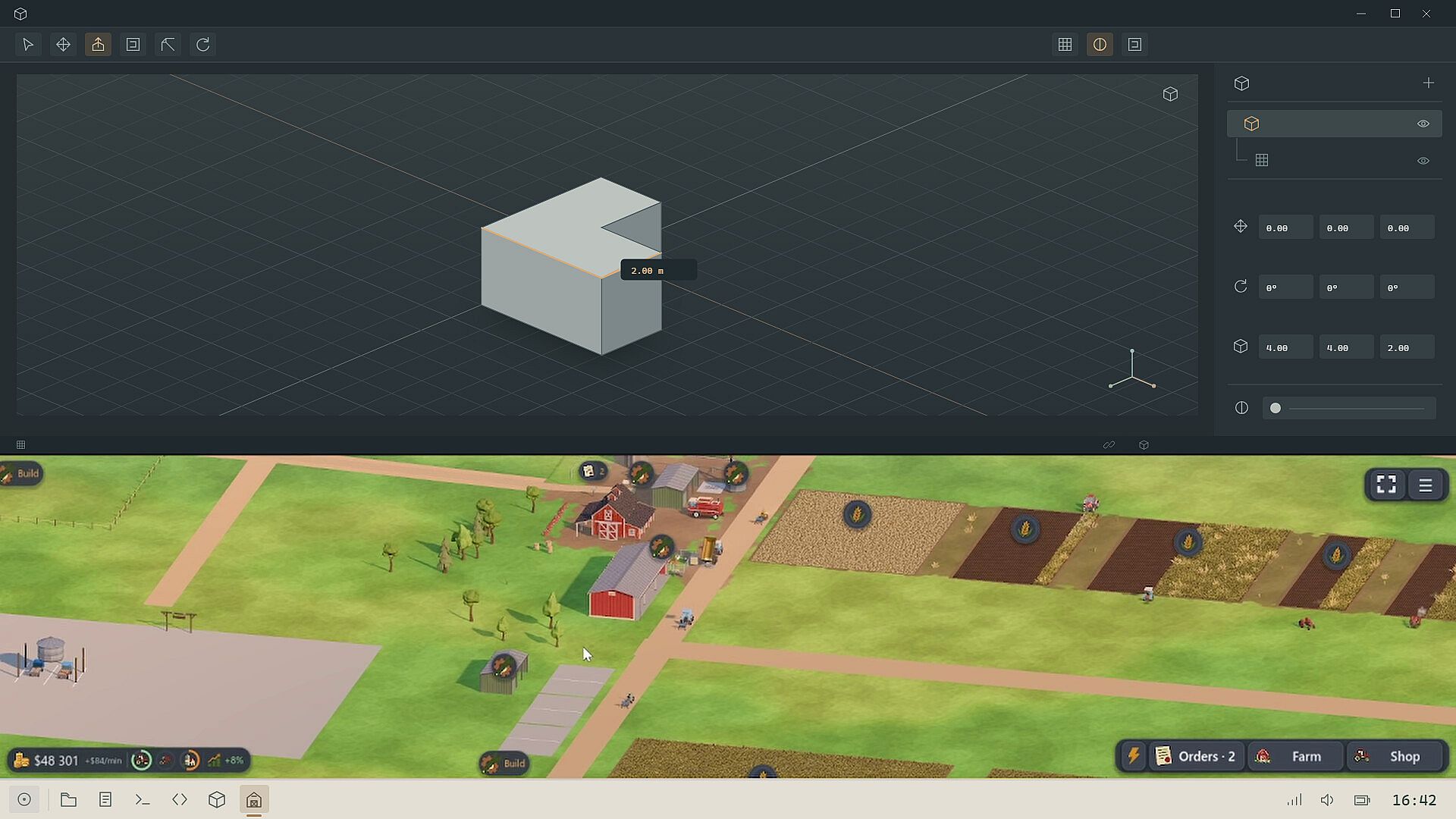
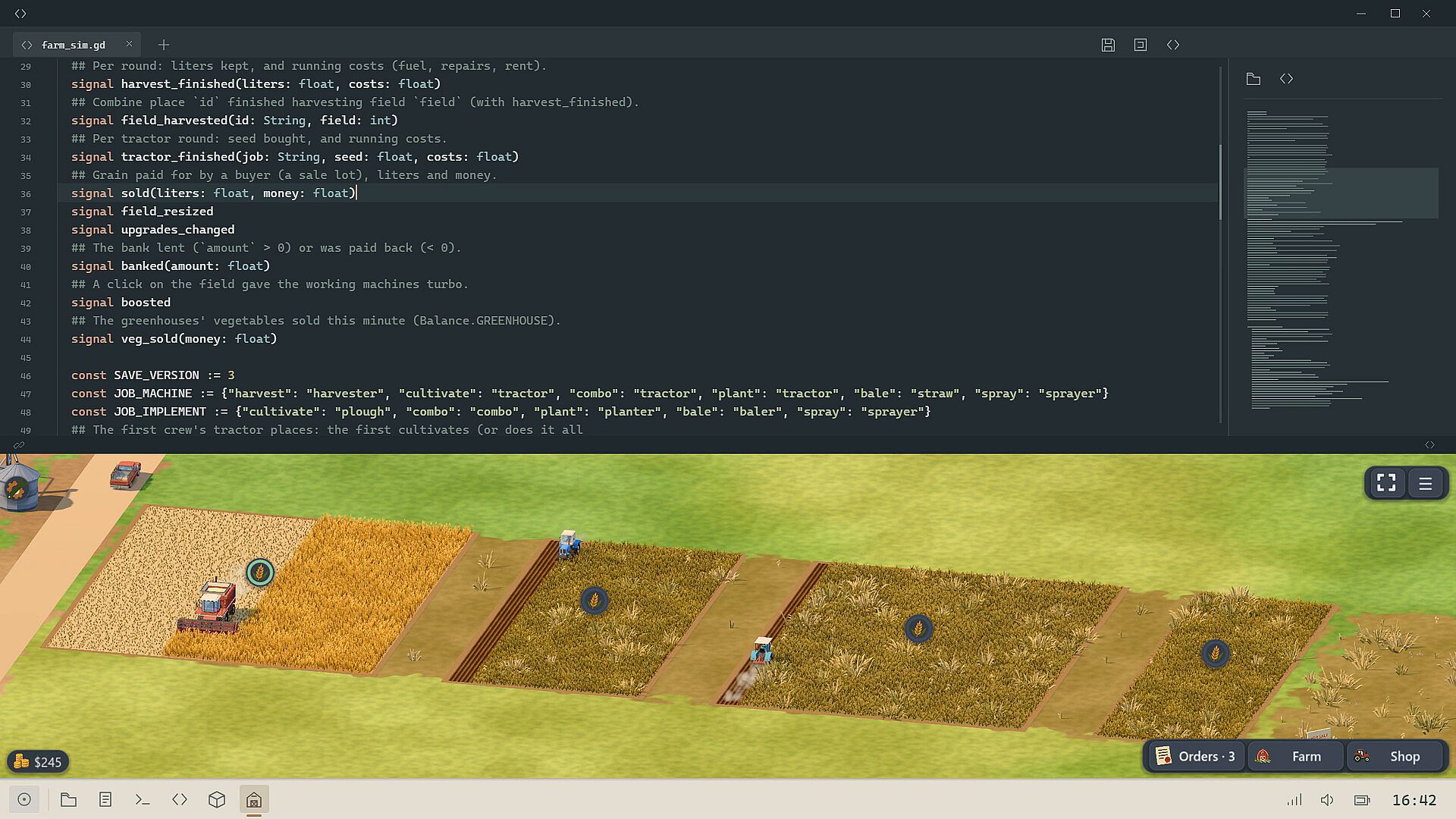
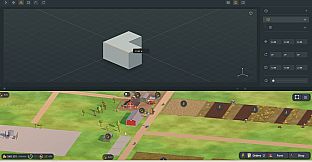
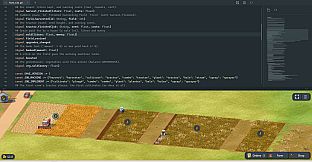
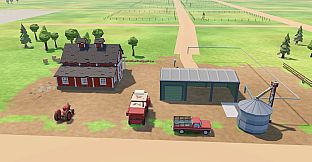
Desk Harvest is an indie casual simulation game for PC that places a compact farm window directly above the taskbar. The experience blends background automation with light hands-on management, allowing the farm to progress while users handle other tasks on their computer.
Gameplay
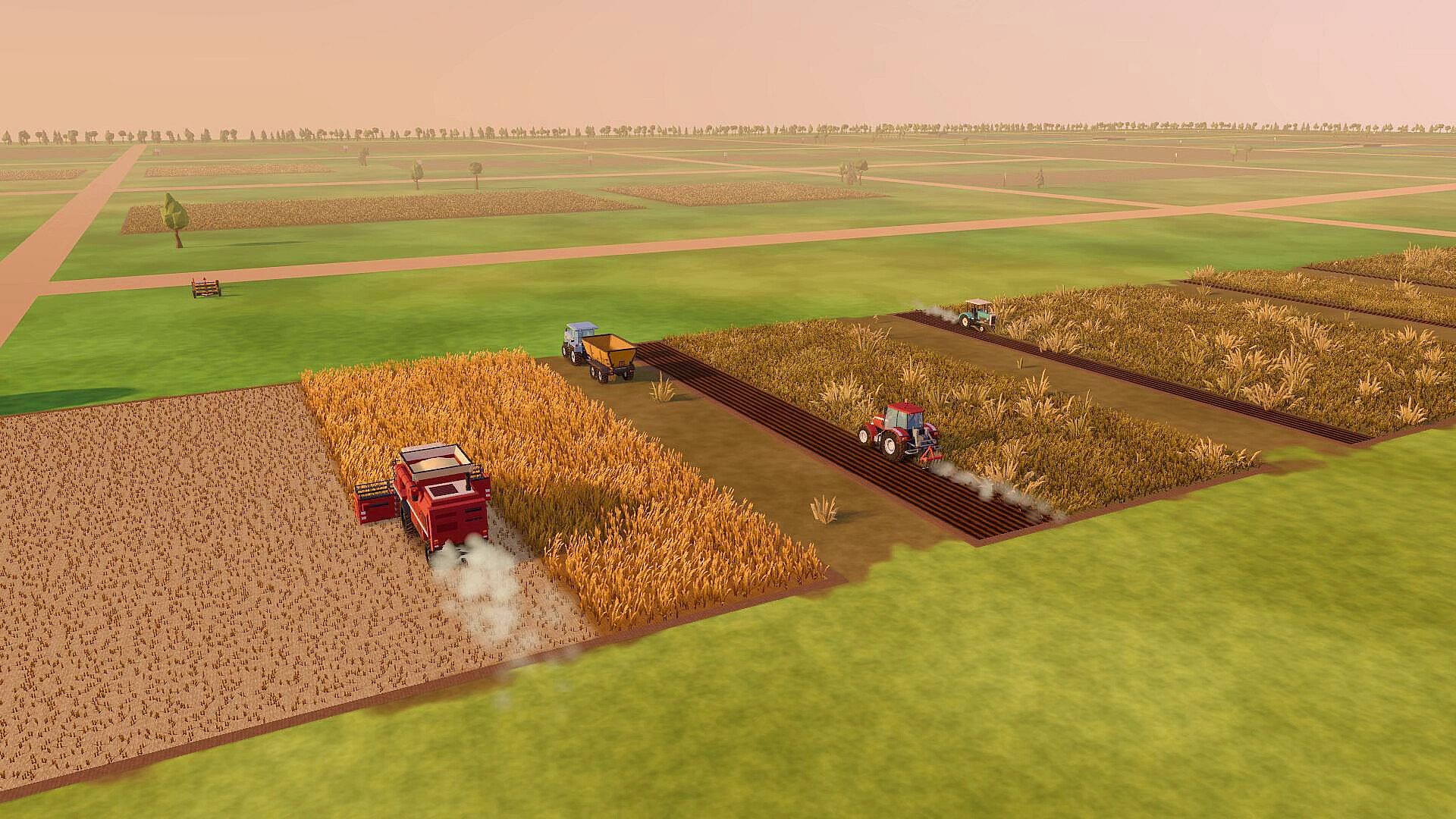
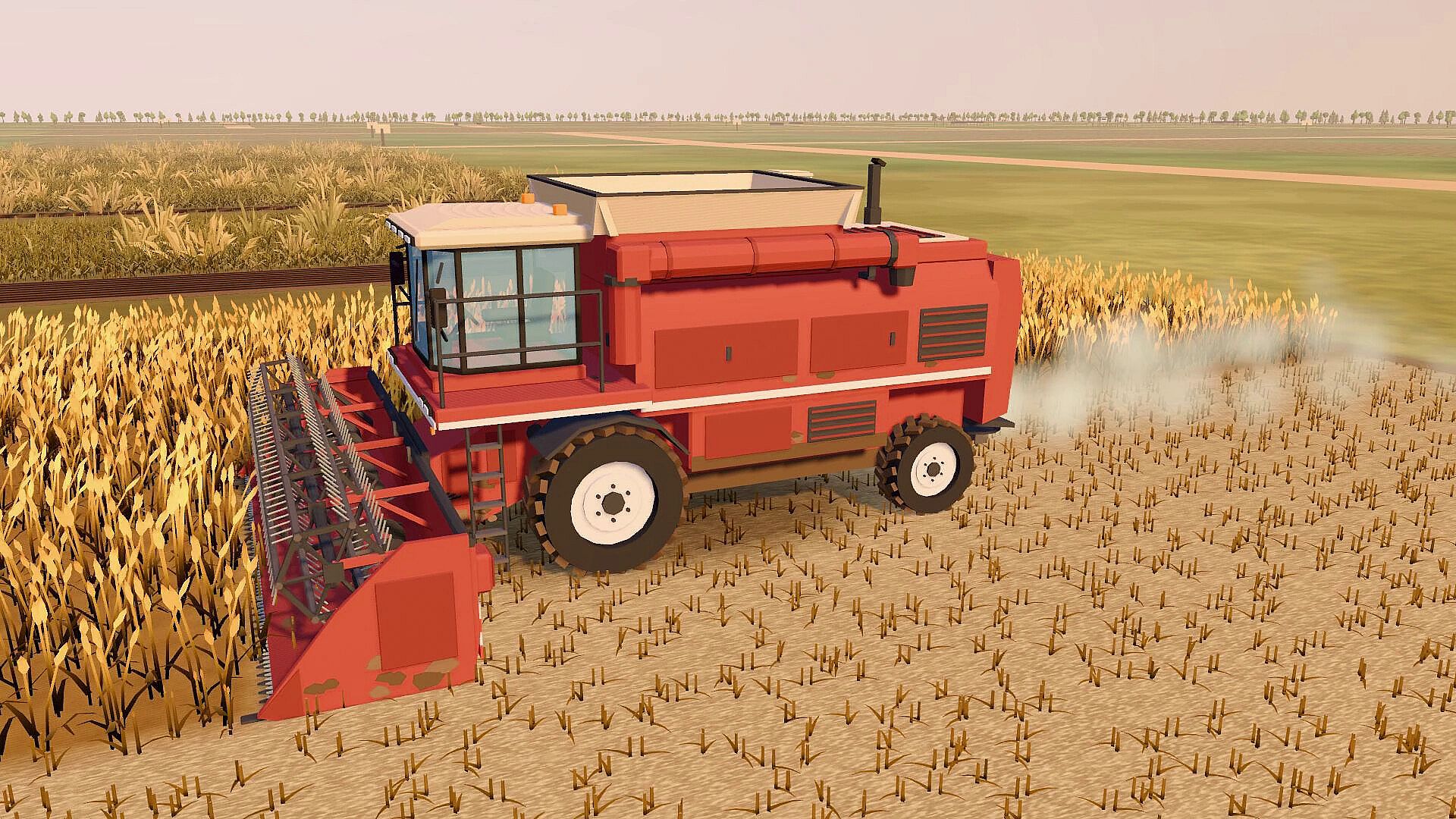
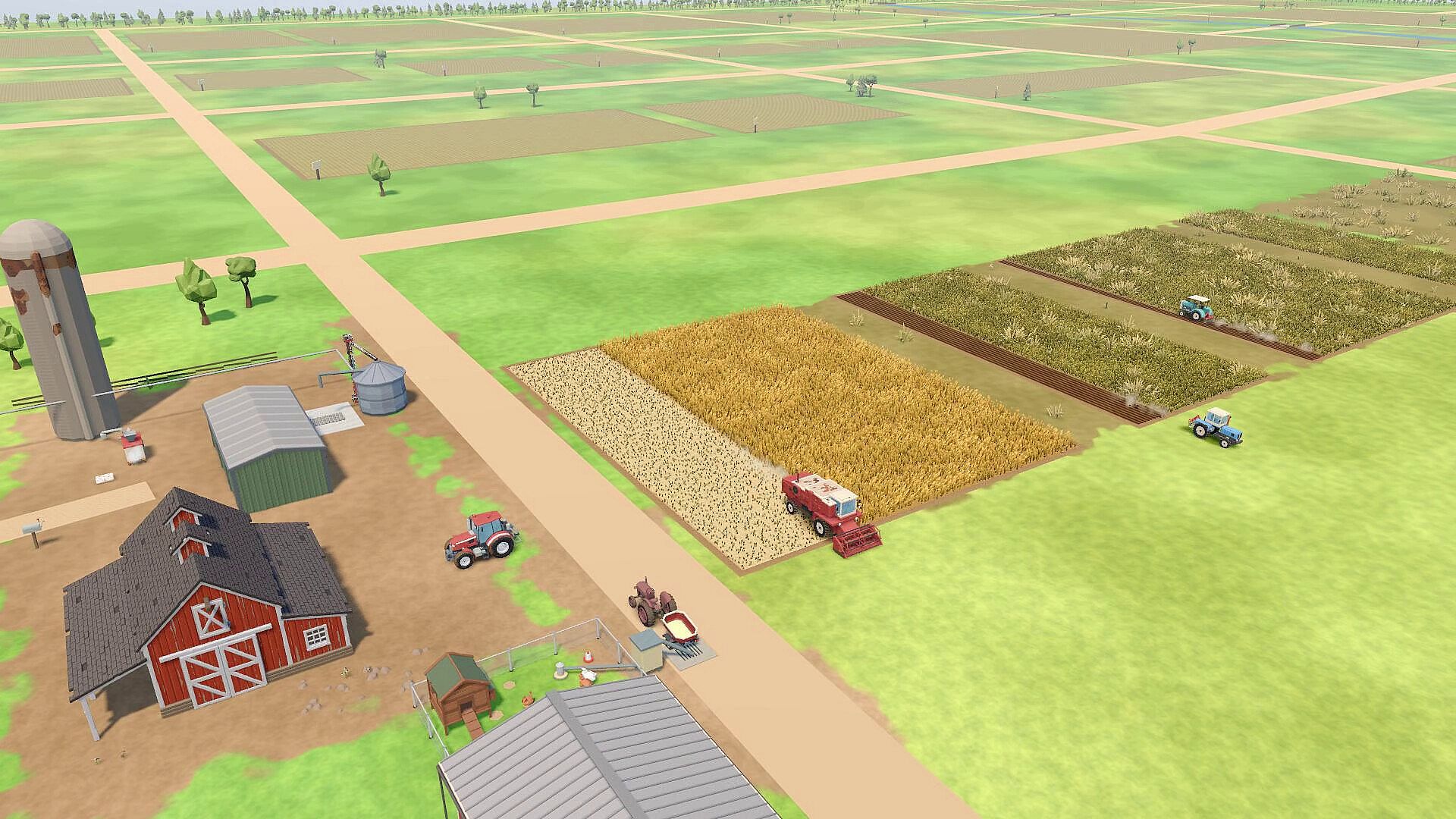
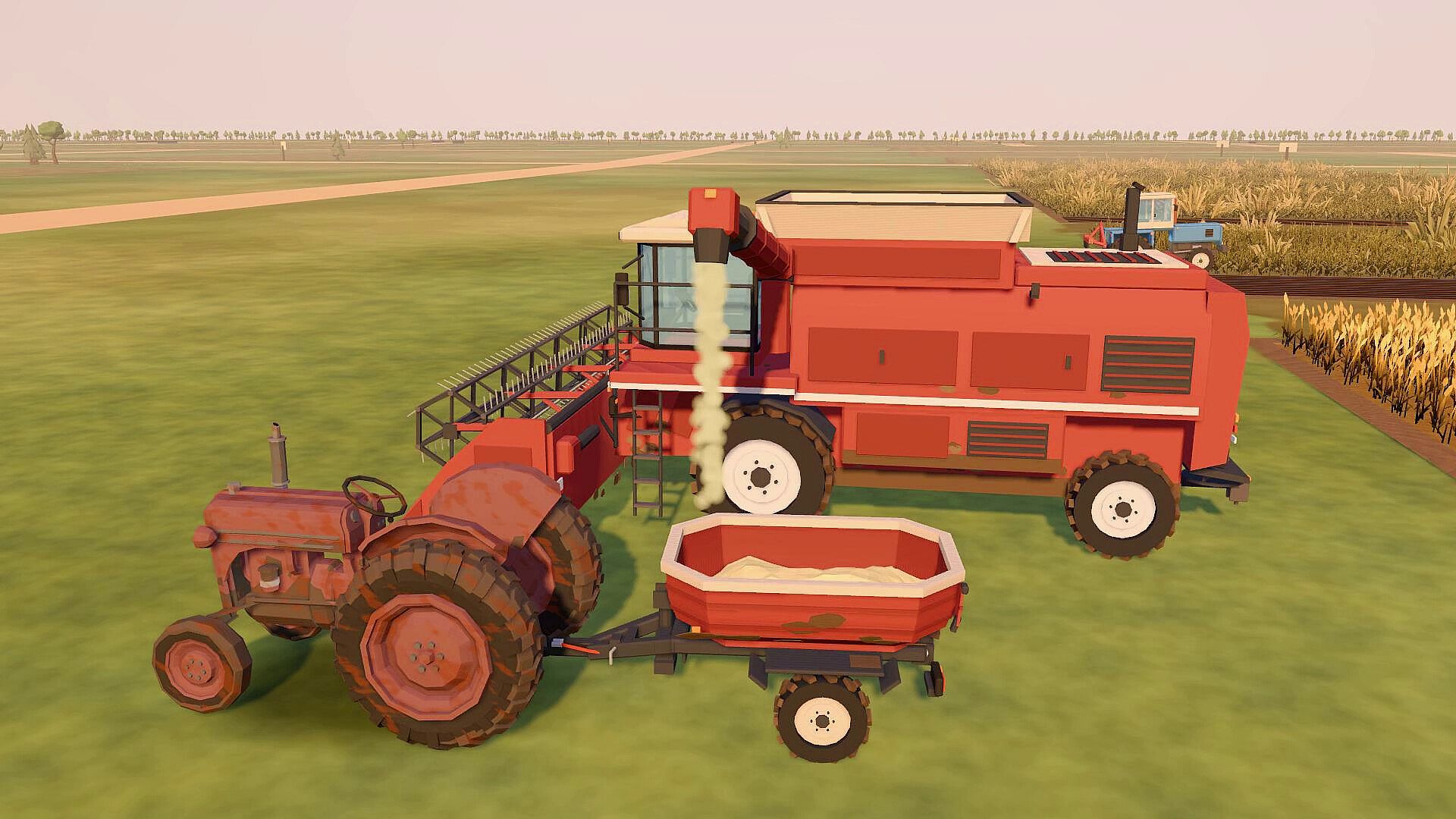
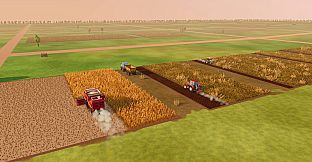
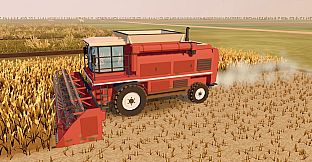
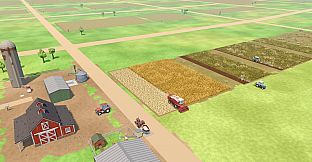
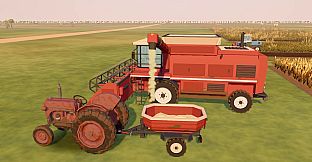
The core loop centers on expanding a modest plot of land into a productive agricultural operation. Tractors prepare the soil, seed drills plant crops, and combines gather the harvest in real time within the small docked window. Players earn income from these automated activities and use it to purchase upgraded machinery or hire additional workers. Opening the full interface provides direct control over field layout, equipment selection, and expansion decisions. The system emphasizes steady growth through repeated cycles of planting, tending, and selling produce, with visual feedback showing machines moving across the fields even when the window remains minimized.
Machinery operates in distinct stages that mirror real farming sequences. Soil preparation comes first, followed by precise planting, growth periods, and final harvesting. Each new piece of equipment improves efficiency or capacity, encouraging incremental upgrades that visibly transform the farm layout. The background operation continues without constant input, making the title suitable for users who want passive progression alongside work or study sessions.
Game Modes
Desk Harvest functions as a single-player idle simulation with no separate competitive or multiplayer options. The primary experience runs continuously in the background, with the option to switch to an active management view at any time. Progression occurs through repeated farming cycles rather than distinct modes, focusing on long-term farm development and machinery collection. All activity stays within one persistent farm world that evolves based on player choices and automated machine performance.
Farm Expansion and Machinery
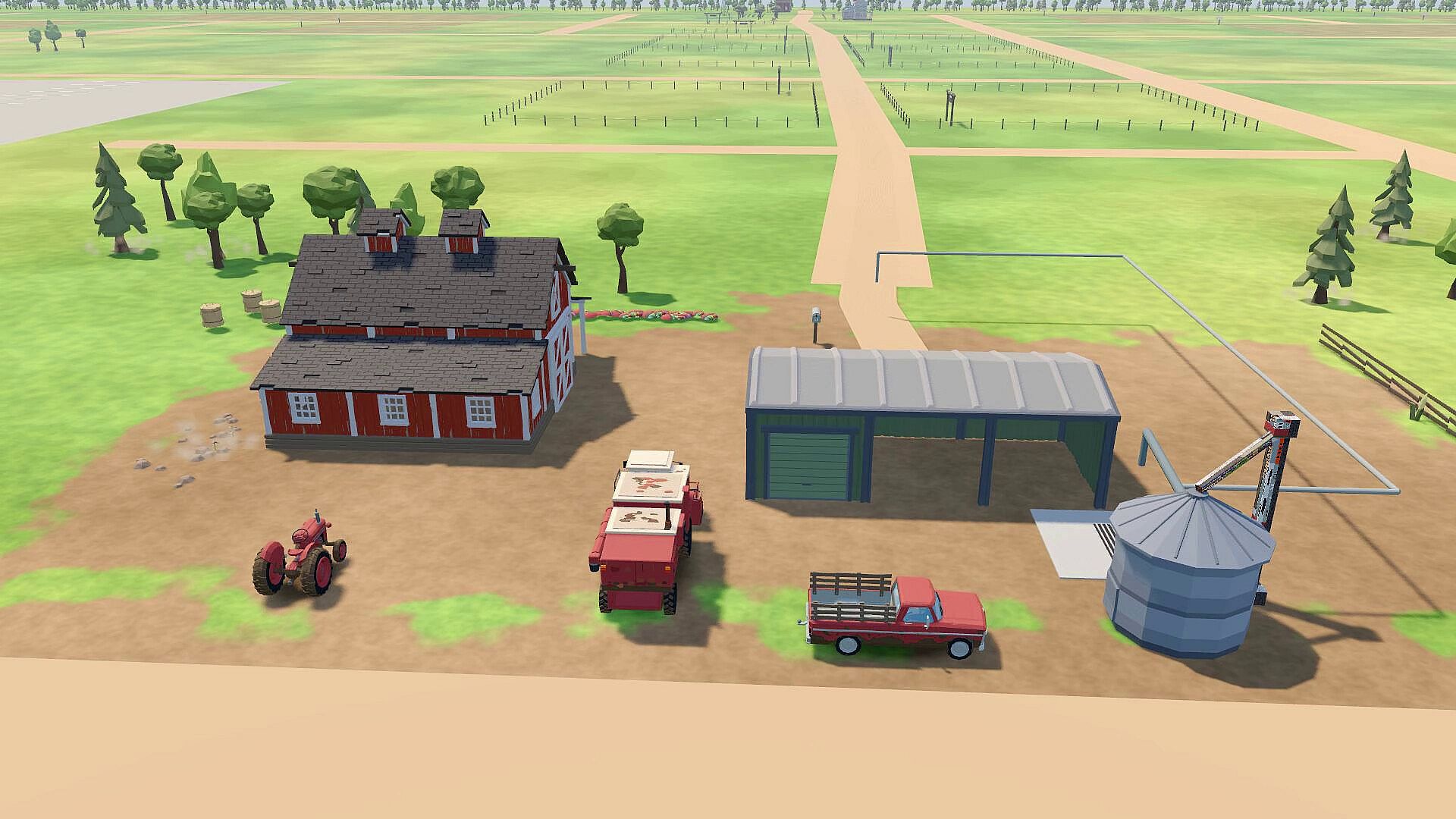
Starting with basic equipment, players gradually acquire larger tractors, more advanced seed drills, and higher-capacity combines. Each purchase directly affects output speed and field coverage. Hiring workers supplements machine labor during peak periods. Field expansion requires careful resource allocation, as earnings from harvests fund both new land and better tools. The visual progression shows fields filling with activity as the operation scales from a small patch to multiple active zones.
Is It Worth Playing?
Desk Harvest suits players who enjoy relaxed simulation titles and appreciate idle mechanics that run alongside daily computer use. The combination of autonomous background farming and occasional direct management creates a low-pressure loop that rewards consistent small decisions over intense sessions. Those seeking traditional full-screen farming games with heavy micromanagement may find the docked-window format limiting, while users who like passive progression will appreciate the seamless integration with normal workflows. The game remains in active development with its core systems centered on real machine operations and steady farm growth.












