


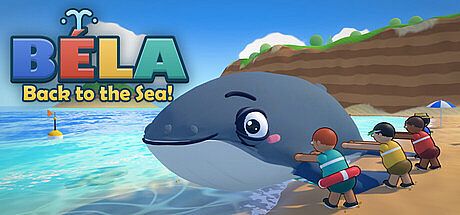


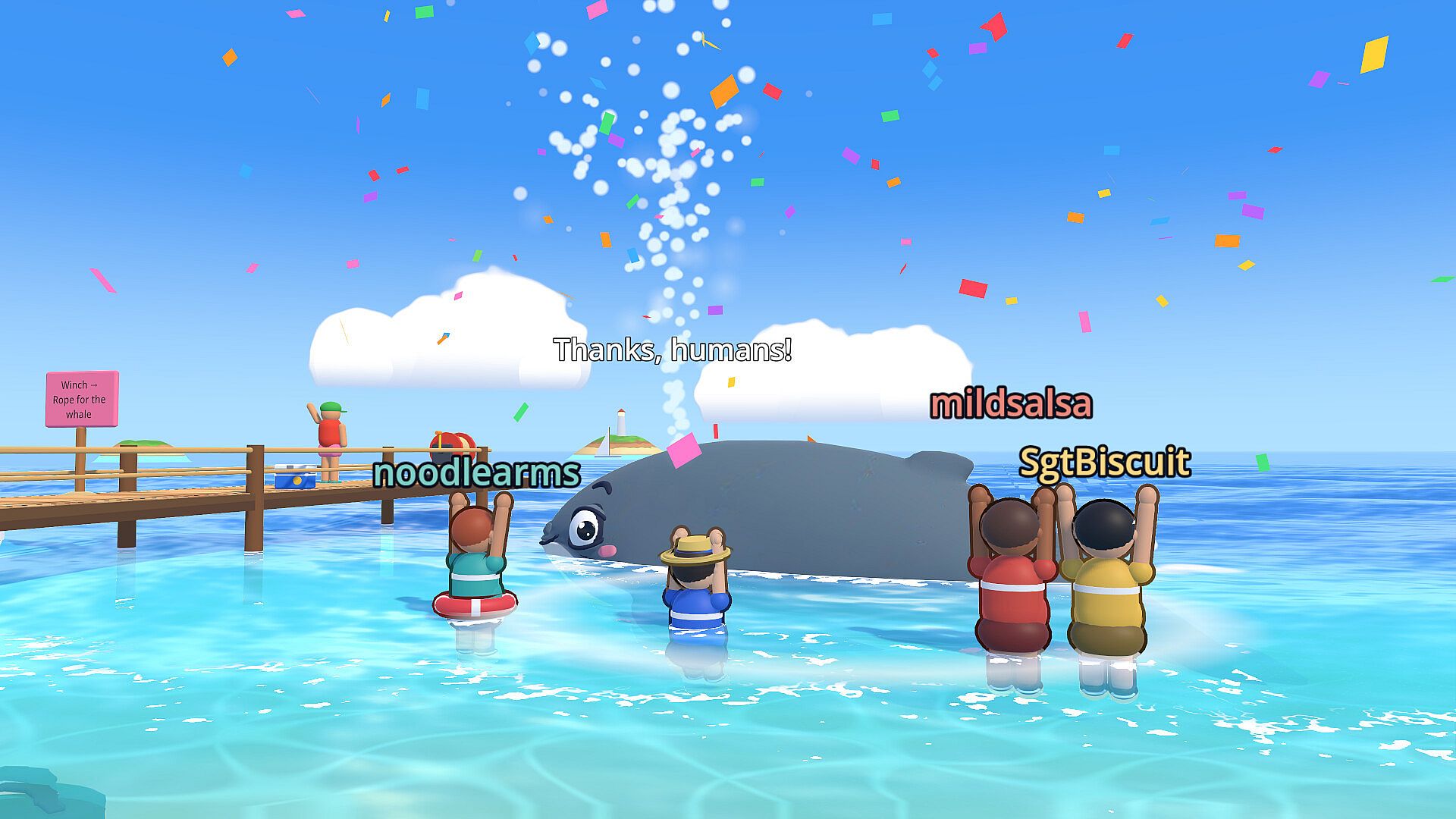
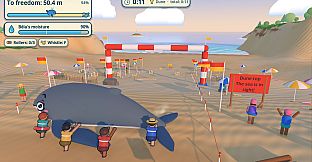
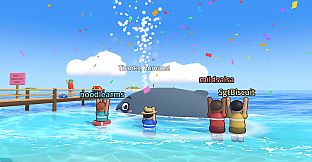
BÉLA: Back to the Sea! is an indie casual simulation game centered on the challenge of rescuing a stranded whale named Béla from a busy summer beach. Players work together to push, pour water, roll, and winch the whale back into the ocean before the sun causes it to faint. The experience blends lighthearted physics-based interactions with cooperative problem solving, making it a distinctive entry in the simulation genre for PC players seeking short, repeatable sessions or longer collaborative efforts.
Gameplay
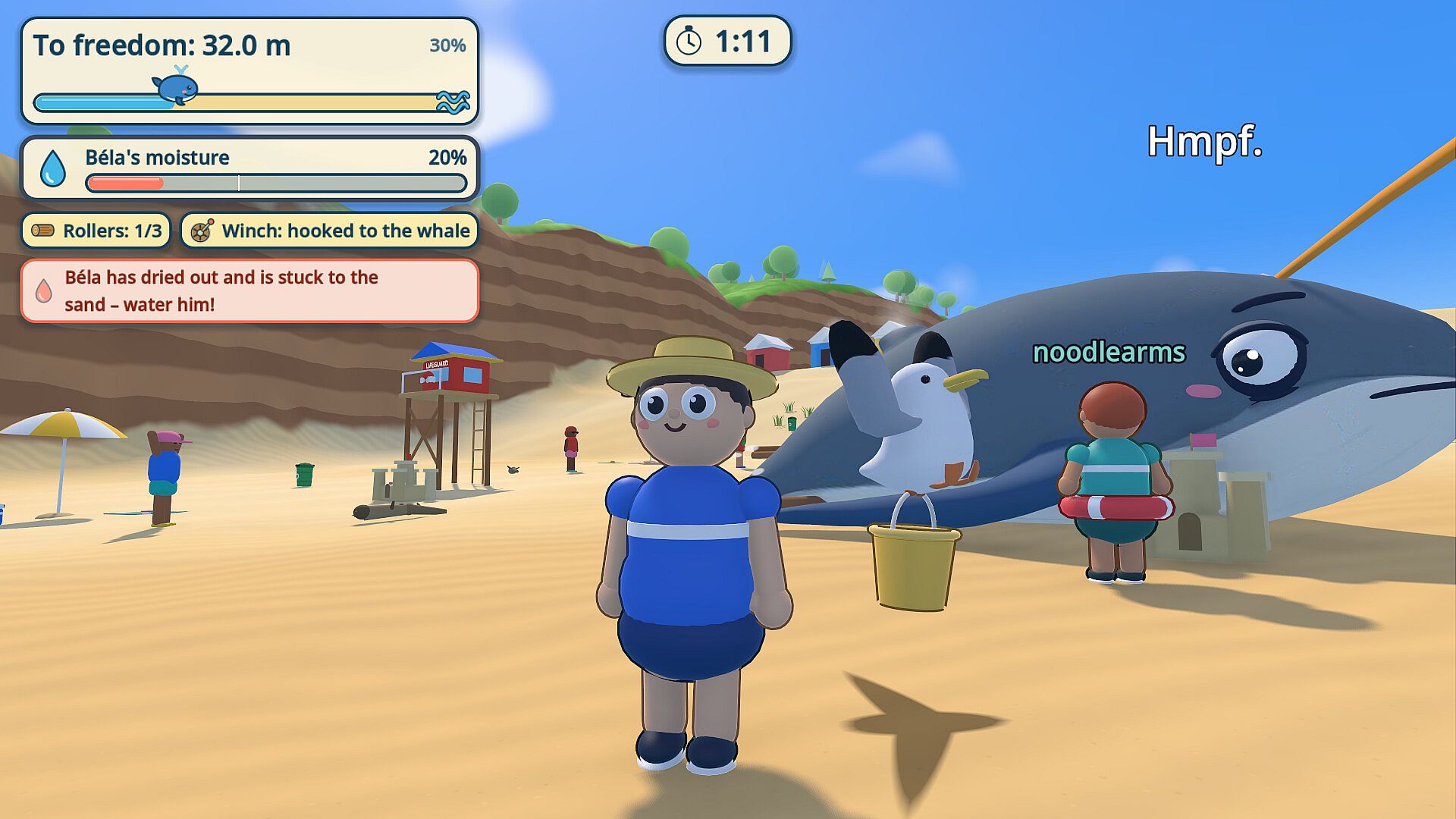
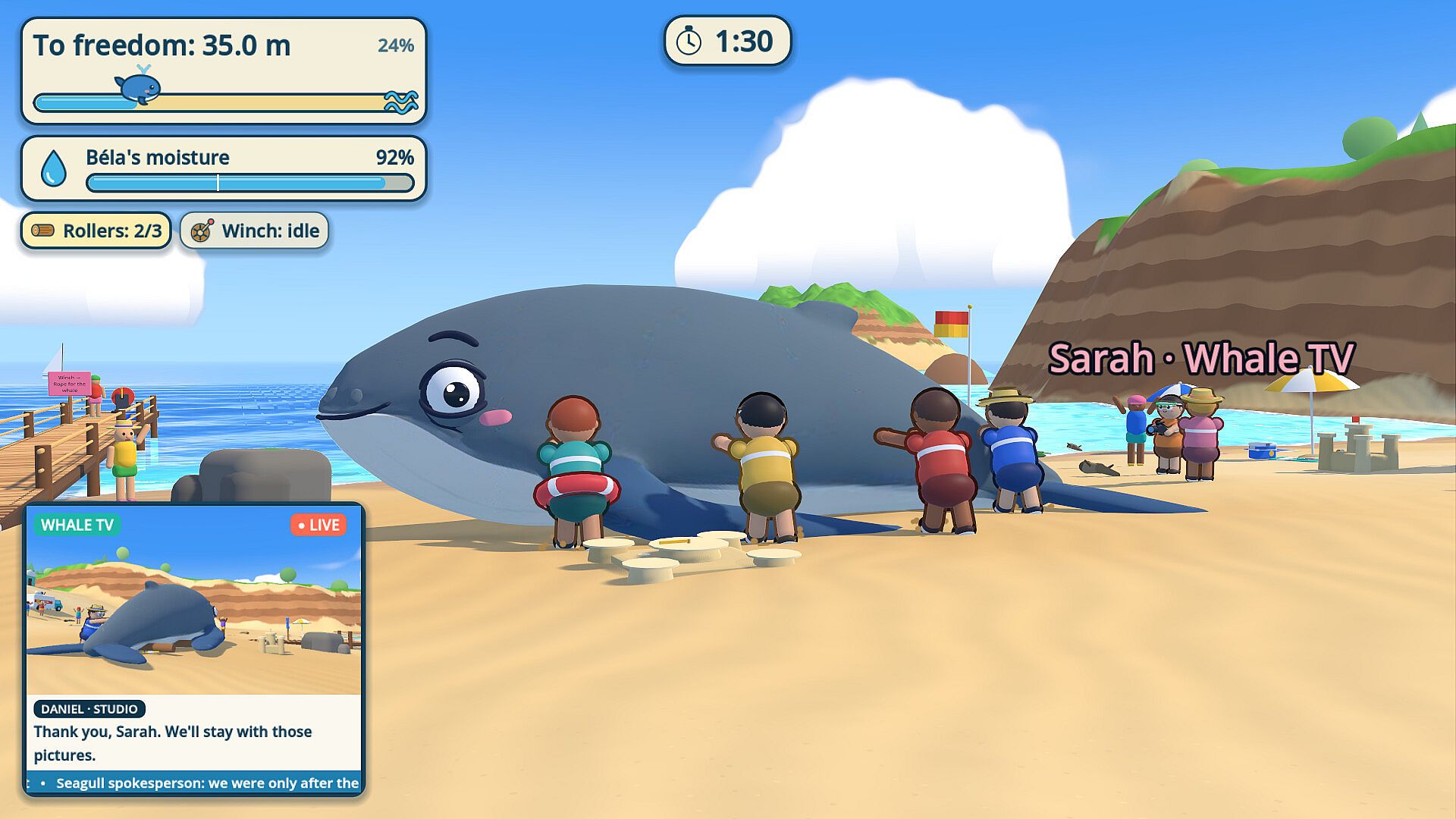
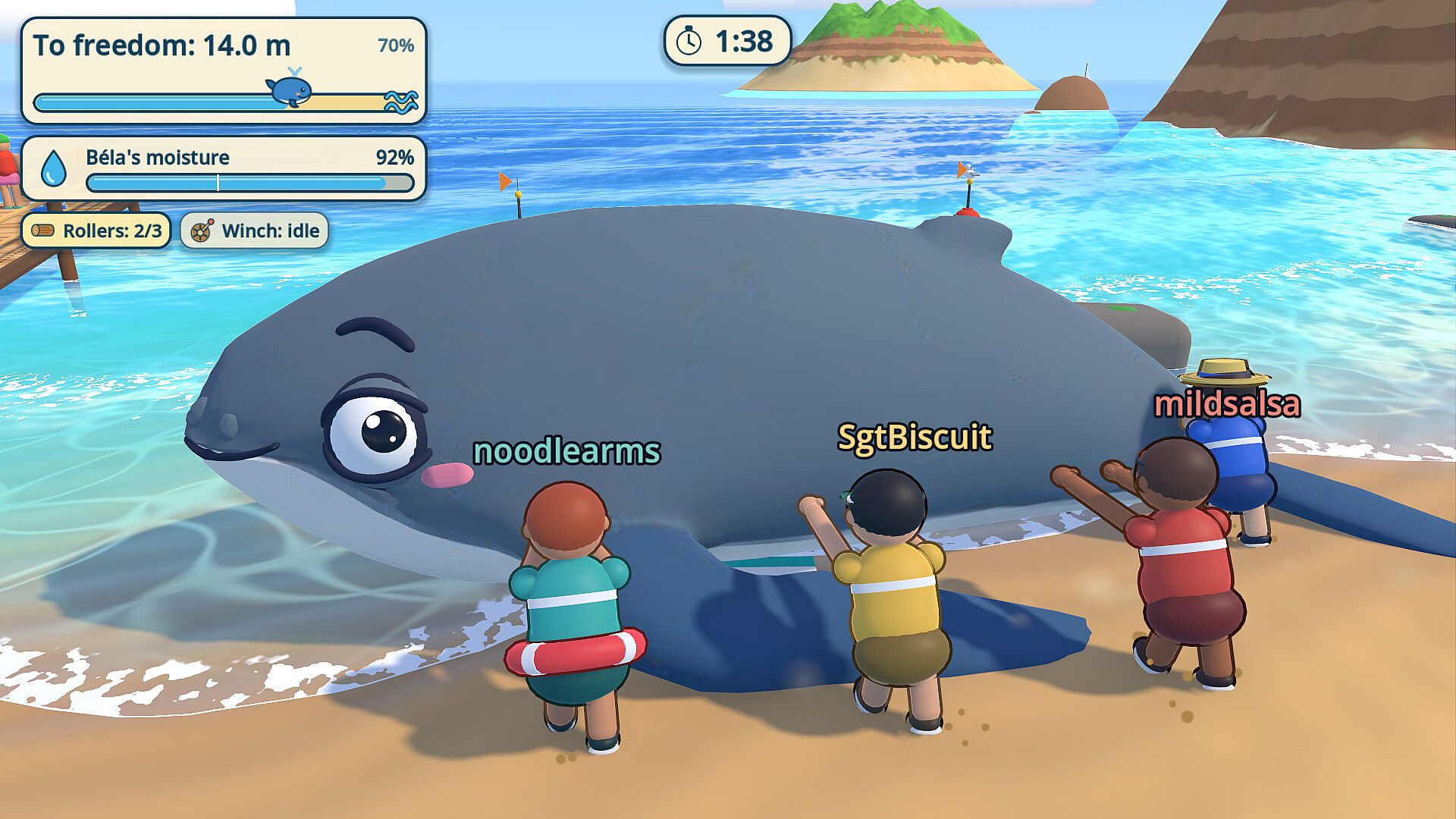
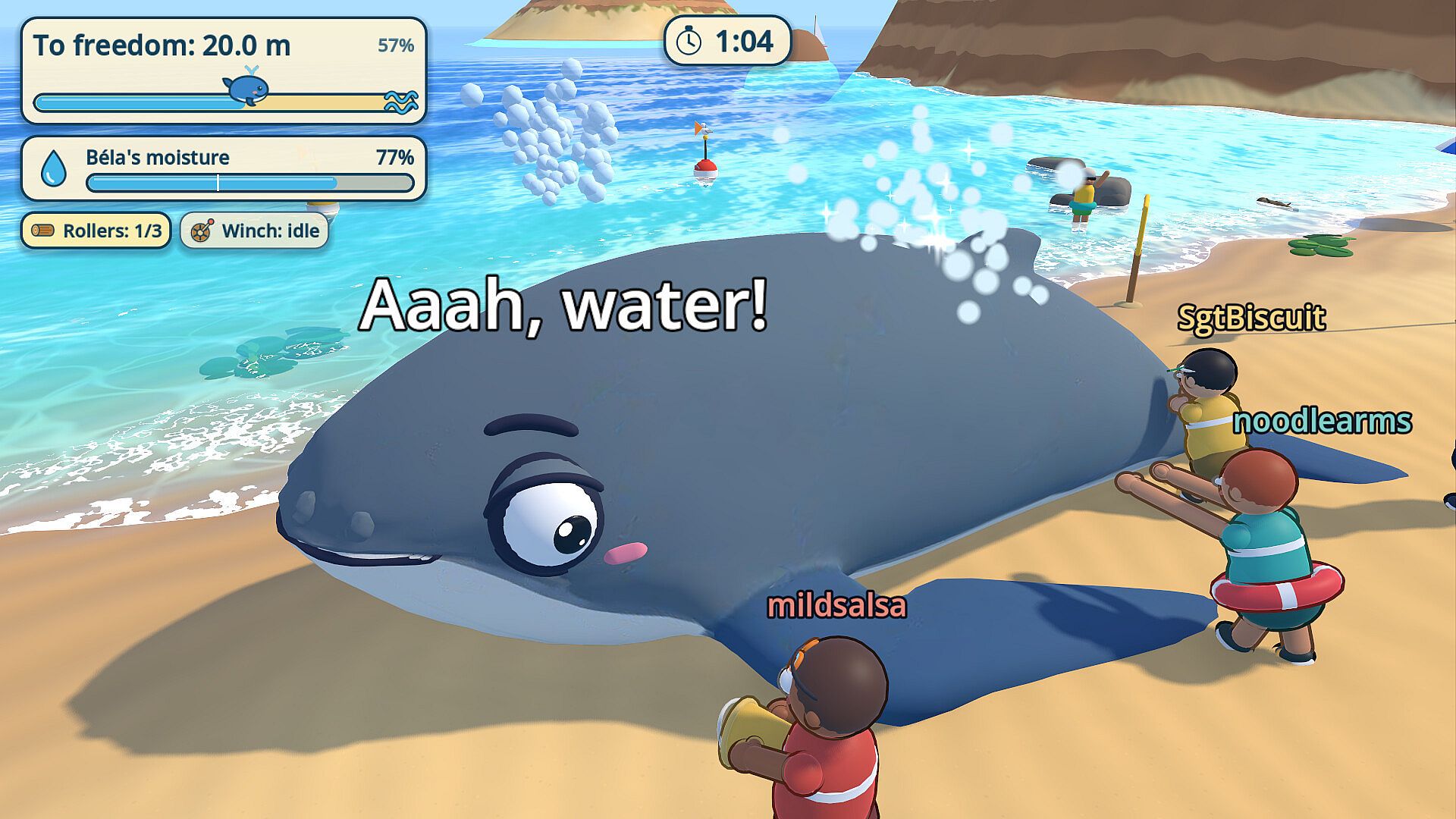
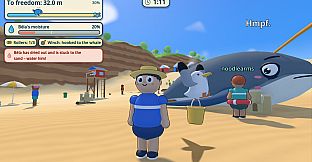
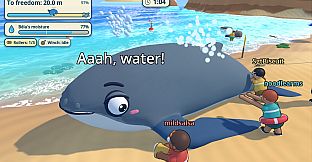
The core loop revolves around managing Béla's condition while navigating environmental obstacles on the beach. Players use everyday tools to keep the whale wet and moving toward the water. Buckets deliver water to prevent fainting, logs serve as rollers to ease movement across sand, and a pier winch provides mechanical assistance for pulling the whale seaward. A whistle sets a rhythmic "heave-ho" pace that coordinates group pushes, while a wet towel helps slow the drying process. Seagulls add an extra layer of tension by attempting to steal full buckets from players carrying them.
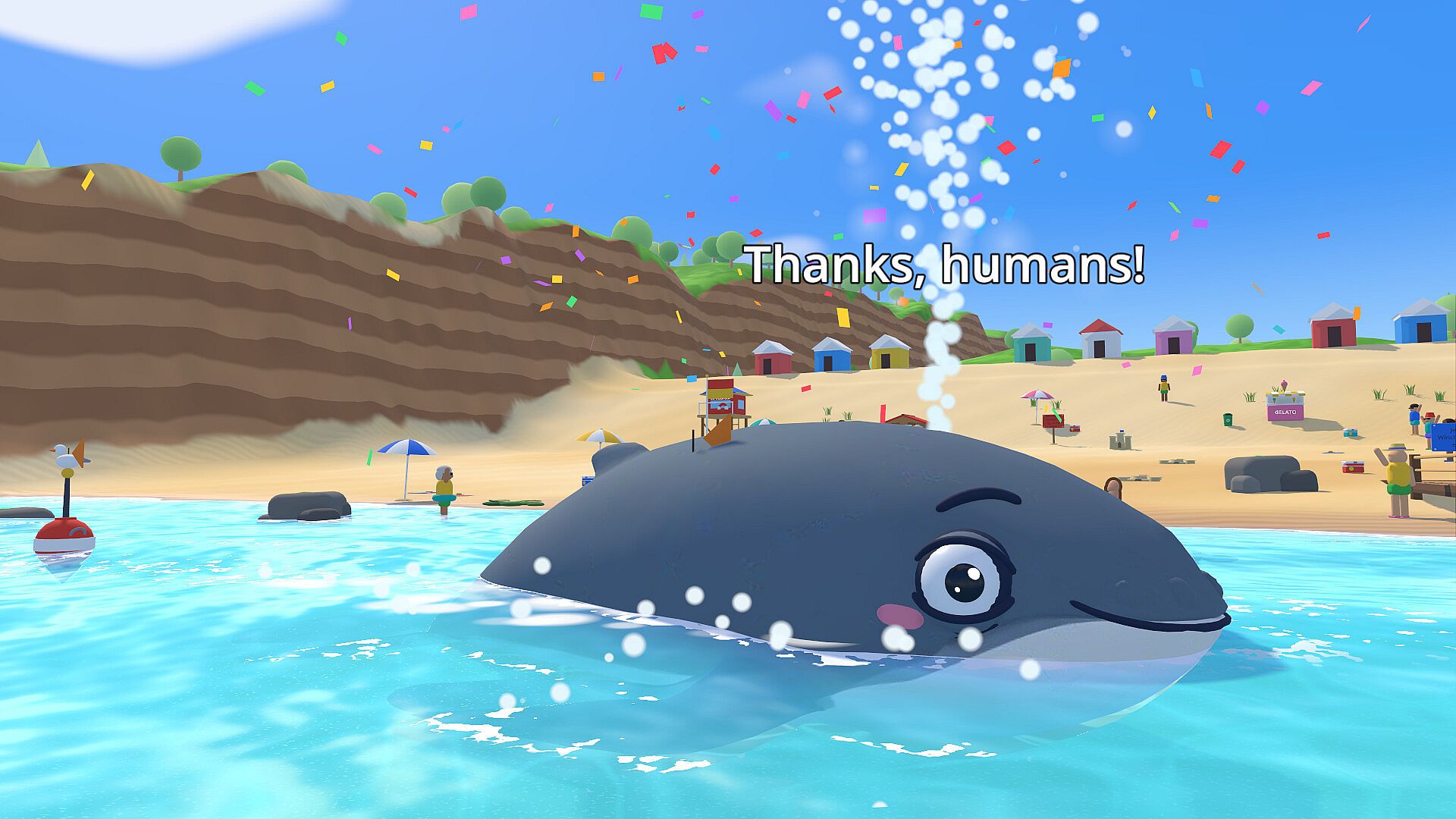
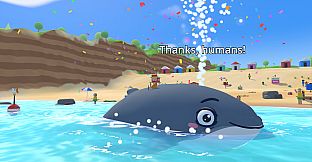
Béla himself reacts dynamically through facial expressions and speech bubbles that comment on successful actions or failures. This feedback system turns every attempt into an interactive dialogue, heightening the sense of personality in the rescue effort. The physics feel responsive yet forgiving, suiting both solo experimentation and group coordination without requiring precise timing or complex controls.
Game Modes
Two primary modes define the available experiences. Quick Round delivers a focused two-to-three-minute rescue ideal for parties and repeated playthroughs. This format emphasizes quick decision making and immediate teamwork in a compact session.
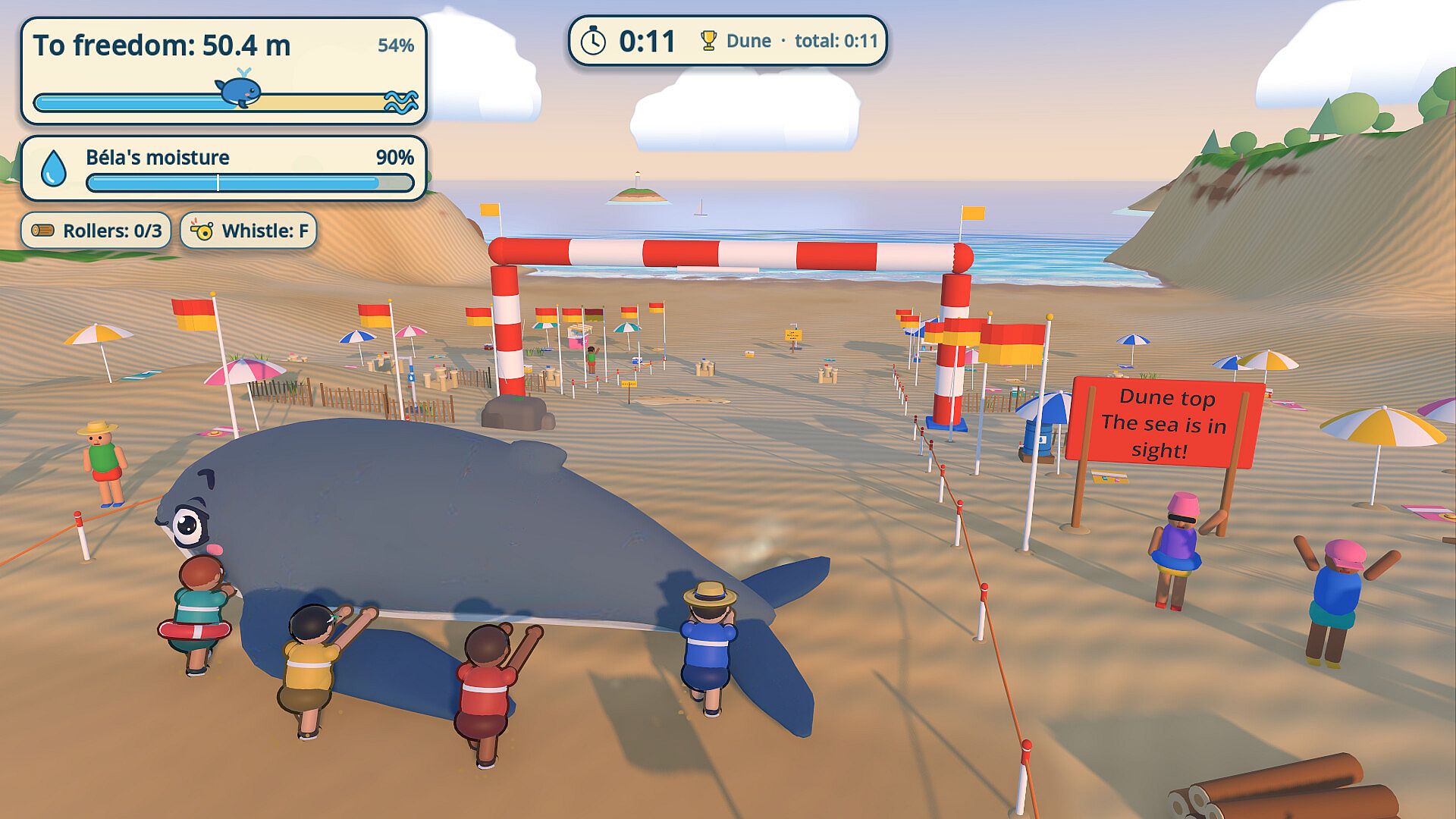
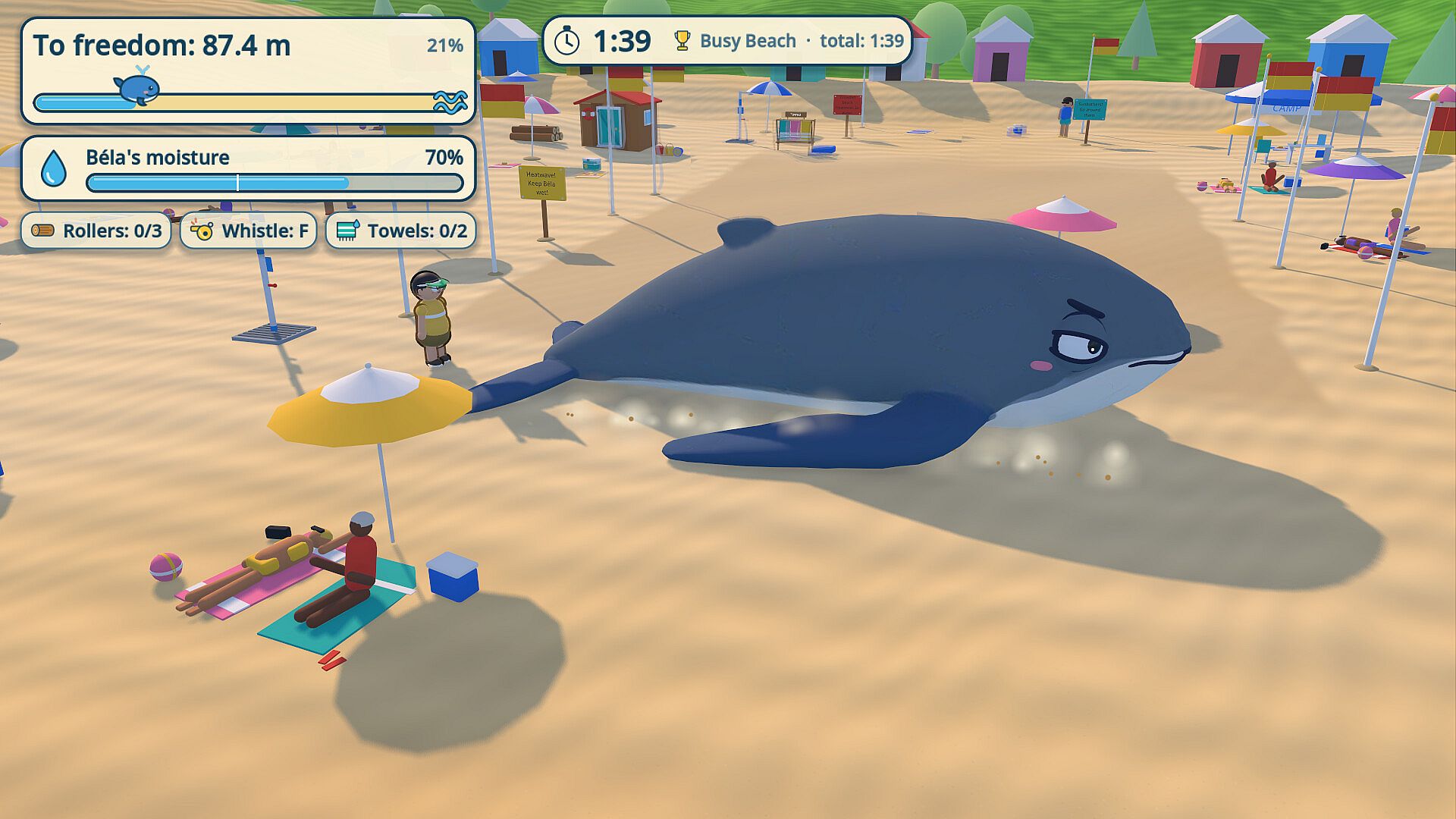
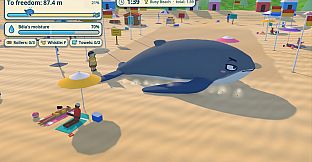
Long Beach mode extends the challenge across the first two zones of a larger rescue operation, incorporating camps, checkpoint flags, and a save-and-continue system. The Dune presents an uphill climb at dawn where the slope resists every push until players reach the crest and glimpse the sea ahead. The Crowded Beach follows with midday heat, sunbathers as obstacles, and increased demands on water logistics to keep Béla hydrated amid the chaos.
Cooperative and Solo Options
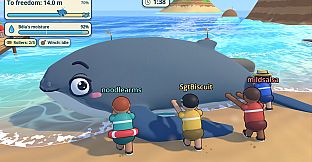
Support for one to four players allows flexible participation. Online sessions use a simple six-character room code that requires no port forwarding, while LAN play and fully solo options accommodate different group sizes or preferences. The design encourages communication and shared strategy during pushes and tool management, yet remains accessible for individuals who prefer to handle the entire rescue alone. Béla's reactive commentary and the surrounding beach elements scale naturally with player count, maintaining engagement whether one person directs the effort or a full team coordinates.
Audio and Presentation
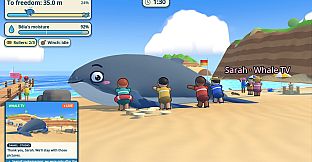
WHALE TV provides live commentary from a studio anchor and a beach reporter throughout each rescue. These segments feature hundreds of voiced lines in both English and Hungarian, delivering humorous observations that react to player progress and mishaps. The combination of voiced narration, Béla's speech bubbles, and environmental sound design creates an immersive yet light atmosphere without overwhelming the casual simulation focus.
Is It Worth Playing?
BÉLA: Back to the Sea! suits players who enjoy cooperative simulation experiences with short, replayable rounds or extended zone-based challenges. The emphasis on teamwork, tool management, and reactive character feedback makes it particularly appealing for groups looking for a party-style activity or friends seeking relaxed collaborative sessions. Solo players can still enjoy the full mechanics and narrative reactions at their own pace. As an early access title, the current build focuses on the verified core rescue systems and modes, providing a solid foundation for those drawn to indie casual simulations centered on creative problem solving rather than high-stakes competition. The accessible controls and humorous presentation support repeated play without demanding long time commitments.












