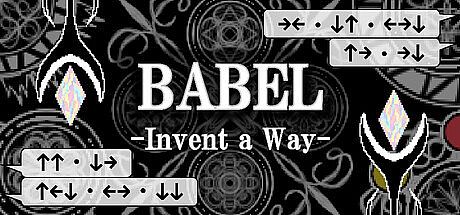


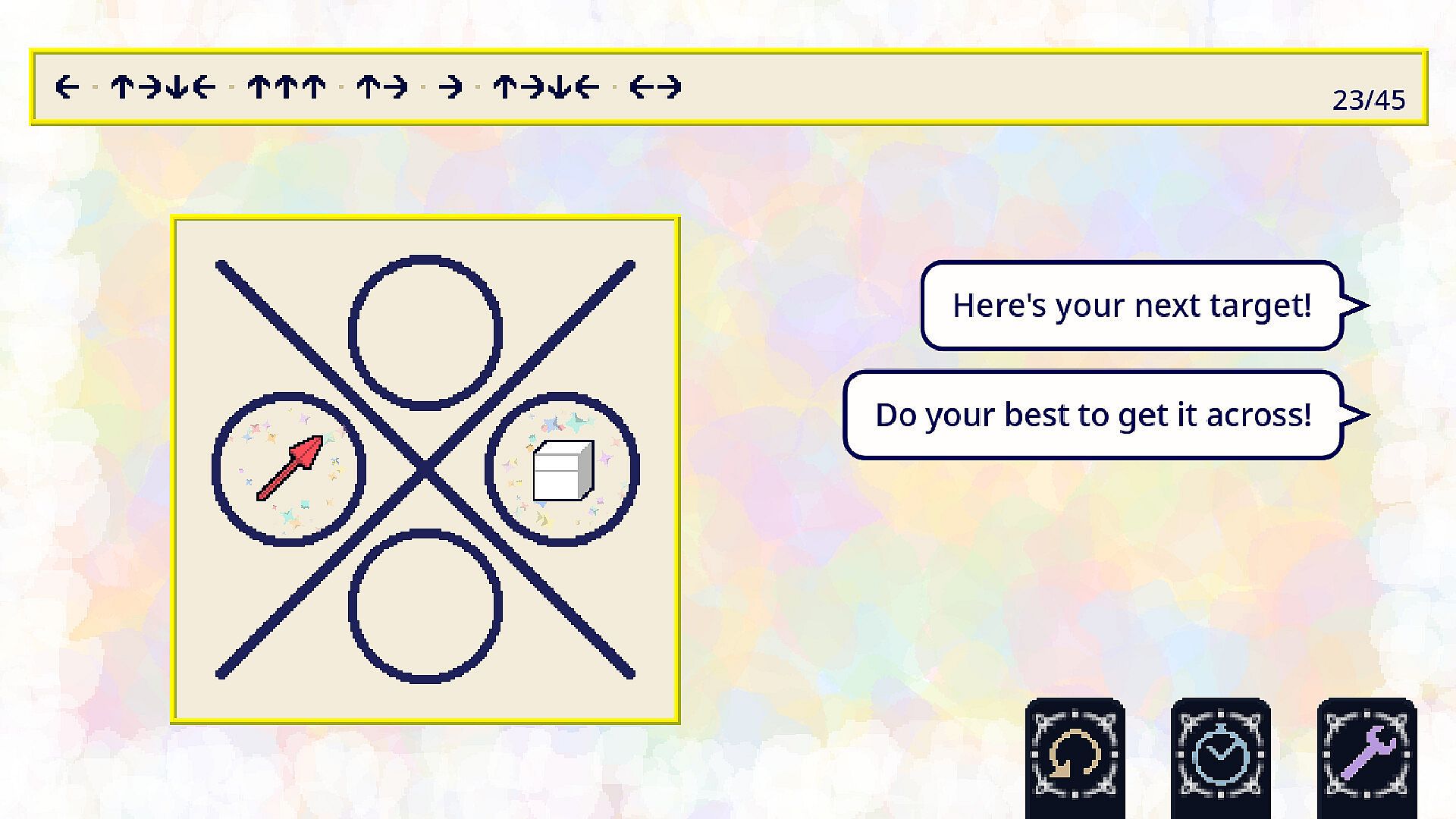

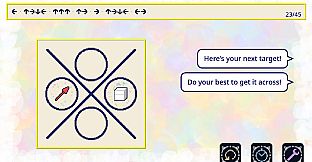

BABEL: Invent a Way is a two-player indie adventure game built around the challenge of inventing a shared language from scratch. Players find themselves separated in different rooms with no way to speak directly. The only tools available are five symbols that can be arranged into sequences and sent back and forth. Success depends on completing a series of magical rituals that require precise coordination, yet the symbols start with no assigned meanings whatsoever.
Gameplay
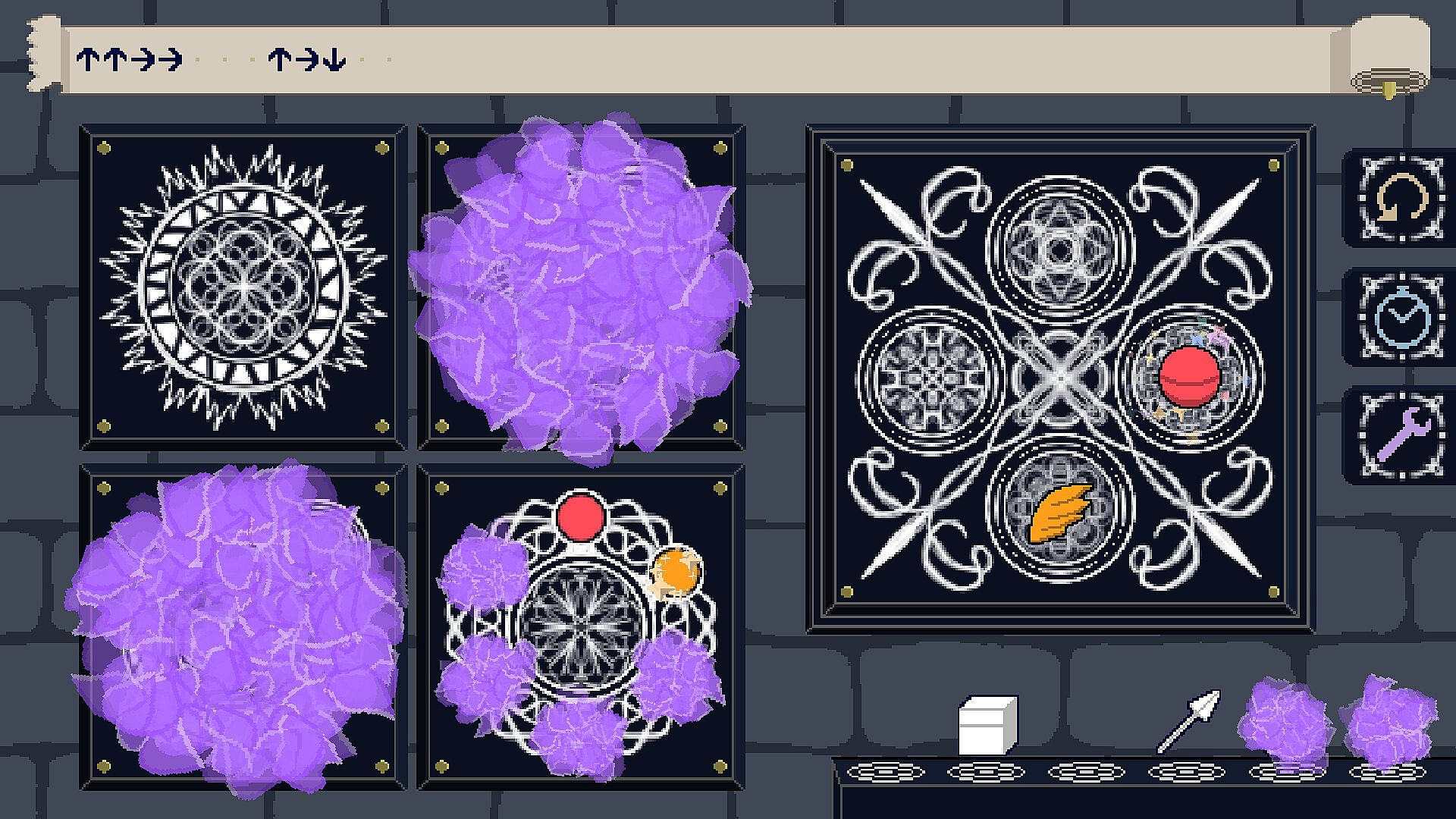
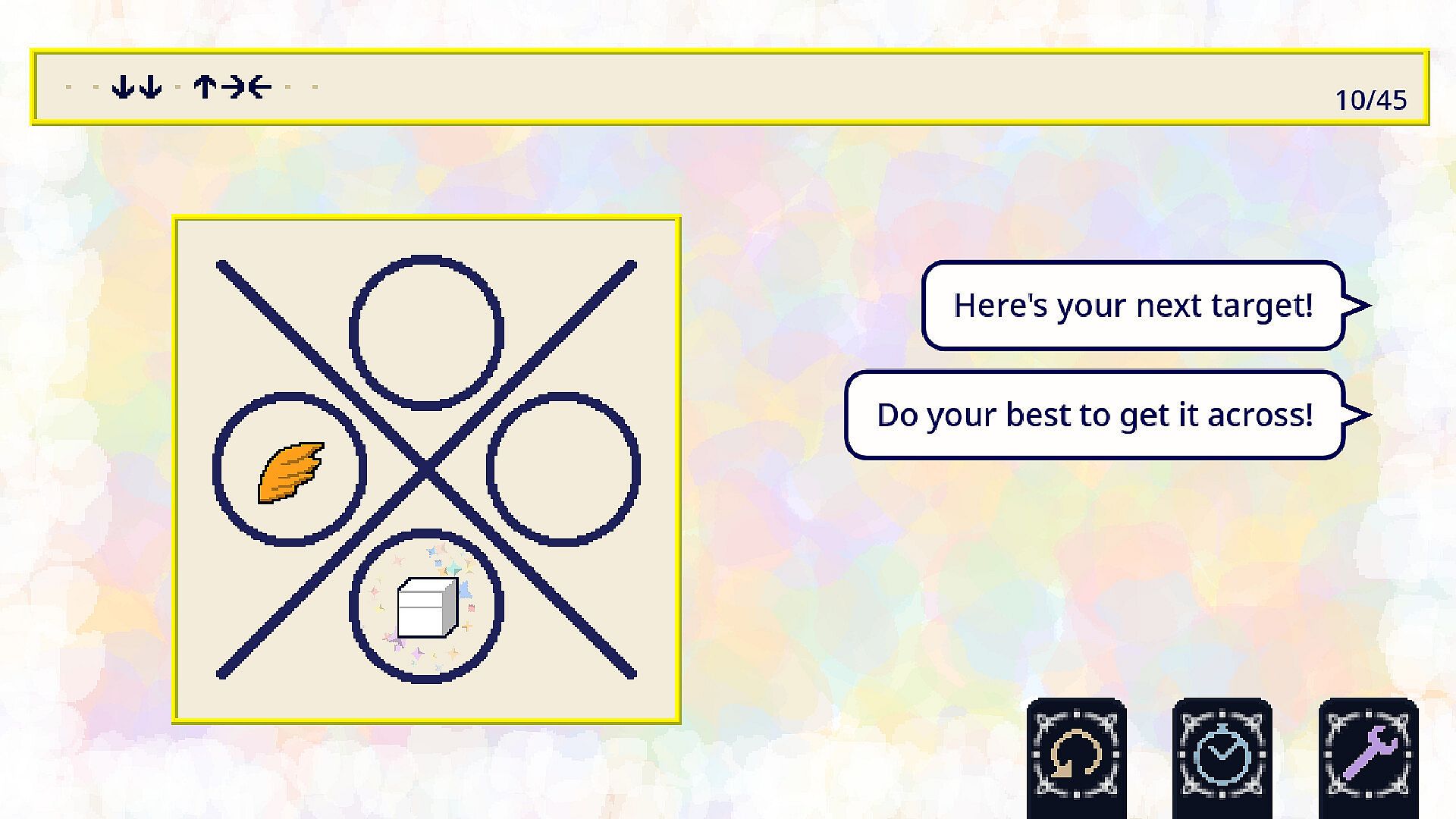
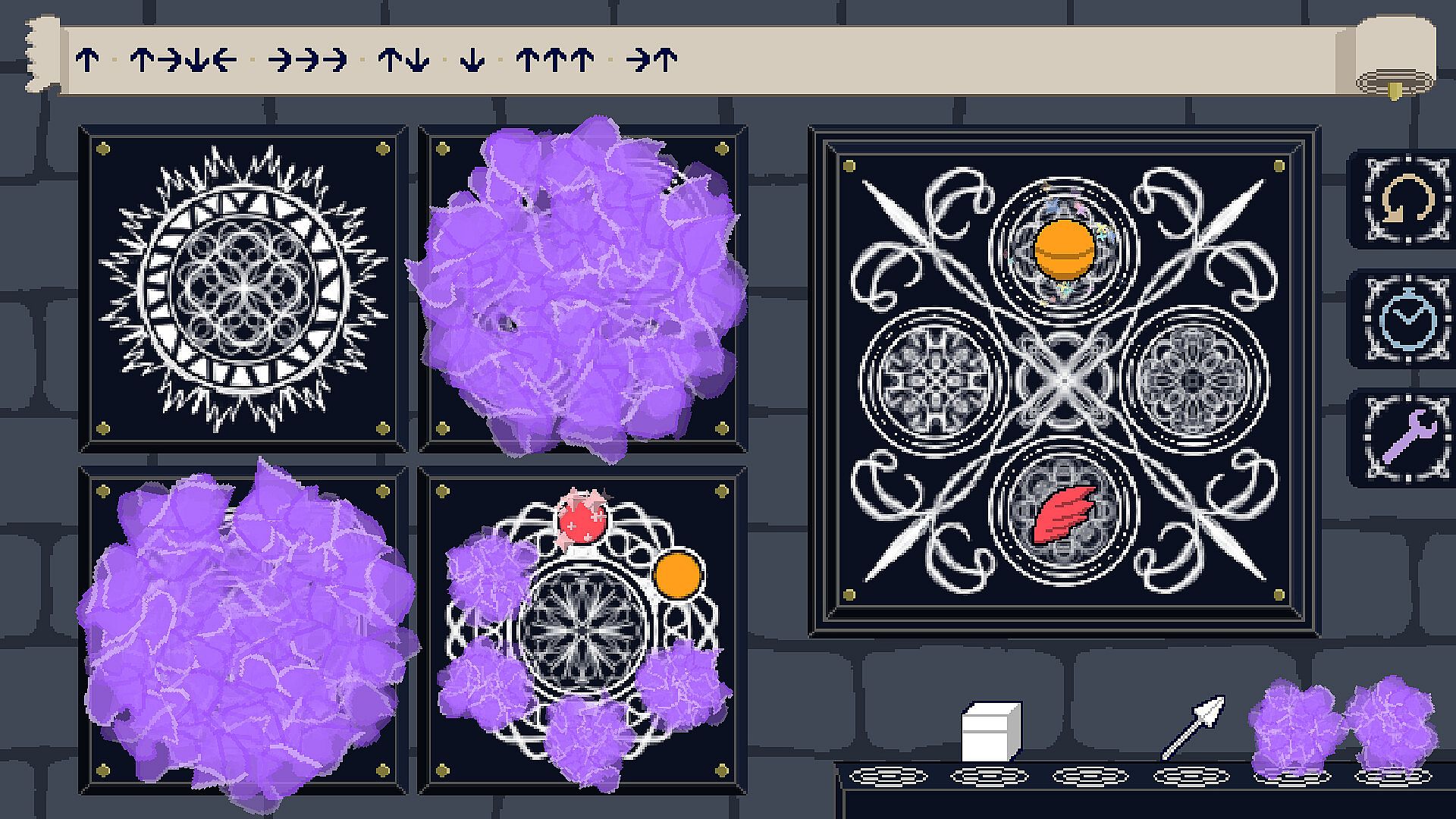
The core loop centers on observation, interpretation, and experimentation. Each player sees unique information that the other cannot access. One person might notice details about a ritual's requirements, such as the need to interact with specific colors or objects, while the partner must convey instructions or confirmations through symbol strings. Over multiple exchanges, patterns emerge as the pair assigns meaning to individual symbols or longer sequences. A single arrow might eventually stand for direction or action, while combinations represent objects or steps in a process. This system supports increasingly complex messages as familiarity grows between the two participants.
Progression requires both players to decode incoming messages accurately and execute the correct actions in their own space. Mistakes lead to failed rituals and the need to refine the shared vocabulary. The experience rewards patience and creative problem-solving rather than following any predetermined rules. Because the symbols carry no inherent definitions, every pair develops its own system tailored to the challenges they encounter together.
Game Modes
The game operates as a focused two-player cooperative experience with no additional named modes or variants. All content revolves around the same ritual-completion structure, where pairs work through a sequence of sealed challenges. Each ritual demands clear communication of private information, and the absence of any preset language forces ongoing adaptation. Sessions typically involve repeated attempts at the same ritual until the pair converges on effective signals. There are no competitive elements, solo options, or separate difficulty settings described in the available details.
Replay value comes from pairing with a new partner after an initial completion. The language created with the first collaborator stays with the player as personal knowledge, but a fresh pairing produces an entirely different set of meanings and strategies for the same rituals. This structure encourages multiple playthroughs with different people to explore how communication styles shift based on the individuals involved.
Language Emergence and Communication
Meaning arises organically through trial and error rather than any external dictionary or tutorial. Early exchanges often involve simple trial signals to test understanding, such as repeating a symbol to confirm receipt or using sequences to point out visible elements. As rituals grow more intricate, players naturally expand their code to cover actions, colors, objects, and timing. The process highlights how two people can align on complex ideas without any shared starting point or spoken words.
The design explicitly discourages external voice or text chat during active attempts. Relying on outside tools removes the central challenge of building understanding solely through the symbol system. This constraint keeps the focus on the emergent language and the moments of confusion or breakthrough that define the experience.
Is It Worth Playing?
BABEL: Invent a Way suits players who enjoy cooperative puzzle games centered on communication and creativity. The two-player format creates an intimate setting where success hinges entirely on the pair's ability to invent and refine their own signals. Those who appreciate abstract mechanics and the satisfaction of watching a private code develop will find the core loop engaging. The game supports full streaming and recording, with a recommendation to mute external voice chat during stages to preserve the intended discovery process.
Replay sessions with new partners offer fresh perspectives without any exclusive content or changes to the rituals themselves. The experience remains consistent across playthroughs, relying on the novelty of different communication styles rather than new features. For pairs seeking a distinctive adventure that emphasizes invention over traditional objectives, the game delivers a focused and repeatable activity centered on human connection through symbols.