


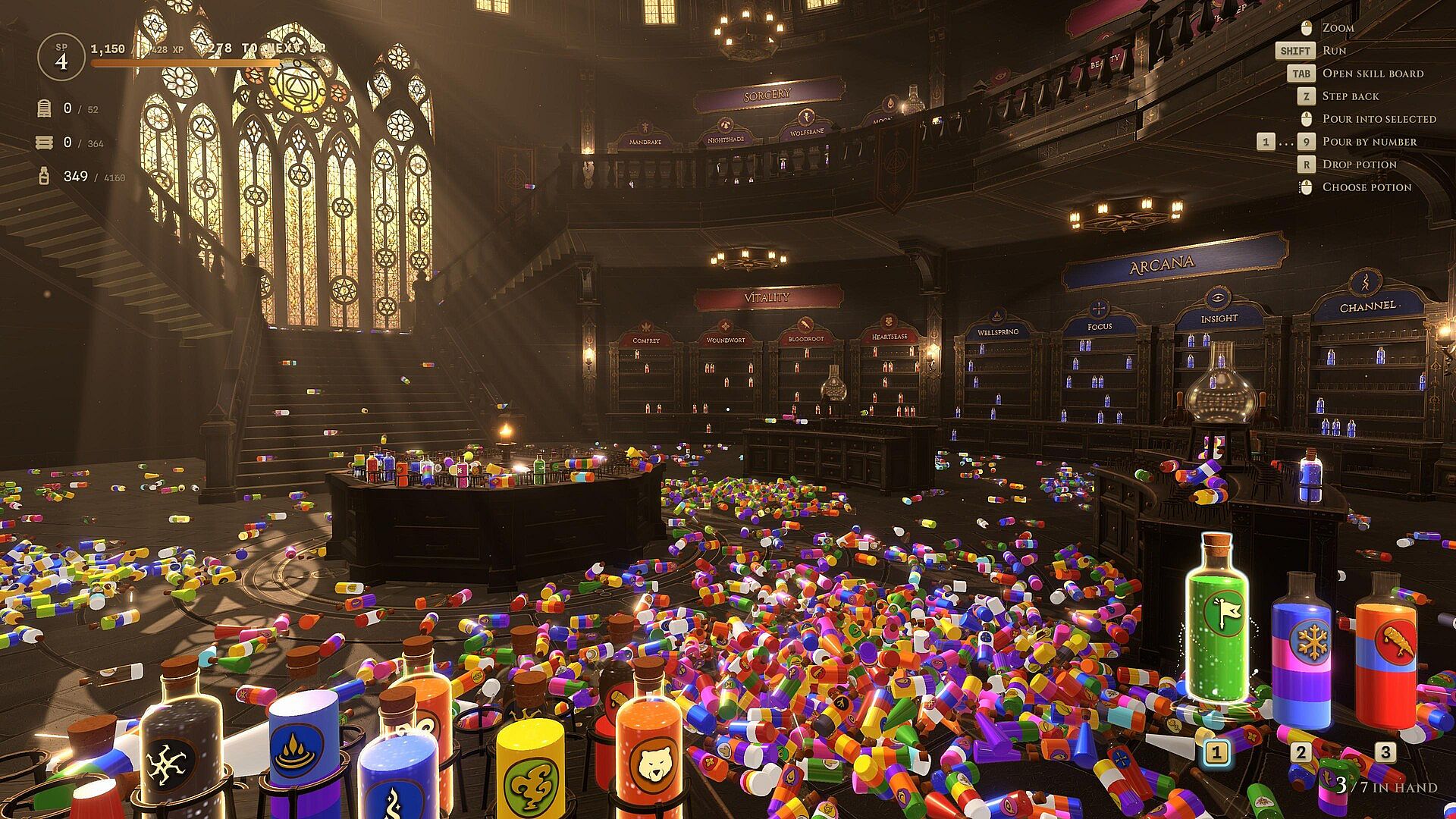
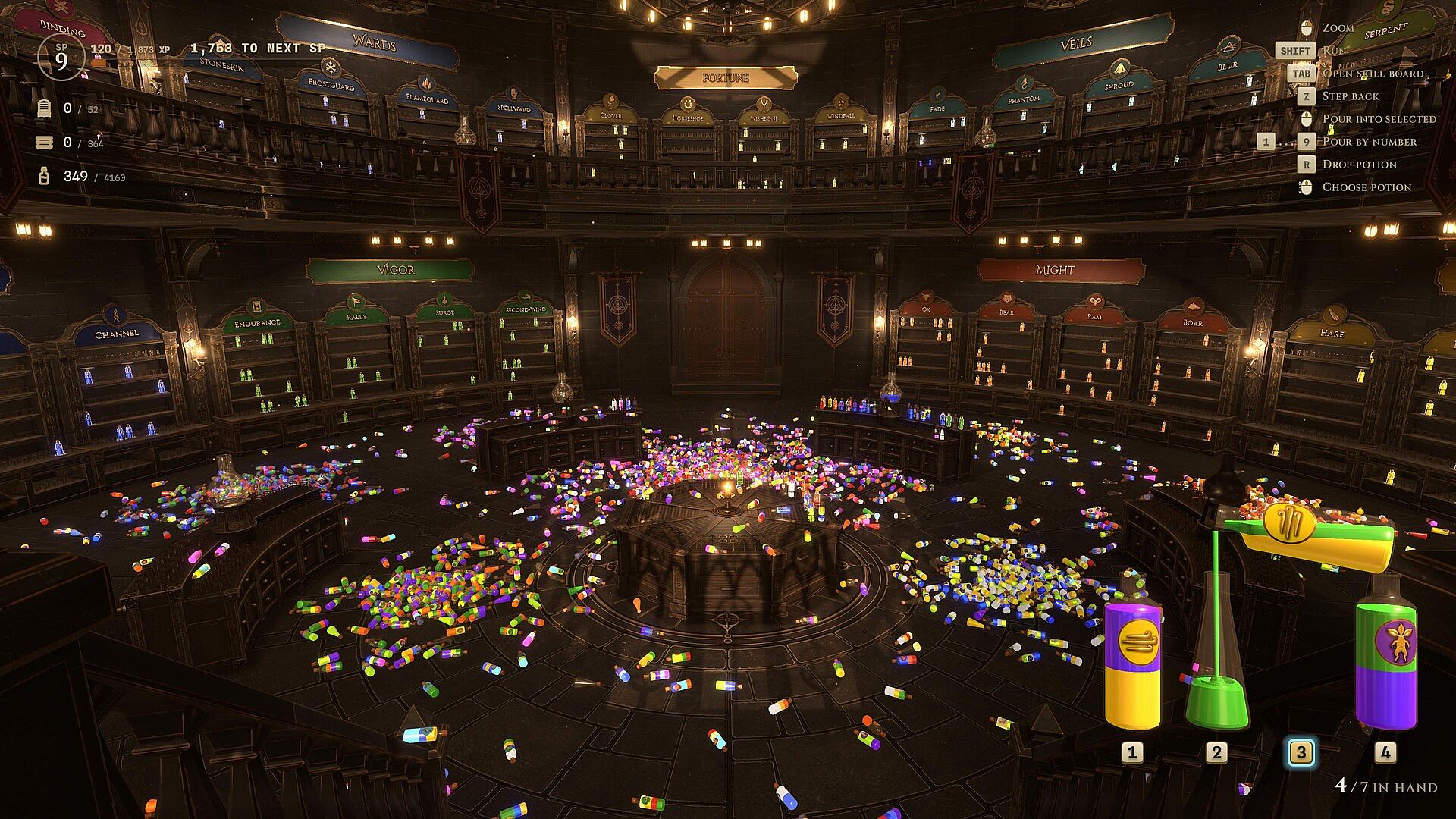
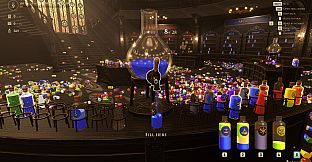
A Place for Every Potion is an indie casual simulation game built around two interlocking sorting puzzles set inside a single laboratory. Players step into the role of an alchemist tasked with restoring order after a spell mishap scatters thousands of potions across the floor. The experience centers on decanting mixed liquids into pure colors and then shelving each finished bottle in its correct spot among 52 sections and 364 rows.
Gameplay
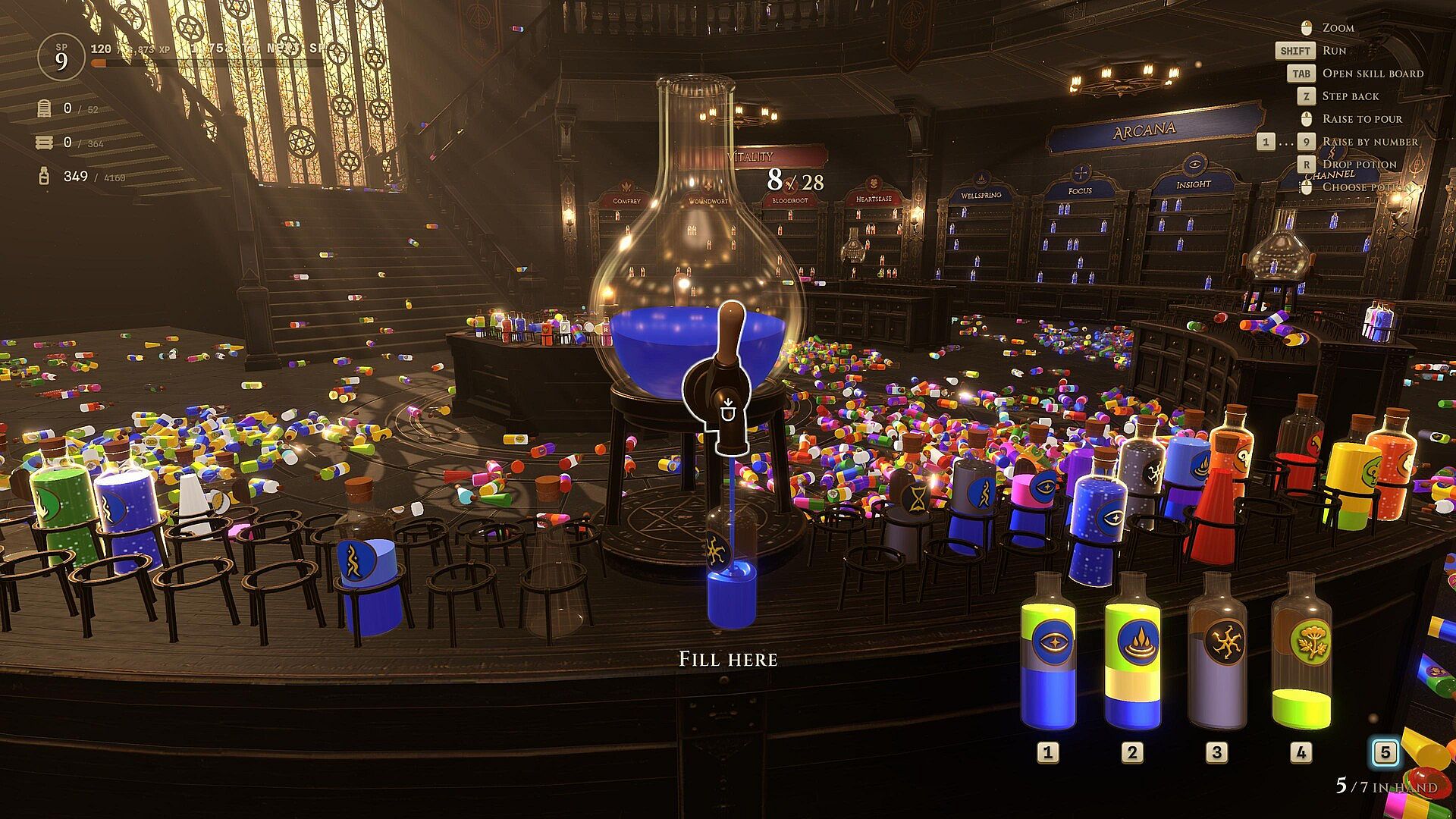
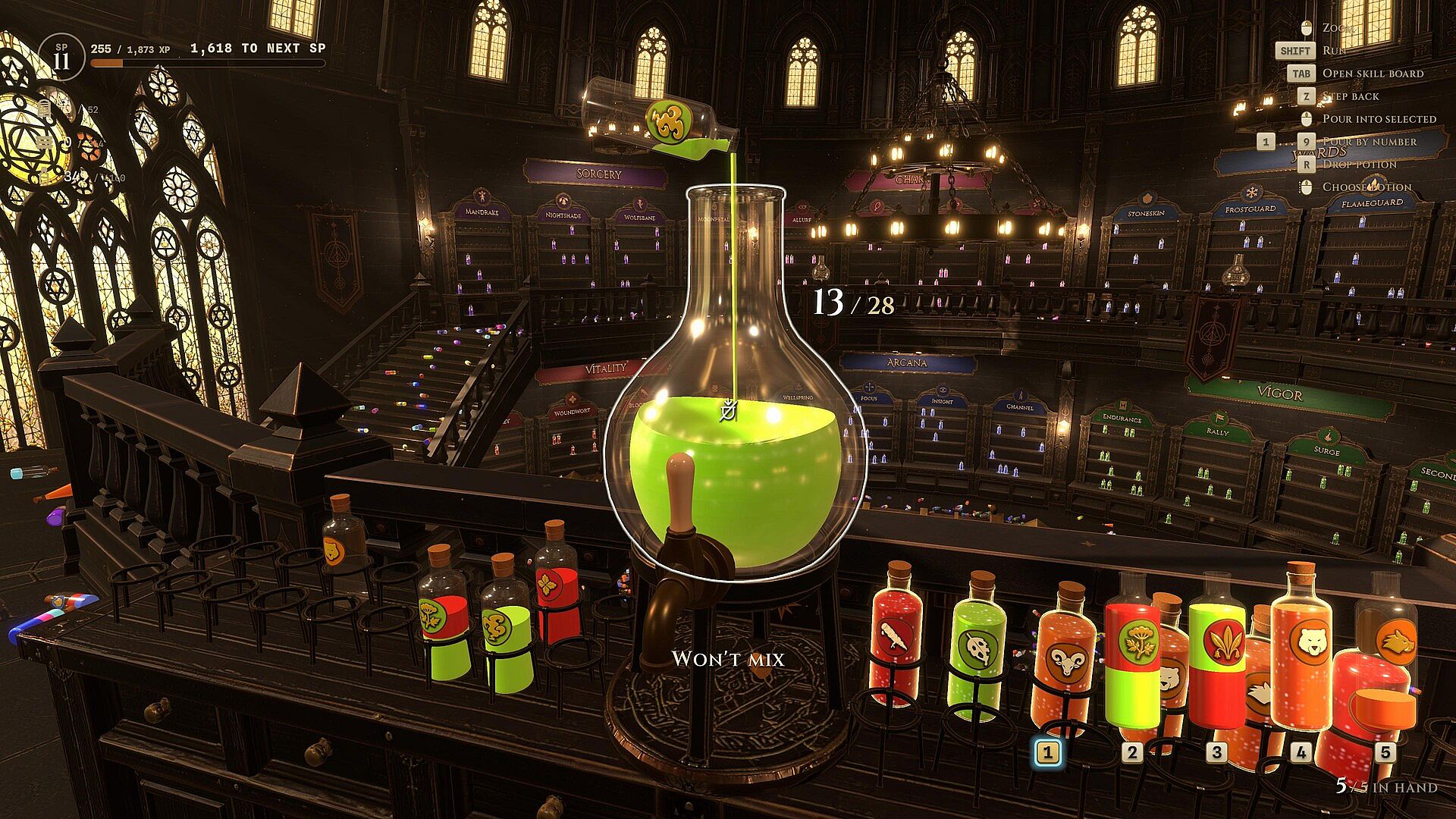
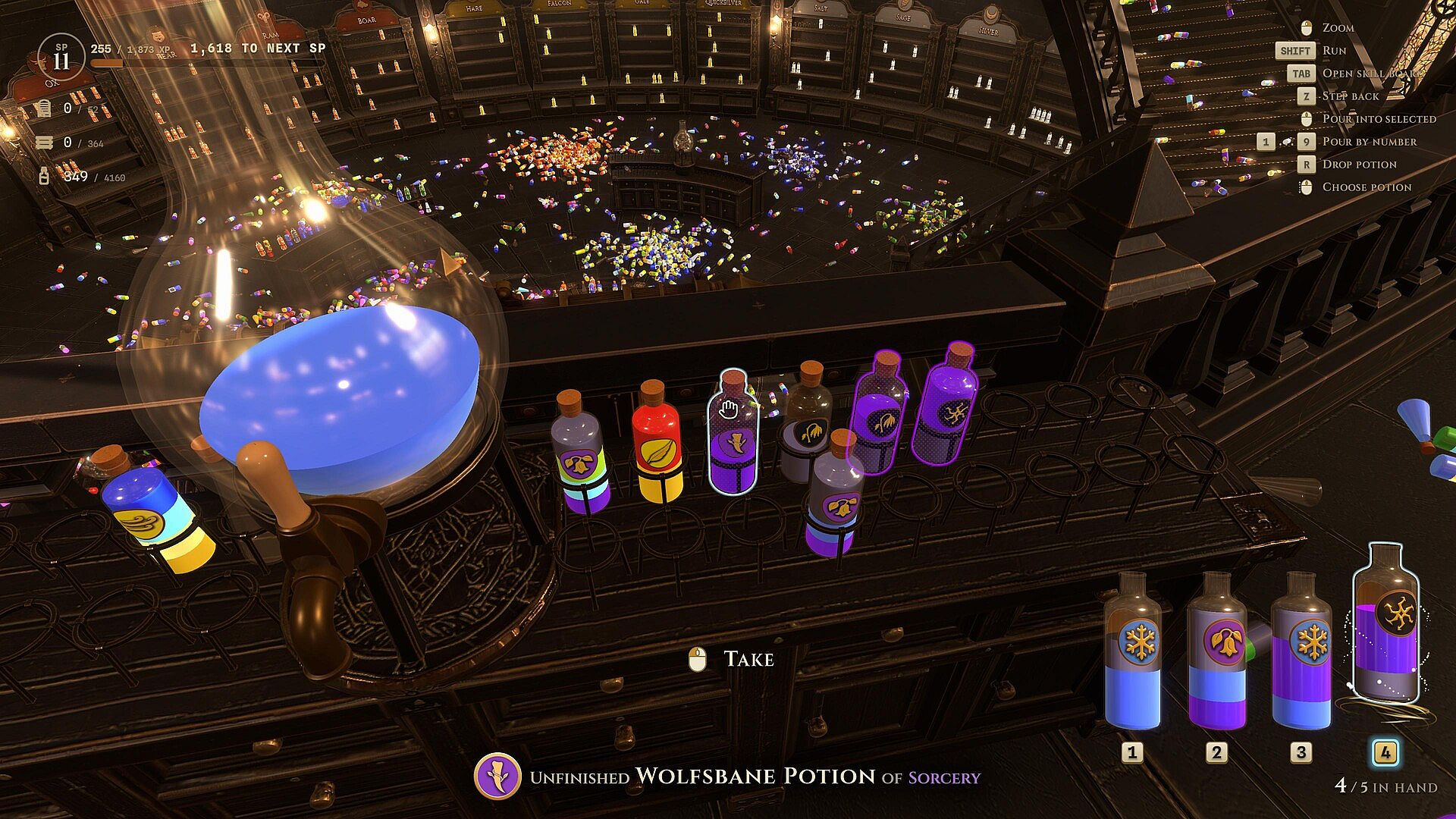
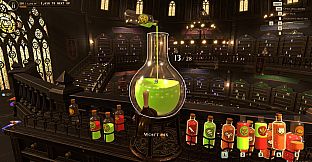
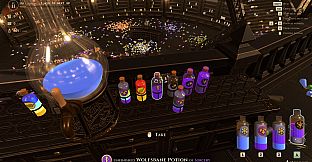
The core loop combines a water-sort style decanting puzzle with a spatial shelving challenge. Liquids start scrambled in bottles, and the first step requires pouring them between containers until each holds a single pure color. Once a potion is complete, it must be carried across the two-floor gothic rotunda to the matching shelf, guided by color on one axis and a sigil on the label for precise placement.
Both tasks draw from the same limited capacity to levitate bottles, forcing constant decisions about what to hold, pour, or transport next. The laboratory itself serves as a visible progress tracker: the central pile shrinks while shelves fill and illuminate. All 4,160 potions exist from the start in one continuous space, with no respawning or refilling elements.
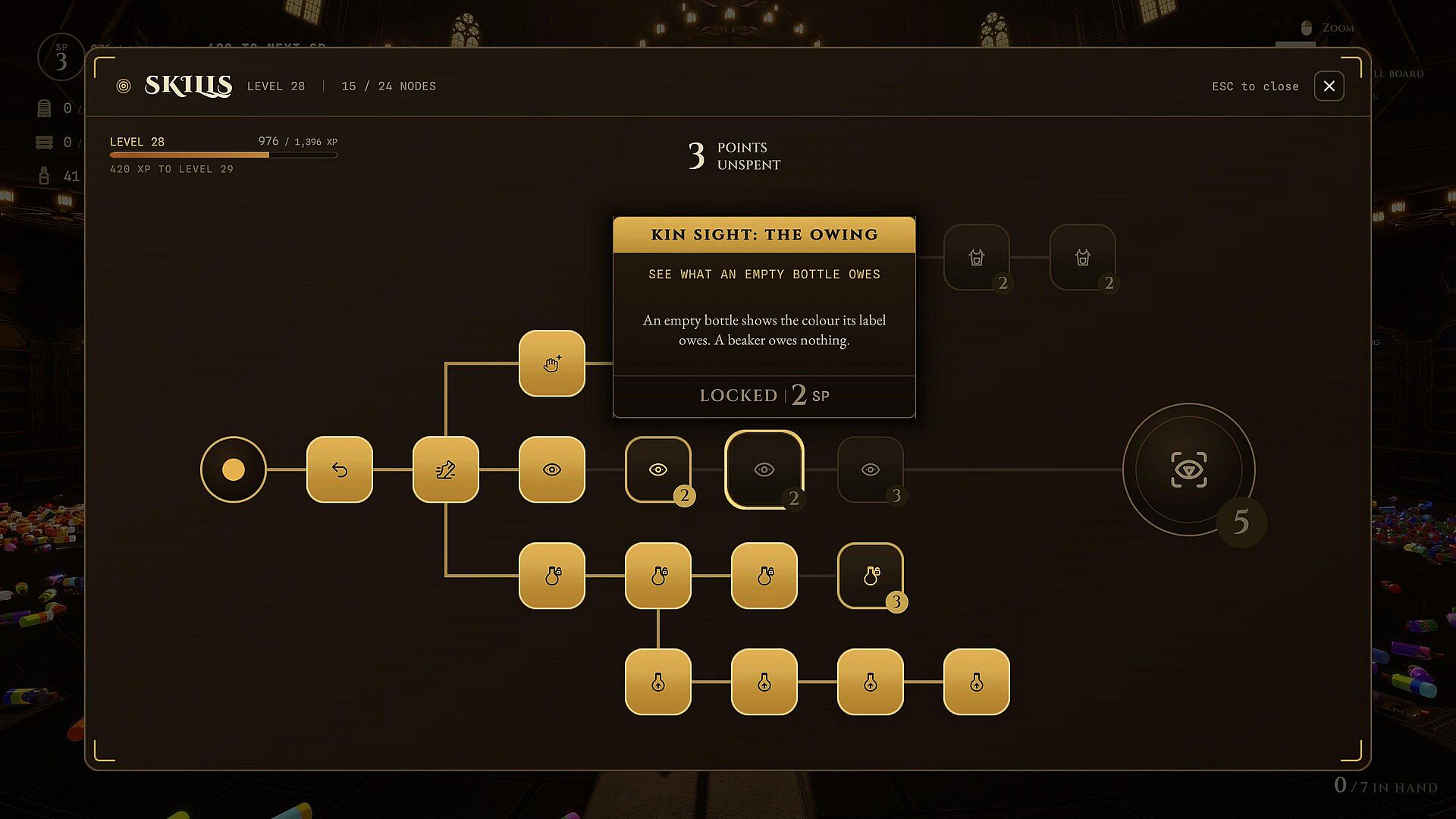
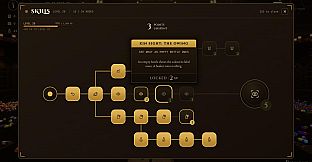
Progression comes through a 24-node skill board offering 47 upgrades. These improvements expand reach, buffer sizes, or visual aids without automating any actions. Input options include full rebinding, an FOV slider, and a toggleable HUD. Autosaves occur after every pour and placement, supporting sessions that can pause and resume without penalty.
Game Modes
The game offers a single continuous experience rather than separate named modes. Players work through the fixed set of 4,160 potions in one laboratory environment, with the option to toggle three numerical counters for sections, rows, and total potions. Difficulty adjustments arrive through the skill board and optional HUD elements, but the fundamental loop of decanting and shelving remains consistent throughout.
Optional counters and the skill system allow players to customize visibility and tool access while keeping the core challenge intact. The structure supports extended play sessions or shorter returns to the same state, with no branching paths or alternate scenarios.
Atmosphere and Features
The setting is a two-floor stone rotunda filled with warm afternoon light through tall arched windows. Audio focuses on the sounds of glass and liquid alongside a quiet score. Every action carries permanence once completed, and misplaced bottles can be retrieved without consequence.
Key systems include the 52 shelved sections across thirteen potion families and the emphasis on manual control at every step. The game tracks exact counts of remaining potions and empty shelf space, providing clear feedback on completion without hidden metrics or rounding.
Is It Worth Playing?
This title suits players seeking a relaxed puzzle experience with clear goals and no time pressure or failure states. The finite scope, with every potion accounted for from the outset and a defined endpoint when the laboratory is fully restored, appeals to those who prefer completion over endless loops. The intertwined mechanics reward thoughtful planning while remaining accessible through adjustable tools and generous save features.
Those who enjoy water-sort puzzles or organizational simulations will find the dual-task tension engaging, especially as capacity management becomes more intuitive with skill upgrades. The absence of penalties or external demands makes it a low-stress option for casual sessions on PC.