




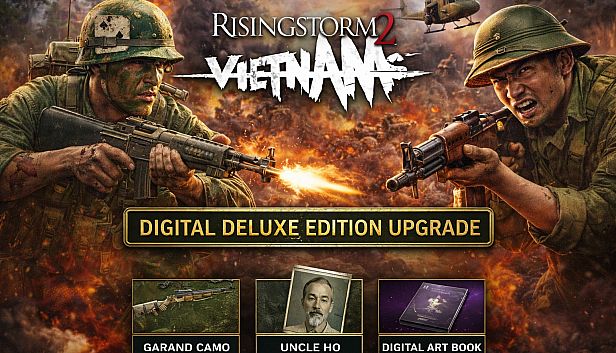













Rising Storm 2: Vietnam is a tactical first-person shooter set during the Vietnam War. It emphasizes large-scale multiplayer combat with asymmetrical forces on opposing sides. The game supports up to 64 players in matches that highlight teamwork, positioning, and objective control across jungle and village environments.
Gameplay
The core loop revolves around infantry combat supported by limited vehicles and call-ins. Players select roles within squads that include riflemen, machine gunners, and specialists equipped with period-accurate weapons. Movement feels deliberate, with emphasis on cover usage and suppression fire rather than run-and-gun tactics. Proximity voice chat encourages coordination, allowing nearby teammates to hear and respond to calls without global communication.
US forces benefit from aerial support options such as helicopter insertions and napalm strikes, while opposing teams rely on guerrilla tactics including tunnel networks and ambushes. Character customization covers uniforms, faces, and loadouts that reflect historical units without altering core balance. Maps exceed twenty in number and feature dense foliage, rice paddies, and fortified positions that reward careful flanking and defensive setups.
Game Modes
Three distinct modes structure the matches. Territories places one team on offense and the other on defense, with attackers advancing through sequential objectives to capture the full map. Defenders hold ground while attackers push forward under time pressure.
Supremacy introduces a more fluid objective system where teams contest multiple points in succession. Control shifts dynamically as players capture and reinforce areas, leading to back-and-forth advances across the battlefield.
Skirmish scales down to smaller player counts on compact maps. Teams fight over three objectives with limited respawns tied to holding at least one point, creating faster rounds suited to competitive or smaller group play.
Factions and Combat Systems
Matches pit United States Army and Marine Corps units against North Vietnamese Army regulars and Viet Cong guerrillas. Each side uses distinct weapon sets and abilities that reflect real historical differences in equipment and doctrine. US players access heavier firepower and air assets, while Vietnamese forces emphasize stealth, traps, and rapid repositioning through hidden routes.
Combat mechanics include realistic ballistics, limited ammunition, and role-specific tools such as demolition charges for objectives. Matches reward squads that communicate positions and coordinate pushes rather than individual heroics. The asymmetrical design ensures each faction plays differently, with no mirrored loadouts or abilities.
Is It Worth Playing?
The game remains a focused multiplayer experience for those seeking tactical first-person shooter action in a Vietnam War setting. It delivers consistent large-scale battles with clear role distinctions and objective-driven gameplay that rewards coordination. Matches run on dedicated servers with active communities years after launch, and the three modes provide variety for different group sizes and play styles.
Players who enjoy deliberate pacing, historical authenticity in equipment, and team-based objectives will find strong value here. Those preferring fast-paced arcade shooters or single-player campaigns may find the emphasis on communication and positioning less appealing. Availability centers on standard multiplayer access without additional single-player content or seasonal updates.


