


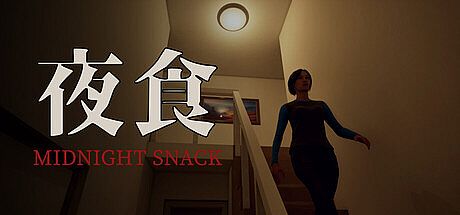


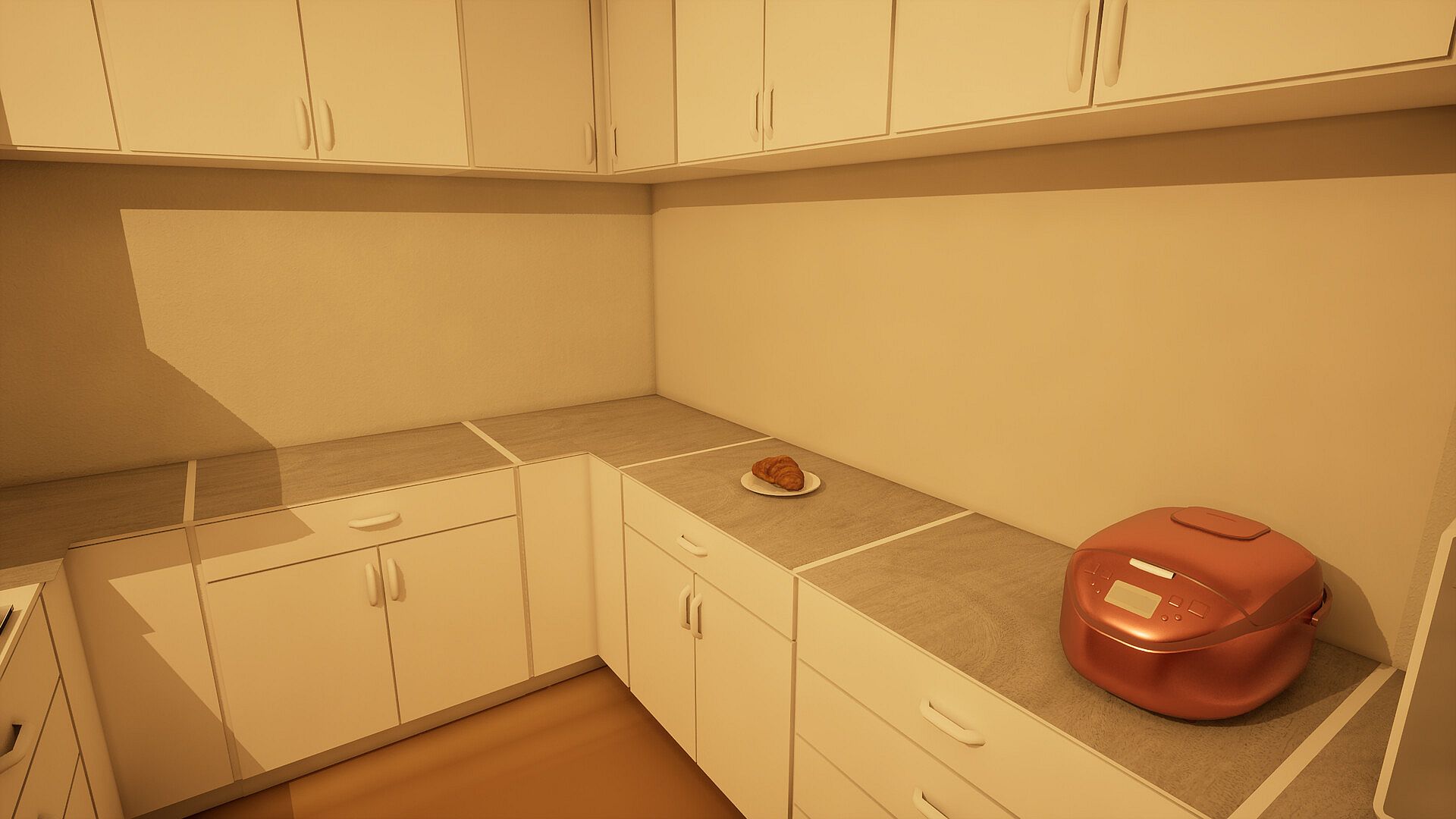
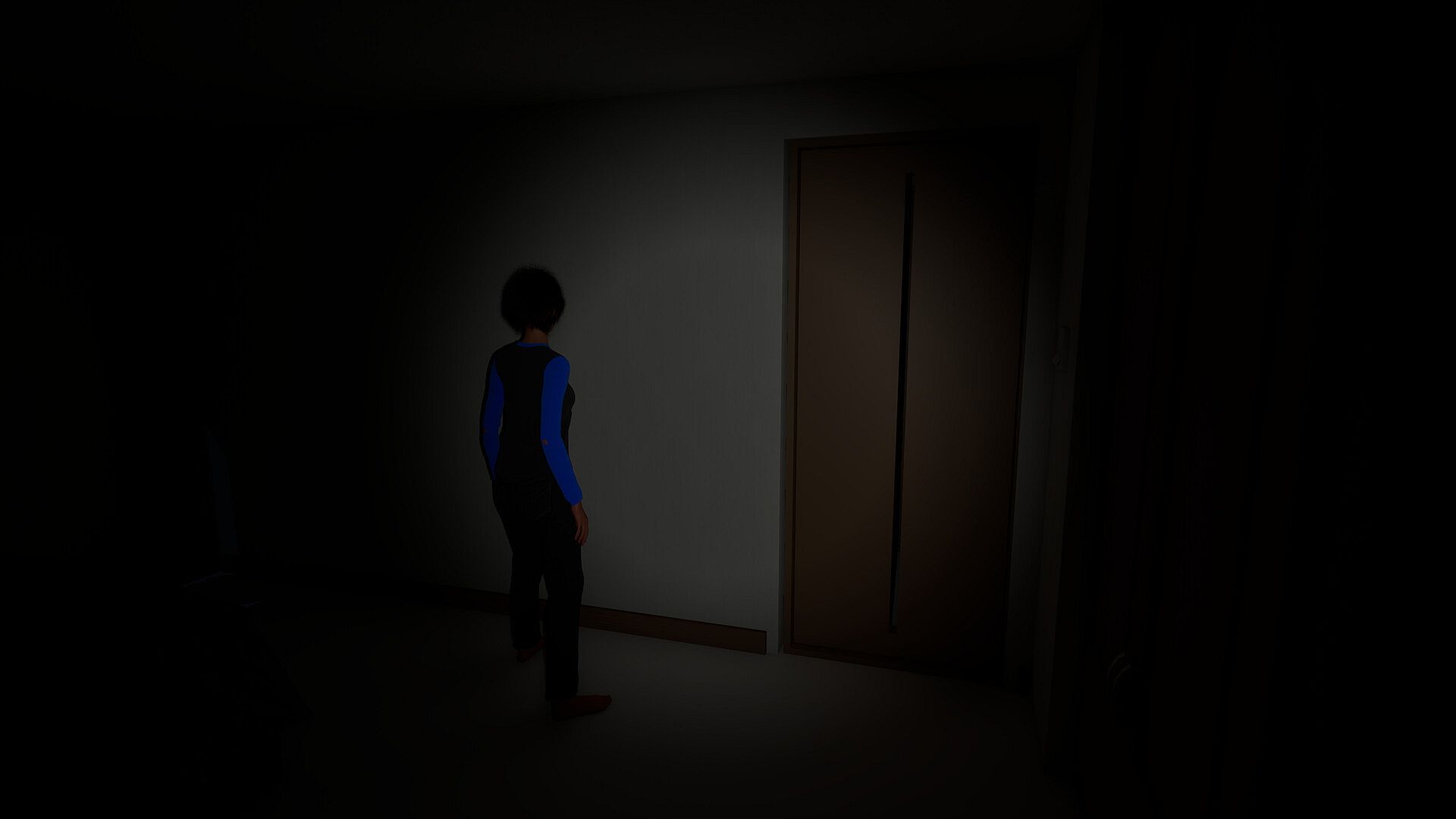
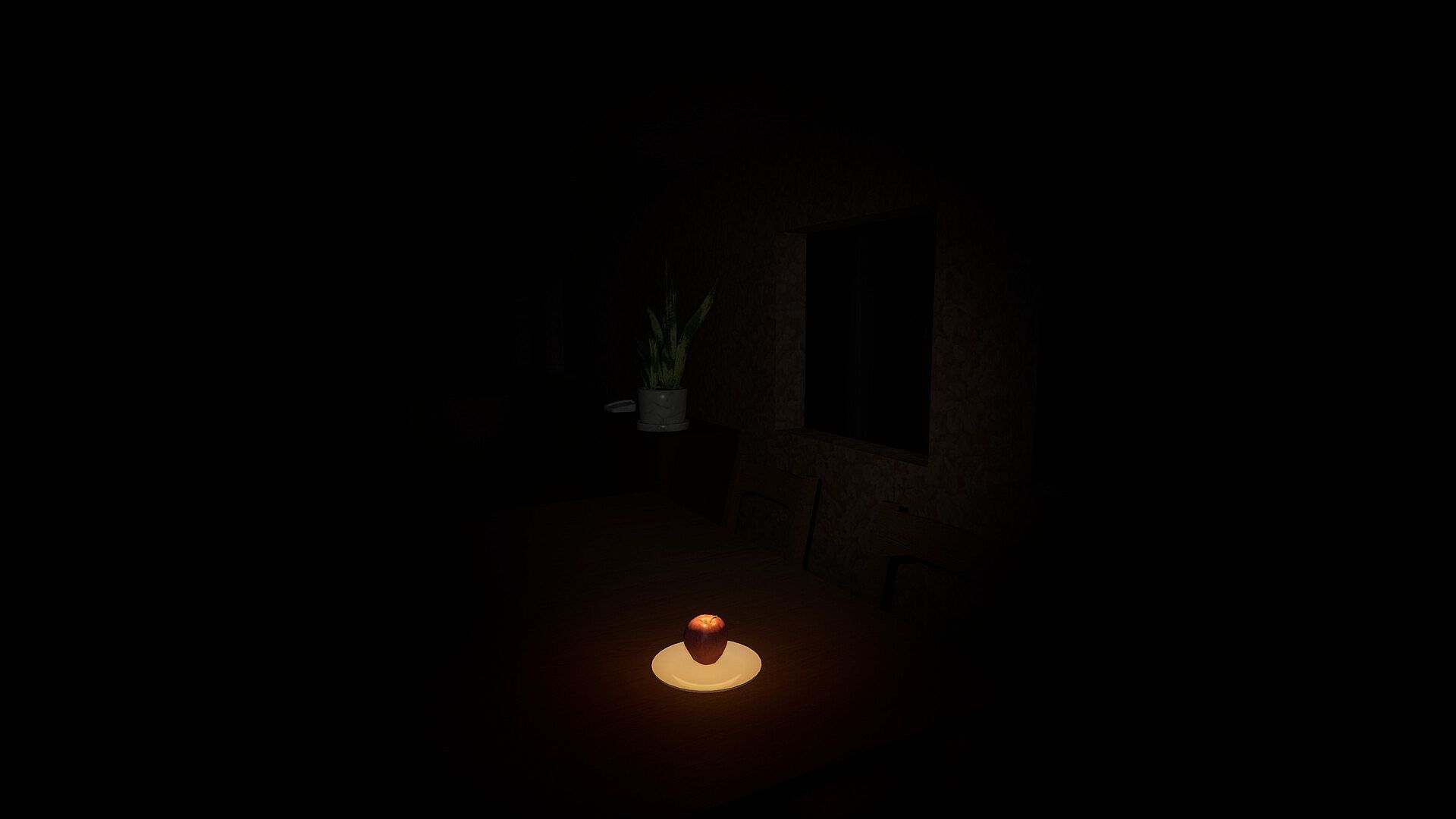
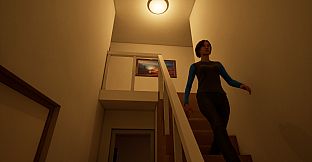
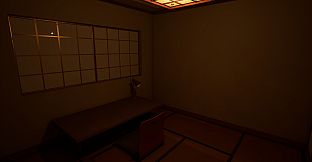

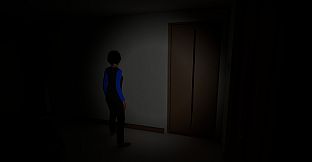
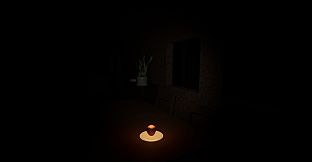
Yashoku: Midnight Snack is a first-person stealth horror adventure game developed for PC. Players take on the role of a boy who repeatedly sneaks through a Japanese family home at night in search of a snack from the kitchen, all while avoiding detection by Mom. The experience emphasizes careful movement, auditory cues, and environmental awareness rather than combat or complex puzzles.
Gameplay
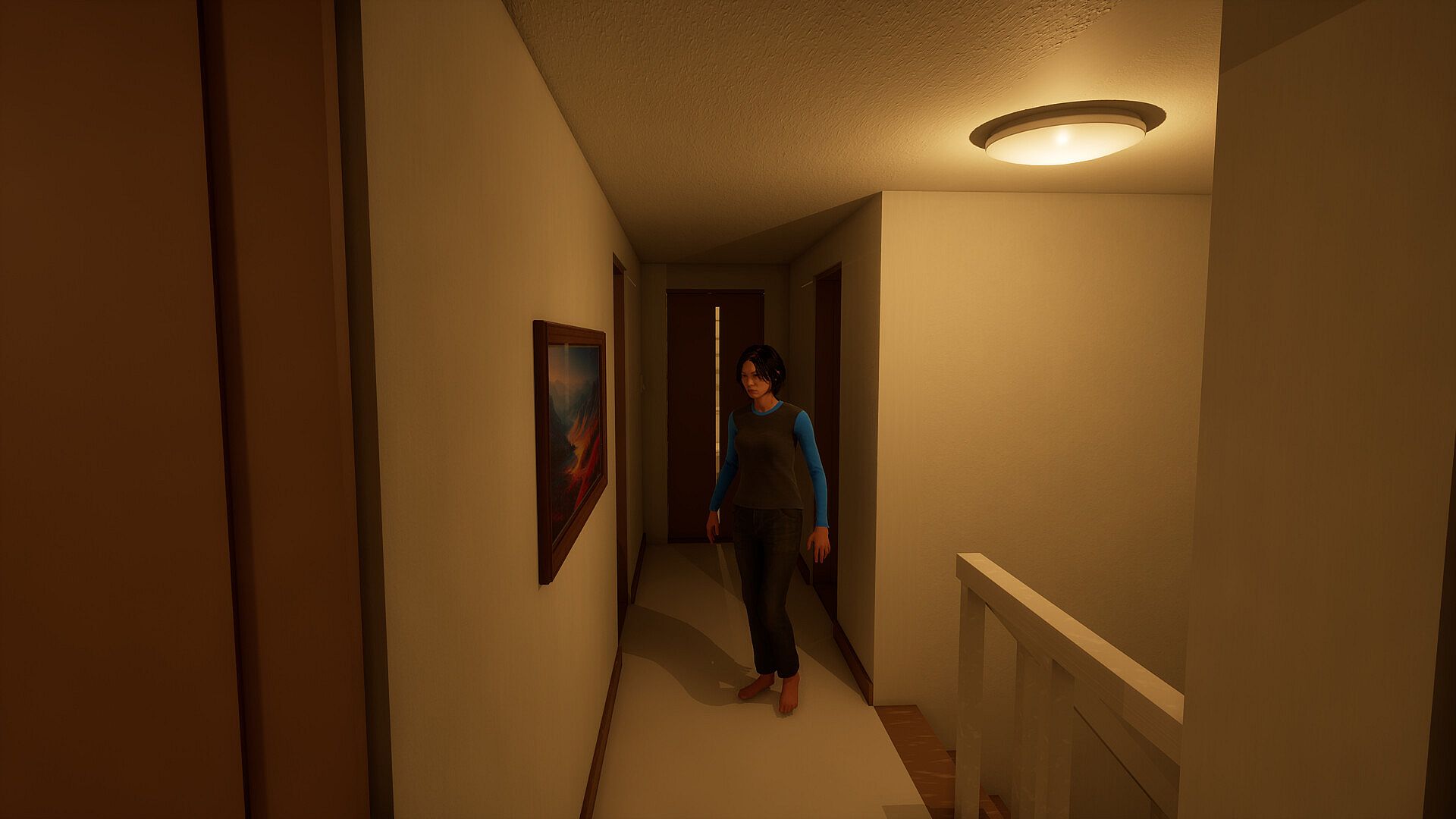
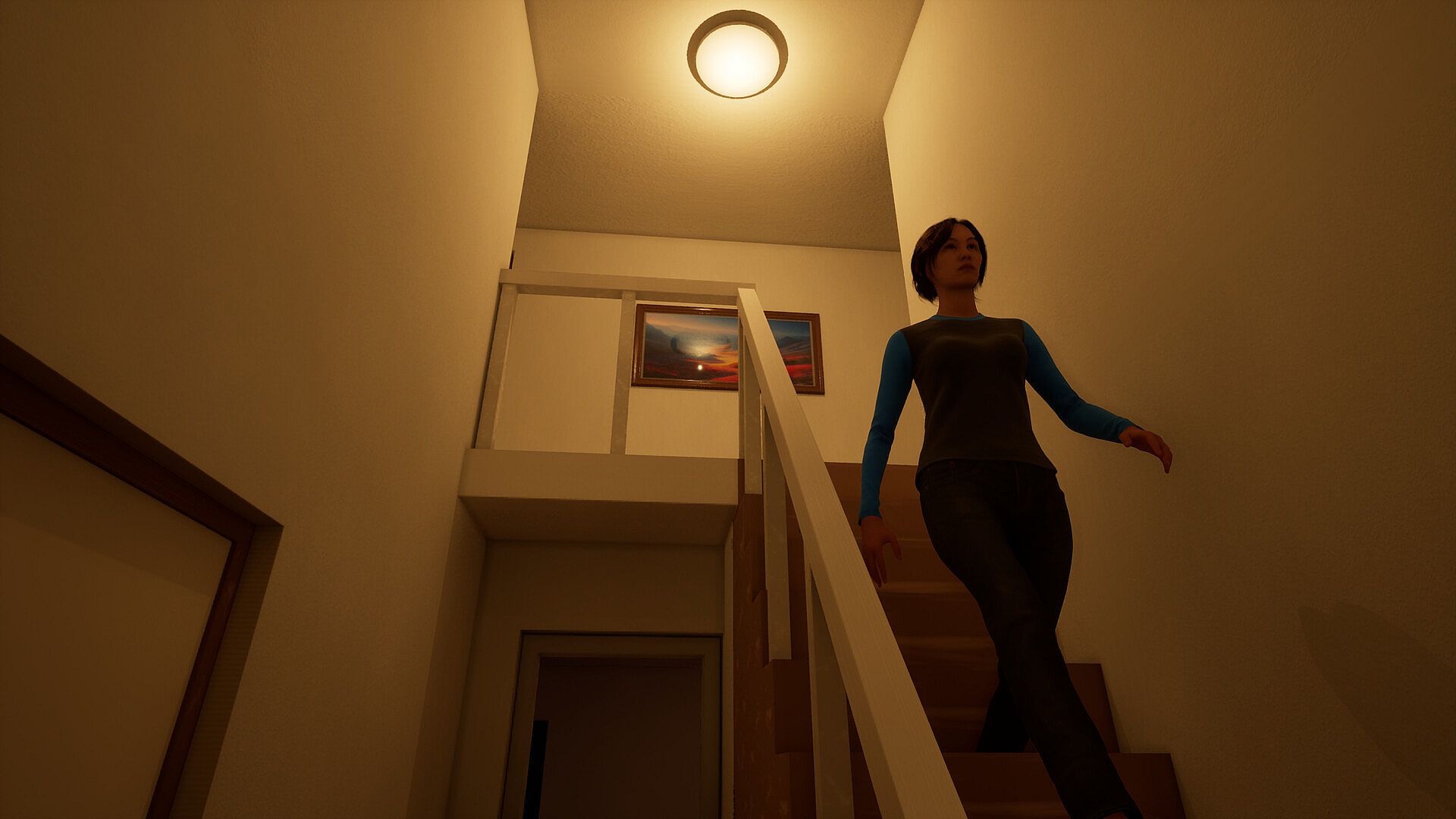
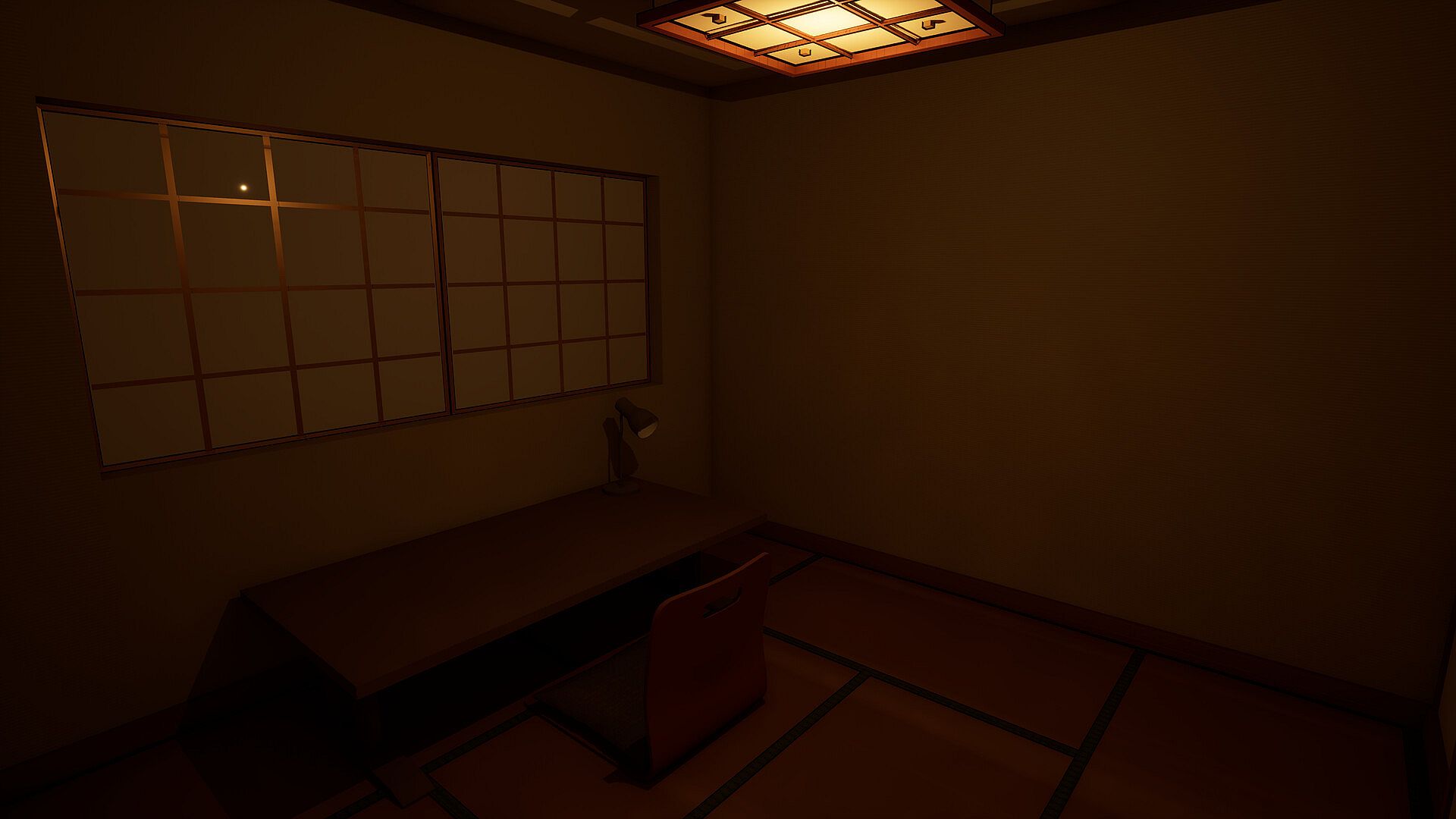
The core loop centers on traversing the house from the starting room to the kitchen. Players move through tatami-floored spaces, sliding fusuma doors, a bathroom, and a child's bedroom while listening for footsteps and monitoring an audible heartbeat that signals Mom's proximity. Crouching reduces footstep noise, and sudden detection requires quick dashes to closets for hiding until the threat passes. Real-time ray tracing renders the ordinary home with realistic lighting and shadows that heighten tension during nighttime sequences. Sound design replaces any background music with creaking floorboards, the refrigerator hum, and the player's own heartbeat, forcing reliance on these environmental audio signals. The house layout remains consistent across play sessions, yet small alterations and shifting behaviors keep each attempt distinct.
Game Modes
The game structures its content around ten distinct nights. Each night applies different rules and obstacles within the same home environment. Some nights require holding breath to avoid detection, others introduce the need to locate a key, and later nights feature external eyes observing through windows. These variations alter Mom's patrol patterns and add new constraints without changing the fundamental goal of reaching the kitchen. The progression builds toward a final night that provides context for the repeating hunger motif. No separate multiplayer or alternative modes exist; the entire experience unfolds as a single-player sequence of these nightly challenges.
Story and Atmosphere
The narrative unfolds through repetition and subtle environmental changes rather than direct exposition. The boy wakes hungry night after night in an everyday Japanese household rendered with precise details like tatami mats and traditional doors. The final night reveals the reason behind the recurring scenario. Atmosphere derives from the contrast between the familiar domestic setting and the growing unease created by limited visibility, restricted movement options, and the constant threat of discovery. Ray tracing enhances the sense of a lived-in space where light sources cast natural shadows that can conceal or reveal threats.
Technical Details and Length
System requirements specify Windows 10 or 11, a processor at least equivalent to an Intel Core i5-9400, 8 GB RAM minimum, and a GPU with hardware ray tracing support such as an RTX 2060. The game runs at around 30 frames per second on minimum settings at 1080p. Recommended hardware improves performance to 45-60 frames per second on higher settings. Total playtime for a first completion falls between 30 and 60 minutes, with replay value stemming from the rule changes across the ten nights. The title supports English and Japanese interfaces along with full audio in both languages.
Is It Worth Playing?
This upcoming title suits players who enjoy short, focused stealth horror experiences built around sound and patience rather than action or lengthy campaigns. The single-player structure with its ten nights of varying rules provides a compact loop that rewards careful observation and repeated attempts. Absence of music and emphasis on realistic household audio create a distinctive tension that stands out in the indie horror space. With a planned release in Q1 2027 and no current player reviews available, interest depends on appreciation for atmospheric single-player adventures that prioritize immersion over extended content. Those seeking a brief, mechanically consistent experience with a domestic Japanese setting may find the approach appealing once it launches.












