

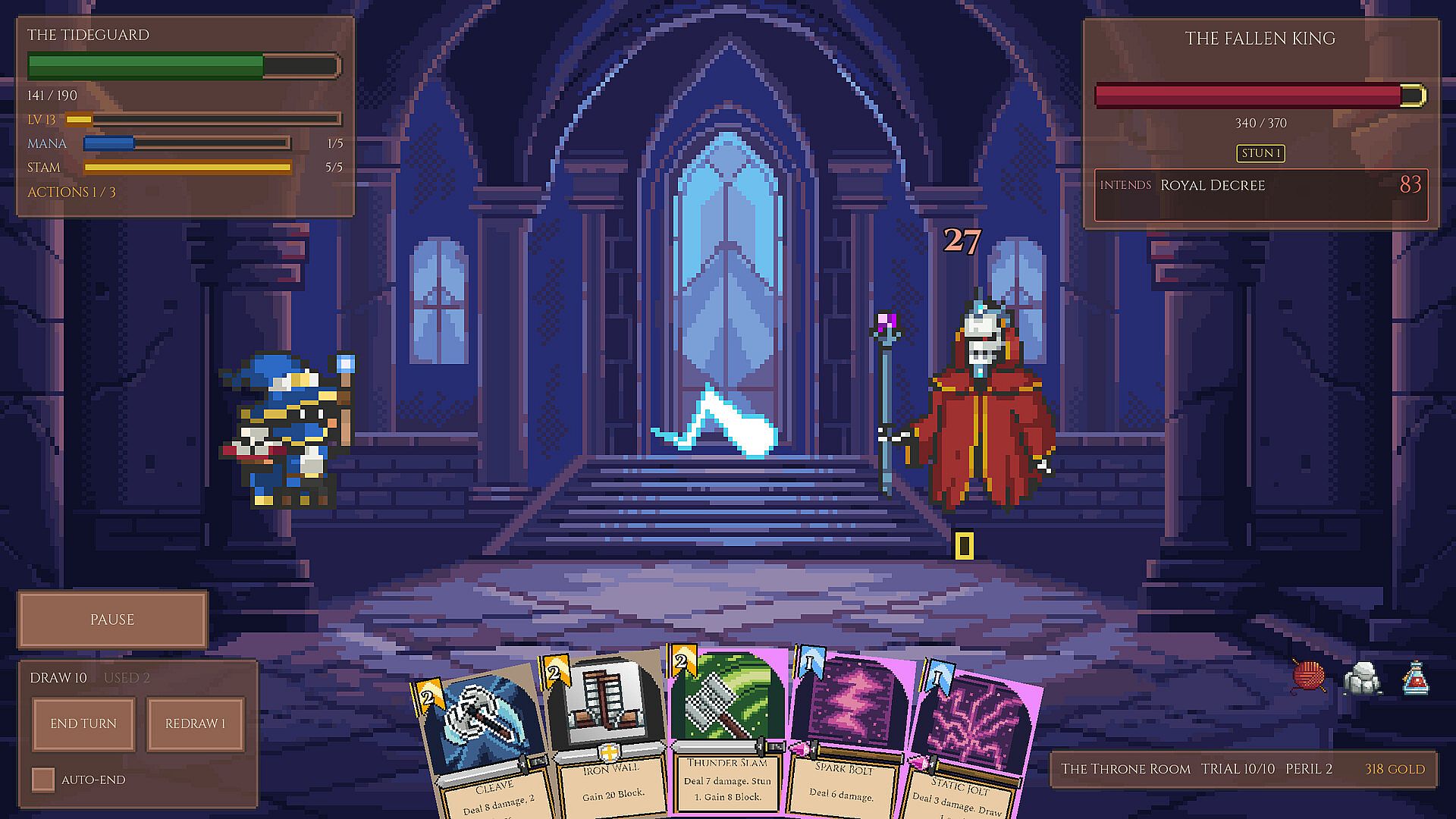


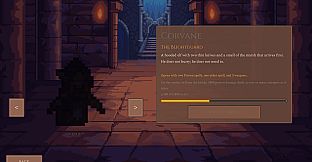
Wizard Warrior is a pixel-art roguelike deckbuilder that blends strategy, indie, casual, and adventure elements on PC. Players draw five cards each turn and select three actions while two cards remain unplayed, building decks around spells that consume mana and weapons or shields that use stamina. The core loop centers on single-enemy encounters where foresight determines survival across procedurally generated roads.
Gameplay
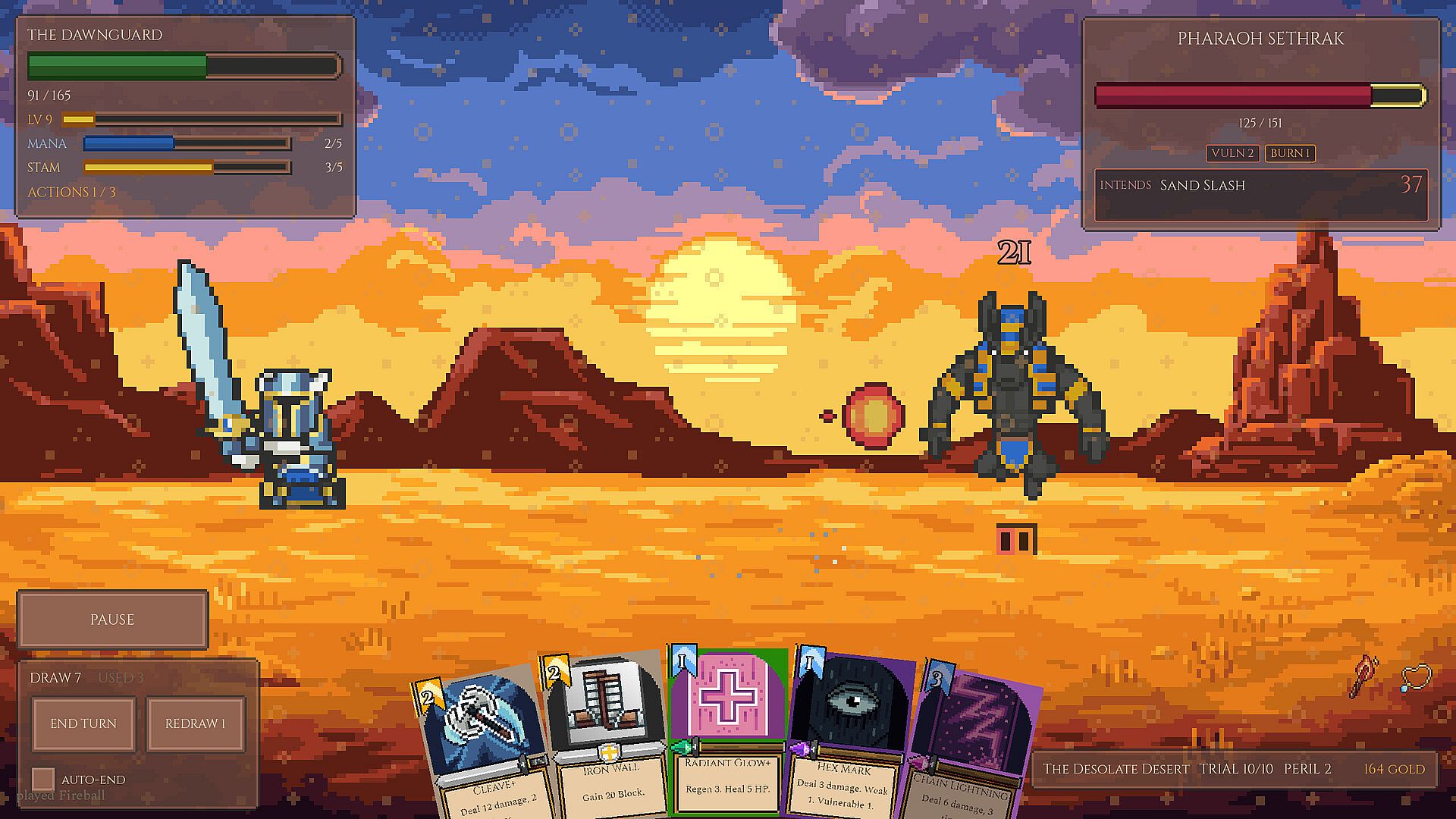
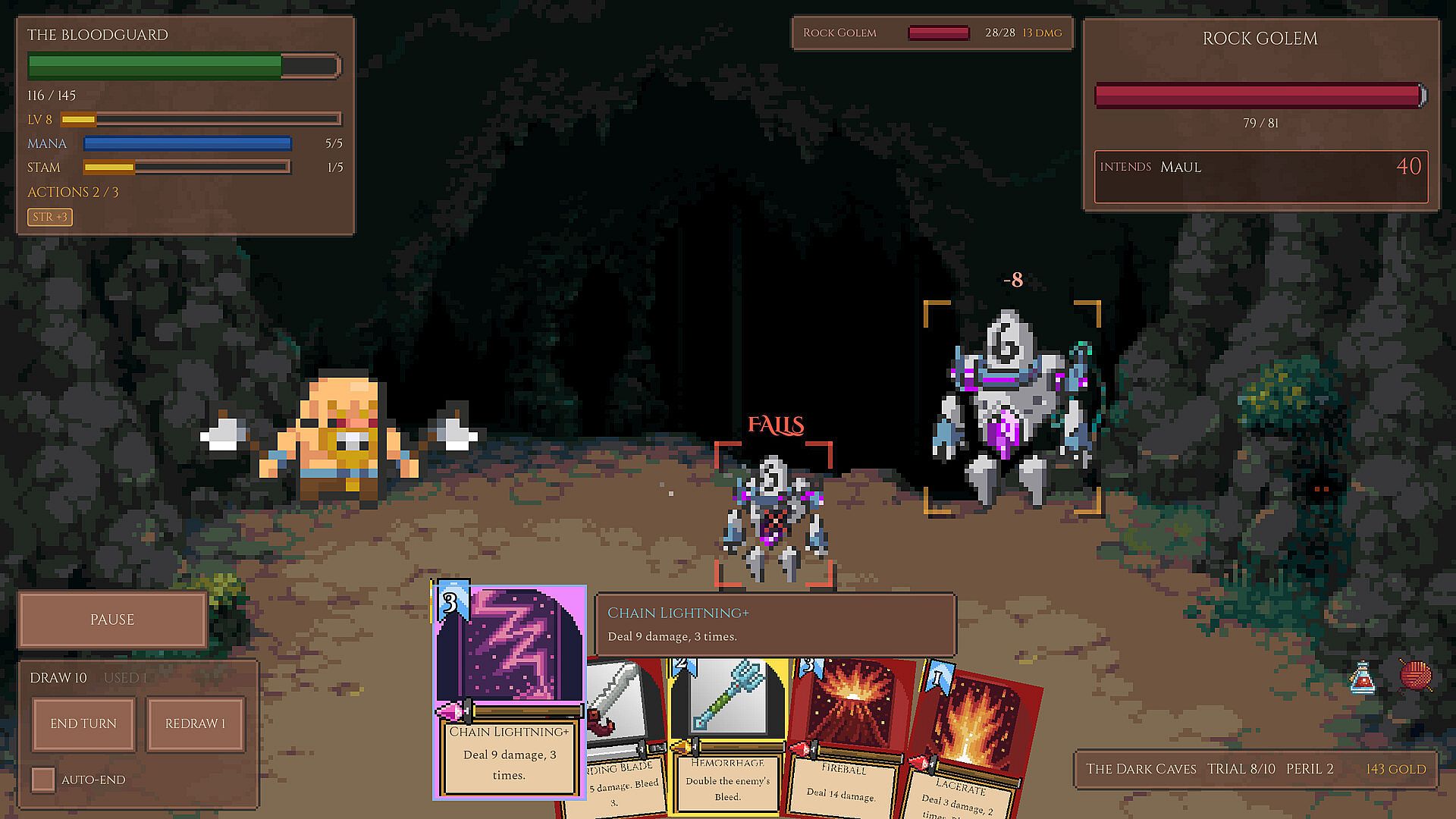
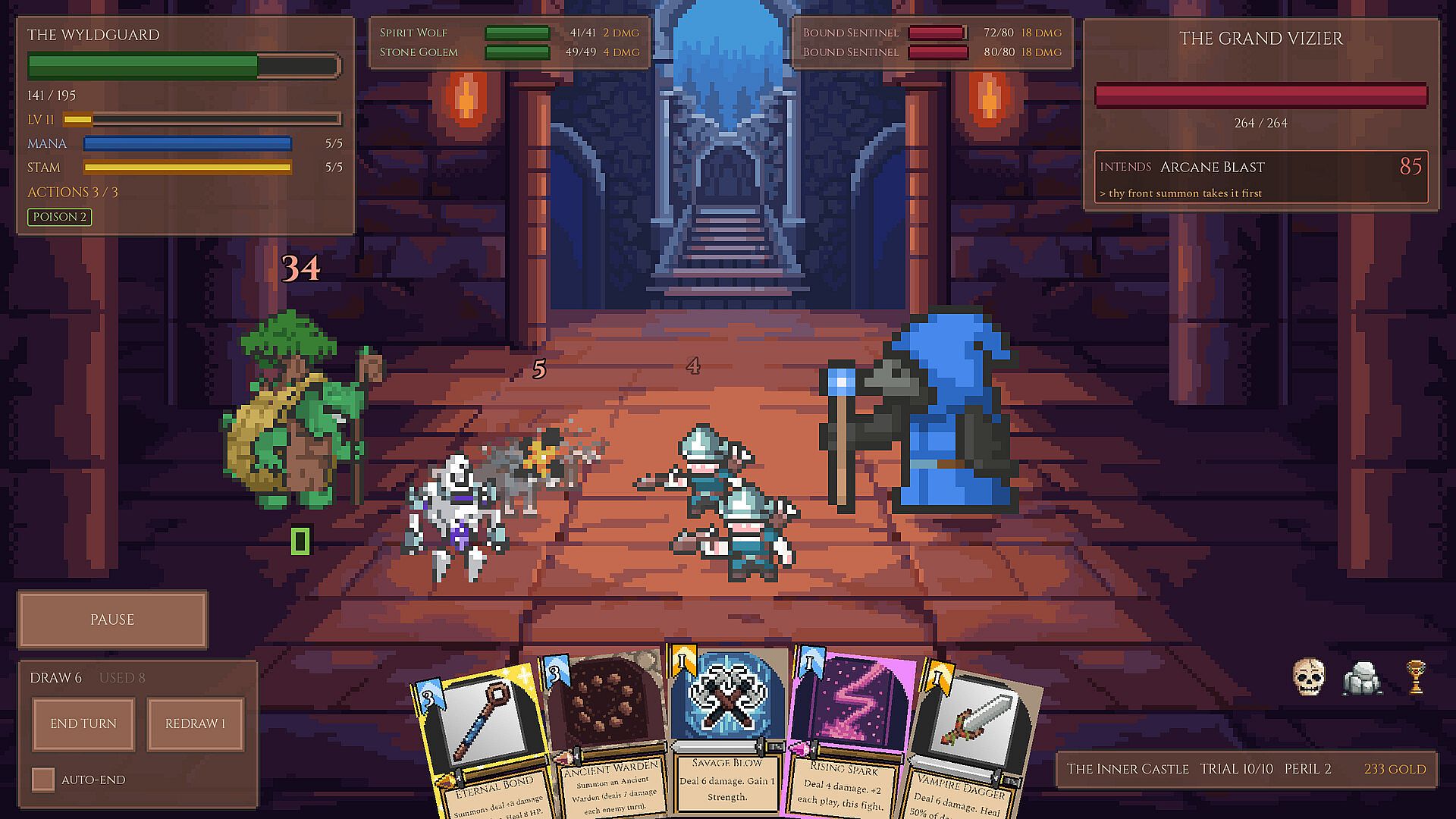
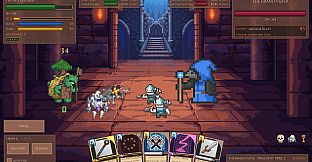
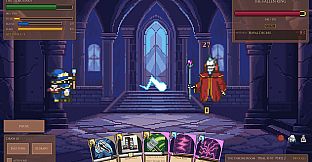
Combat emphasizes prediction over reaction. Hovering any card reveals its exact effects, marking damage on targets, indicating which bodies will fall, and showing status placements before commitment. Foes announce their next move in advance, allowing players to plan blocks, summons, or counters. No manual targeting exists; hits always strike the frontmost body first, with overflow reaching the leader. Health carries over between fights without automatic refill, making block, healing, and control cards essential alongside damage.
Summons add layers to every battle. Players and enemies can field up to three spirit wolves, dire hounds, stone golems, or harpies at once. These units possess independent health, attack each round, and absorb incoming damage. Effects remain attached to the specific body they hit, so burning or poisoning a summon affects only that unit. The system creates pack-versus-pack dynamics when both sides field creatures.
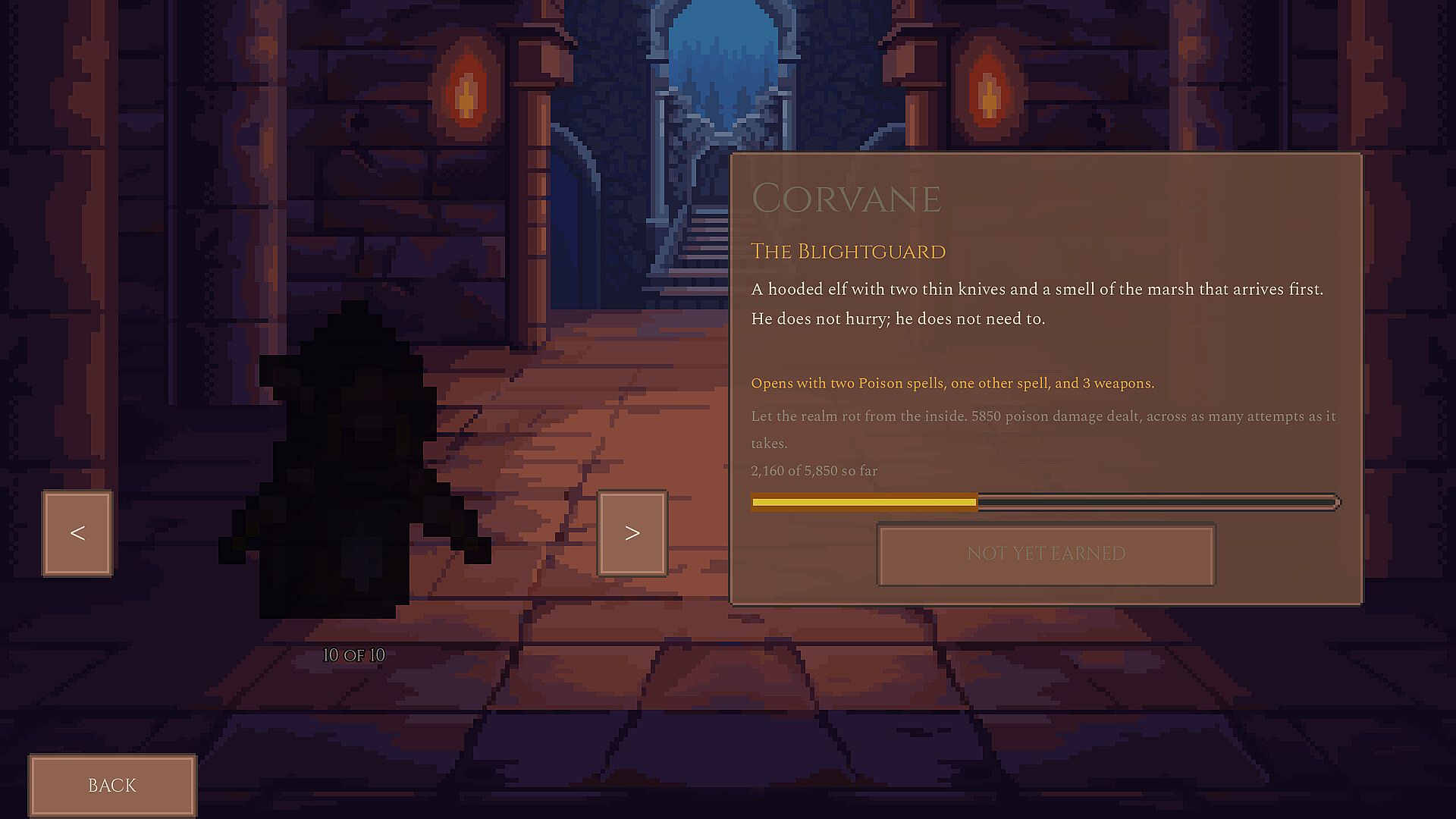
Progression ties to ten distinct houses. The Dawnguard serves as the starting option with Aurelian and his sword. Additional houses unlock through cumulative achievements such as dealing 1,250 fire damage across runs or completing higher difficulty challenges. Each house features a unique hero and playstyle, including a dwarf focused on bleed with dual axes or a tortoise that summons wolves and golems. Winning runs opens creeds with oath choices and house cards that upgrade to rank III and enter the starting deck. Further success on elevated difficulty grants heirlooms carried on every subsequent run.
Game Modes
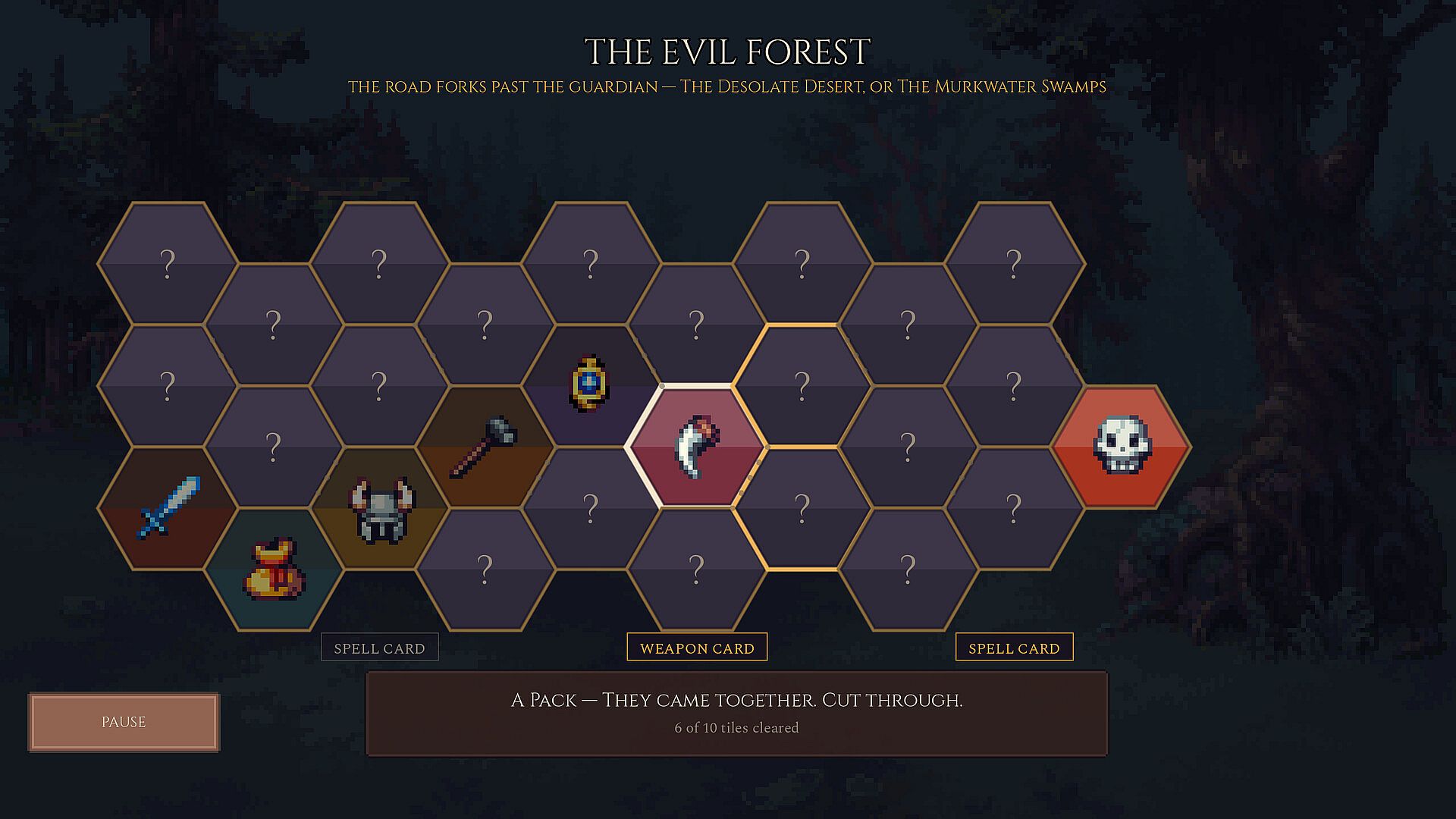
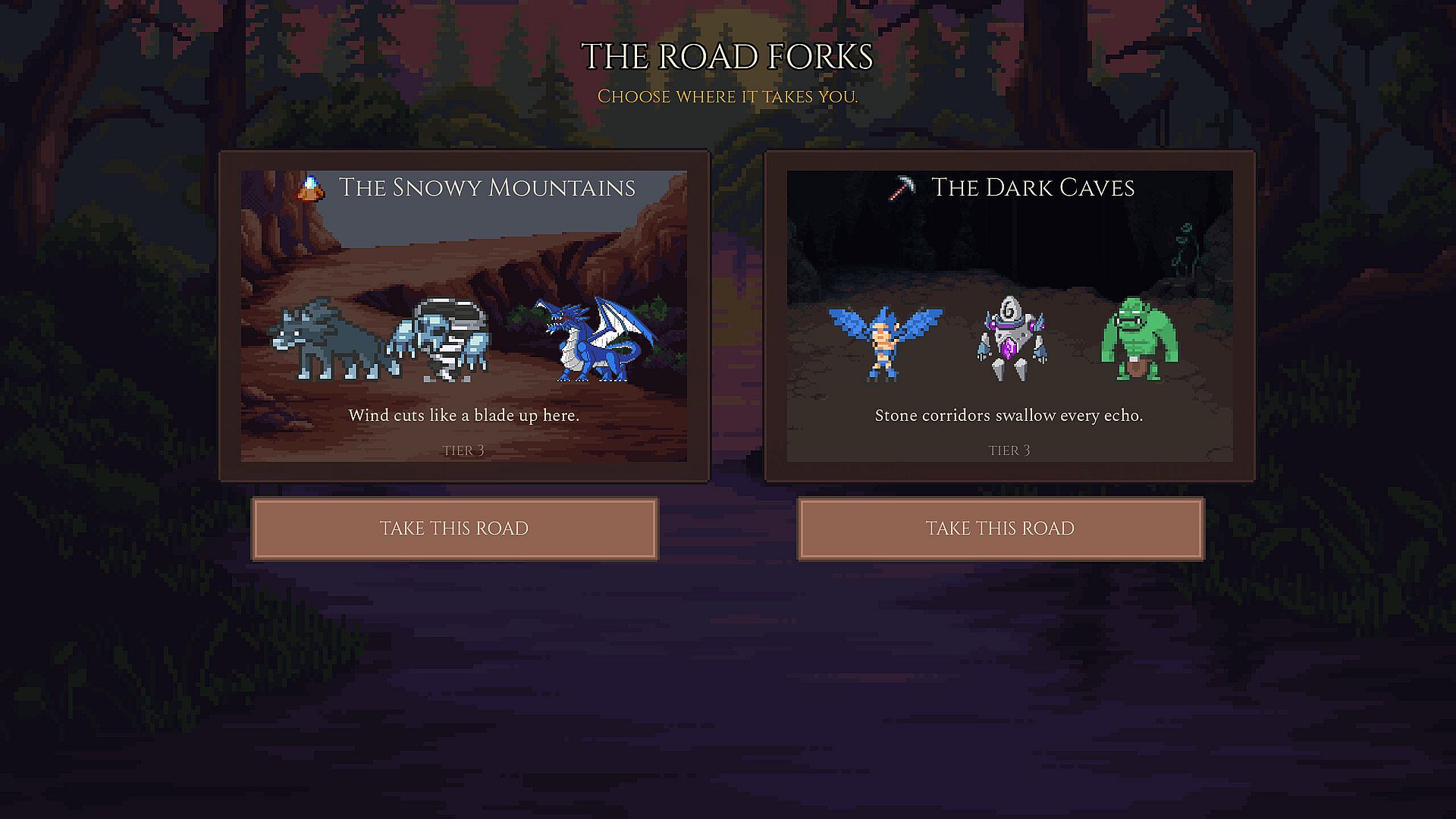
The primary structure is the road, a honeycomb path of face-down tiles spanning eight realms. Three forks appear per run, with fresh realm pairs generated each time. Tiles reveal foes, packs, champions that yield higher rewards, merchants, wells, forges, or persistent bad omens. Guardians wait at the end of each realm and deliver unique dialogue upon encounter and defeat.
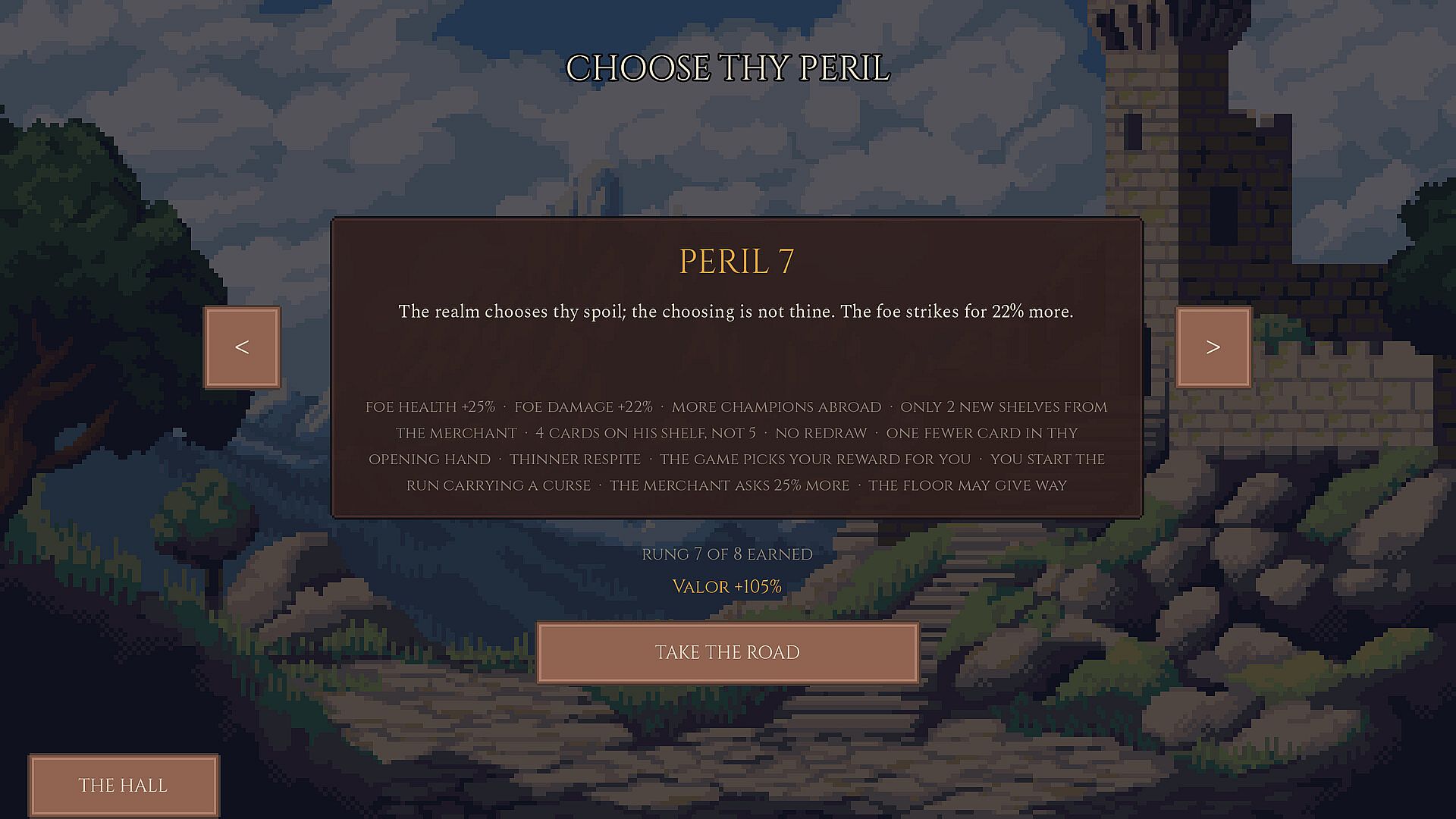
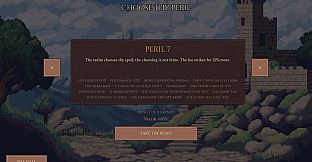
Difficulty scales through eleven rungs of Peril. Higher rungs increase foe strength, improve valor payouts, and unlock additional content including relics. Two specialized modes appear at upper levels: The Rush pits players against guardians in immediate succession under a time limit, while The Endless Road repeats the same eight realms with escalating difficulty each cycle. Valor earned from fights, even on failed runs, funds house mastery trees, creeds, heirlooms, house cards, and provisions at the Road Shelf.
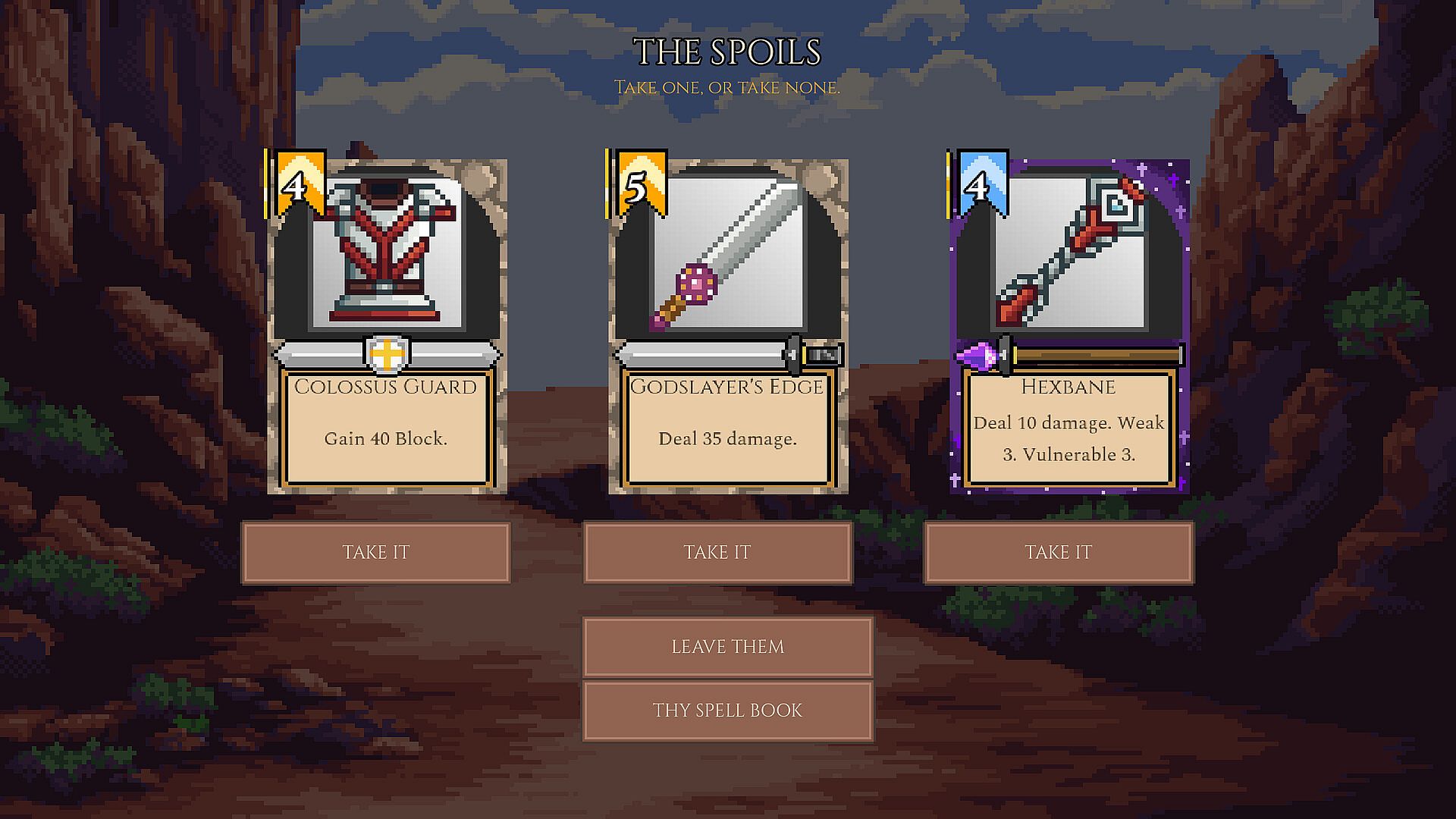
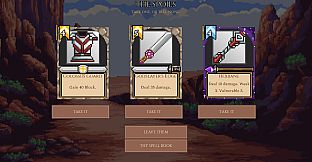
Card acquisition occurs through spoils after fights, legendary drops from guardians, merchant purchases, and forge upgrades. At forges, Bruni Ironwright can make any card heavier for 40 percent more effect or quicker for one lower cost, though each card accepts only one such modification. The full pool contains 256 cards, split between 168 spells and 88 weapons or shields, with 30 house cards obtained exclusively through hall progression rather than road finds.
Progression and Customization
Each house develops independently. Victories with a house unlock its creed and initial house cards, while high-difficulty wins add the heirloom. Mastery trees in the hall allow permanent upgrades purchased with valor. The Road Shelf stocks better provisions and contracts at higher Peril levels, letting players stake valor on tougher challenges for greater returns.
Over 90 distinct foe types populate the realms, including 11 guardians with personalized lines. The single-foe focus per fight keeps attention on positioning summons and predicting enemy actions rather than managing multiple simultaneous threats.
Is It Worth Playing?
Wizard Warrior targets players who enjoy roguelike deckbuilders that reward careful planning and visible outcomes. Its preview system and announced enemy moves set it apart from titles where outcomes remain hidden until cards resolve. The house system and Peril ladder provide long-term goals through unlockable heroes, creeds, and heirlooms. Because the game remains in development with a planned 2027 release, interested players can follow official updates for any changes to the verified mechanics described here. Those drawn to single-player strategy experiences with pixel art, mana and stamina resource management, and summon-based combat will find a focused loop built around foresight rather than reaction.