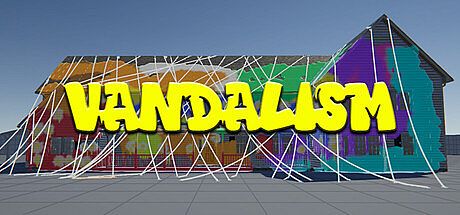


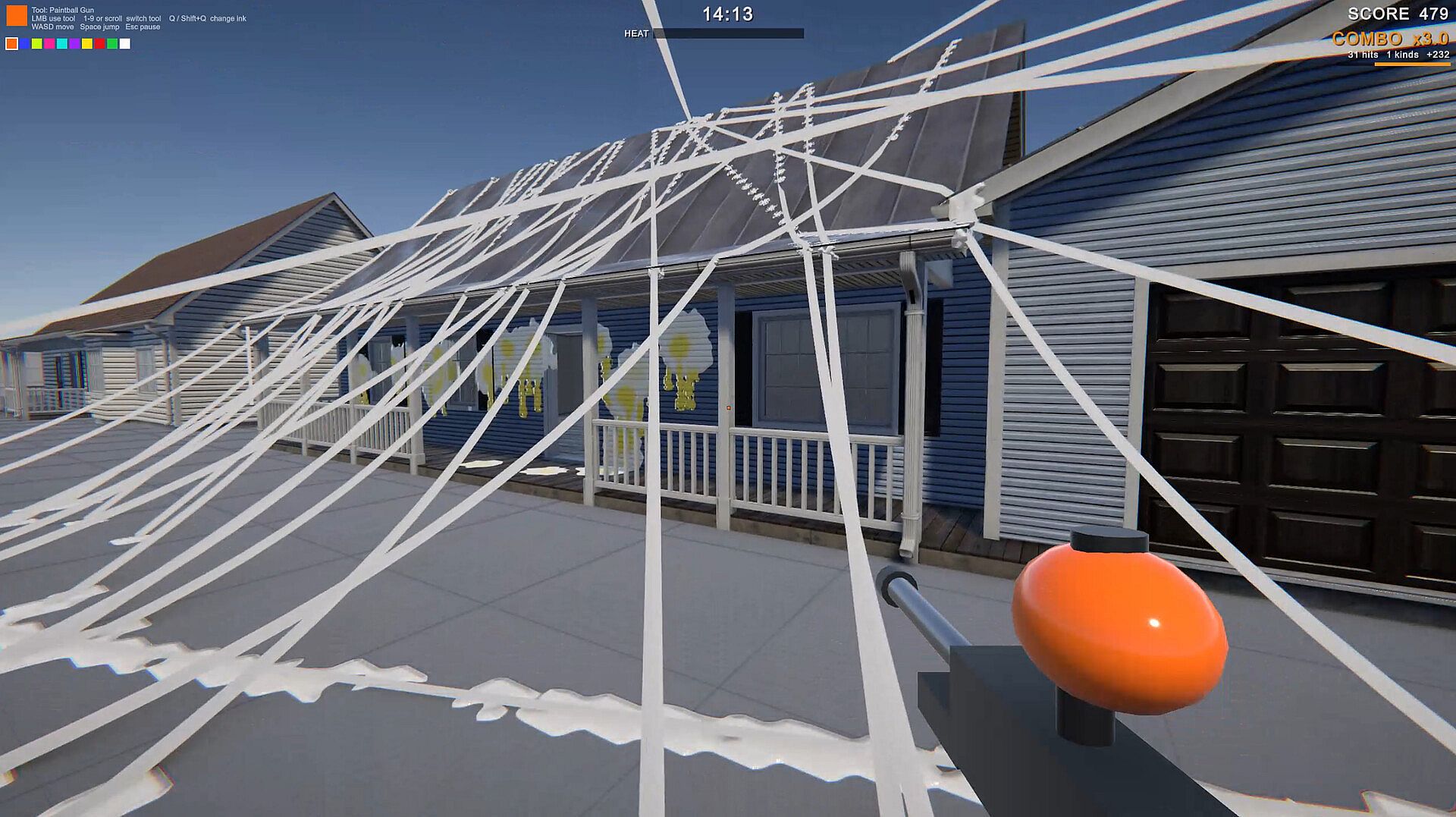
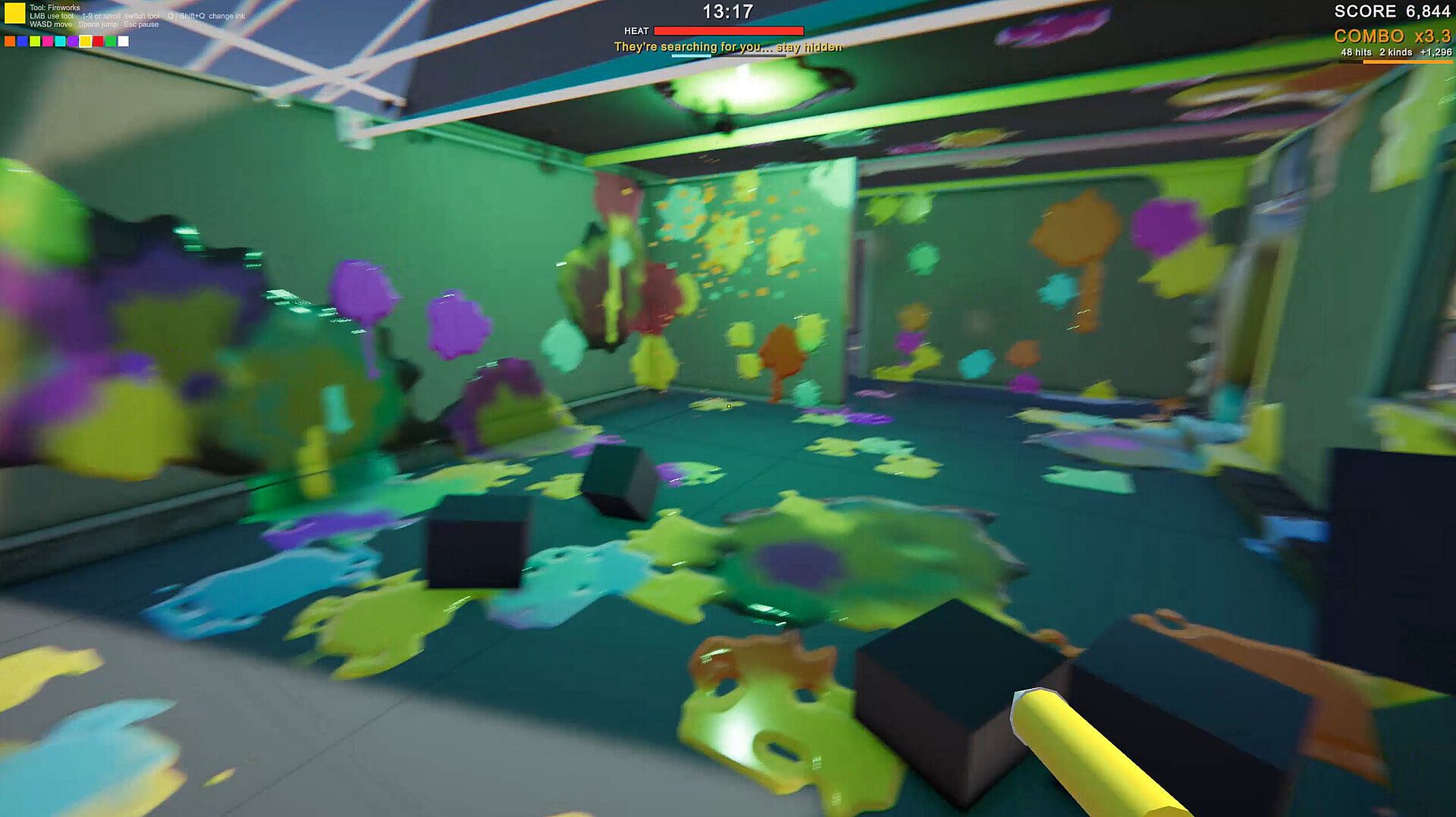
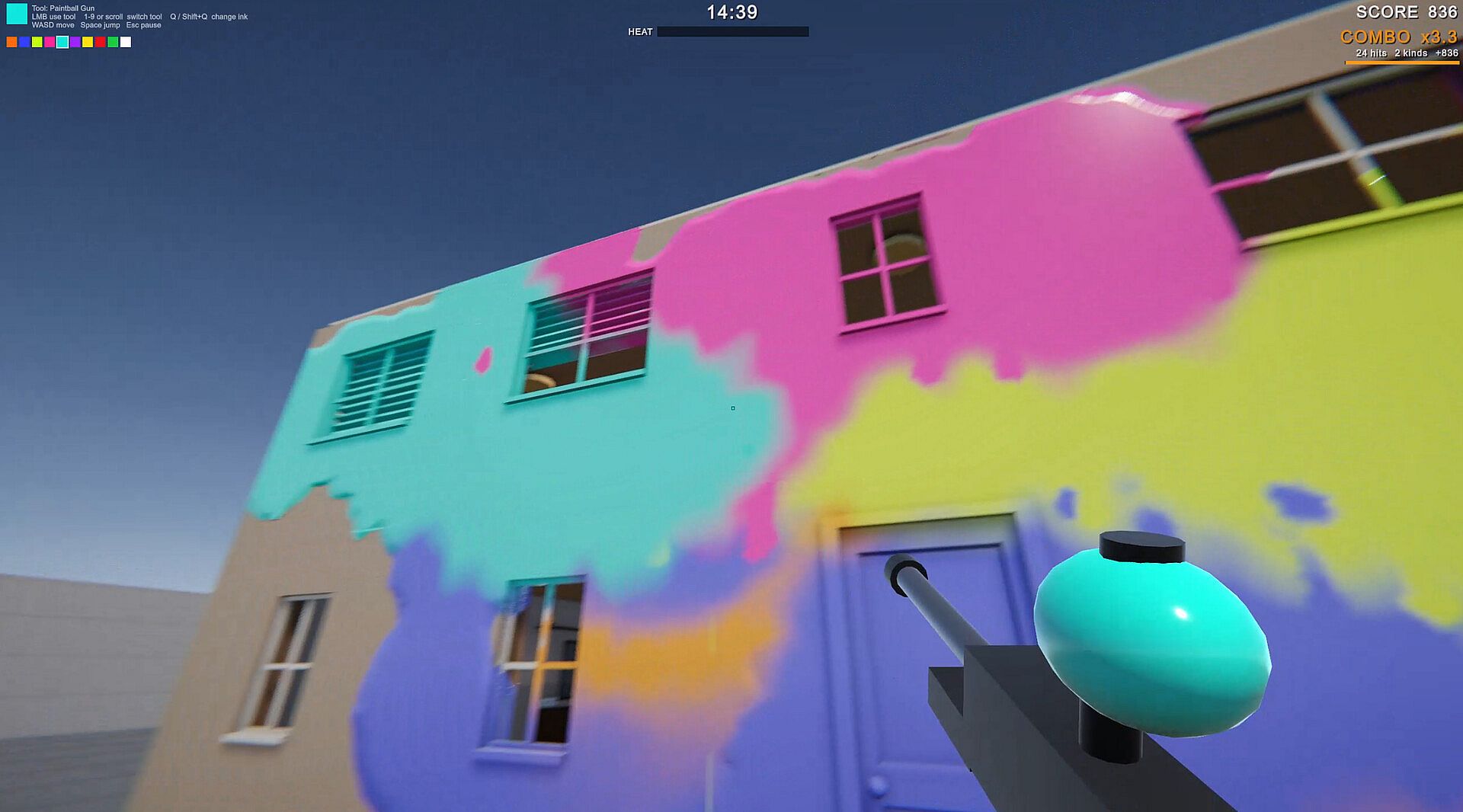
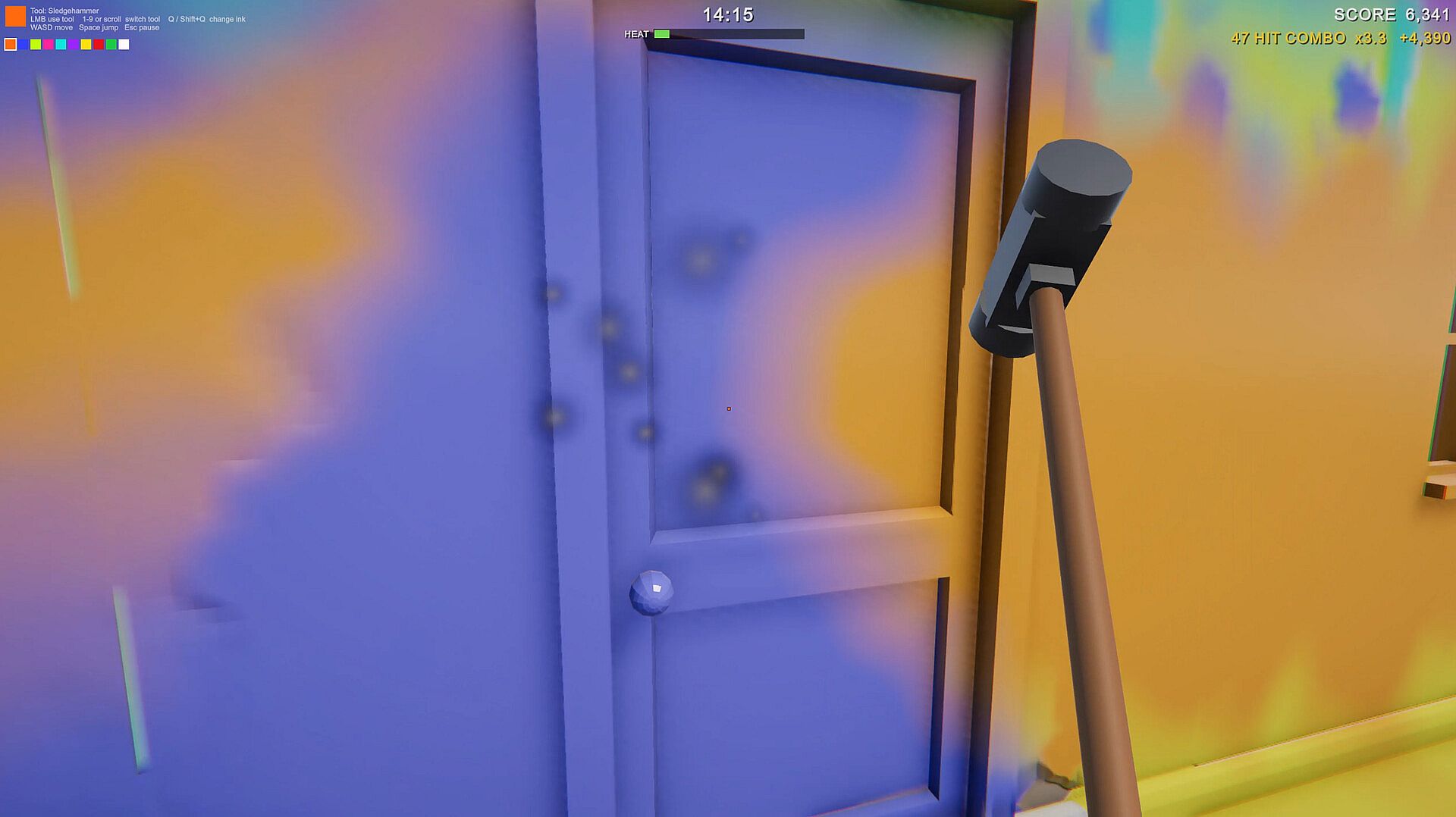
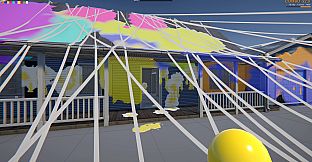
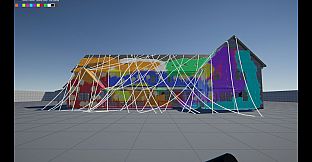
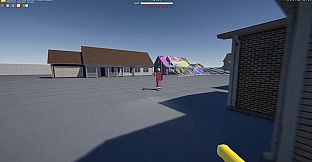
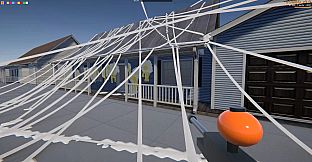
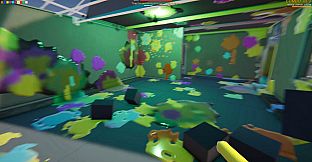
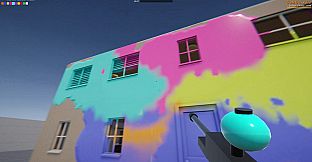
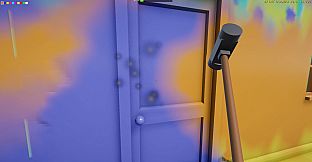
Vandalism is a strategy indie casual game on PC that puts players in the role of a suburban mischief maker. The core loop involves sneaking into neighborhoods at night, using a variety of tools to alter houses and yards, and escaping before patrols arrive. Every session revolves around balancing creative output with the risk of detection, turning quiet streets into scenes of colorful disorder.
Gameplay
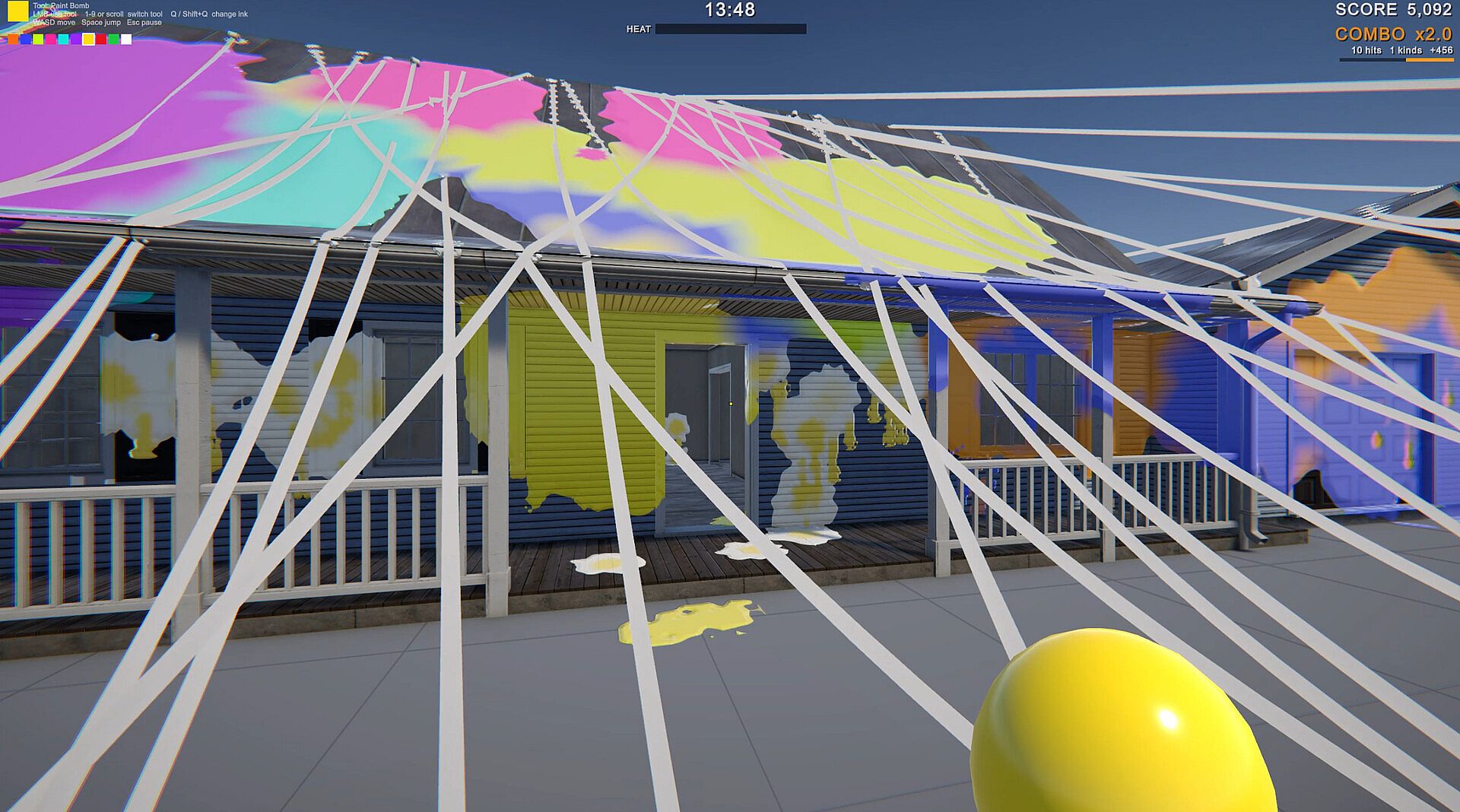
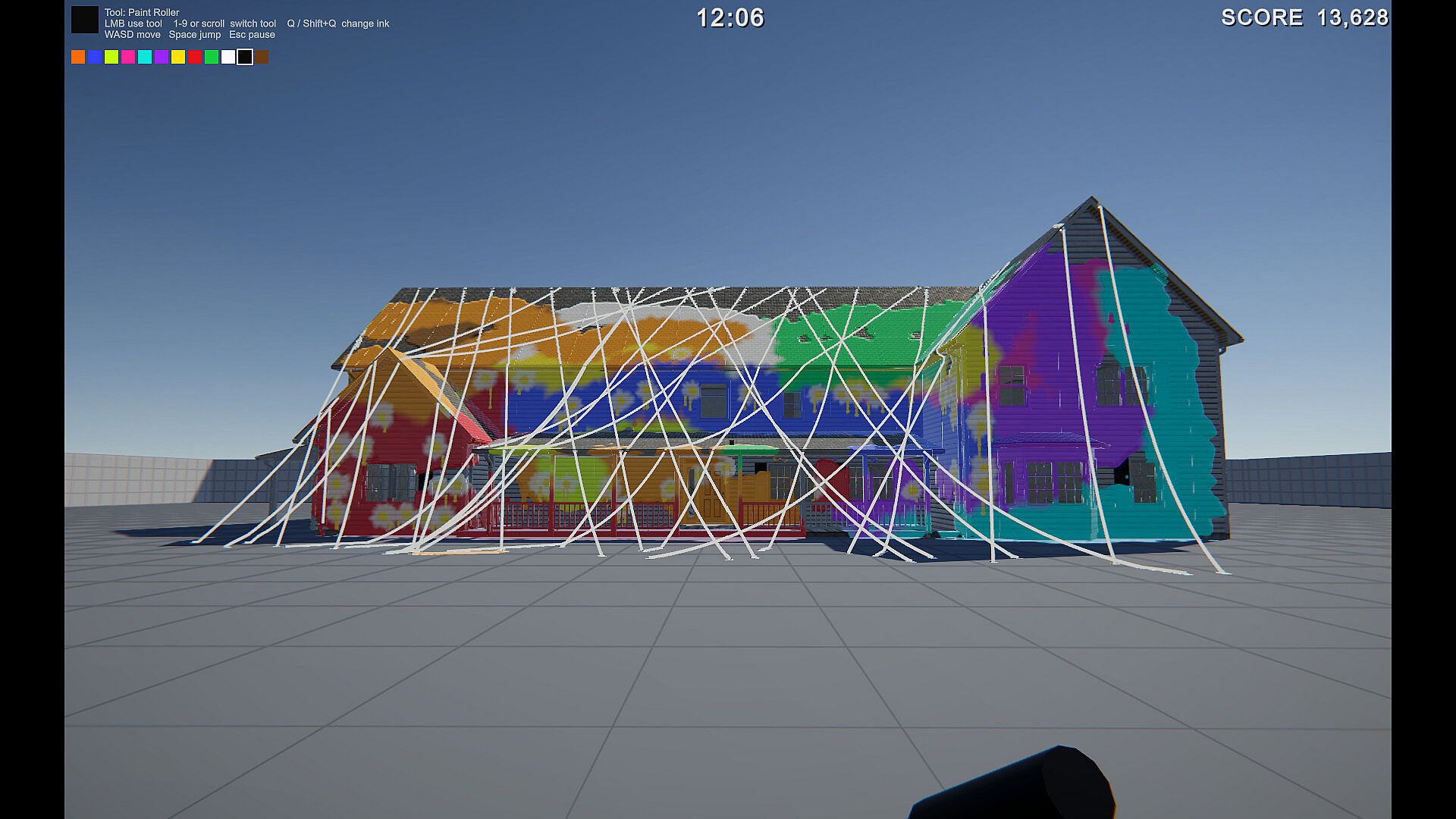
The experience centers on a toolkit of mischief tools that players deploy across interactive houses and yards. Spray cans allow precise tagging on walls and fences, while paint rollers cover larger surfaces quickly with bold colors. Stencils provide options for repeated patterns, and a paintball gun lets players mark targets from a distance. Paint bombs create wide splatter effects on impact.
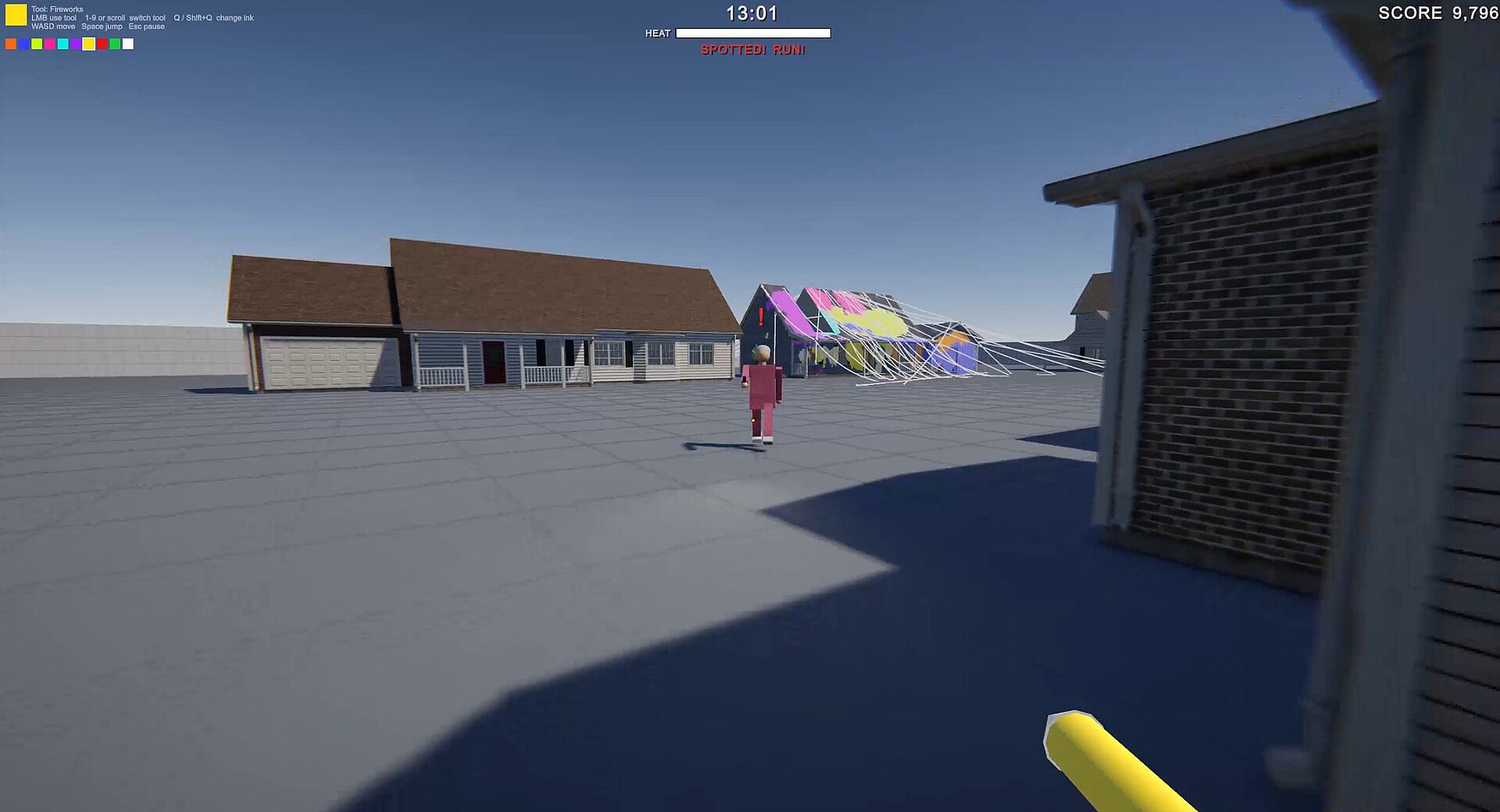
More destructive options include the sledgehammer for smashing doors, windows, and walls, and the jackhammer for louder, more thorough demolition. Classic methods like egging and toilet papering add sticky or draped effects to siding and roofs. Fireworks deliver visual spectacles but increase the chance of drawing attention. Each tool carries a noise level that affects how quickly the Neighborhood Watch responds, forcing players to choose between quiet precision and high-impact chaos.
Runs reward players based on the extent of coverage, style of execution, and combos from chaining different tools. Earnings fund upgrades that expand tool capacity or effectiveness for future attempts. The system encourages experimentation with combinations while managing visibility and sound to complete objectives before patrols intervene.
Game Modes
Play revolves around individual runs through neighborhood streets where the goal is to maximize creative damage on multiple homes without getting caught. Each attempt tracks chaos caused and stylistic flair, feeding into a payout system that supports progression. Leaderboards allow comparison of top performances across different routes and tool choices, turning personal runs into a competitive chase for the highest scores.
The structure supports repeated sessions focused on perfecting paths, timing movements around patrols, and unlocking new options through accumulated rewards. There are no separate campaign or multiplayer structures confirmed, keeping the focus on solo sandbox runs that emphasize risk versus reward with every outing.
Key Mechanics and Progression
Progression ties directly to run performance. Higher chaos and better execution yield more resources for expanding the arsenal with bigger payloads or enhanced versions of existing tools. The Neighborhood Watch acts as the central tension, patrolling based on noise and duration spent in one area. Players must weigh the satisfaction of thorough destruction against the need to slip away undetected.
Fully interactive environments let tools affect specific surfaces and objects in consistent ways, supporting creative approaches to each house. The emphasis remains on short, repeatable sessions that build toward better results rather than long narrative arcs.
Is It Worth Playing?
Vandalism suits players who enjoy casual strategy games centered on creative destruction and light tension from evasion mechanics. The run-based loop with immediate feedback on chaos and style provides a clear sense of improvement through upgrades and leaderboard competition. Those drawn to sandbox-style mischief without lasting consequences will find the arsenal and neighborhood setting engaging for repeated short sessions.
Because the game remains in development with no released version or player data available yet, any final judgment depends on how the core systems feel once launched. The described focus on tool variety and risk management aligns well with the listed genres for fans of indie casual strategy experiences.