


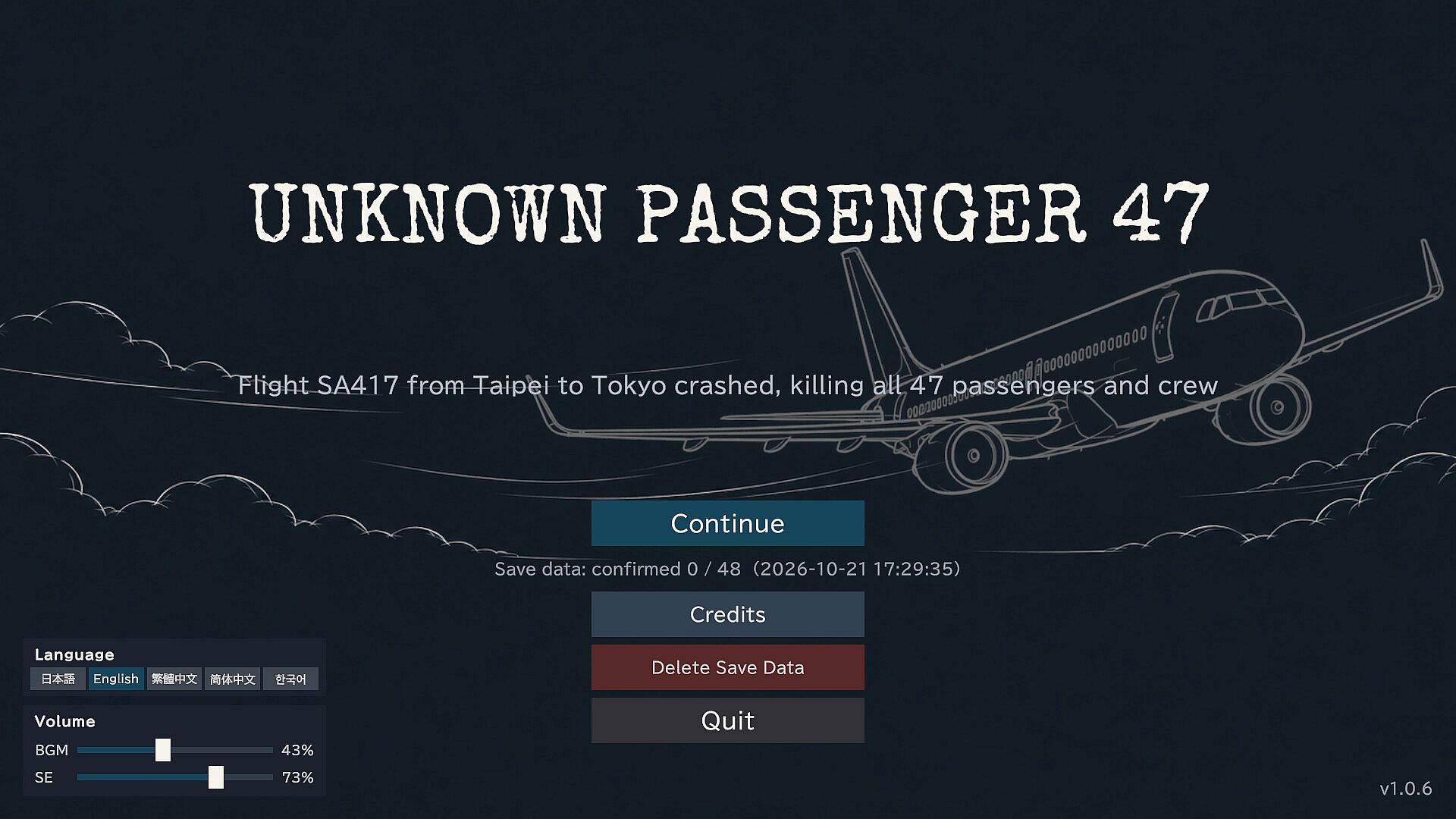
UNKNOWN PASSENGER 47 is an indie adventure game built around a text-based deduction puzzle. Players step into the role of an identification officer tasked with matching numbered body records from a fictional plane crash to passenger and crew details using cross-referenced documents.
Gameplay
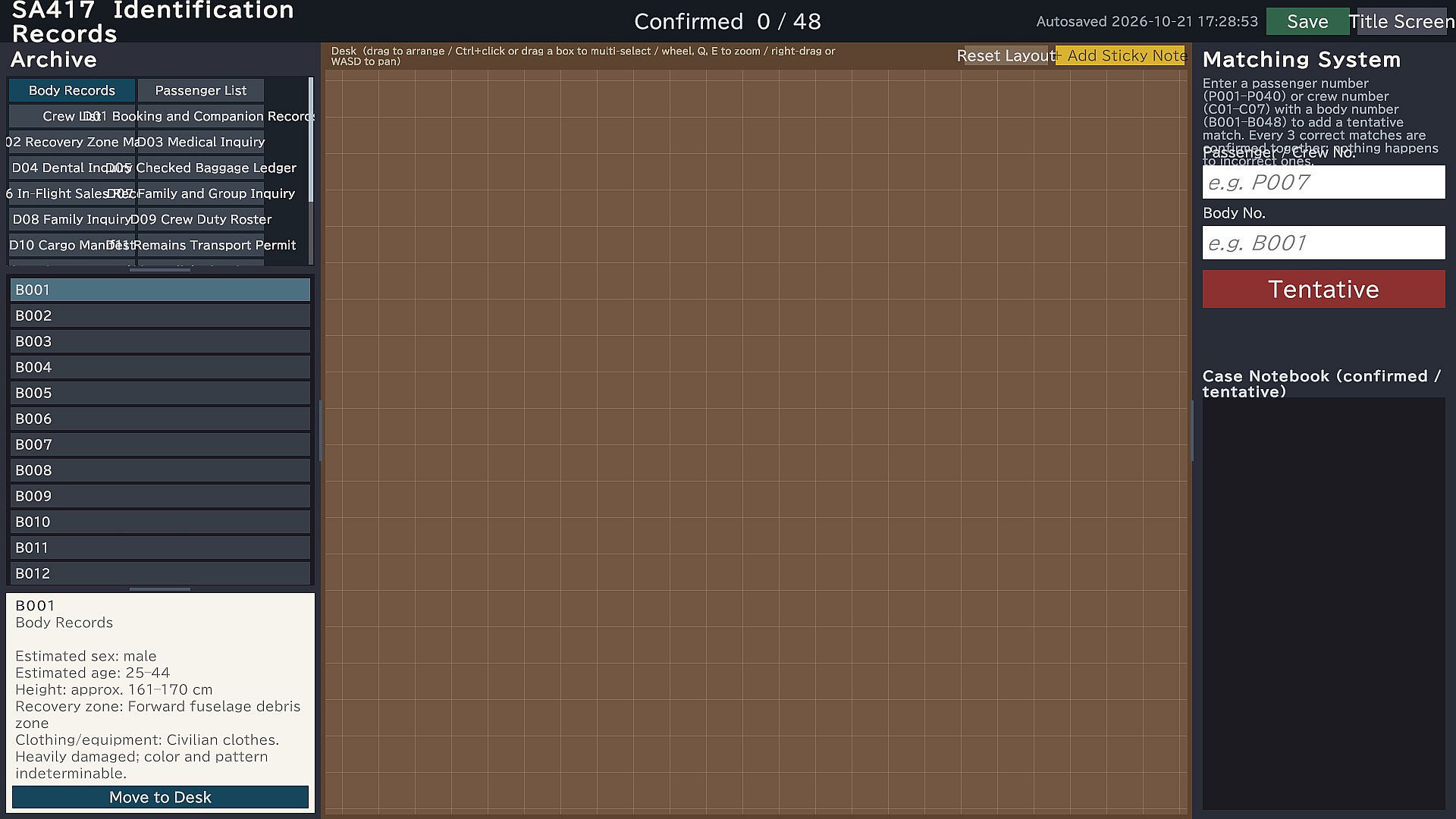
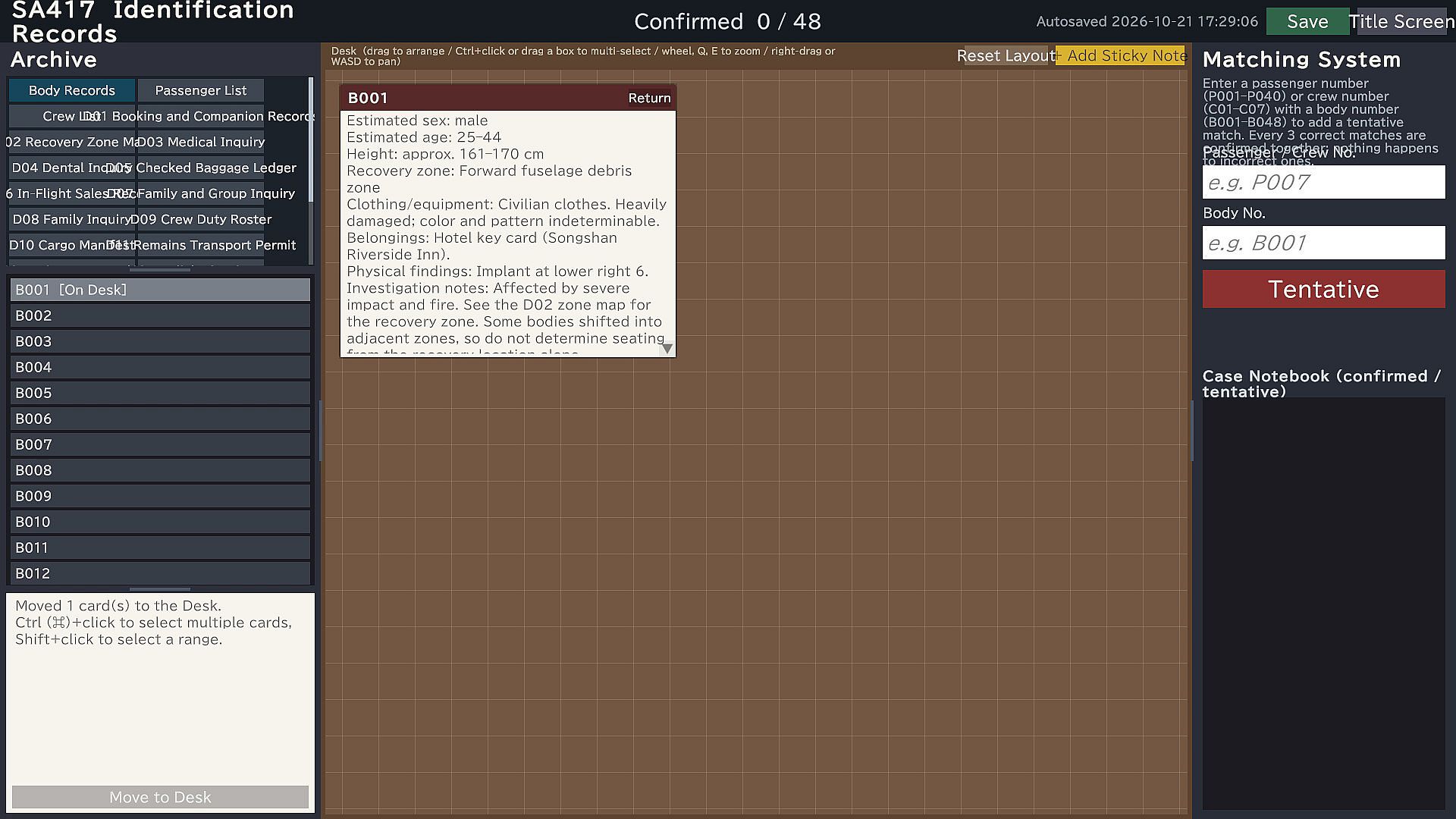
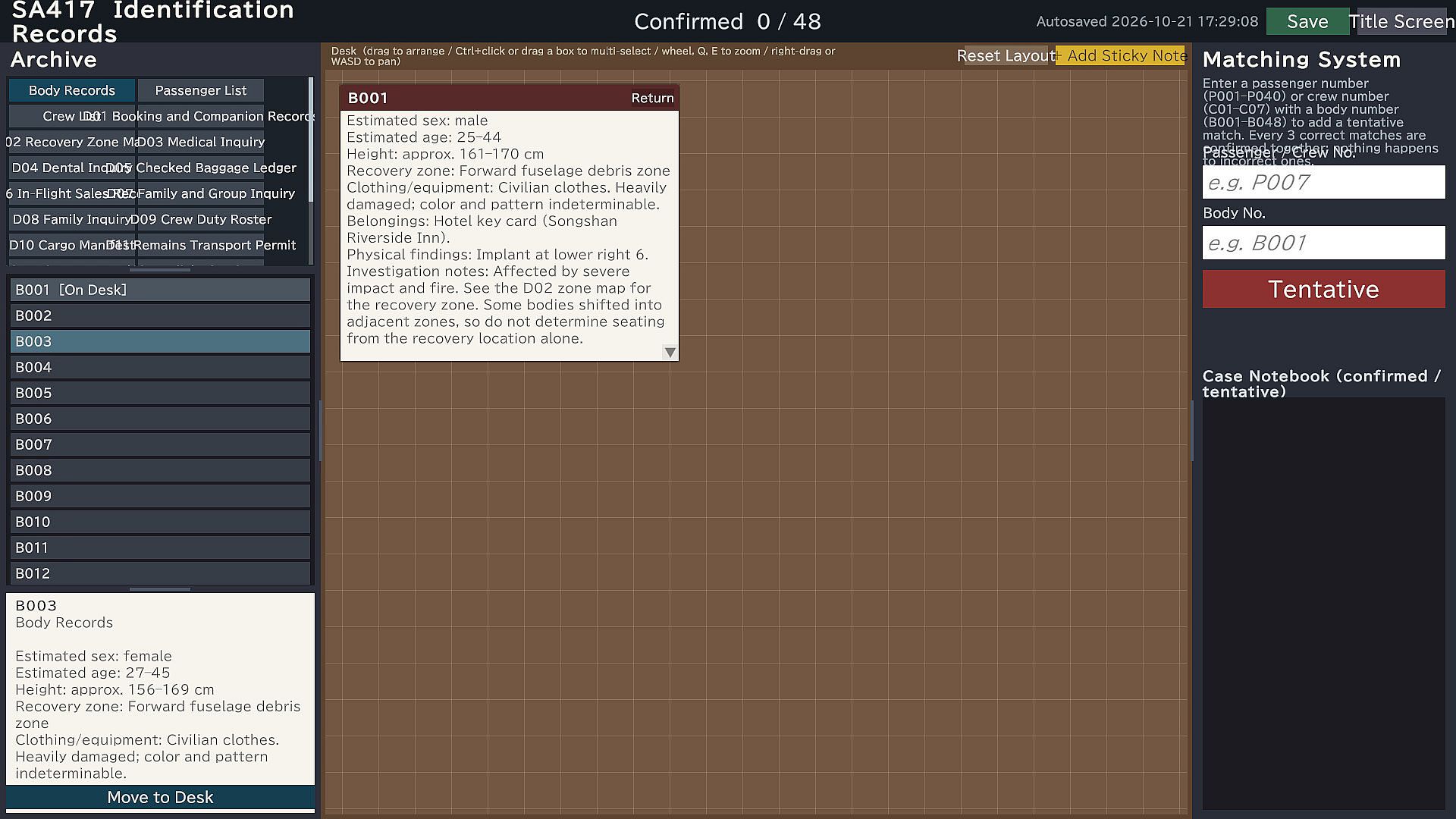
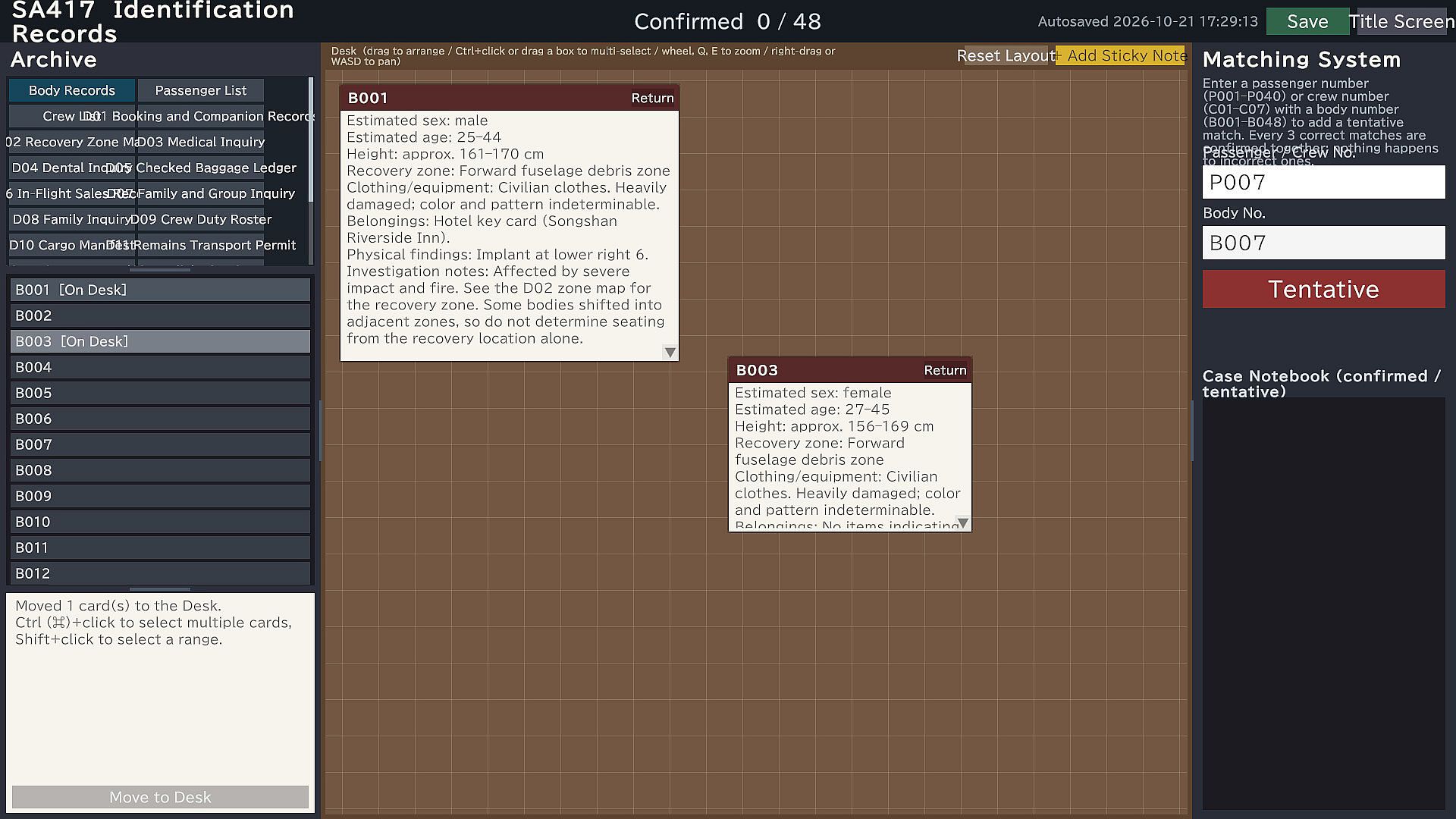
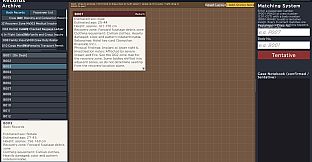
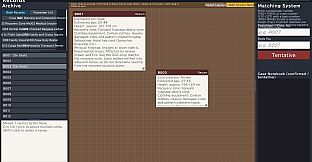
The core loop centers on careful comparison of evidence. Each of the 48 body records includes details such as estimated age ranges, dental findings, surgical scars, clothing descriptions, and personal effects. These clues must be checked against 17 categories of supporting documents that include manifests, medical inquiries, hotel records, and in-flight sales receipts. A single clue often leaves multiple possibilities, so players combine information from several sources to narrow options and eliminate mismatches.
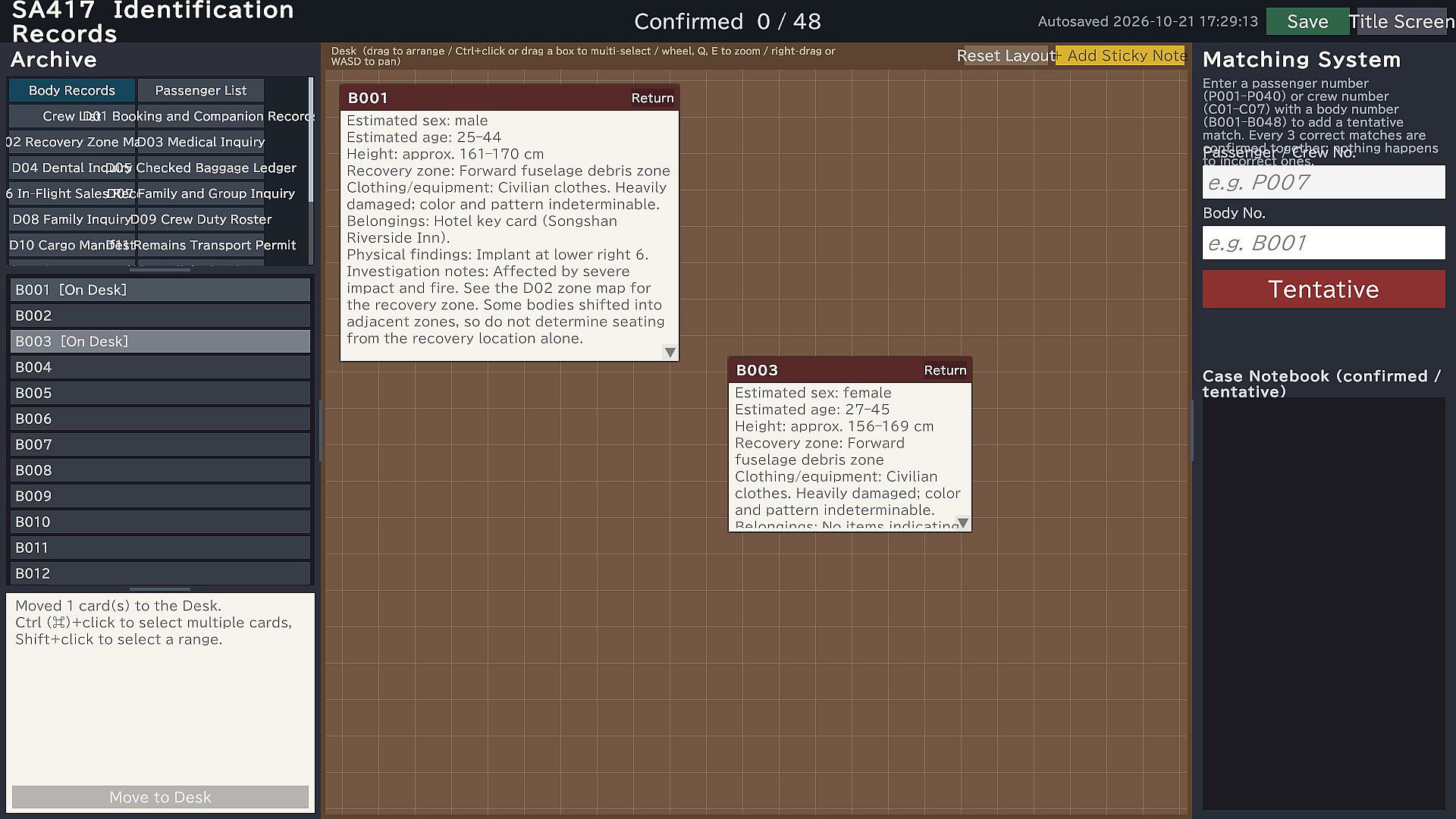
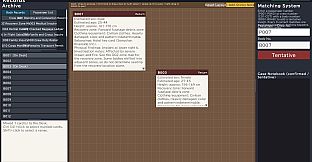
Documents appear as movable cards on a workspace that can be freely arranged, panned, and zoomed. Editable sticky notes allow players to jot observations and track theories directly on the desk layout. Once tentative matches are entered into the identification system, the game confirms three correct pairings at once rather than validating each one individually. This batch confirmation encourages players to build clusters of related deductions before submitting them.
Progression remains entirely self-paced. There are no timers, no penalties for incorrect submissions, and automatic saving that preserves the current desk arrangement and notes. Each body record offers three escalating hint levels for players who reach an impasse, with the final hint level providing direct confirmation if needed.
Game Modes
The game consists of a single continuous investigation experience without separate modes or variations. All activity takes place within the same workspace environment where players organize documents, form hypotheses, and submit matches. The structure supports one complete playthrough focused on identifying every body, with the option to revisit and refine earlier deductions at any time due to the absence of locks or failure states.
Investigation Tools and Pacing
Organization forms the heart of the experience. Players drag document cards into view, align related items side by side, and use sticky notes to record connections or contradictions. The system rewards methodical cross-referencing rather than rapid guessing, as many identifications require evidence from multiple document types to become certain. The 2 to 3 hour estimated playtime reflects a deliberate pace that lets players work through the full set of records without pressure.
Language support covers Japanese, English, Traditional Chinese, Simplified Chinese, and Korean, with mouse and keyboard controls handling all interactions. The presentation remains entirely text-based, with no visual depictions of bodies or injuries.
Is It Worth Playing?
UNKNOWN PASSENGER 47 appeals most to players who enjoy methodical deduction puzzles and the satisfaction of connecting disparate pieces of information. The absence of time limits or penalties makes it accessible for those who prefer to work at their own speed and revisit clues as new connections emerge. Feedback on the available version highlights the logical depth of the matching process and the weight that builds as individual stories take shape through the records.
Those drawn to text-heavy investigation games or similar deduction titles will find a focused, self-contained experience here. The short length suits a single sitting or spread-out sessions, and the hint system lowers barriers for newcomers while still rewarding careful observation. The game is a work of fiction with no connection to real events, and its content warnings note descriptions of an aviation incident and medical findings that some players may find heavy. For fans of quiet, evidence-driven puzzles, the title offers a distinctive approach worth considering once it reaches full release.