




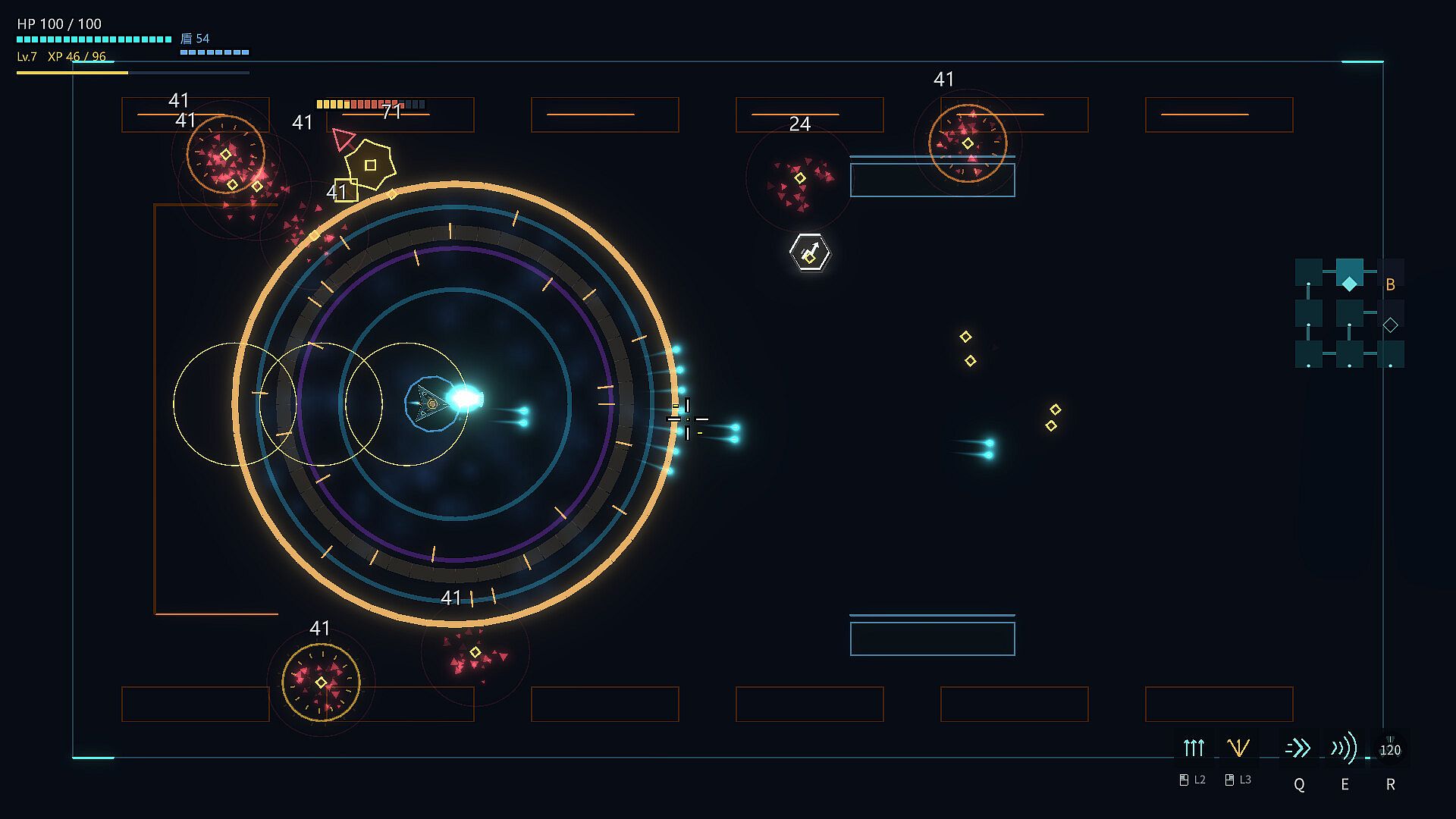
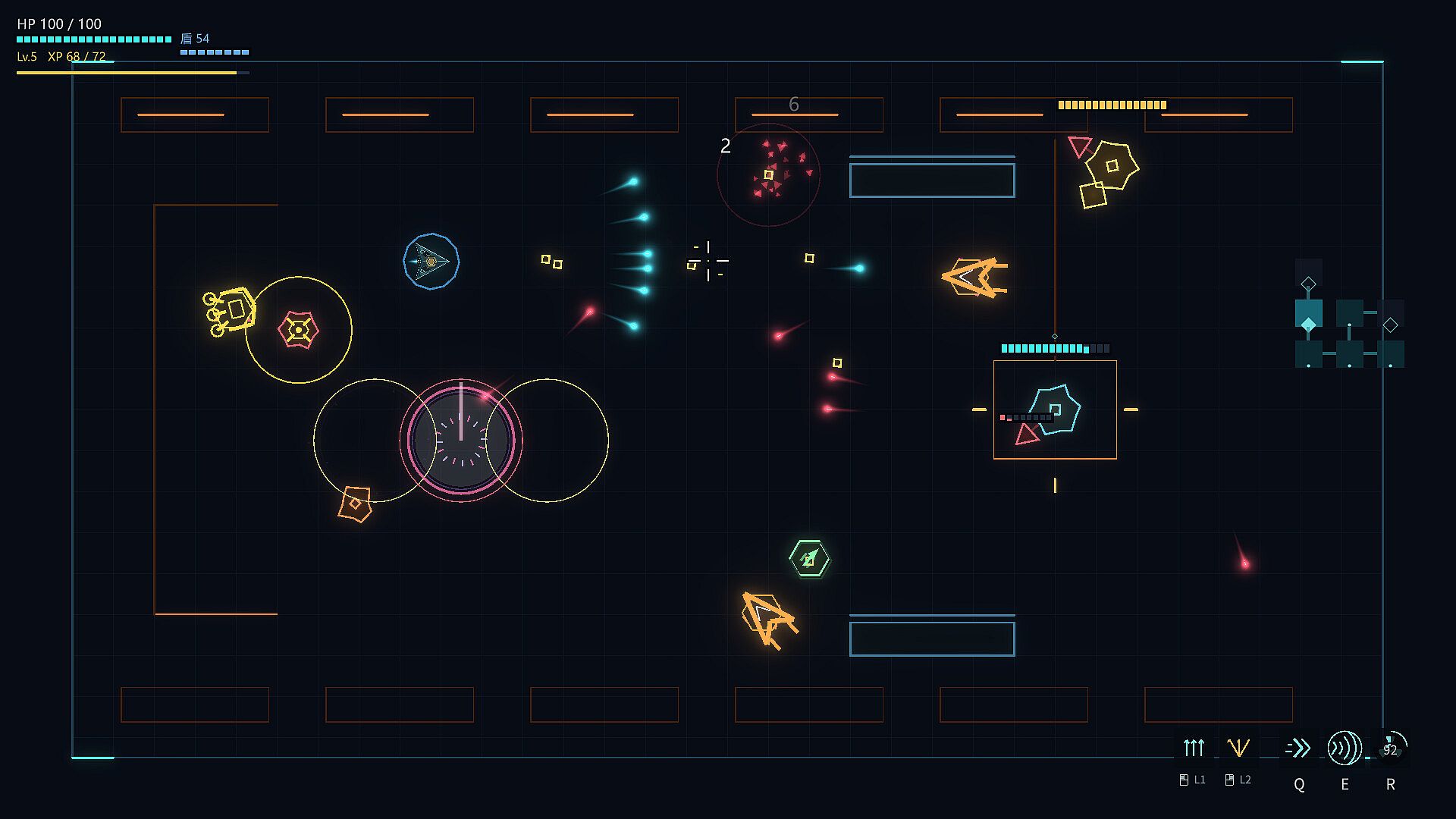
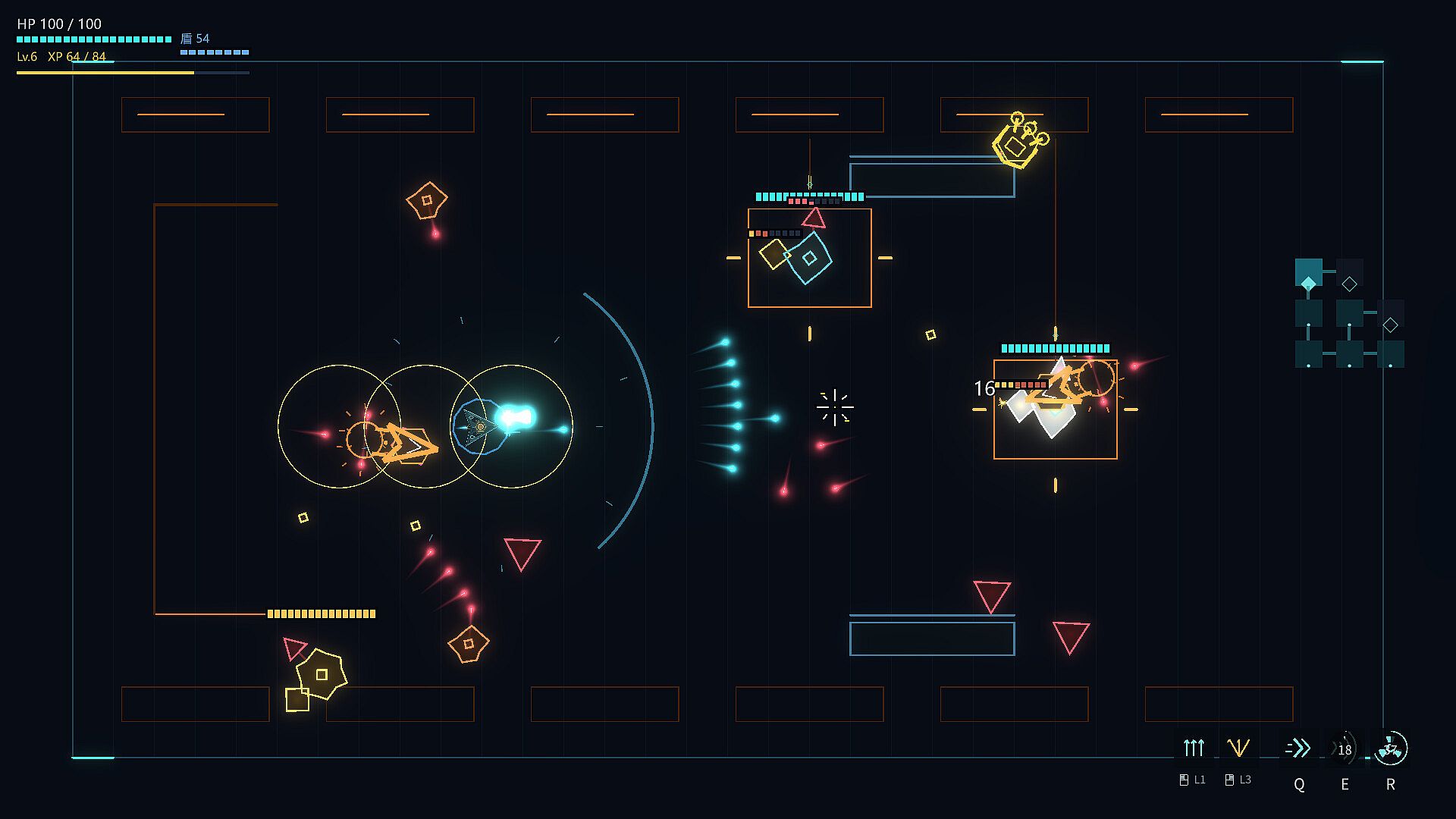
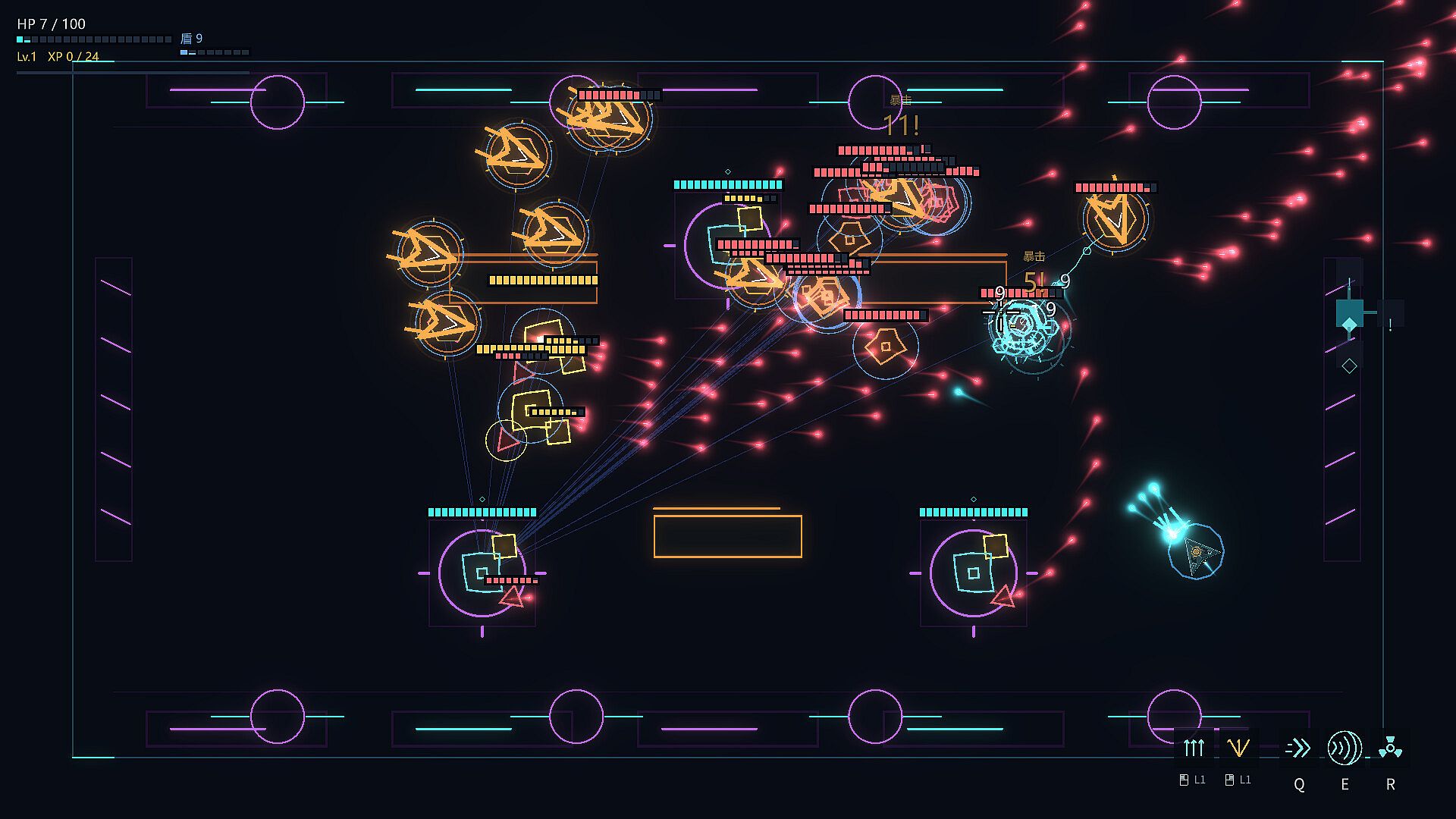
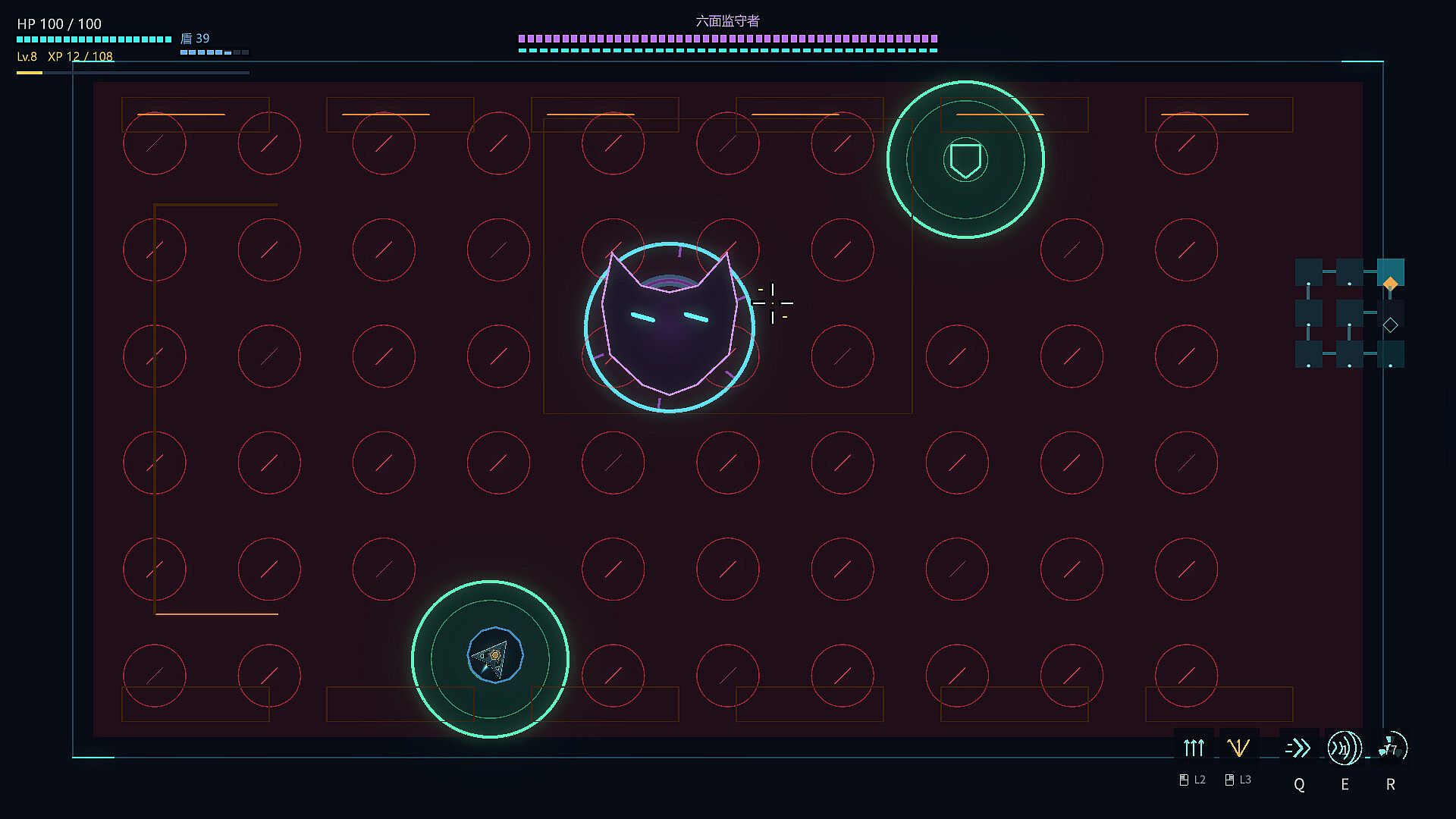
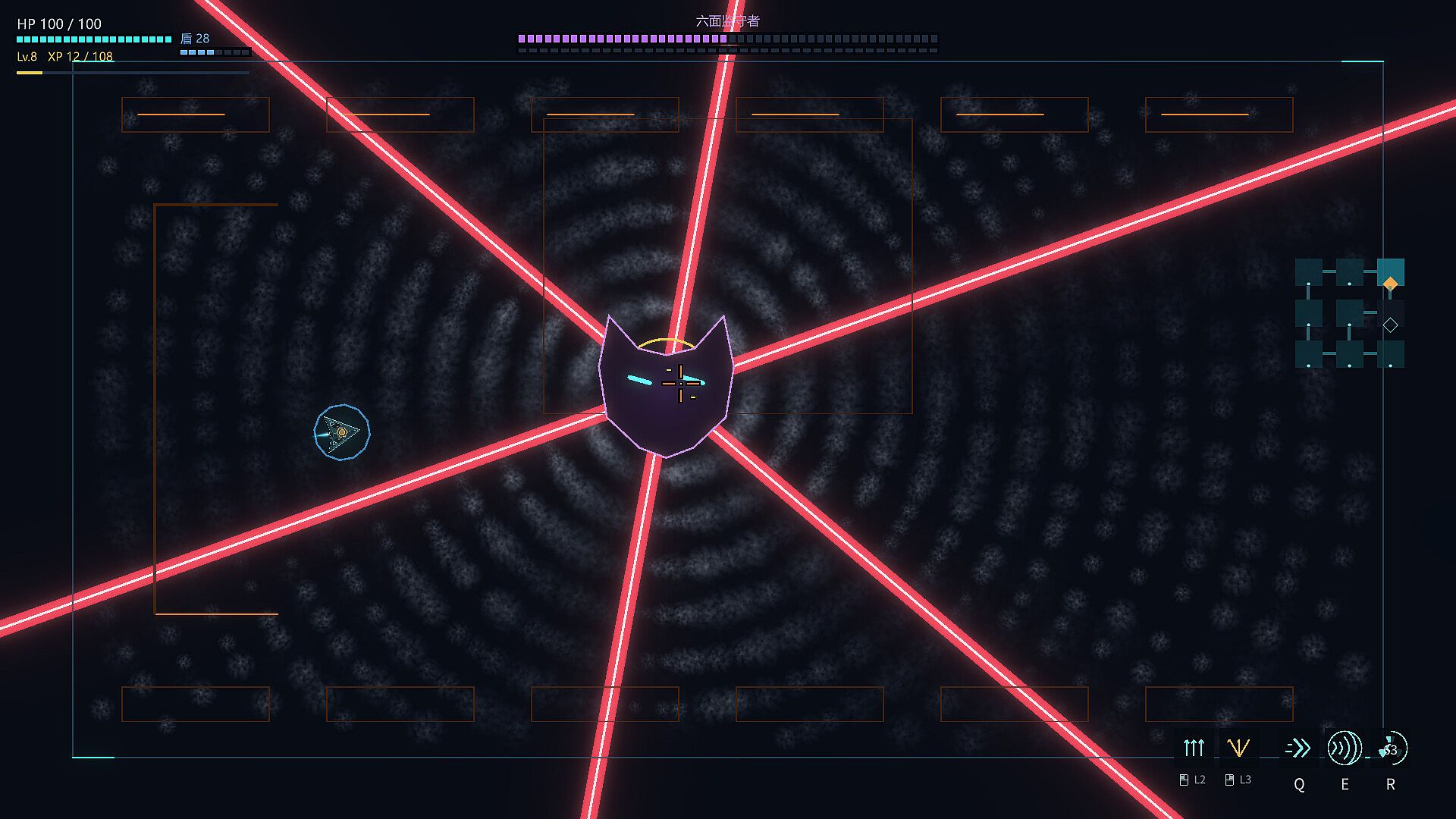
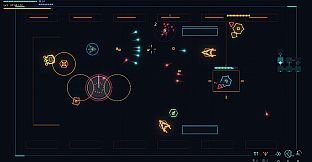
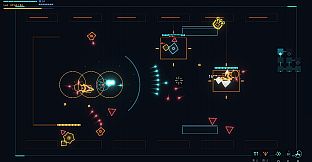
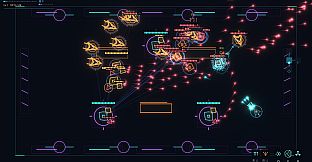
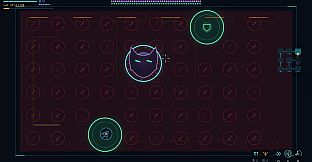

TRIANGLE: Geometric Exclusion Zone is a top-down action shooter developed for PC that blends strategy elements with roguelite progression. Players control a triangular spacecraft through neon-lit zones filled with geometric hazards and hostile entities. The core loop centers on exploration, combat, and incremental upgrades that encourage repeated attempts at breaking through layered defenses.
Gameplay
The experience revolves around piloting a customizable ship equipped with two independent primary weapons. Each cannon can be fitted with different modules that alter damage type, range, and firing pattern, allowing combinations that favor focused strikes or wide coverage. Movement emphasizes precise dodging amid dense projectile patterns while managing positioning to exploit enemy weaknesses.
Zones consist of interconnected rooms that branch in multiple directions. Choices at each junction influence the sequence of encounters and the equipment drops available. Regular foes appear in groups that test basic evasion, while elite variants introduce new attack behaviors that demand adaptation. Boss encounters at zone ends feature multi-phase patterns requiring sustained attention to both offense and survival.
Equipment collected during runs modifies weapon performance and adds secondary effects. Synergies emerge when modules complement each other across the dual-cannon setup, turning early modest firepower into specialized loadouts suited to particular threats. The system rewards experimentation across multiple attempts rather than a single fixed build.
Game Modes
The game operates entirely in a single-player format with no multiplayer components. Progression follows a linear sequence of zones punctuated by branching room layouts that introduce variability. Each attempt generates different room orders and enemy placements, so the path through a zone changes between runs.
Players advance by clearing rooms, gathering upgrades, and defeating the zone boss to unlock the next area. There are no separate named modes such as endless survival or competitive arenas; the structure remains focused on successive zone clears with accumulating power from collected items. The randomized elements ensure that no two full traversals follow identical patterns.
Key Mechanics and Features
Weapon customization forms the central strategic layer. Left and right cannons operate independently, so players balance short-range precision tools against longer-range area options or sustained fire types. Upgrades attach directly to these weapons and persist only for the current run unless carried forward through successful clears.
Enemy design emphasizes geometric forms with predictable yet escalating attack sequences. Swarms require efficient crowd control, elites demand specific counters, and bosses combine multiple patterns that shift as health decreases. Success depends on reading projectile trajectories and using ship mobility to maintain firing angles.
Branching exploration adds decision-making beyond combat. Different routes yield distinct equipment pools and enemy densities, encouraging players to weigh immediate risk against potential long-term advantages for later zones.
Is It Worth Playing?
The title targets players who enjoy top-down shooters that incorporate buildcrafting and procedural path choices. Its single-player focus suits those seeking solo sessions centered on mastery of movement and loadout experimentation rather than social or competitive play.
With a planned release in December 2026 and a demo already available, interested players can test the dual-weapon system and branching structure firsthand. The absence of user reviews at this stage means expectations should rest on the described systems rather than aggregated feedback. Those drawn to indie action titles with geometric themes and incremental power growth will find the core loop aligned with their preferences, while others seeking narrative depth or multiplayer options may look elsewhere.











