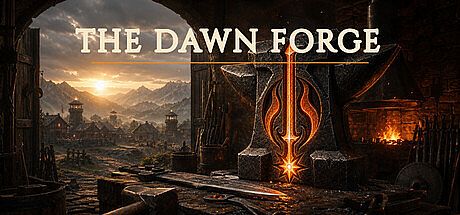




The Dawn Forge is a single-player strategy game that blends indie RPG and simulation elements on PC. Players take on the role of a smith maintaining a forge against encroaching darkness in a world where time pauses when the game closes. This deliberate pause mechanic shapes every aspect of progression, from resource management to defensive preparations, creating a focused experience centered on active sessions rather than passive accumulation.
Gameplay
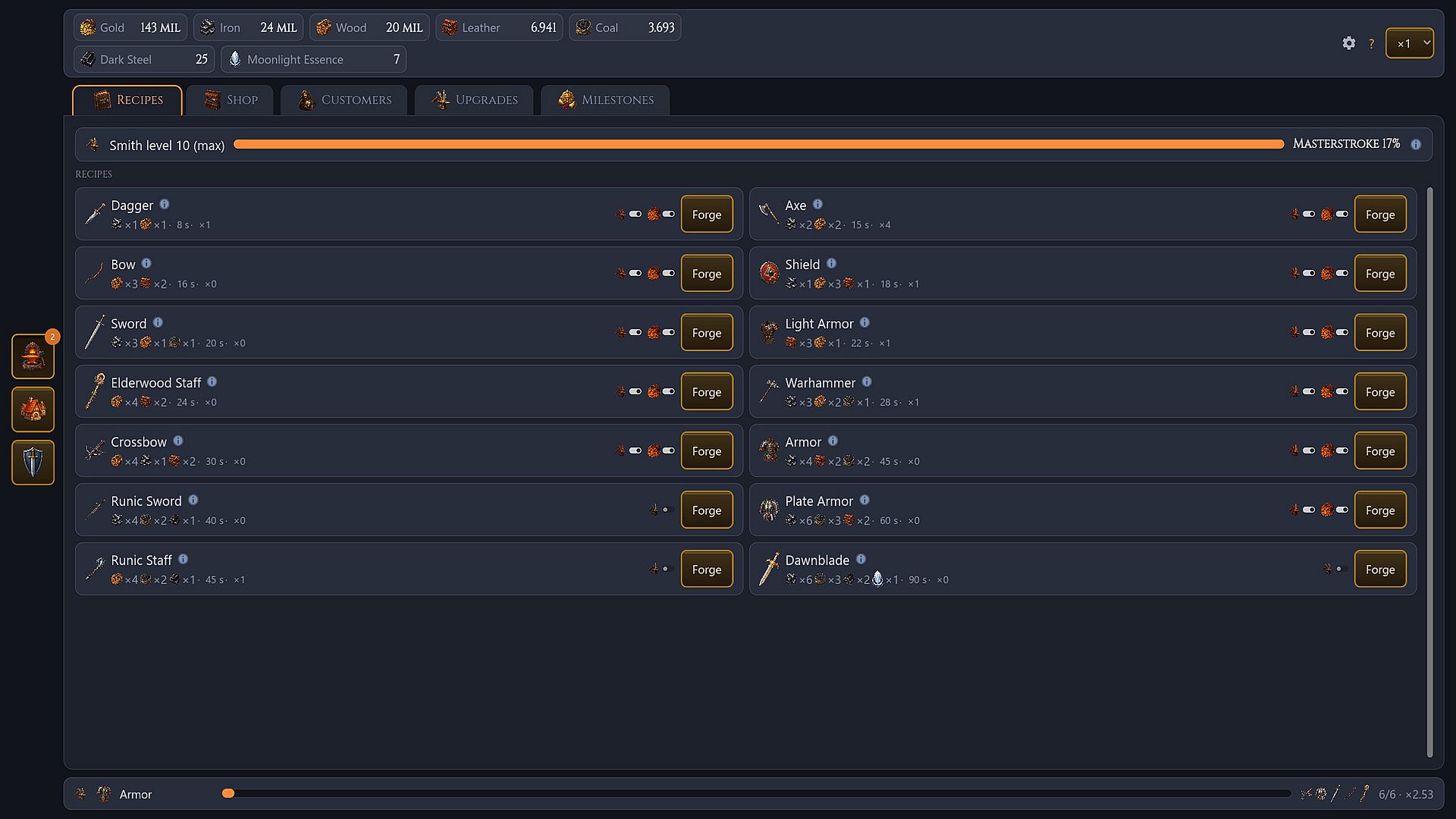
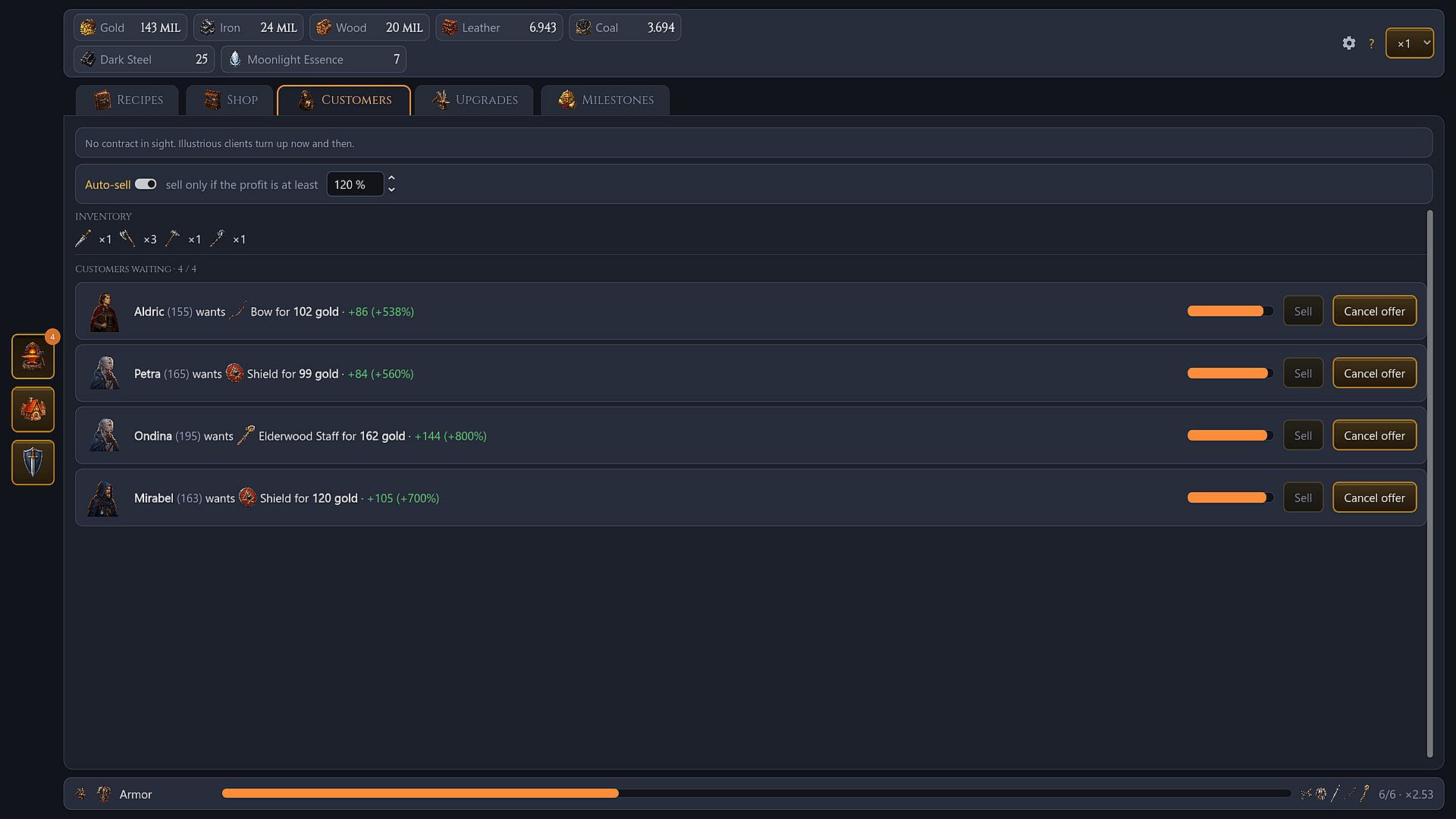
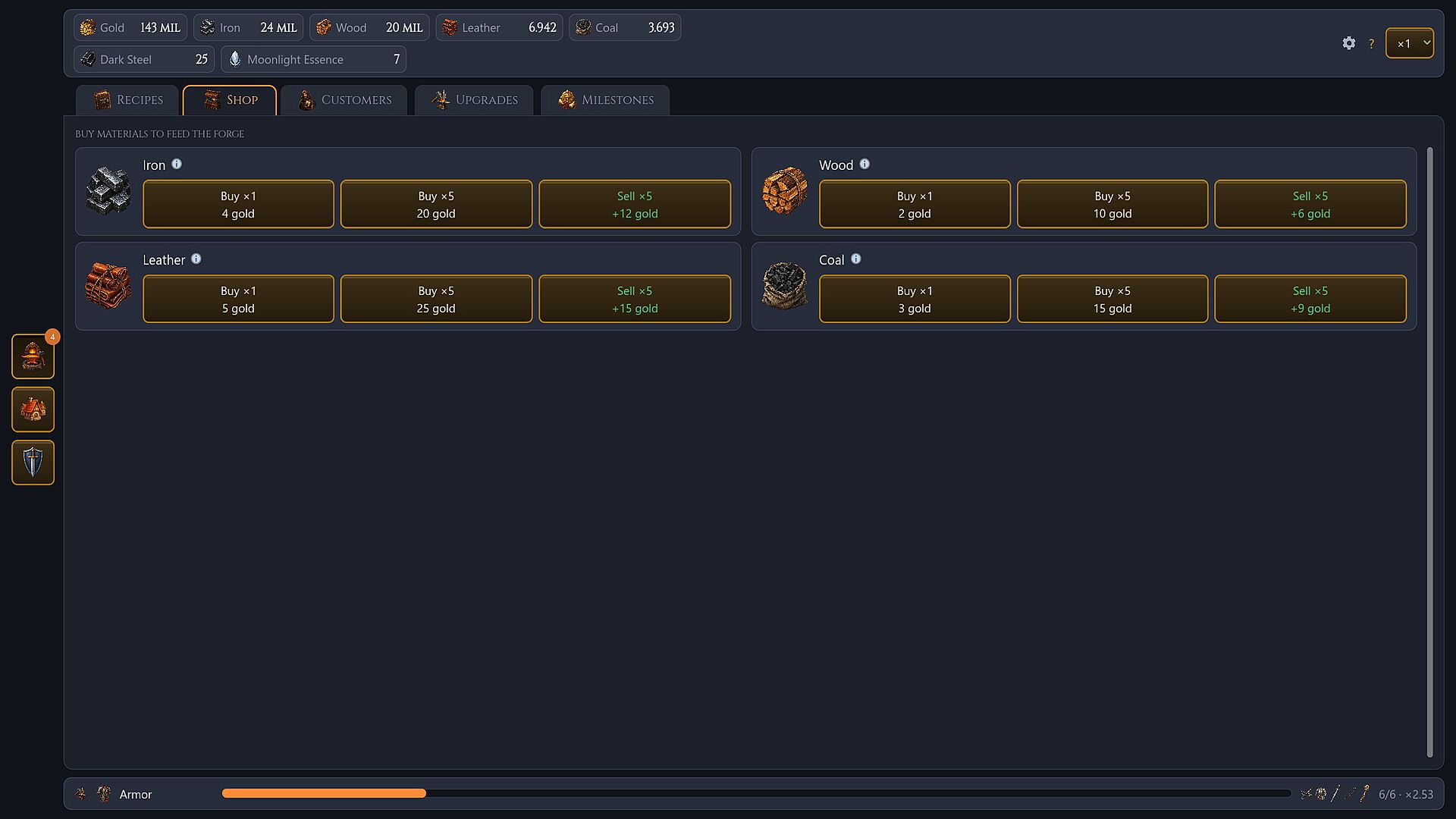
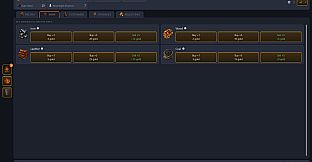
Core play revolves around the anvil and its 14 recipes. Players purchase iron, wood, leather, and coal to craft daggers, swords, armor, bows, and shields. Sales to visiting adventurers generate gold that funds forge upgrades, longer production queues, and village expansion. Every item produced contributes to the central economy, where brighter output draws greater threats from the dark.
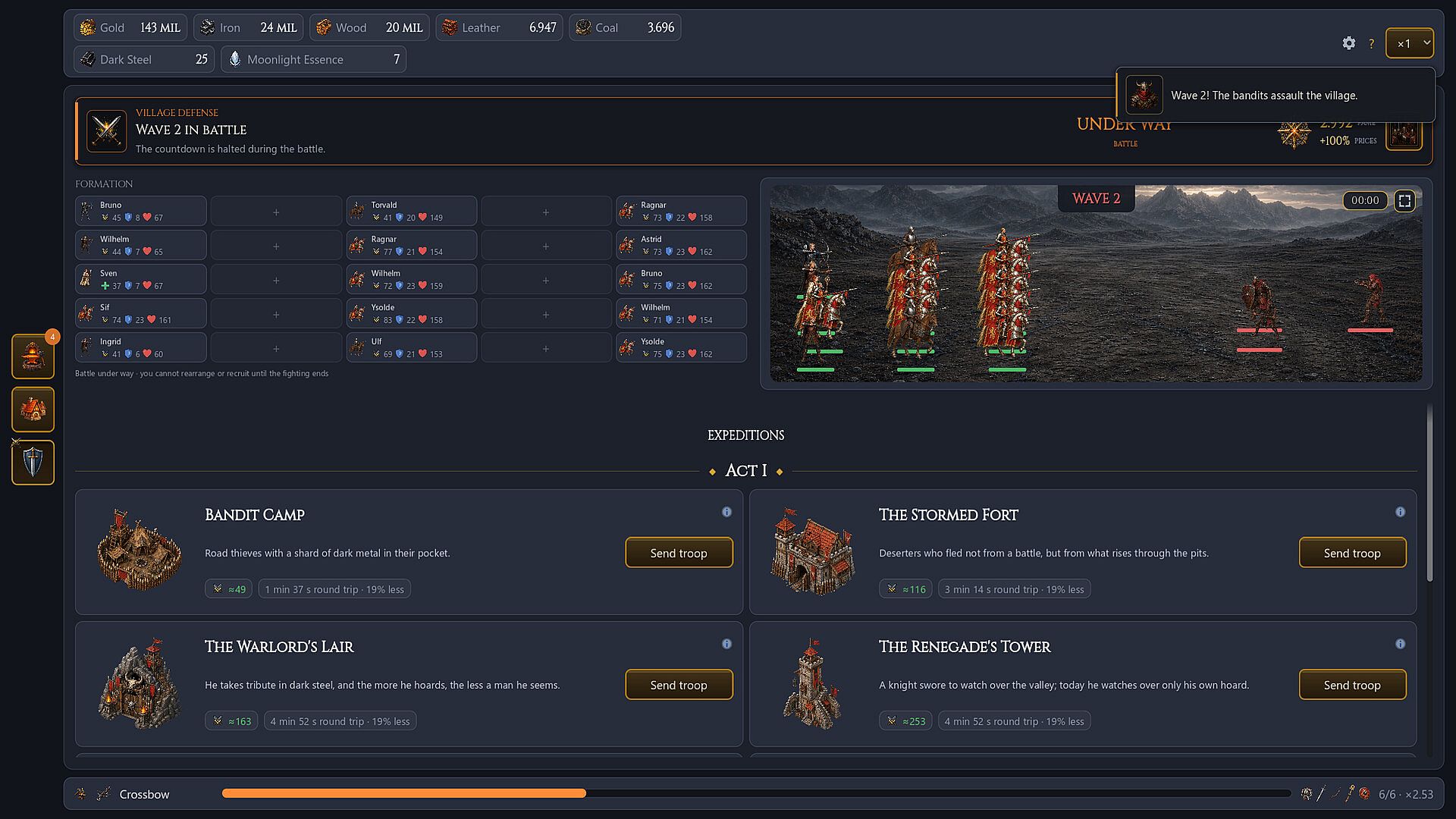
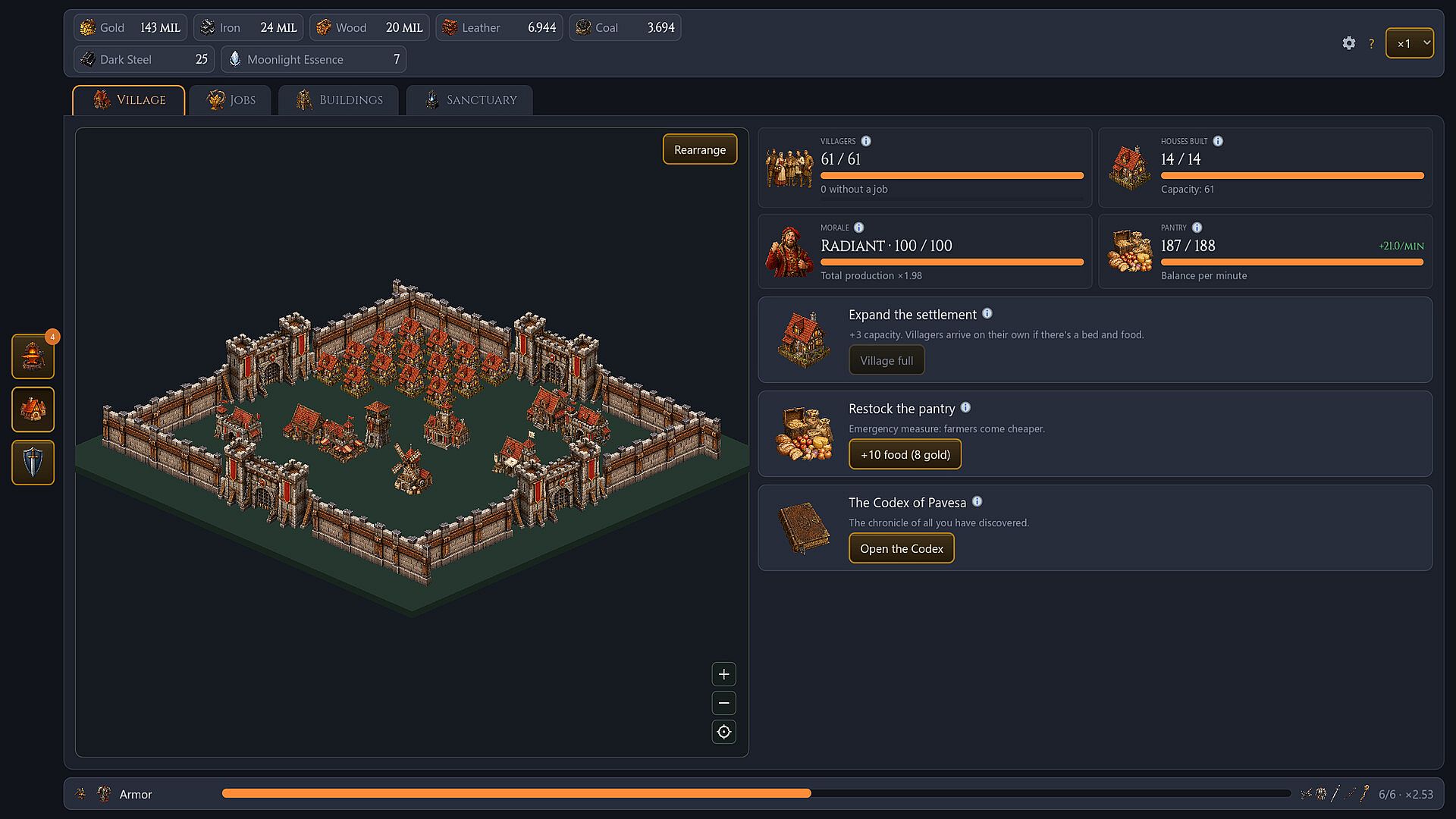
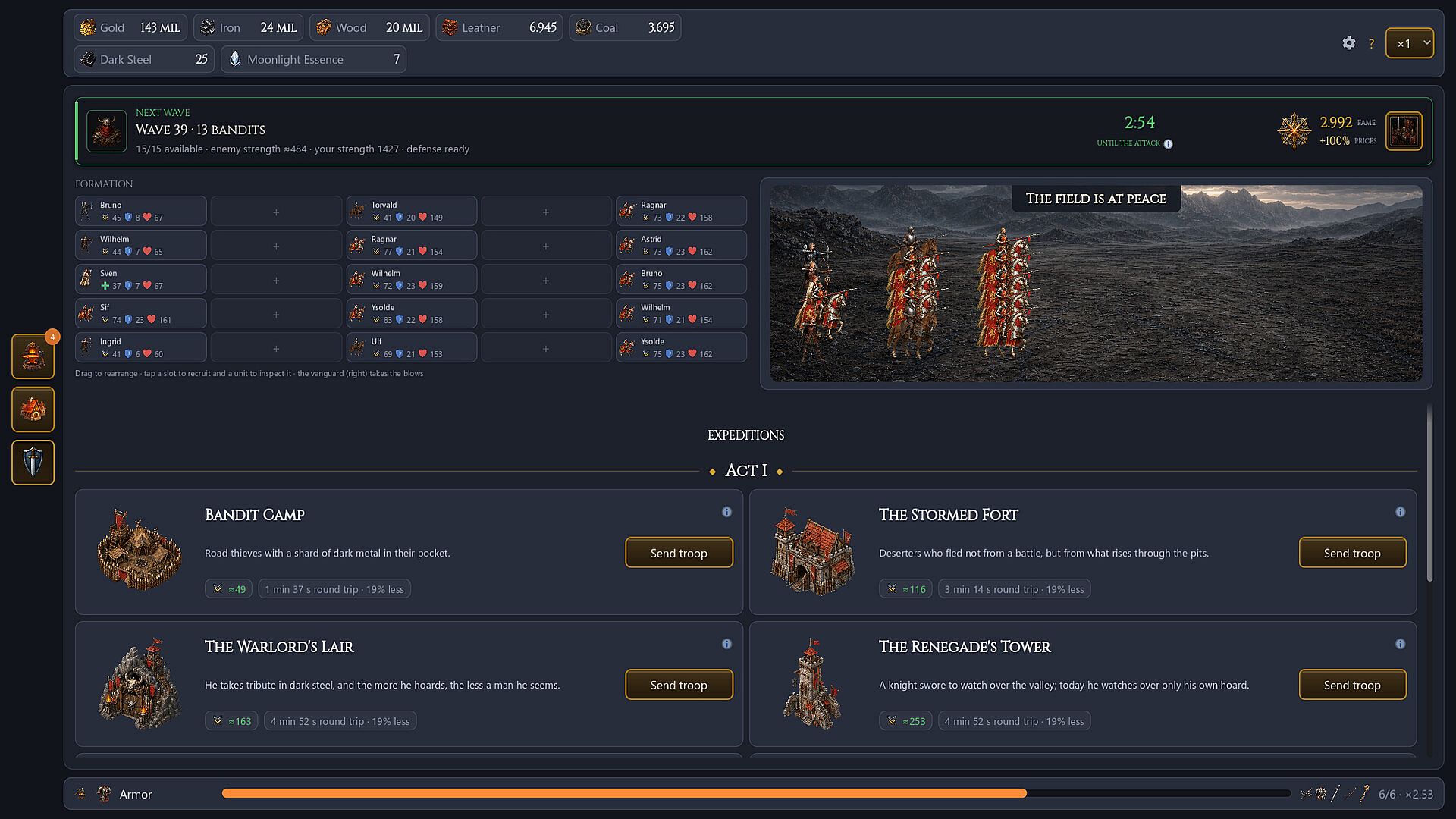
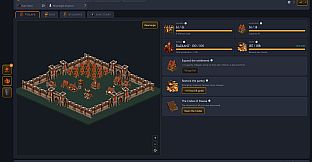
Village growth adds depth through 11 jobs and matching buildings. New arrivals fill roles such as woodcutter, tanner, collier, farmer, or instructor. These workers supply raw materials and sustain morale, which declines if food runs short. A defensive wall protects the settlement from incoming warbands. Players recruit from the population, equip fighters with self-crafted gear, arrange formations, and command turn-based battles that allow direct control over positioning and actions.
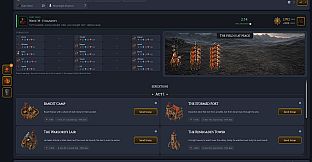
Ten expedition destinations extend the loop outward. Each features a named boss with exploitable weaknesses tied to background lore, such as an axe that targets former woodcutters or a hammer effective against stolen plate. Six lead into the human kingdom of bandits, while the remaining four reach deeper territories. A self-assembled myth emerges through item descriptions, boss epitaphs, and material details that populate the Codex as fragments are earned, offering optional narrative layers without requiring engagement.
Game Modes
The game offers three difficulty settings known as tempers that alter unit recovery and enemy strength. Normal temper allows fallen units to retire wounded and return fully restored. Hard temper increases enemy toughness, adds an extra minion to each fight, and requires treatment for fallen units before they can fight again. Permadeath temper removes fallen units permanently, returns their equipment to the anvil in bent condition, and presents a high-stakes path where reaching the final boss carries substantial risk.
These tempers integrate directly with the core loop of forging, village management, and expeditions. Session length remains player-controlled because the world holds its state exactly upon return, with no offline harvesting or timers advancing. Autosaves occur every 30 seconds and on exit to preserve progress reliably.
Village and Combat Systems
Eleven buildings support the 11 jobs, creating a self-sustaining settlement that feeds the forge with materials instead of merely consuming resources. Morale mechanics add consequence to neglect, encouraging balanced attention across production, defense, and population needs. Combat emphasizes preparation through custom equipment and formation tactics rather than random encounters, with warbands representing corrupted individuals drawn to extinguish the forge.
Expeditions reward strategic planning through boss-specific vulnerabilities that reward attention to material and background details. The overall structure supports both short focused sessions and longer campaigns, with 31 milestones providing structured rewards along the way.
Is It Worth Playing?
The Dawn Forge suits players who prefer deliberate, session-based strategy gameplay without idle mechanics or guilt-driven returns. Its emphasis on active forging, village simulation, and turn-based defense creates a cohesive loop where every action ties back to keeping the ember lit. The three tempers provide clear paths for different risk tolerances, from forgiving recovery in Normal to the coin-flip challenge of Permadeath. Full localization in English and Spanish, bespoke icons, and reliable save systems support extended play. Those seeking a self-contained experience that rewards attention to economy, recruitment, and expedition preparation will find the design consistent and intentional throughout.