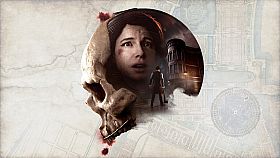


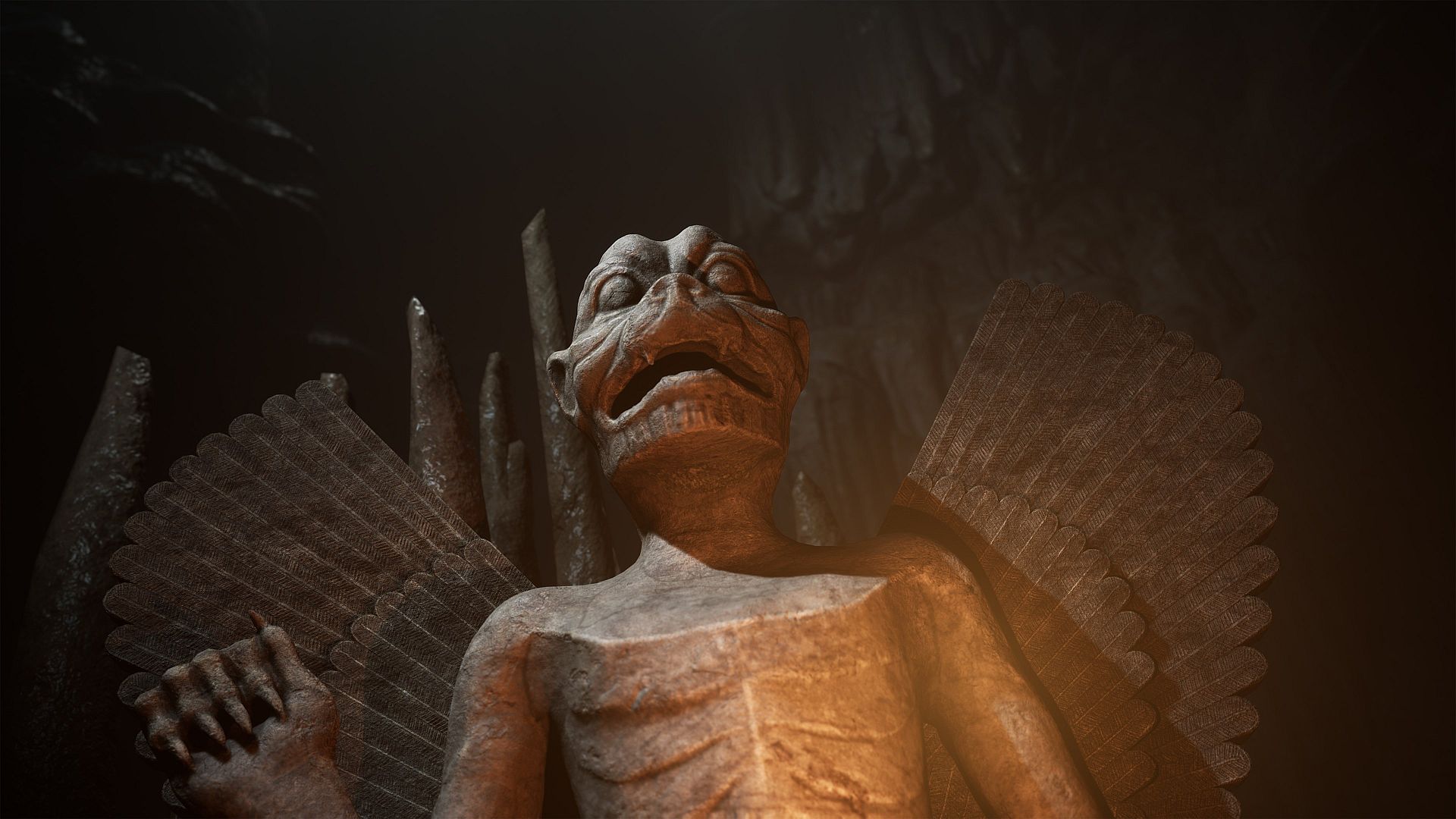
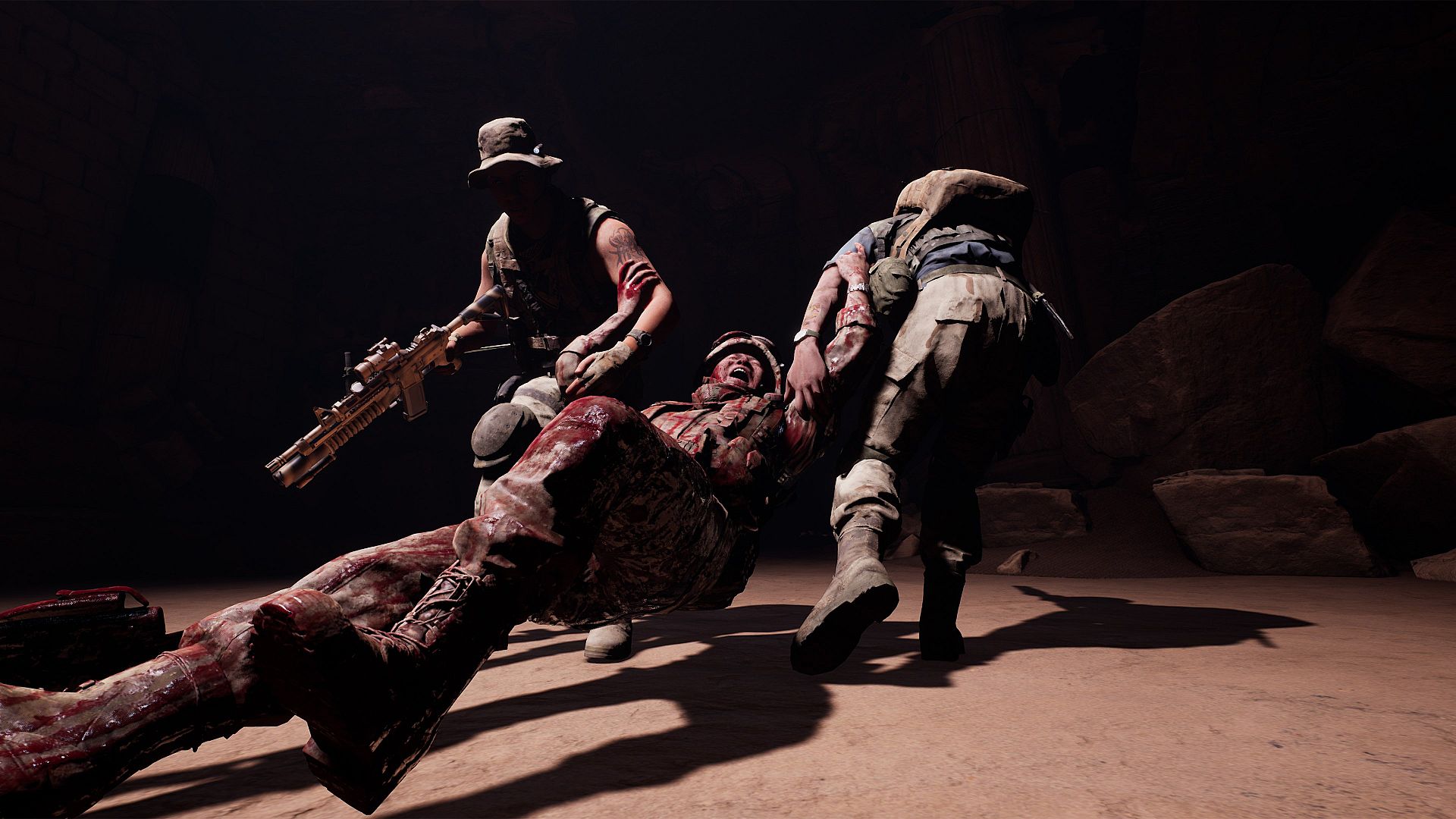
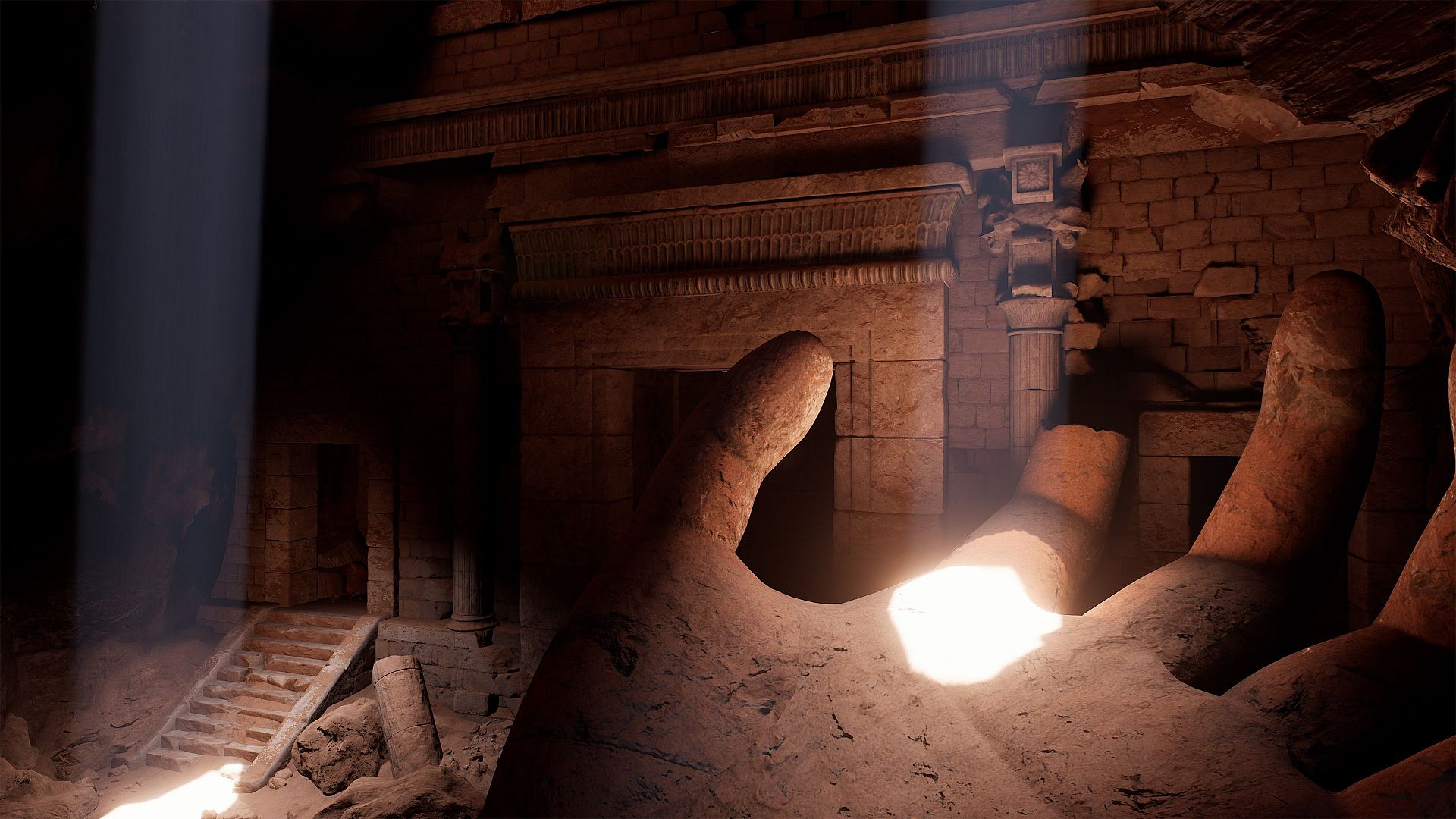
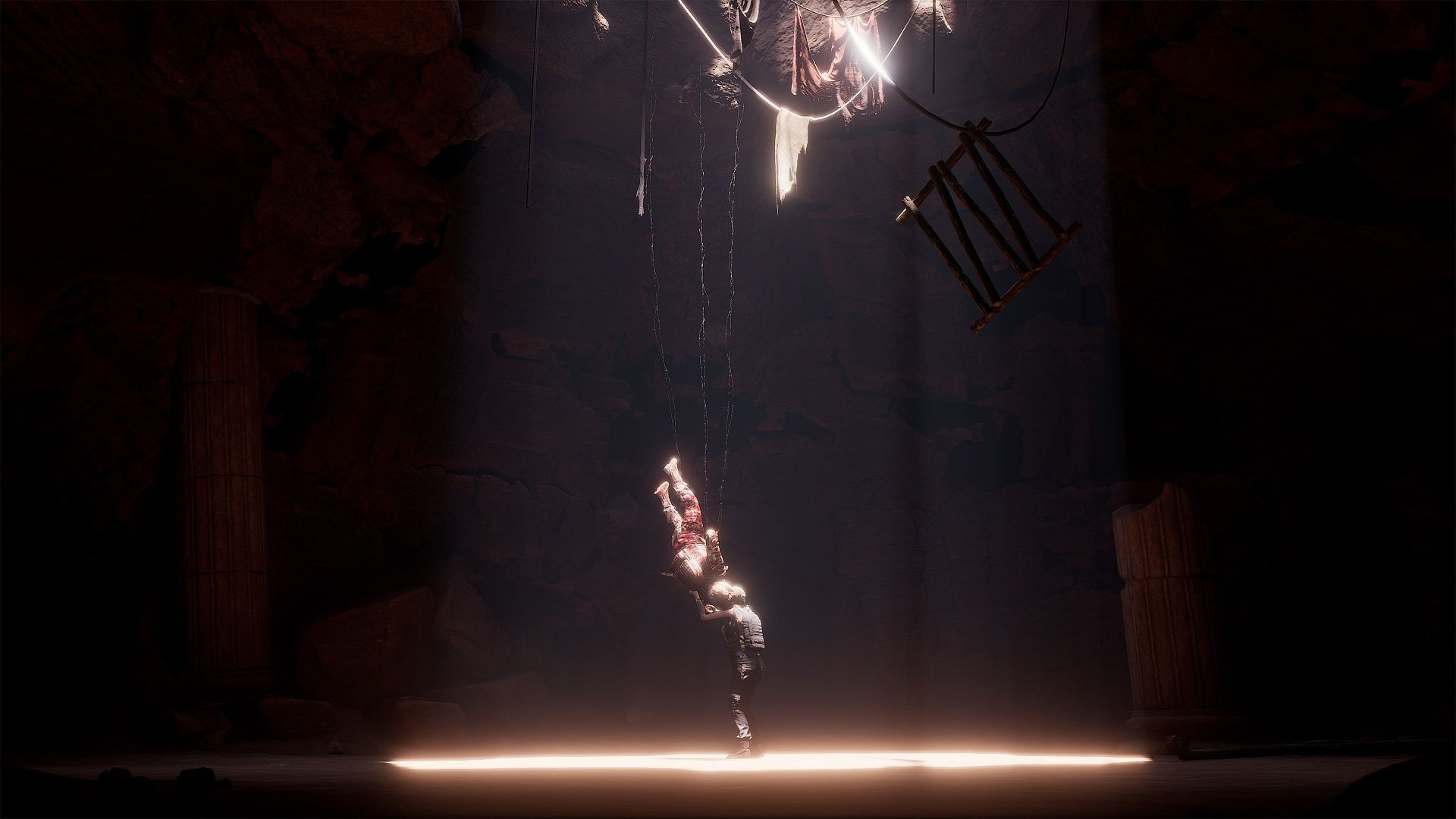
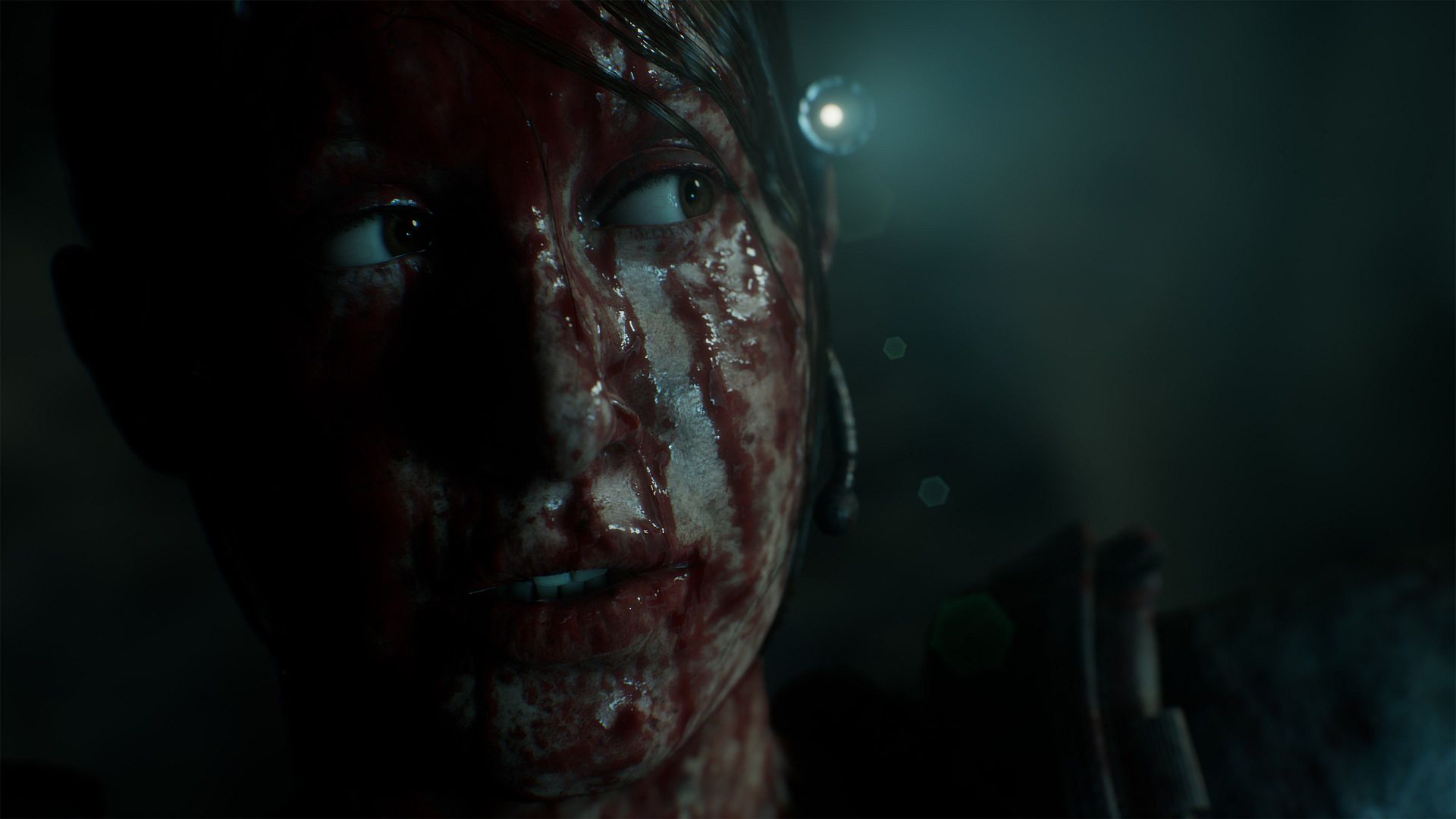
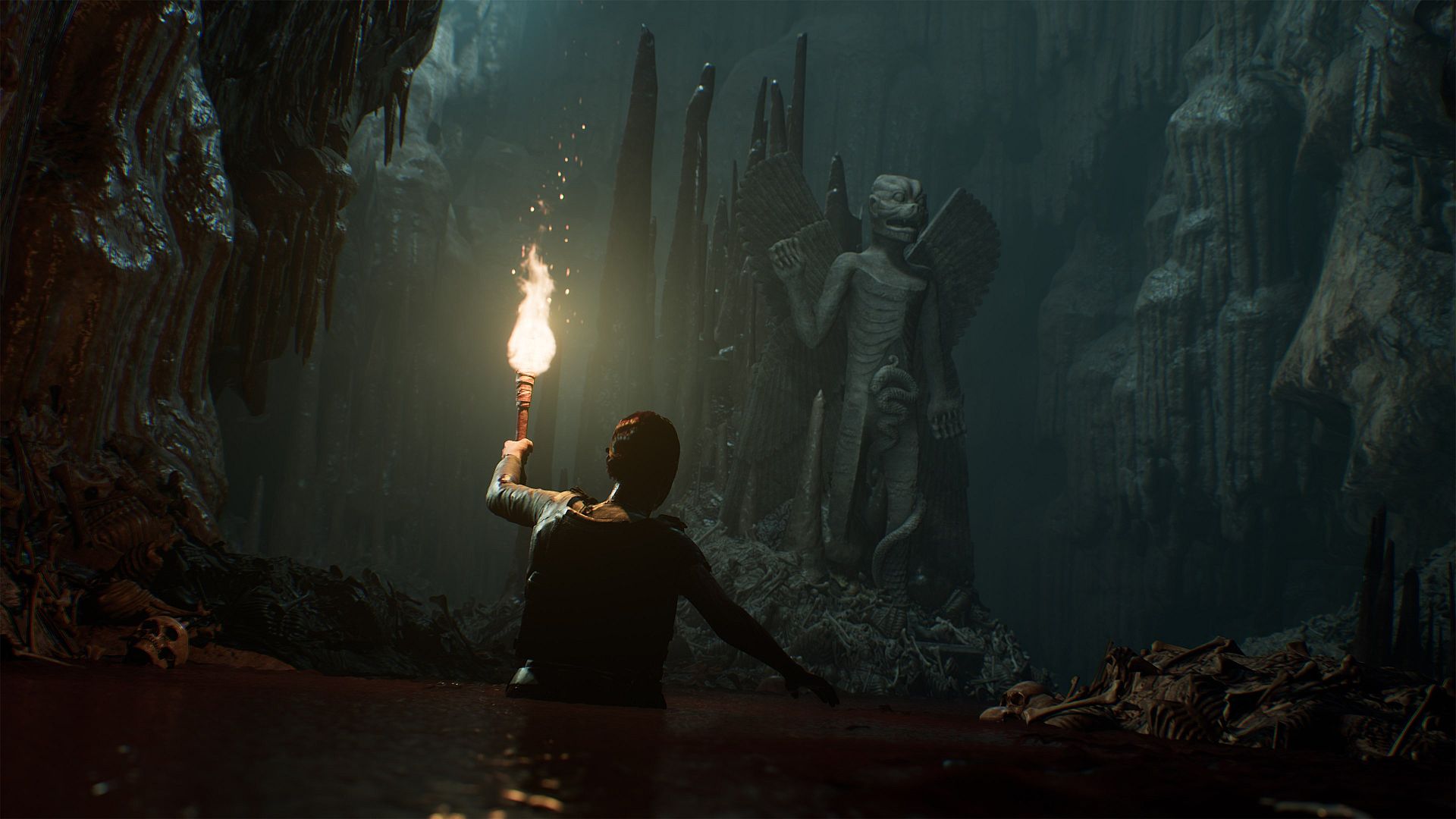

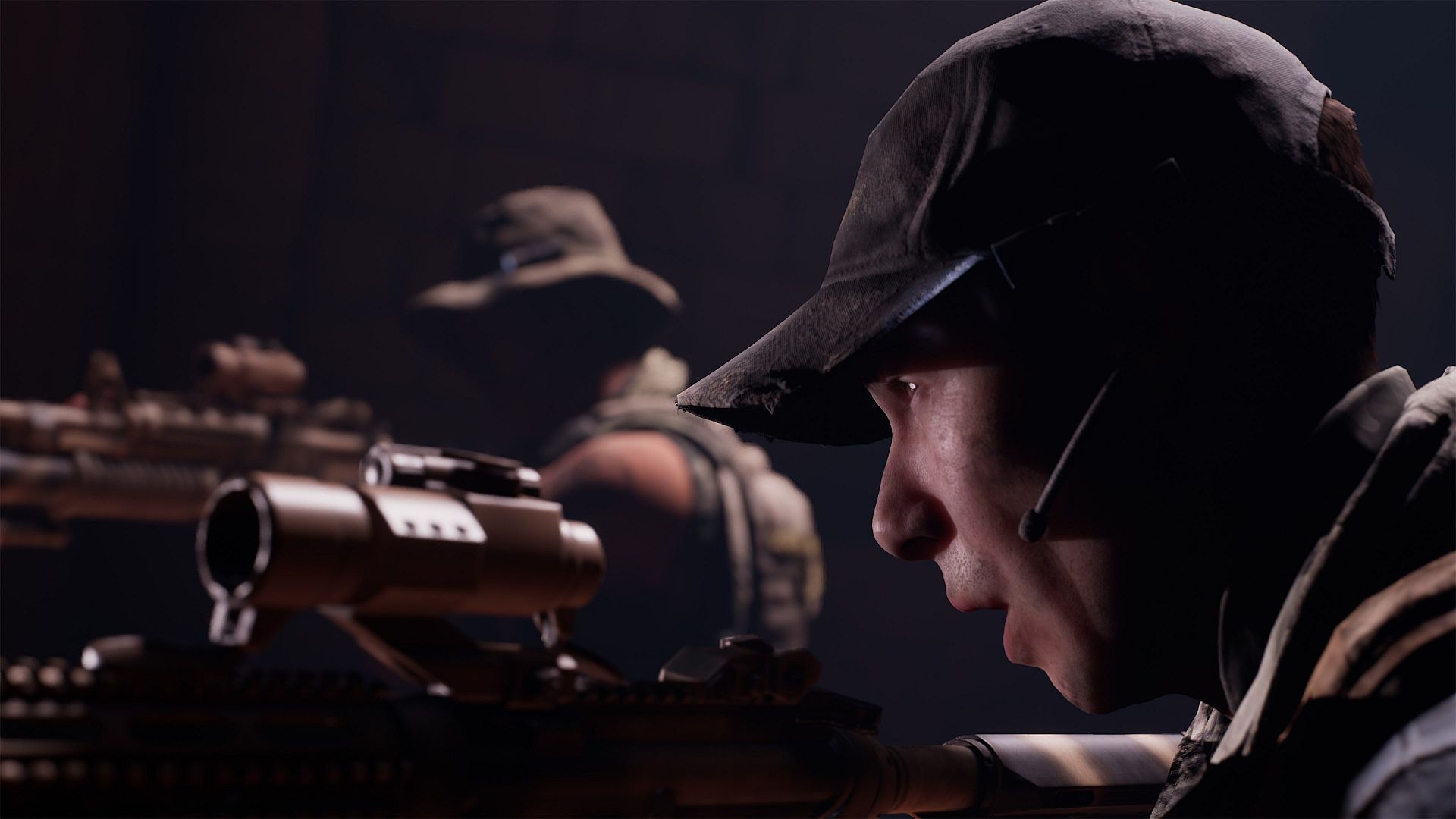
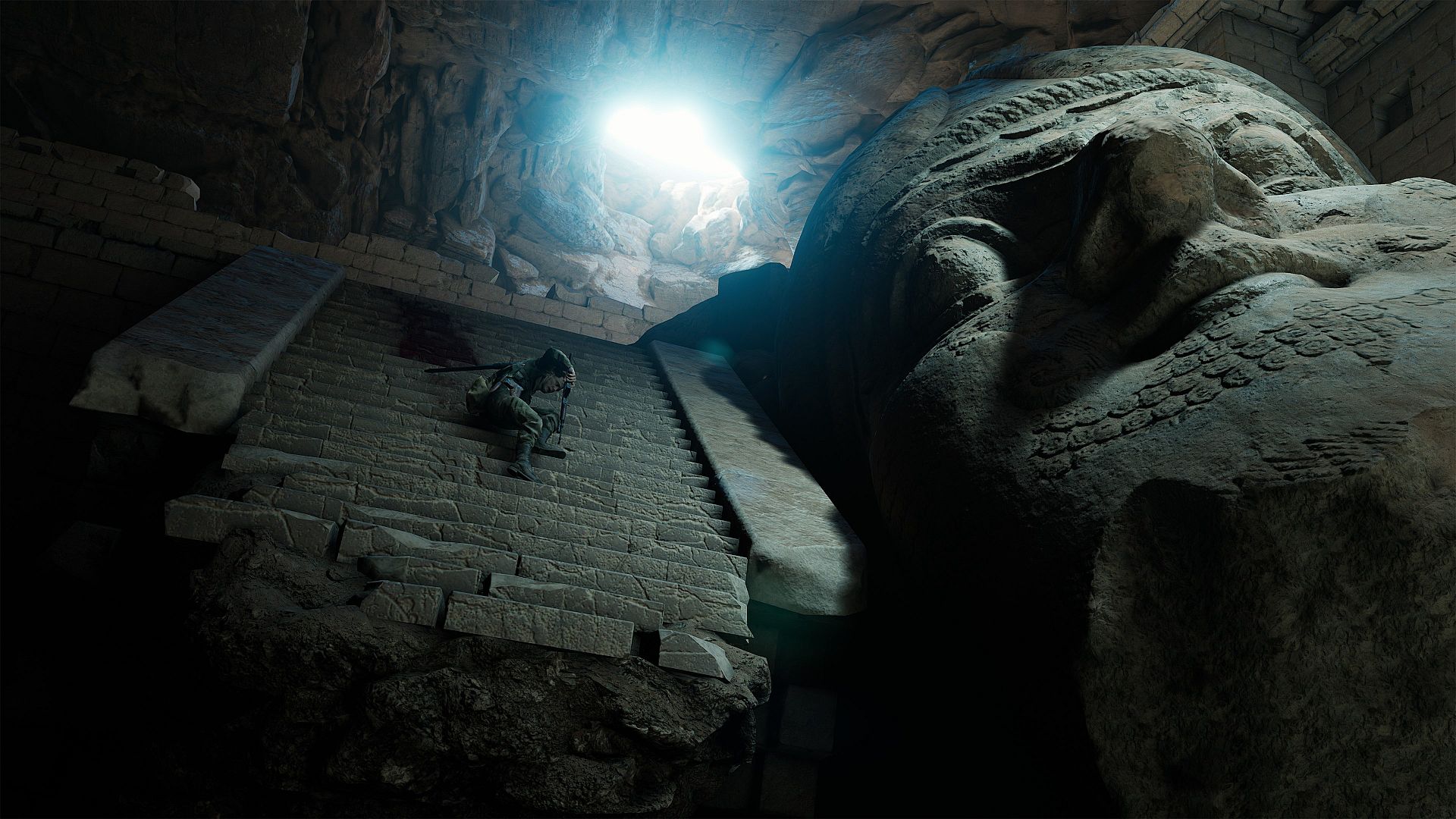




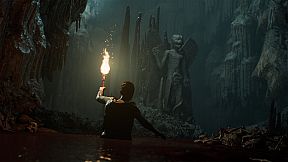


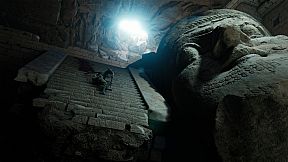
The Dark Pictures Anthology: House of Ashes is a cinematic interactive drama and survival horror title that blends action and adventure elements through player-driven choices in a branching narrative. Set during the 2003 Iraq conflict, the story follows a military unit and a CIA operative who stumble into an ancient threat after an ambush leads them into the ruins of a buried Sumerian temple beneath the desert. Decisions made throughout the experience shape character relationships, survival outcomes, and multiple possible endings, creating a replayable structure centered on tension, exploration, and moral dilemmas.
Gameplay
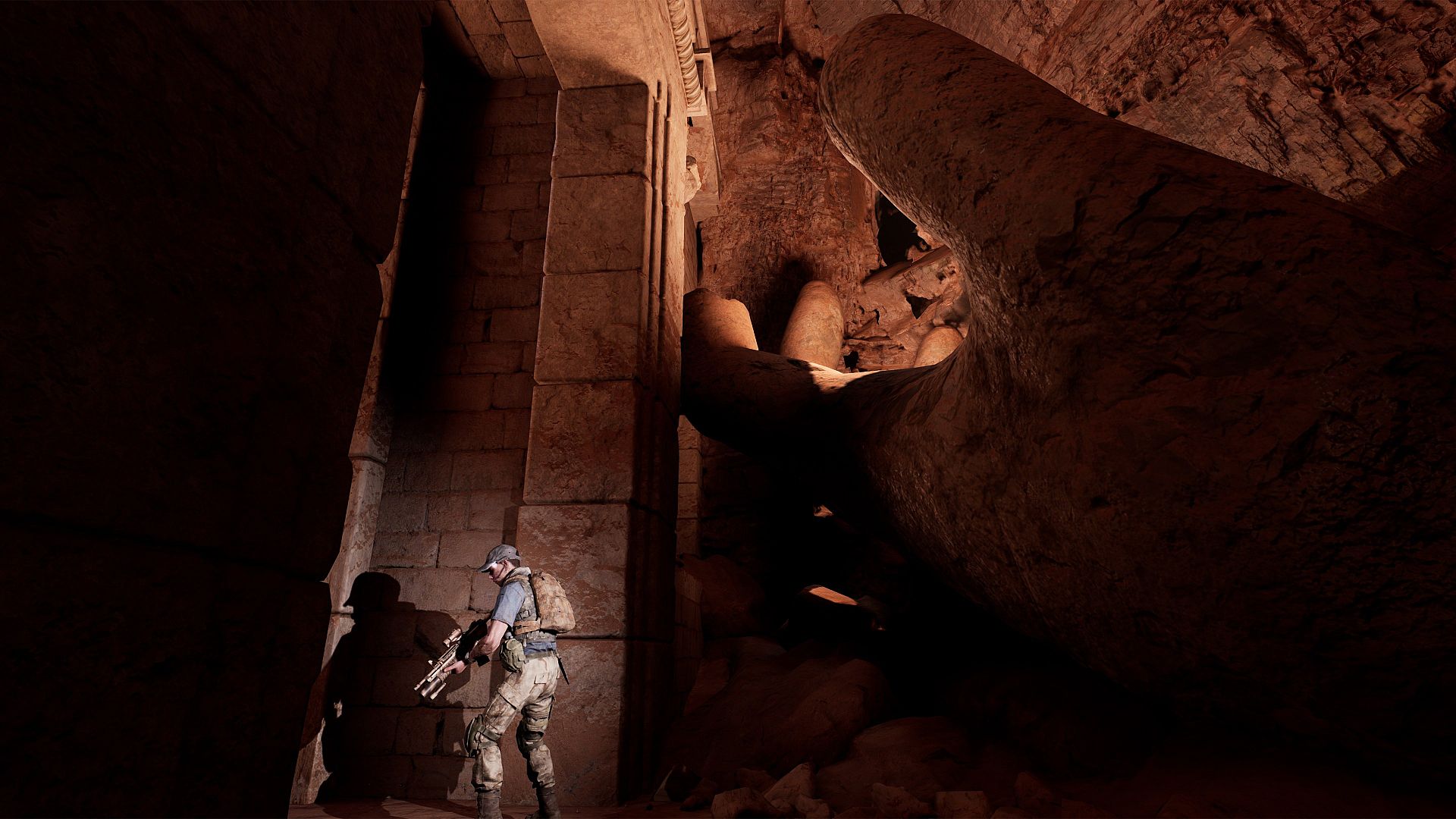
Core mechanics revolve around exploration of a dark, subterranean environment using a fully controllable 360-degree camera equipped with a flashlight function. Players navigate labyrinthine temple ruins while managing limited resources and avoiding or confronting unearthly creatures awakened in the depths. Quick-time events form a central pillar of the experience, requiring precise timing to succeed in combat, evasion, or environmental interactions. Separate Keep Calm segments test player composure during high-stress moments by maintaining steady input to prevent panic or failure.
Collectibles scattered throughout the levels provide glimpses of potential future events, helping inform choices and encouraging thorough investigation. Difficulty settings include Forgiving, Challenging, and Lethal modes that adjust the speed and strictness of quick-time events and Keep Calm sequences. These options can be adjusted at any point during a playthrough to suit individual skill levels or preferred intensity. The overall loop emphasizes careful decision-making over direct combat, with survival depending on how well players balance personal survival instincts against group cooperation.
Game Modes
House of Ashes supports four distinct ways to experience the story. The Theatrical Cut serves as the primary single-player mode, delivering the main narrative from a consistent perspective with standard choices and branching paths. The Curator's Cut unlocks after completing the main story and shifts focus to alternate character viewpoints, introducing new scenes, dialogue options, and decisions that reveal additional layers of the plot and different death sequences.
Shared Story enables two-player online co-op where participants control separate groups of characters and influence the shared narrative through their individual choices. Movie Night offers local couch co-op for two to five players, with each person assigned specific characters to control and guide through the events in a shared session. These multiplayer options emphasize collaboration or friendly competition in decision-making, extending the game's appeal beyond solo play.
Story and Characters
The narrative unfolds across a tense military operation that escalates into a fight for survival against ancient horrors. Key figures include U.S. soldiers, a CIA field operative named Rachel King, and opposing forces led by Sergeant Salim Othman. Personal rivalries and differing priorities among the group create friction that players must navigate through dialogue choices and actions. The underground setting amplifies isolation and dread as the unit uncovers horrific discoveries while attempting to escape the temple's dangers.
Branching paths allow for varied character fates, with outcomes ranging from full survival to total loss depending on how alliances form or fracture. The story draws on historical context of the Iraq conflict while introducing supernatural elements that shift the tone toward horror. Multiple playthroughs uncover different perspectives and hidden details, rewarding those who revisit the experience with fresh choices.
Is It Worth Playing?
House of Ashes delivers a focused narrative experience suited to players who enjoy choice-based horror adventures with strong character interactions and co-op flexibility. The combination of single-player story modes and multiplayer options makes it accessible for solo sessions or group play, particularly for those comfortable with quick-time event mechanics and exploration in confined spaces. Reception highlights the solid performances, branching consequences, and atmospheric tension as standout elements that hold up well for fans of the genre.
Those seeking fast-paced action or open-world freedom may find the linear structure and emphasis on dialogue less engaging, but the game rewards investment in its decision systems and multiple endings. Availability on Xbox platforms supports both solo and shared play without additional barriers. For players interested in replaying to explore alternate outcomes or experiencing the Curator's Cut perspective, the title offers meaningful depth beyond a single run. Overall, it stands as a worthwhile entry for narrative-driven horror enthusiasts who value consequence and collaboration over traditional gameplay loops.