


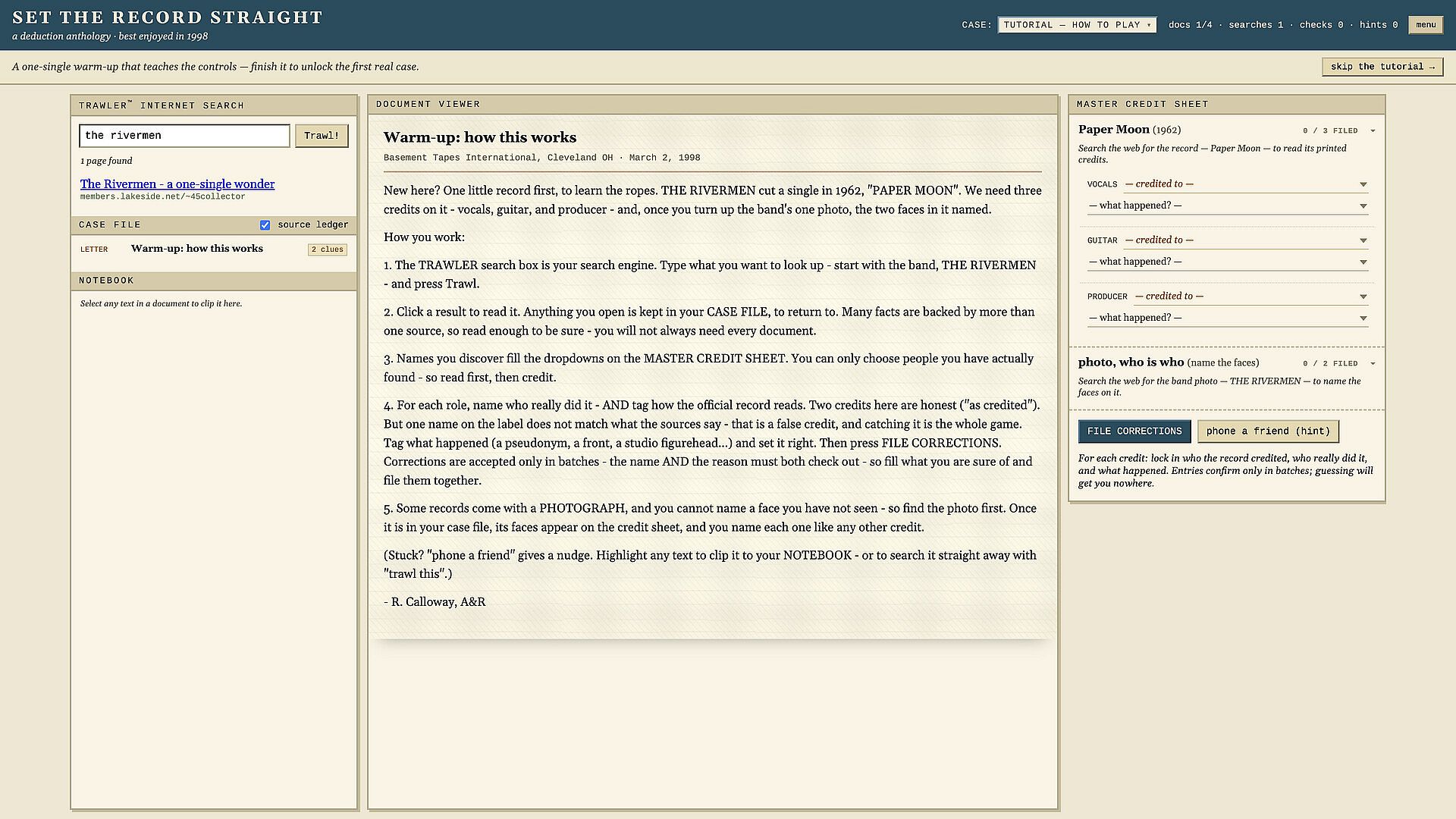
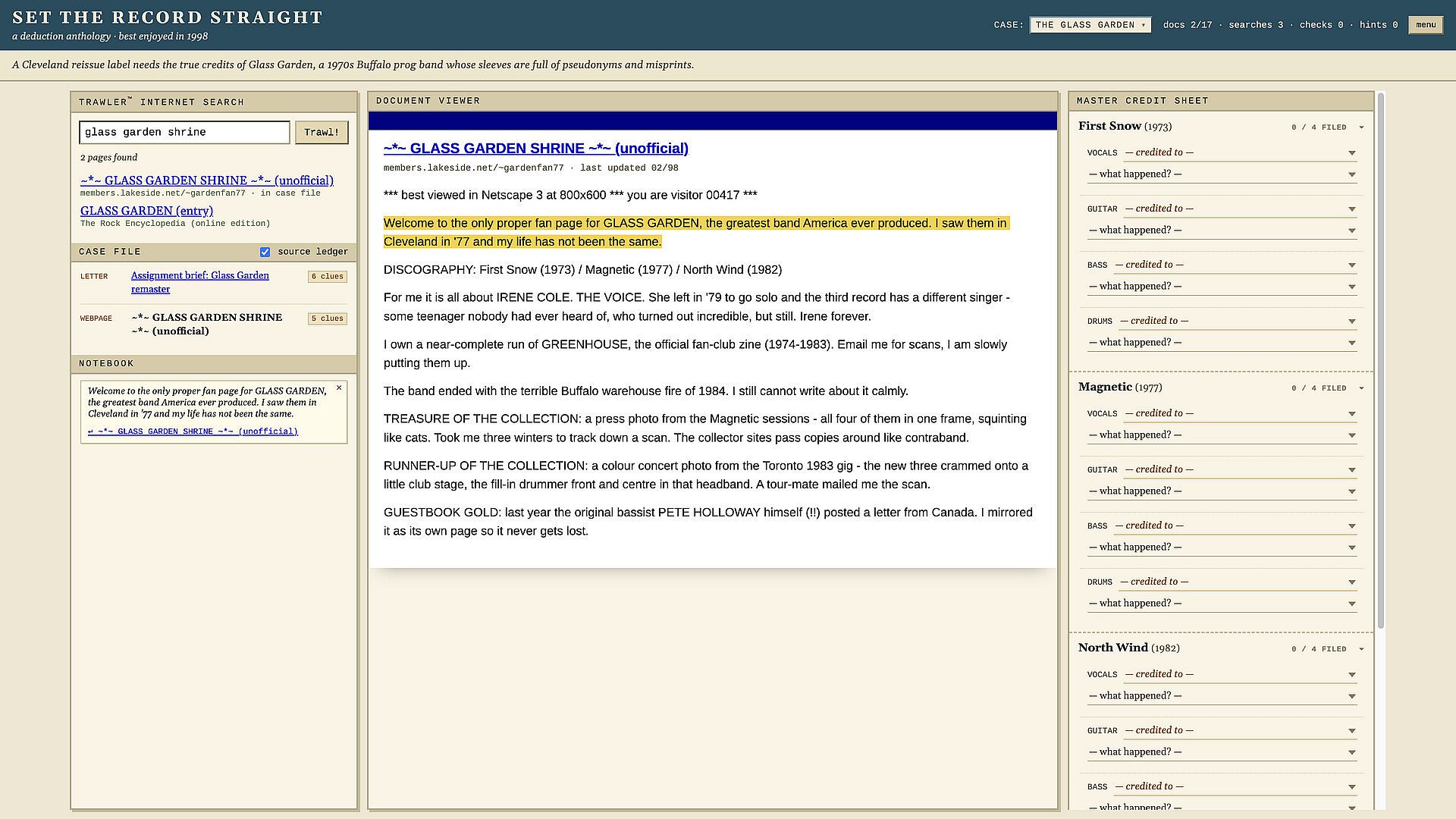
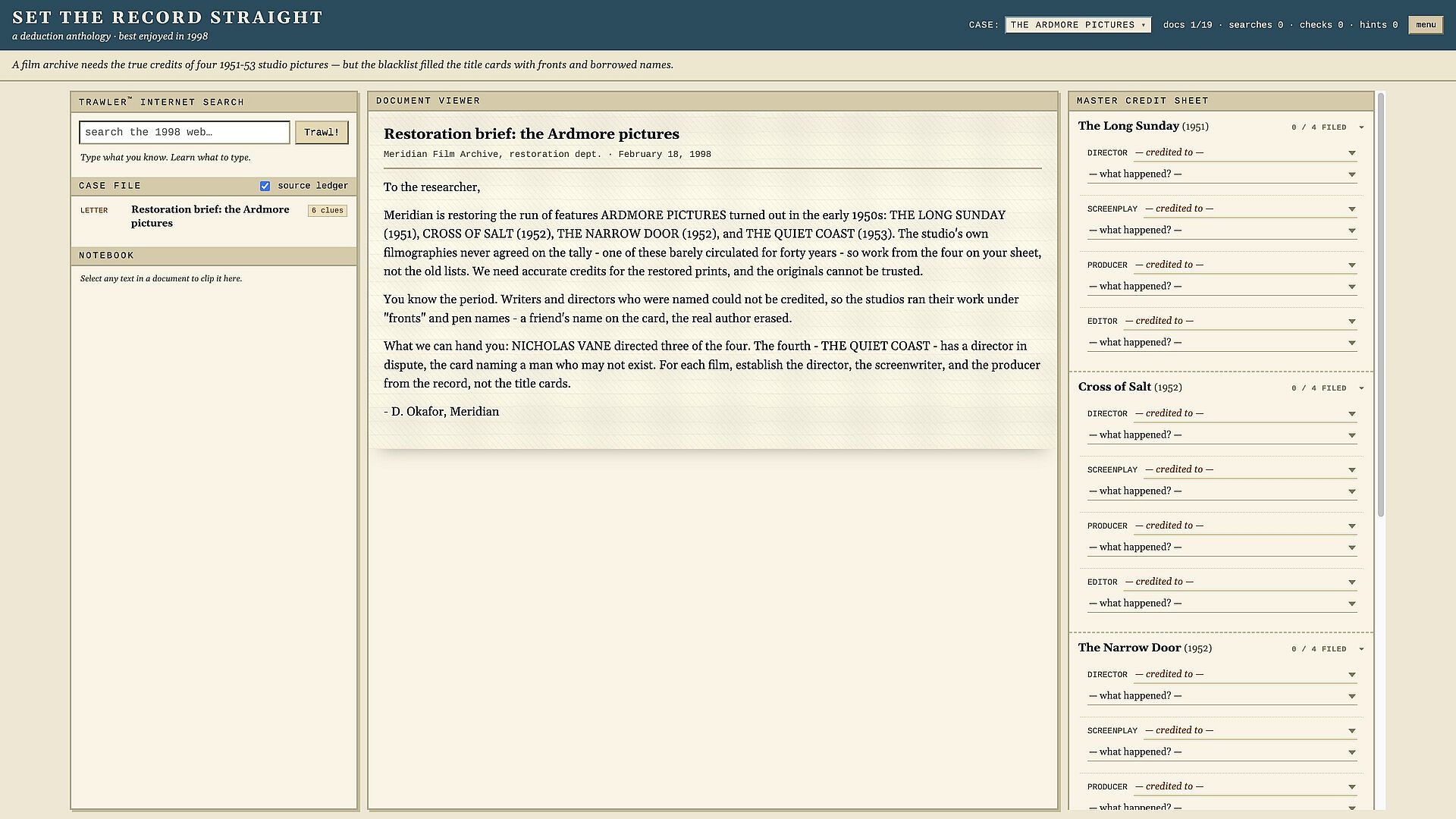
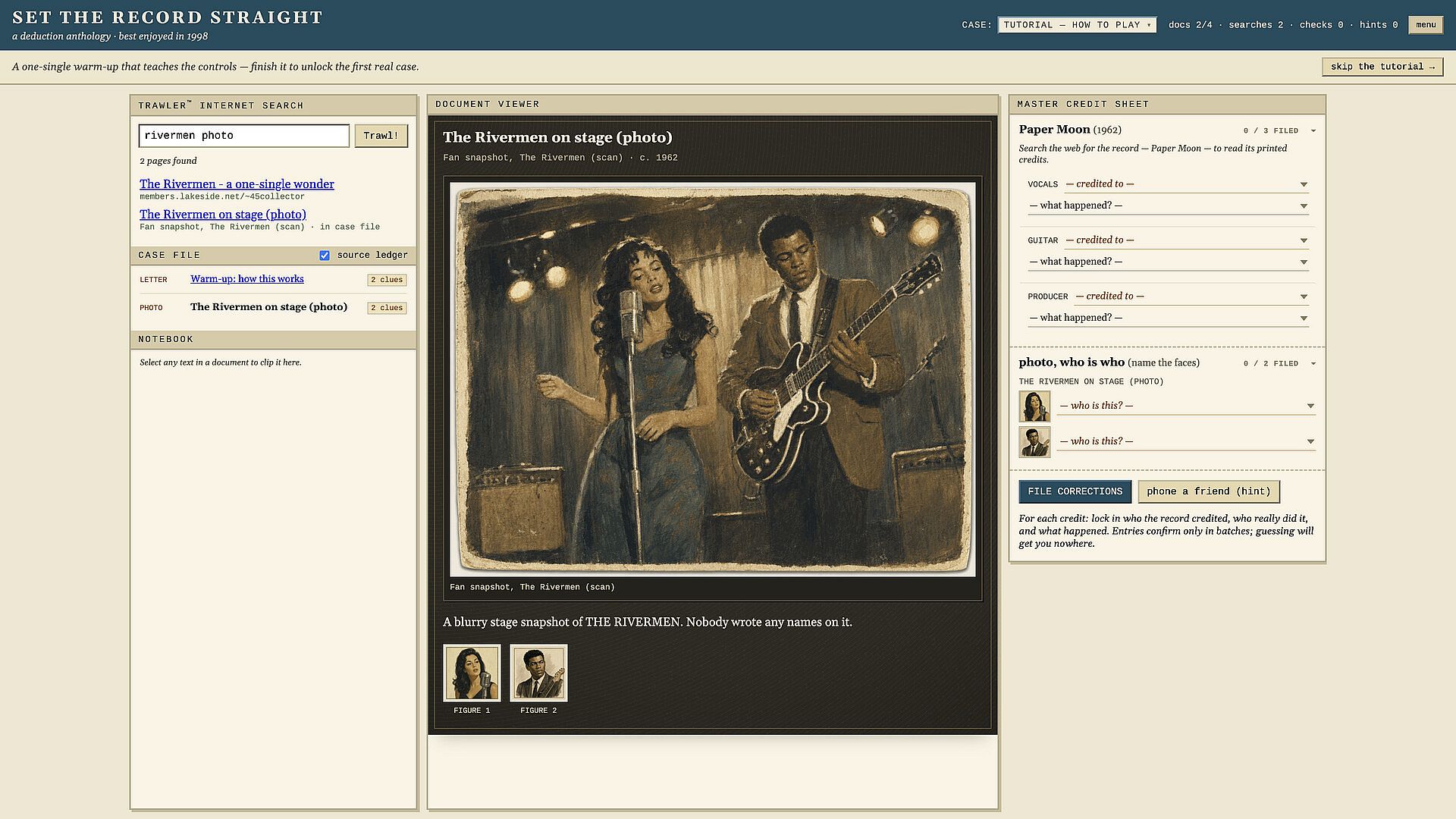
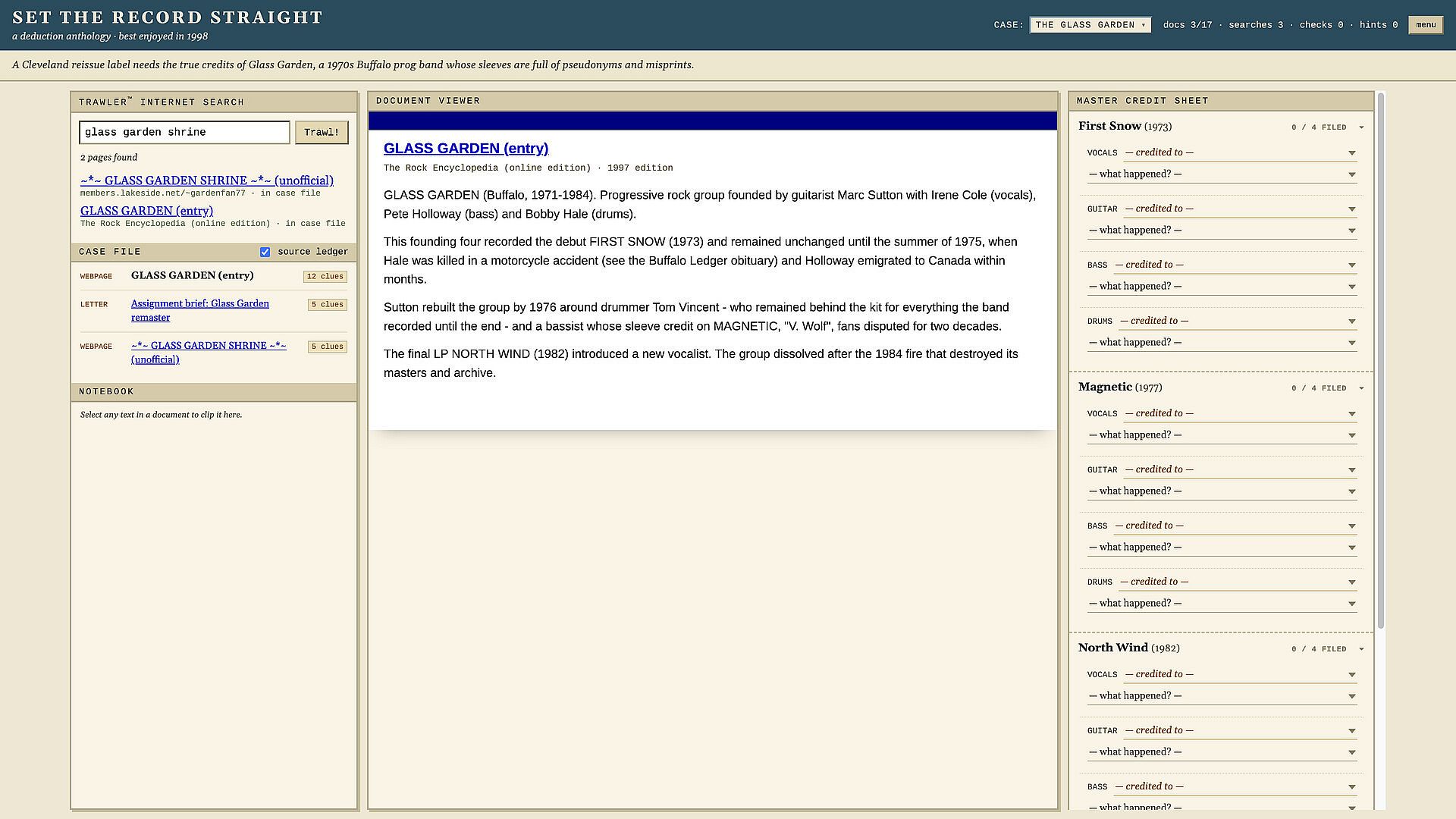

«Set the Record Straight» es una aventura de deducción para un solo jugador centrada en investigar y corregir atribuciones históricas. El jugador encarna a un investigador de 1998 que desentraña las verdaderas historias detrás de los créditos oficiales en música, cine, cómic, teatro y arquitectura. La experiencia gira en torno a navegar por una recreación de internet de la época, llena de páginas web, mensajes de Usenet, fanzines, carátulas y recortes, para identificar a las personas que realmente realizaron el trabajo oculto tras los nombres acreditados.
Gameplay
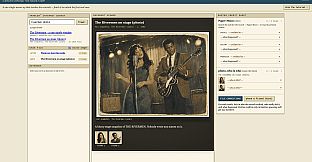
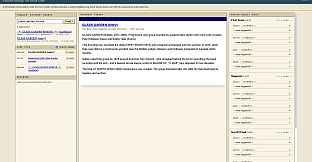
El ciclo principal consiste en buscar documentos e imágenes en una versión artesanal de la web de 1998. El jugador lee las fuentes, cruza datos y envía correcciones a una hoja maestra de créditos. Cada corrección exige tres elementos precisos: el nombre originalmente acreditado, los hechos reales y las personas que llevaron a cabo el trabajo. Las propuestas solo se aceptan cuando coinciden todos los datos, lo que impide respuestas parciales o suposiciones. A lo largo de cada caso aparecen fotografías que hay que relacionar con nombres y cargos mediante pruebas obtenidas de distintas fuentes. El proceso prioriza la lectura y la deducción frente a la rapidez o los reflejos, sin estados de fallo ni presión temporal.
Los casos son independientes, por lo que pueden abordarse en cualquier orden mientras se aprende el uso de la interfaz y las herramientas de búsqueda. Un tutorial guiado presenta el motor de búsqueda de la época y la mecánica de la hoja de créditos desde el principio. Todo el contenido es ficticio: bandas, películas, cómics y publicaciones creados específicamente para los puzles.
Modos de juego
El juego funciona exclusivamente en modo individual con estructura de antología. Cada caso constituye un conjunto de puzles independiente dentro de la colección general de escenarios de corrección de créditos. El progreso se mide completando las hojas de tres partes e identificando a las personas en las fotografías de cada caso elegido. No hay elementos competitivos ni cooperativos; el énfasis recae en la exploración metódica de los documentos proporcionados, sin narrativas ramificadas ni finales múltiples por caso.
Los planes de Acceso Anticipado contemplan ampliar la antología con nuevos casos en los mismos ámbitos creativos, manteniendo intactos los mecánicas básicas de búsqueda web, confirmación por lotes e identificación fotográfica desde el lanzamiento inicial.
Historia y ambientación
El marco narrativo sitúa al jugador en 1998, una época en la que los créditos oficiales solían ocultar a los verdaderos colaboradores mediante testaferros, seudónimos o identidades prestadas. La investigación se desarrolla en un entorno de escritorio repleto de materiales propios de la época que hay que consultar sin las comodidades de las búsquedas actuales. El escenario pone de relieve las limitaciones y peculiaridades de los recursos en línea de finales de los noventa, como debates fragmentados en Usenet y recortes físicos que requieren una interpretación cuidadosa. Cada caso desvela capas de atribuciones erróneas vinculadas a proyectos concretos de música, cine, cómic, teatro o arquitectura, animando al jugador a reconstruir cronologías y relaciones a partir de pruebas dispersas.
Público objetivo
Este título está dirigido a jugadores que disfrutan de experiencias basadas en puzles de lectura, cotejo y deducción lógica. Quienes buscan simulaciones de investigación histórica o aventuras pausadas encontrarán mecánicas acordes con una investigación deliberada, más que con la acción o la exploración en el sentido tradicional. La ausencia de elementos de reflejos y estados de fallo lo hace accesible para sesiones cortas, mientras que el formato de antología permite tanto partidas breves como prolongadas según el número de casos que se completen en una misma sesión.
¿Merece la pena jugarlo?
«Set the Record Straight» llega a Acceso Anticipado como una experiencia completamente jugable, con mecánicas principales terminadas y un conjunto inicial considerable de casos. Su enfoque de deducción en solitario ofrece una profundidad constante gracias al sistema de corrección de créditos y las tareas de identificación fotográfica. Quienes buscan una aventura reflexiva basada en documentos, sin presión competitiva ni sistemas complejos, encontrarán la versión actual satisfactoria. El desarrollo continuará añadiendo casos con el tiempo, y los comentarios de los jugadores orientarán los ajustes y las nuevas incorporaciones. Aquellos que prefieren títulos que premian la lectura atenta y las deducciones precisas frente a los reflejos rápidos o la creatividad abierta probablemente valorarán el enfoque estructurado pero flexible de cada caso.