





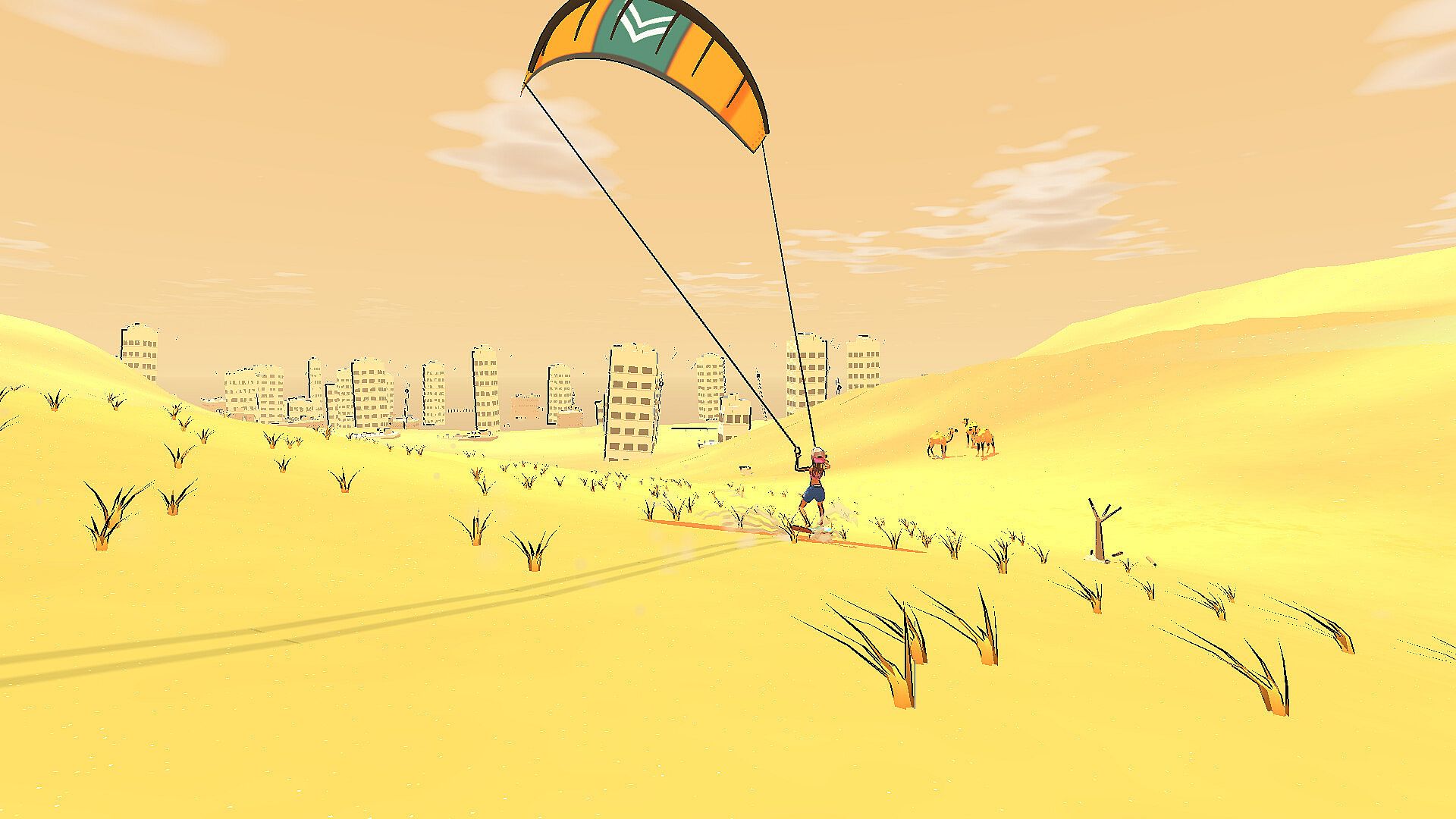
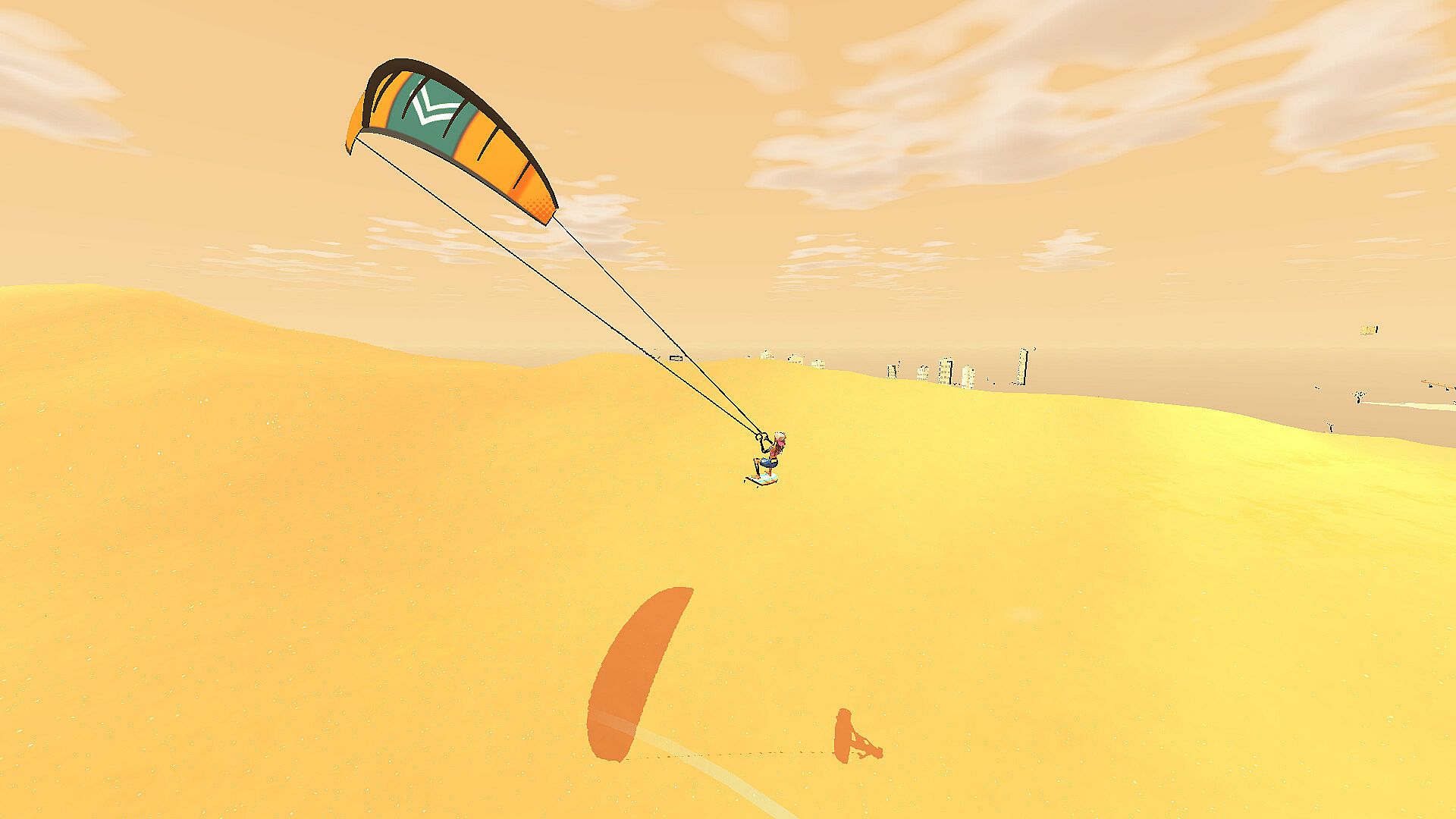
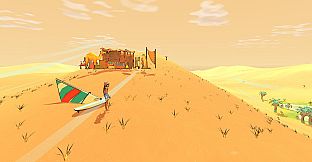

Sands of the Aftermath is an open-world survival game set on PC in which players ride kite or windsurf rigs across endless sand dunes in a world buried under desert. The core loop combines traversal, resource management, and light base building as players navigate ruins, manage thirst and temperature, and gather materials from the remnants of a drowned civilization.
Gameplay
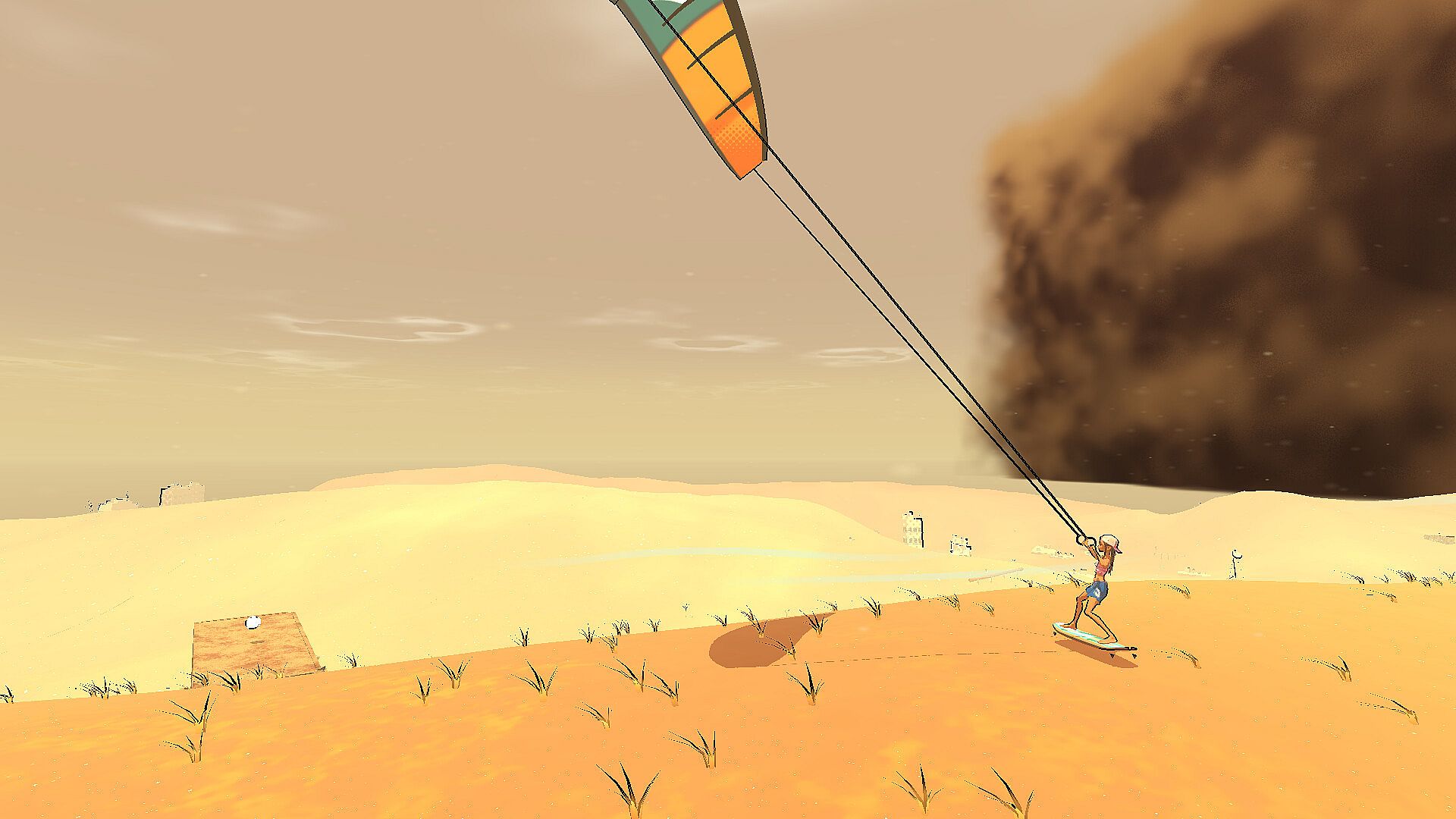
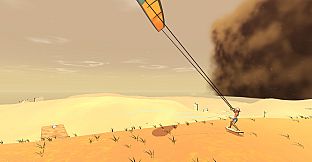
Traversal forms the heart of the experience. Players select either a kite rig for greater height and distance on jumps or a windsurf board for straight-line speed at the outset. Reading wind patterns allows launches from dune crests, followed by grinds along rooftops, containers, and guard rails. Sand storms approach visibly on the horizon, requiring players to seek shelter beneath the kite before they hit.
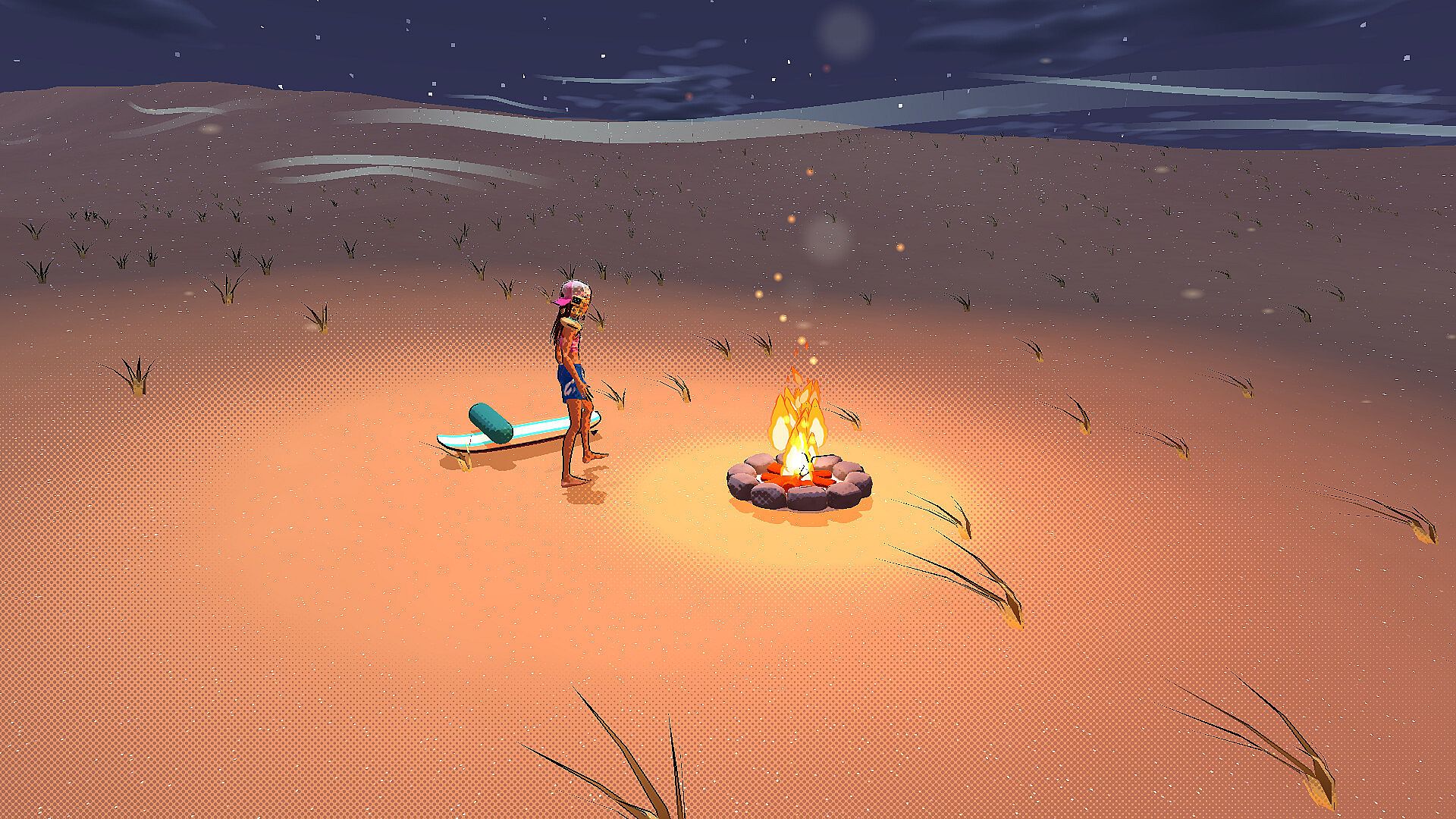
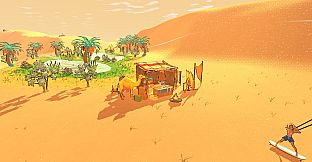
Survival demands constant attention to water and temperature. Players dig water holes along shores, desalinate salt lakes, and collect dew at night. Daytime heat gives way to cold after dark, so fires and shelters become essential. Food comes from picking dates, aloe, and saffron, maintaining beehives for honey, and other desert-appropriate gathering. A small robot companion named Nix rides on the shoulder, providing storm warnings, world explanations, and occasional animations when music plays.
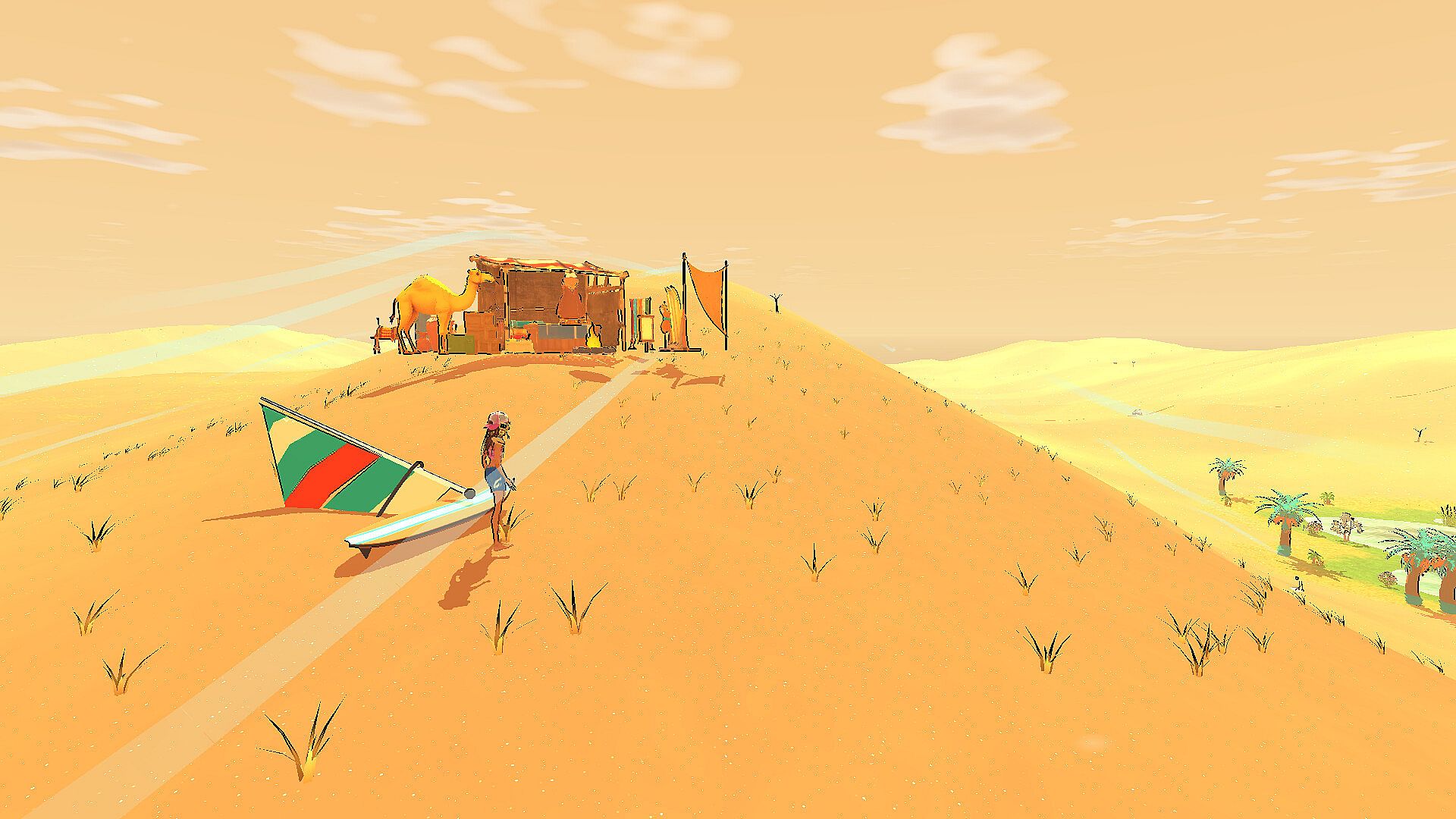
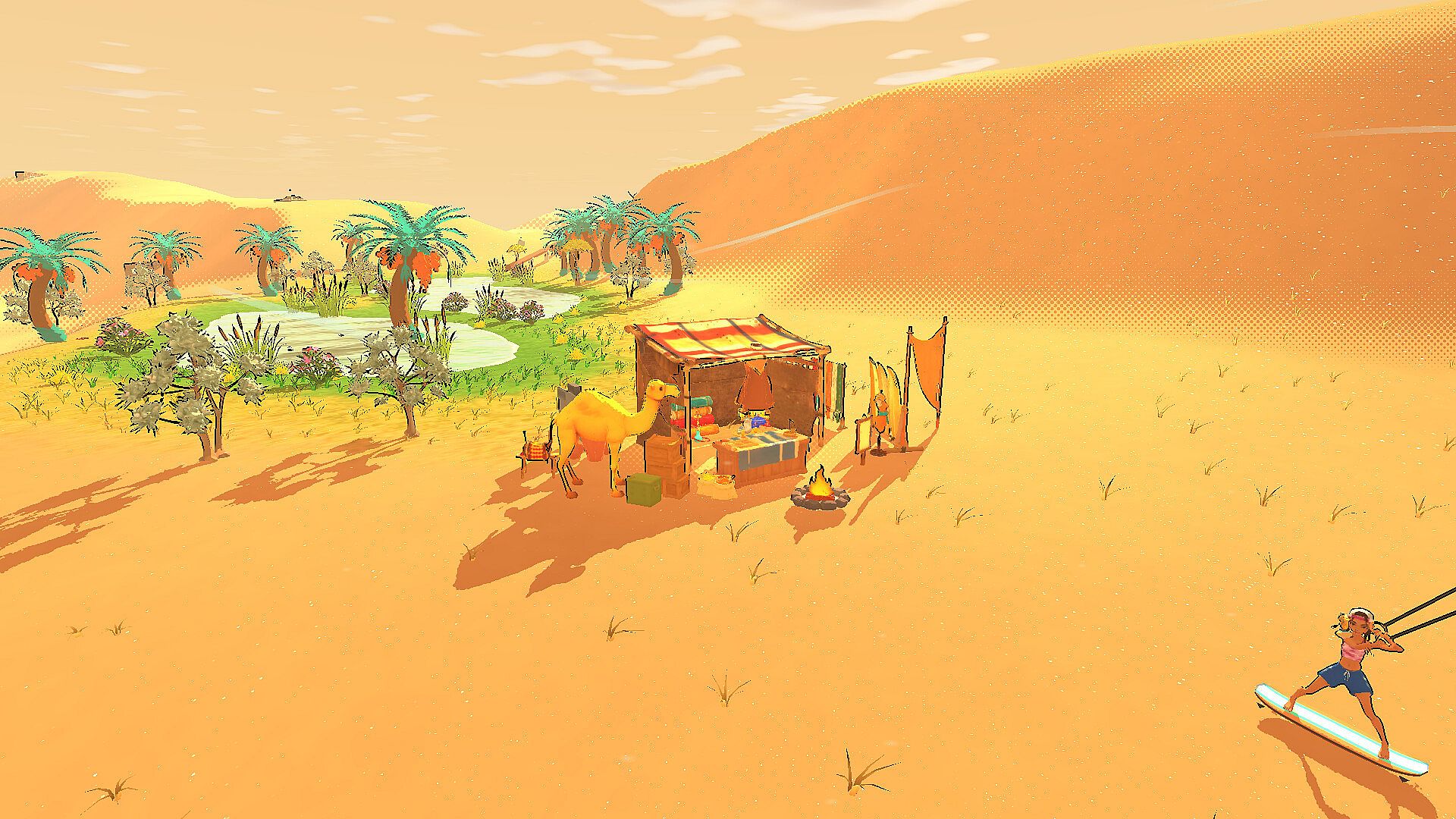
Salvage and construction tie the systems together. Tools such as crowbar, wrench, and angle grinder allow disassembly of car wrecks, containers, and server racks. Players break into buried buildings to recover old-world items. A traveling merchant named Hakim appears at different oases each day for trading. Base building starts small with fires and shelters and expands as more modules and materials become available.
Game Modes
The game operates as a single-player open-world experience without separate named modes at this stage. All activity takes place in one continuous desert environment where riding, survival, and salvage happen together. Progress comes from crossing dunes, locating resources, expanding a personal base, and interacting with the merchant and companion. The Early Access version contains the full current scope of these systems, with further scope and balance additions planned through updates.
Exploration and Salvage
Ruins of the old world serve as both obstacles and opportunities. Players grind across exposed structures and enter buried buildings to recover useful components. The wind itself acts as the primary means of movement, turning dune crests into launch points and open flats into speed runs. Nix assists with scanning and commentary during these journeys, while Hakim provides a mobile trading post that shifts location daily.
Resource loops encourage repeated trips across the dunes. Water sources are scattered and require specific actions to access, while food plants and beehives reward careful placement near a growing base. Temperature management adds a daily rhythm that influences when players travel or shelter.
Is It Worth Playing?
The game remains in an early playable alpha state with the listed riding, survival, and building systems already functional. Rough edges exist in animation, balance, and individual systems, which the developer plans to refine based on player input. It suits players who enjoy solo open-world survival focused on unique wind-powered traversal and desert resource loops rather than large-scale management or combat. Those interested in following development and shaping future additions through feedback will find the current version a direct way to engage with the core vision. The title is available on PC through its planned Early Access window.











