


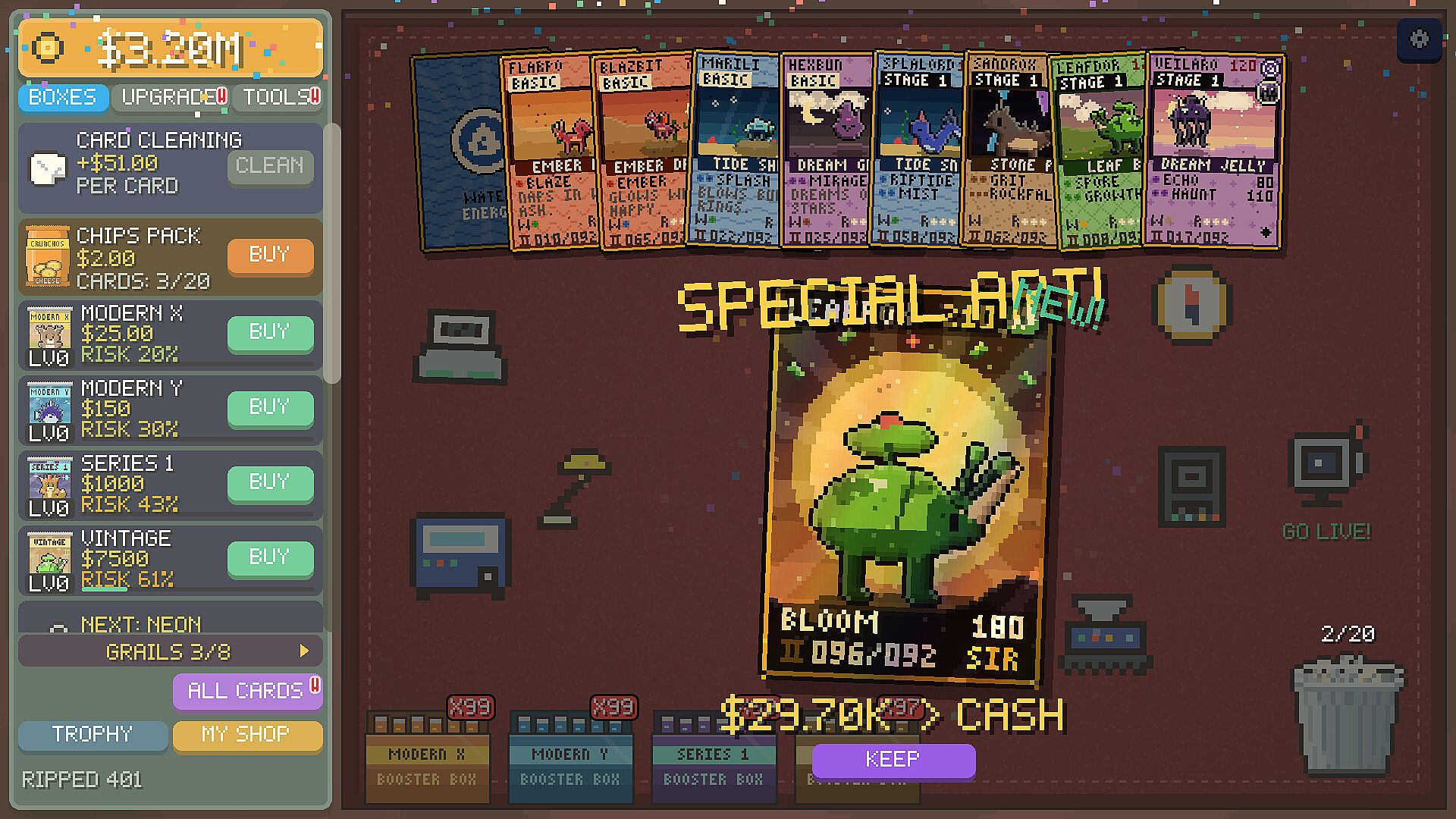
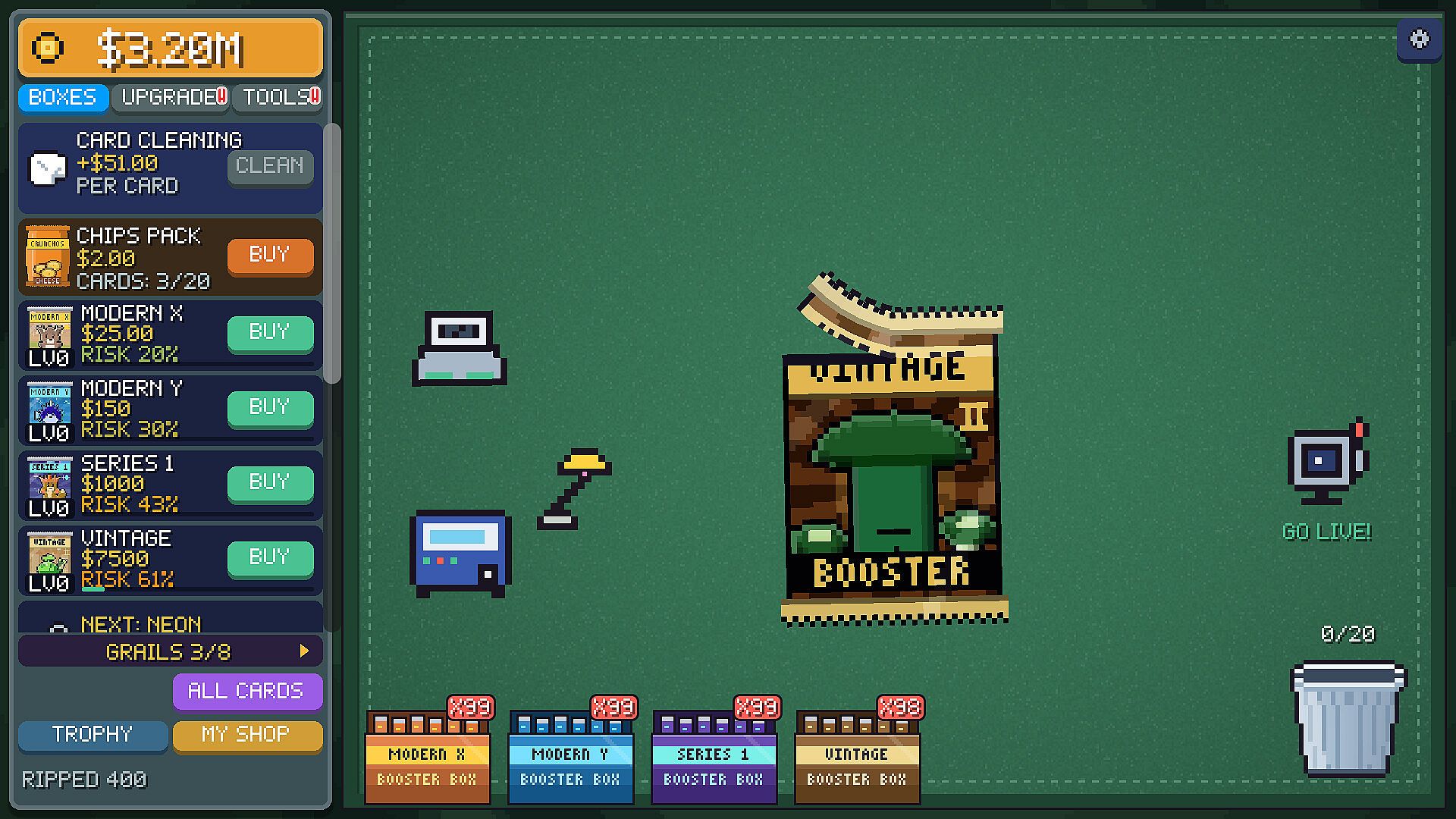
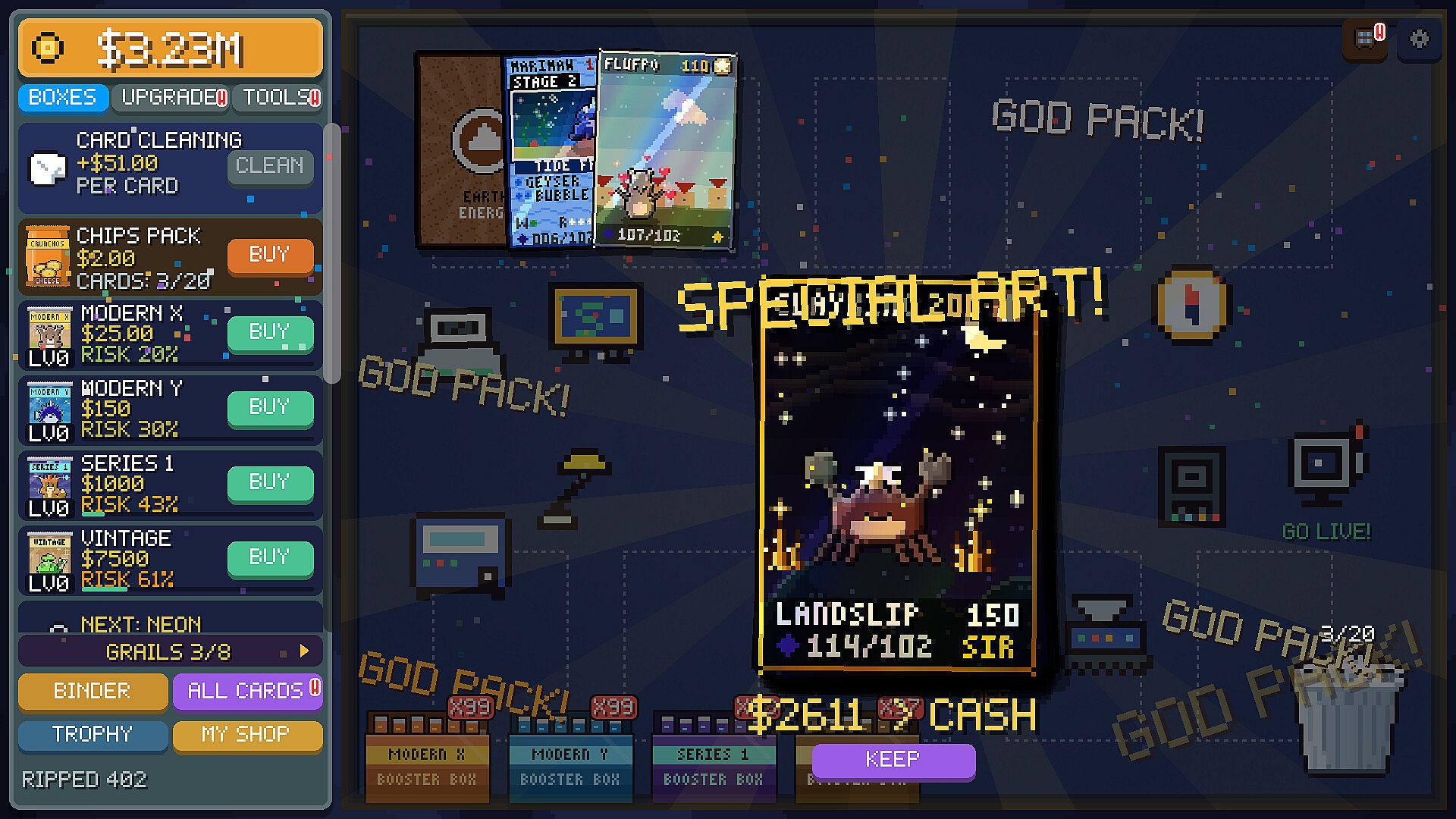

RIP ME! is an indie casual simulation game for PC that puts players in charge of a growing trading card shop built around pack opening and incremental progression. The experience centers on buying booster boxes, revealing pixel-art cards, and turning rare pulls into profit through cleaning, grading, and display. Every pack carries visible risk, with odds shown before purchase, and successful hits fund the next round of openings while upgrades automate parts of the process.
Gameplay
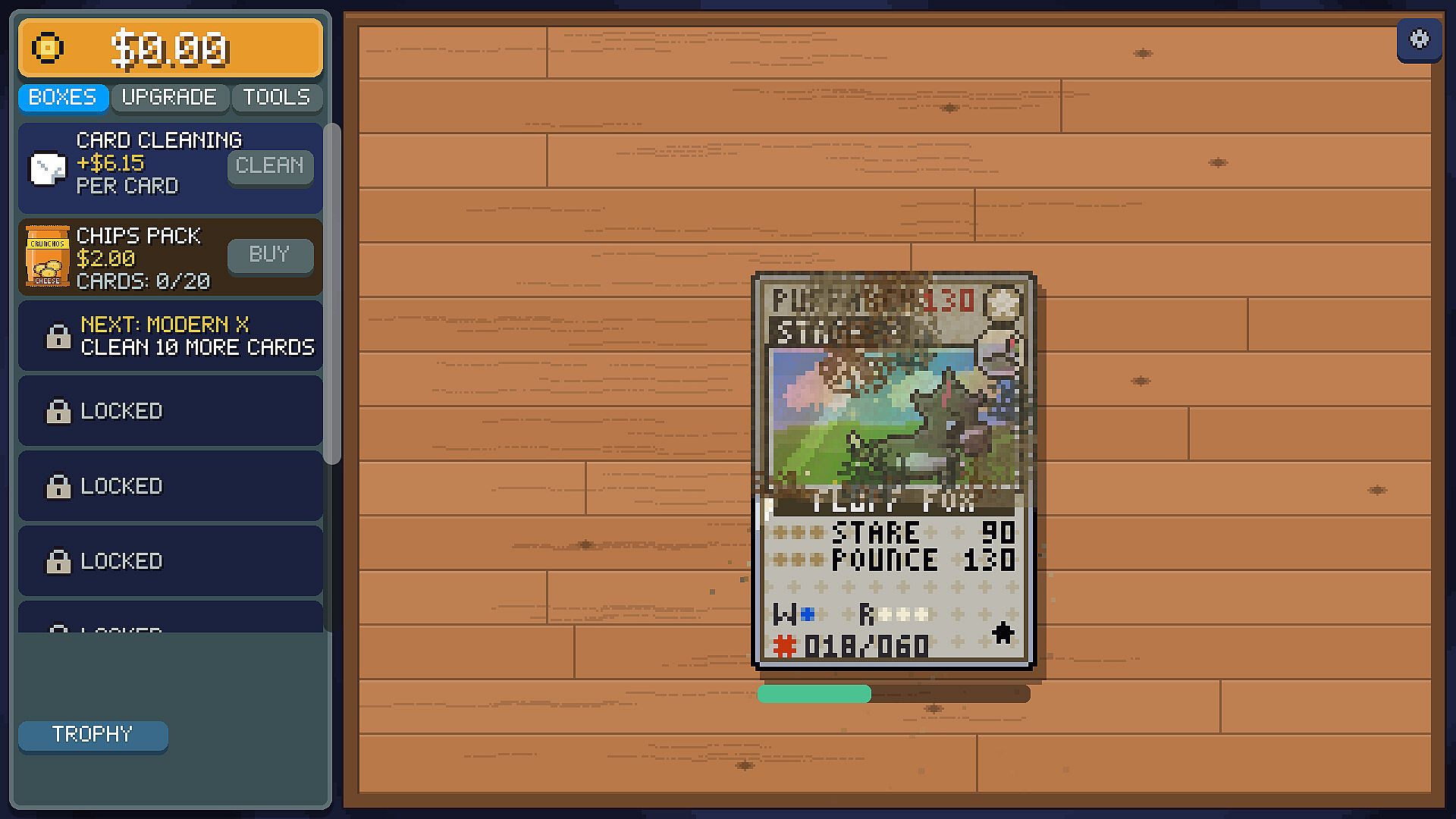
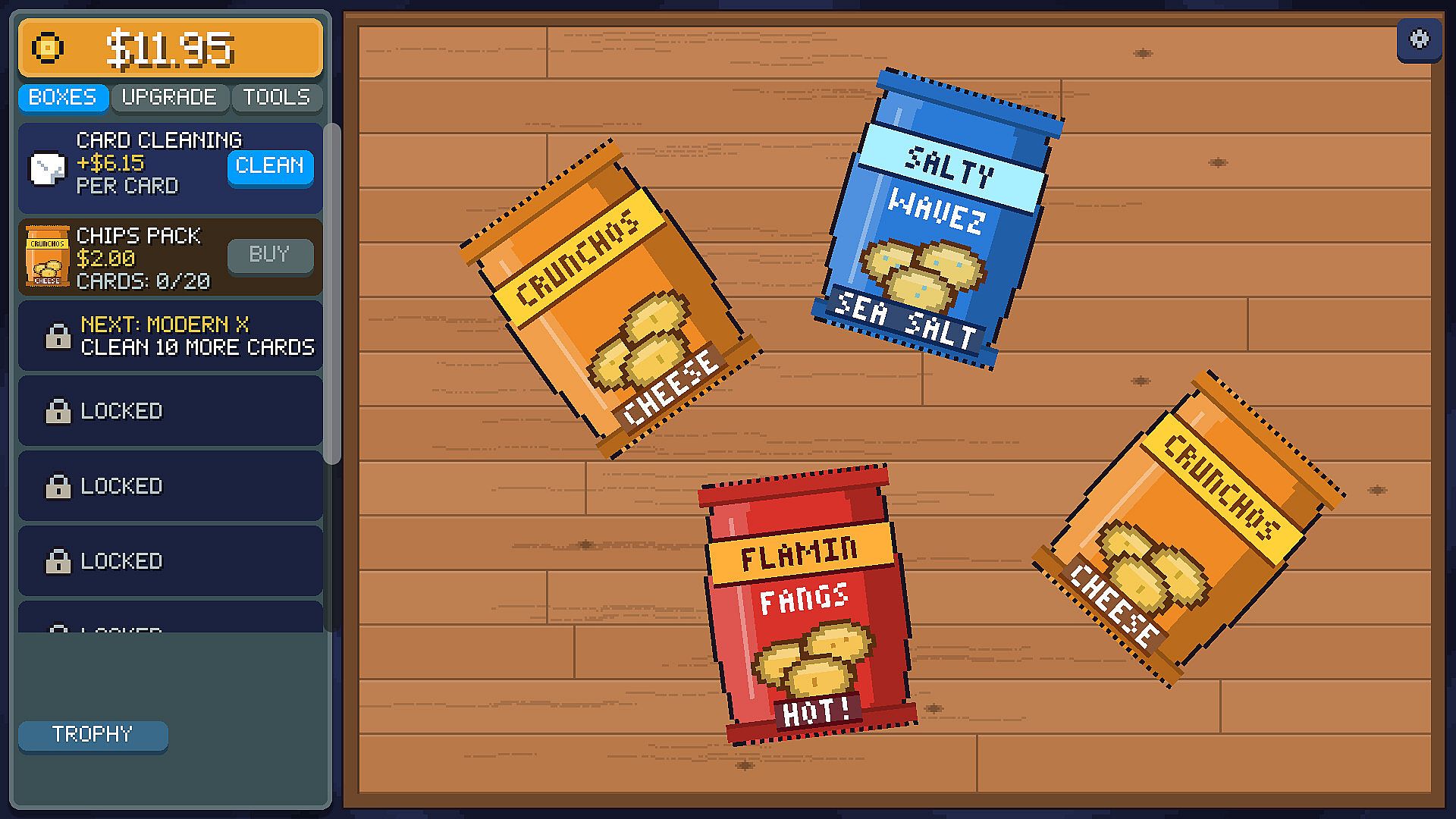
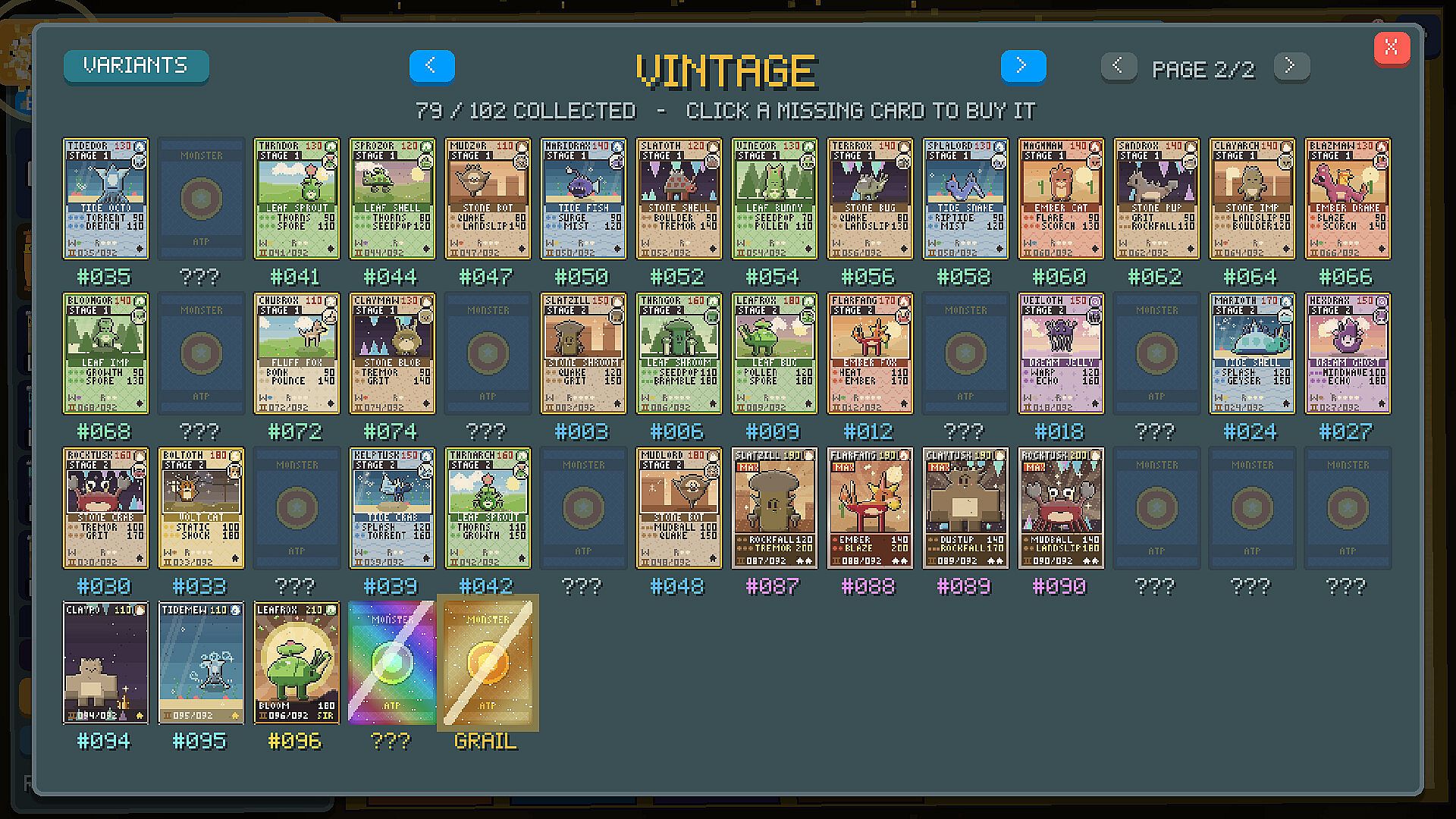
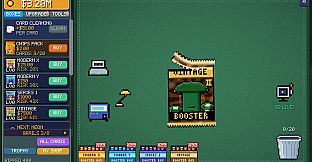
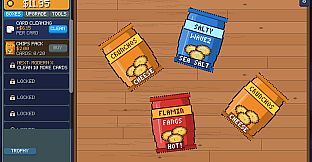
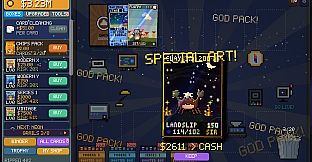
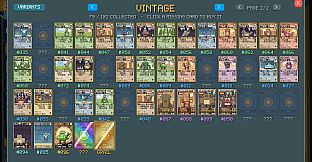
The core loop begins with basic manual tasks and expands into automated systems. Players start equipped only with a cleaning cloth and earn initial funds by scrubbing dirty cards for customers or risking small amounts on chip bags that contain promo cards. Savings go toward the first booster box, after which the focus shifts to opening packs from eight distinct series. Each series features its own artwork style, card list, and special mechanics, yielding holos, full-art specials, and gold hyper rares among more than 870 total pixel-art cards.
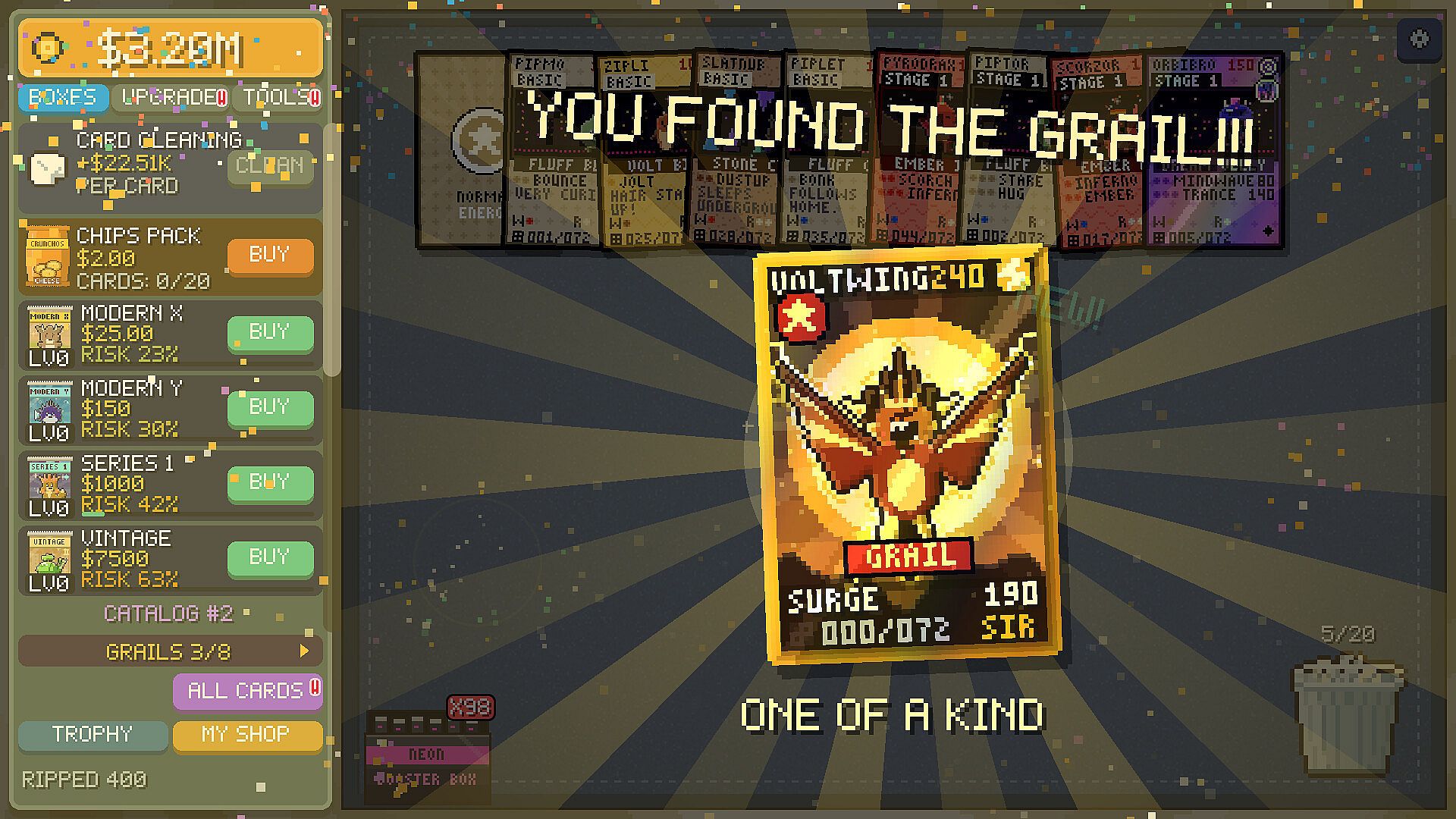
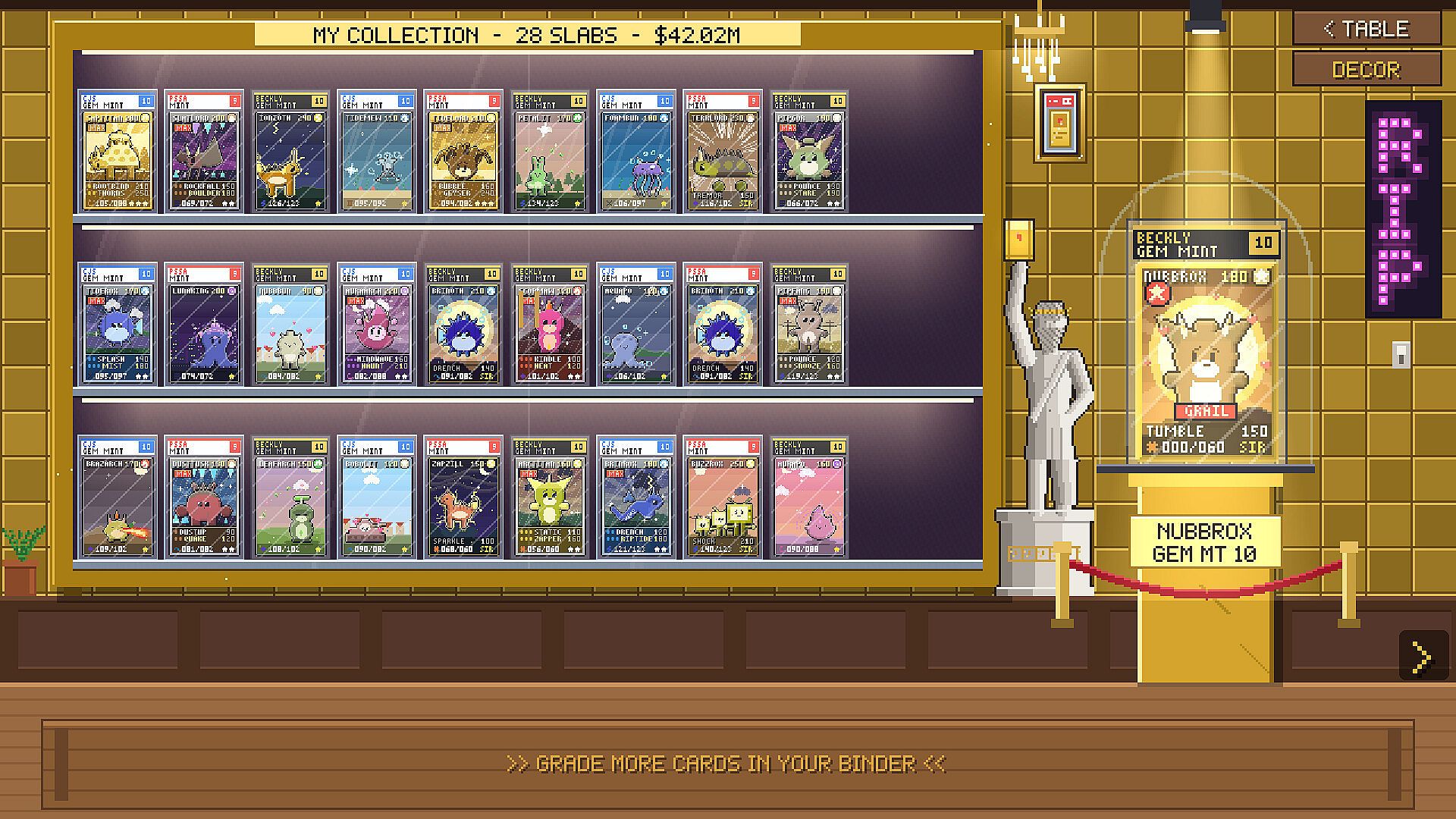
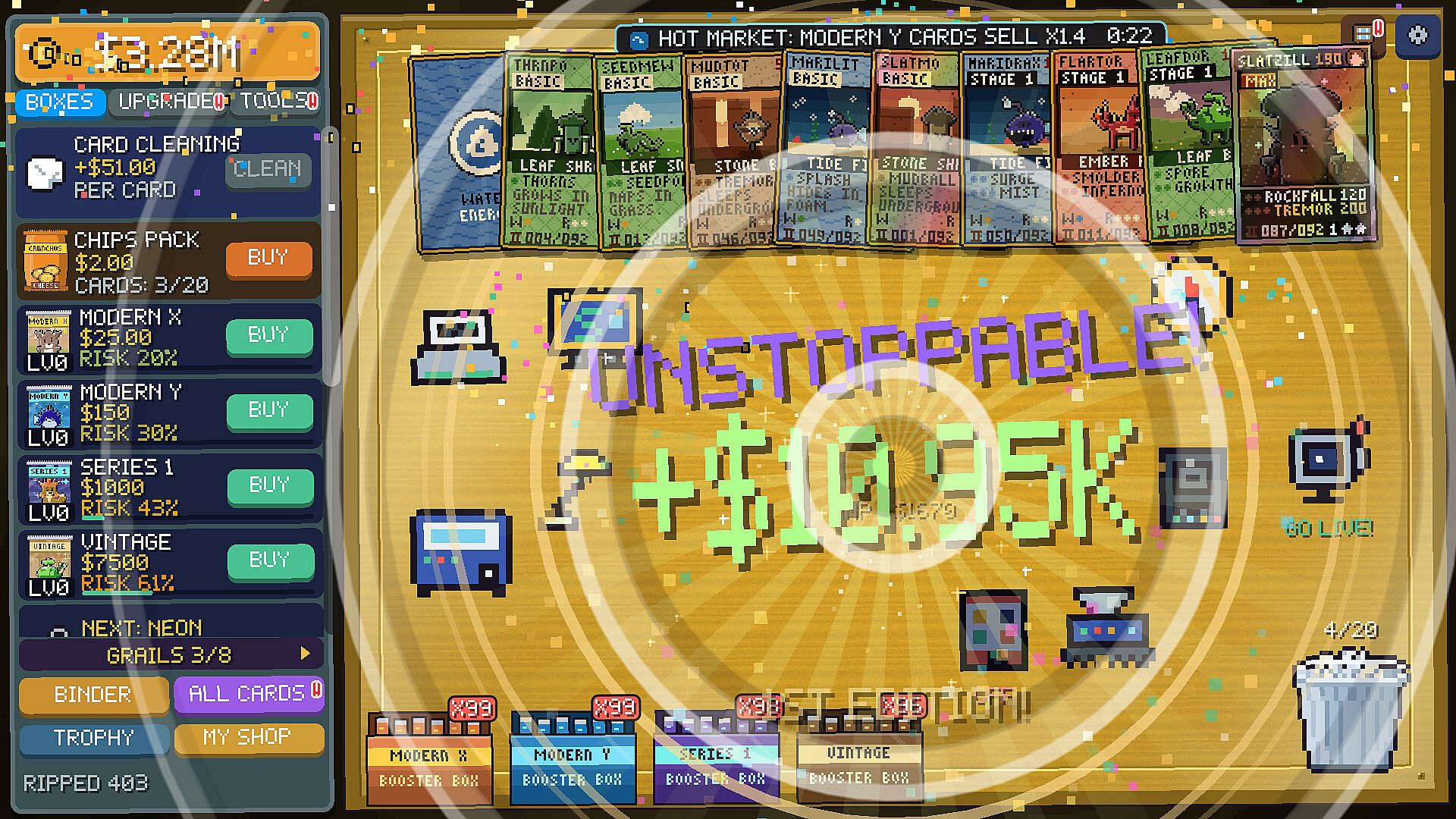
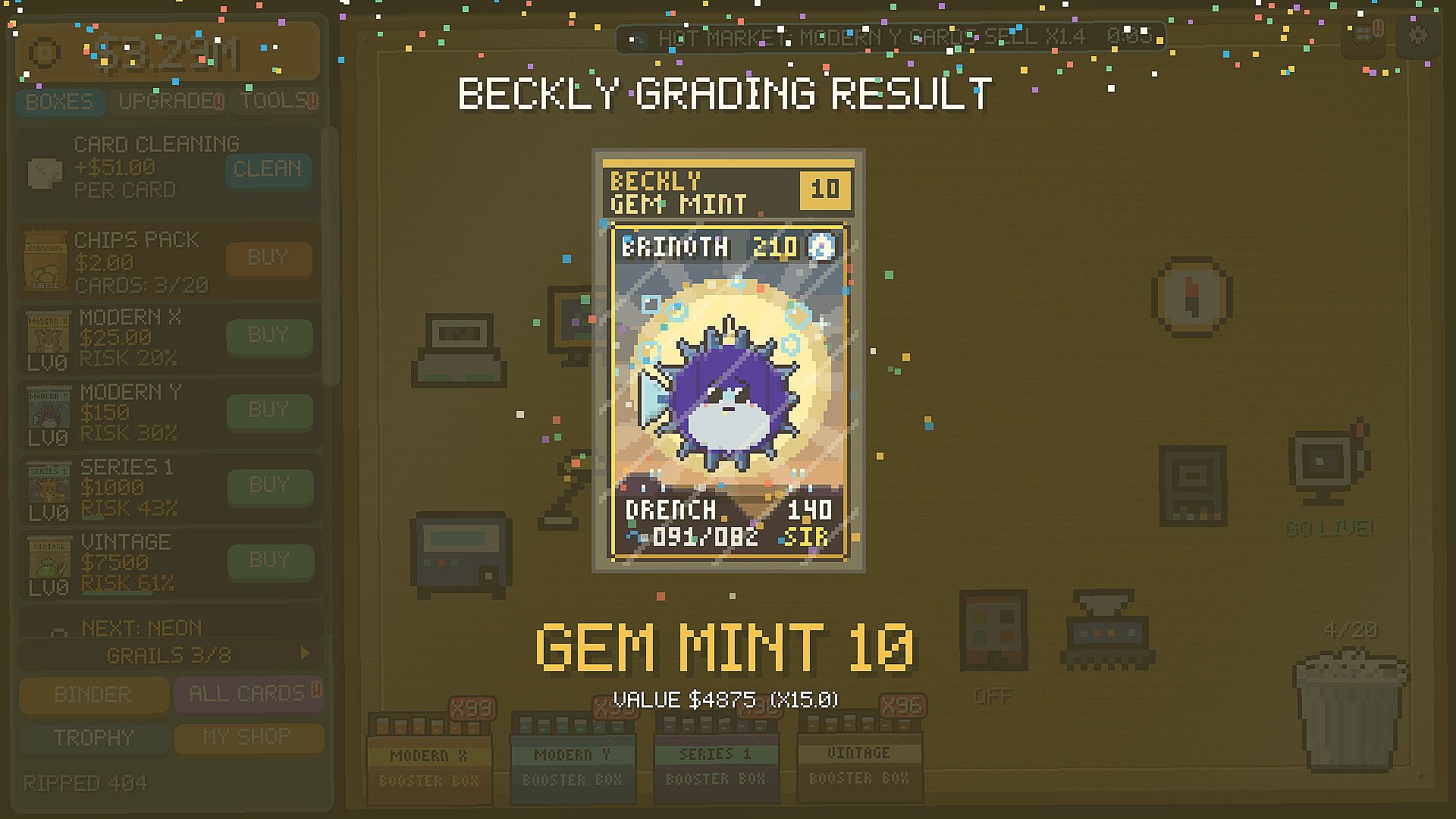
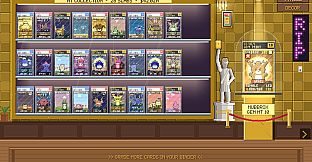
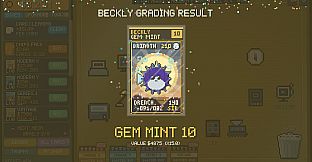
Rare finds include God Packs, misprints, alt arts, first editions, and a ghost that appears in one series. After pulls, the best cards can be sent to grading companies in hopes of receiving a Gem Mint 10 rating. Graded slabs then enter a display case where visiting collectors make purchase offers. Automation arrives through the Rip Bot, which handles pack openings independently, along with a scale for weighing packs and streaming options that double card values while enabling combo chains for extra cash. Twenty-six upgrades and ten desk tools alter how packs are opened and processed, while players can reposition tools freely on the desk, unlock new tables, decorate the display case, or upload a personal image as the table surface. Every box displays its potential to lose money, and keyboard shortcuts plus a reduce-flashing setting keep the experience comfortable during extended sessions. The interface supports ten languages.
Game Modes
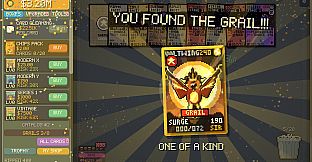
Progression unfolds through layered systems rather than separate named modes. Early stages emphasize hands-on cleaning and small gambles to build capital for pack purchases. Mid-game introduces grading and display sales that generate steady income. Later stages focus on automation via the Rip Bot and streaming features that scale earnings through live reveals and combos. Series themselves function as distinct environments, each with unique card pools and twists that encourage repeated play to chase specific rares. Two possible endings emerge from hunting the one-of-a-kind Grail hidden in each series while competing against rival collector Vex. Thirty-eight achievements track progress across these systems, with none gated solely by luck.
Progression and Customization
Players expand their operation by investing earnings into upgrades that speed up or enhance pack handling. Desk tools provide additional control over weighing, ripping, and revealing cards, while visual customization lets the shop reflect personal taste through rearranged furniture and uploaded images. The risk-reward structure remains transparent at every purchase, helping players decide when to push for higher-value boxes. Collection growth feeds directly into the display case economy, where graded slabs attract offers that accelerate further investment in automation and new series.
Is It Worth Playing?
RIP ME! suits players who enjoy incremental games built around collection and light management rather than fast action or complex strategy. The transparent risk indicators, luck-independent achievements, and accessibility options such as reduced flashing make it approachable for extended sessions. With a real ending tied to Grail hunting and rivalry with Vex, the game offers a clear goal beyond endless grinding. As an upcoming title with no released version yet, its appeal will depend on how well the pack-opening tension and automation upgrades hold interest for fans of casual simulation and trading-card themes. Those drawn to pixel-art presentation and steady progression from rag to automated rip operation will find the described systems align closely with that preference.