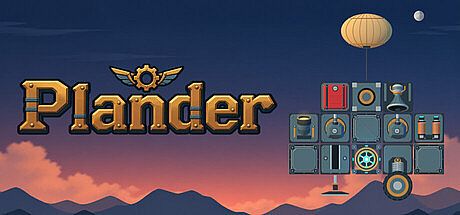


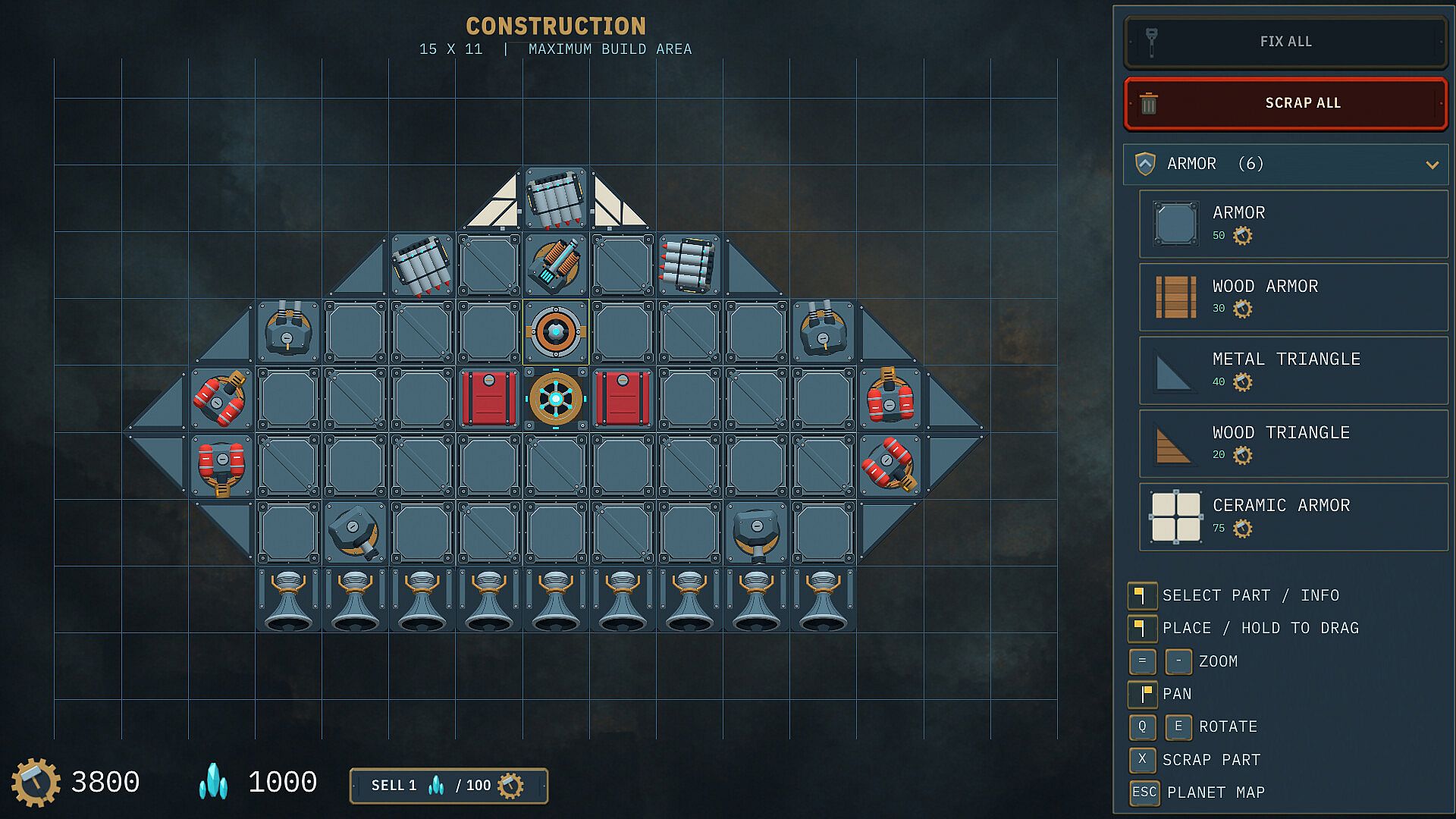
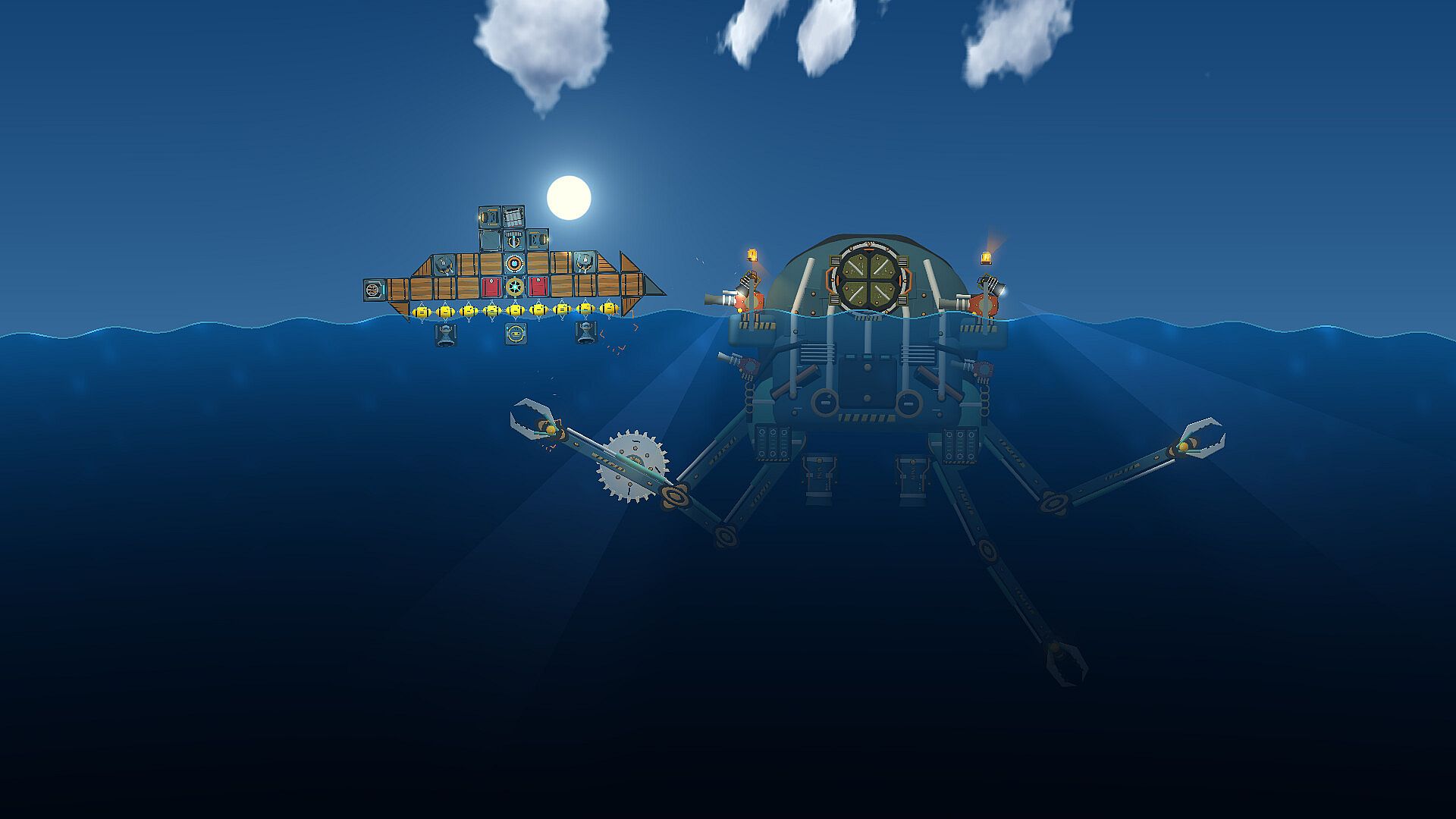
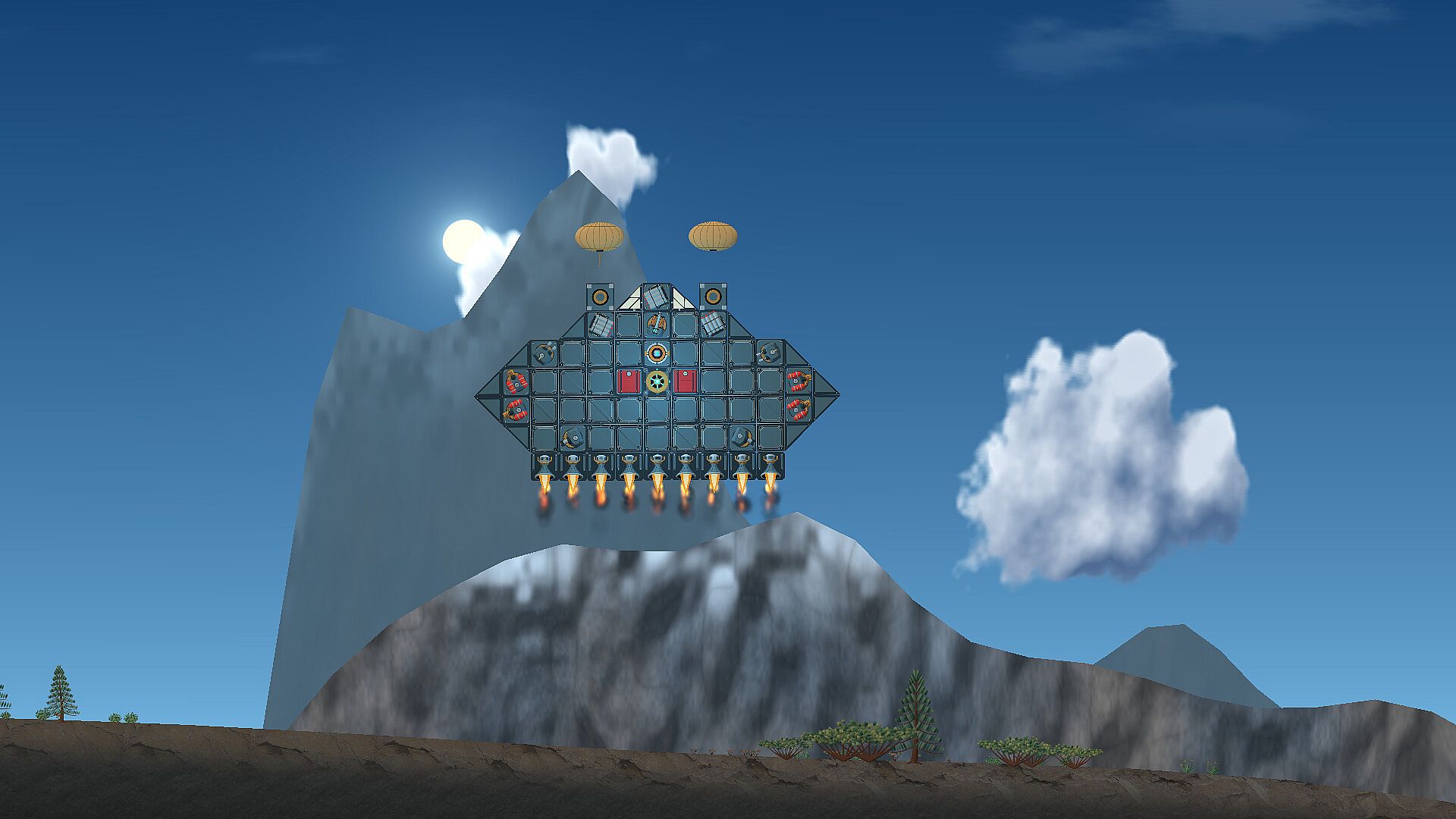
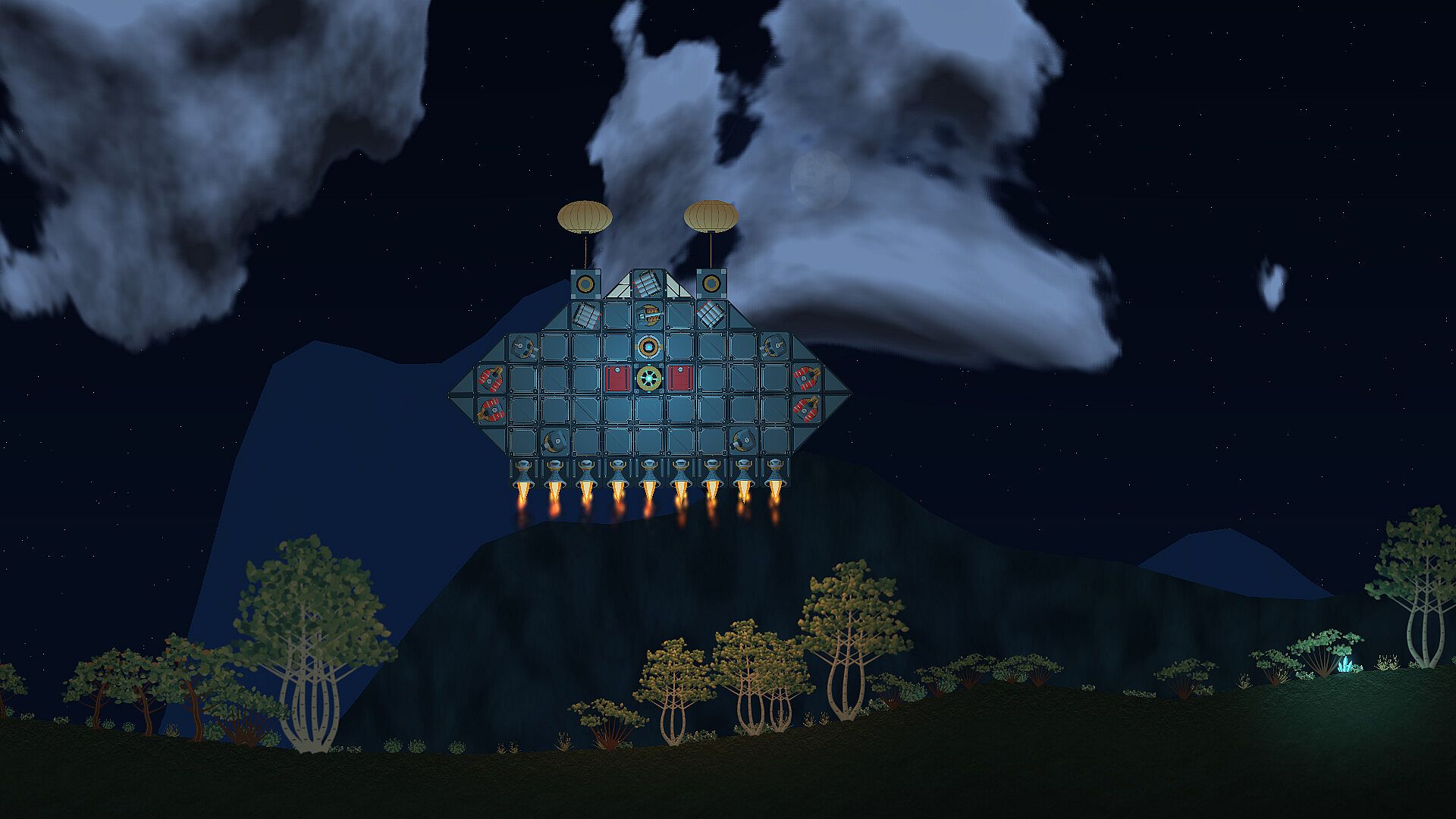
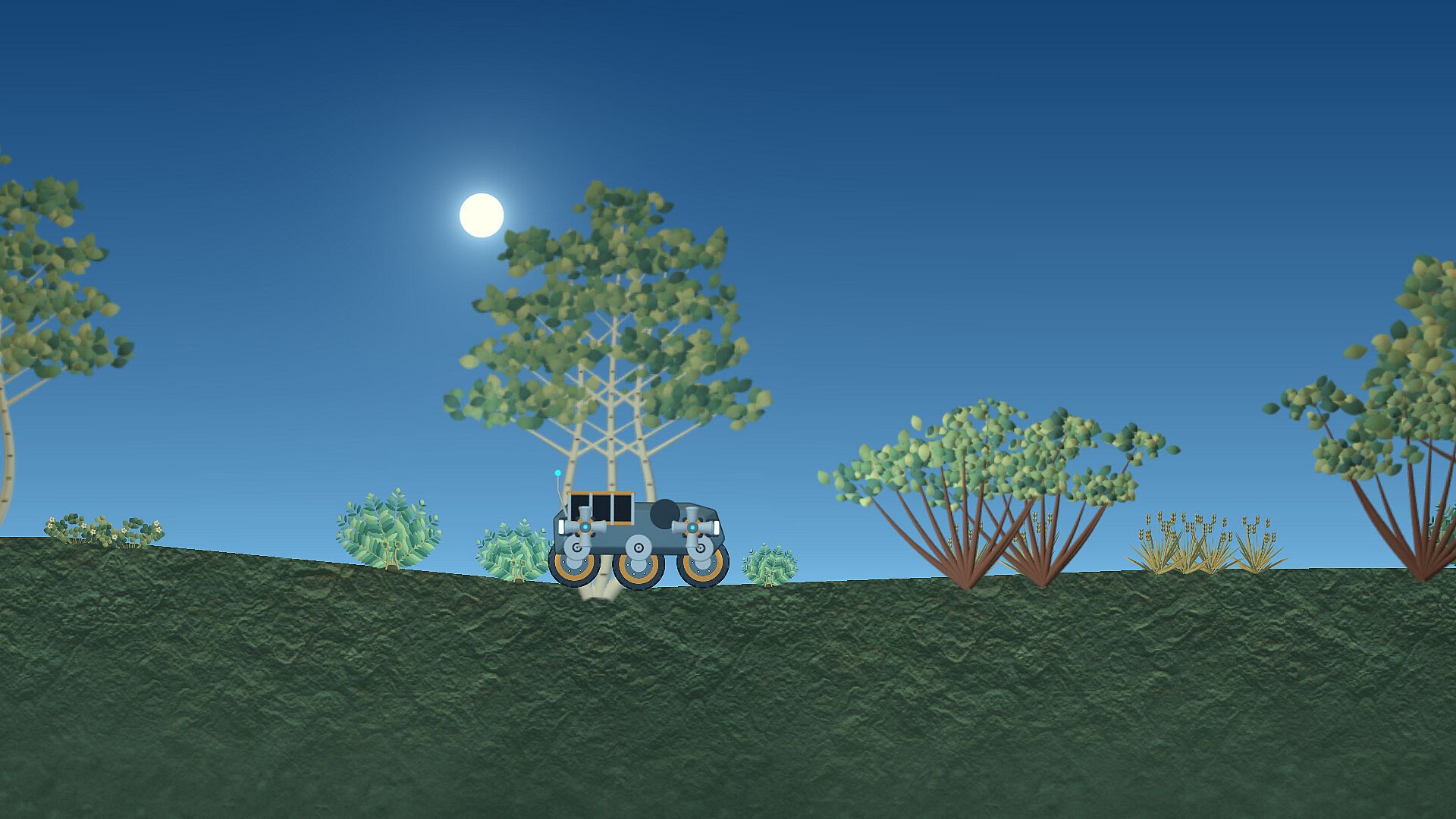
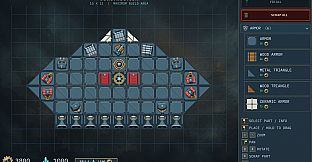
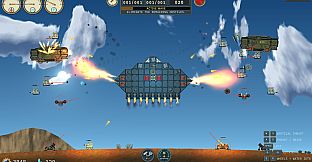
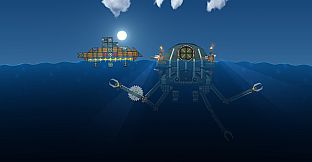
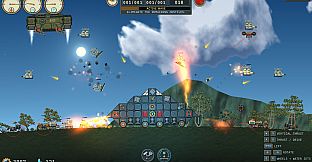
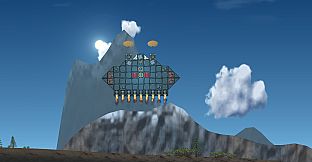
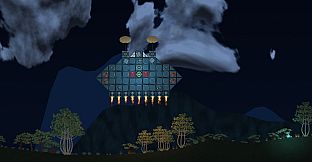

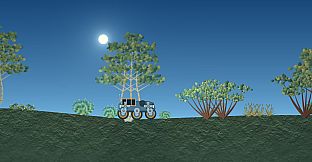
Plander is a 2D physics-based action adventure simulation game for PC that centers on constructing and piloting custom vehicles across dangerous procedural planets. Players begin with a command core and add components such as wheels, directional thrusters, balloons, armor, guns, and utility modules to create machines suited to varied terrain and threats. Placement of each part influences weight distribution, balance, and overall handling, turning every assembly into a practical engineering task rather than simple decoration.
Gameplay
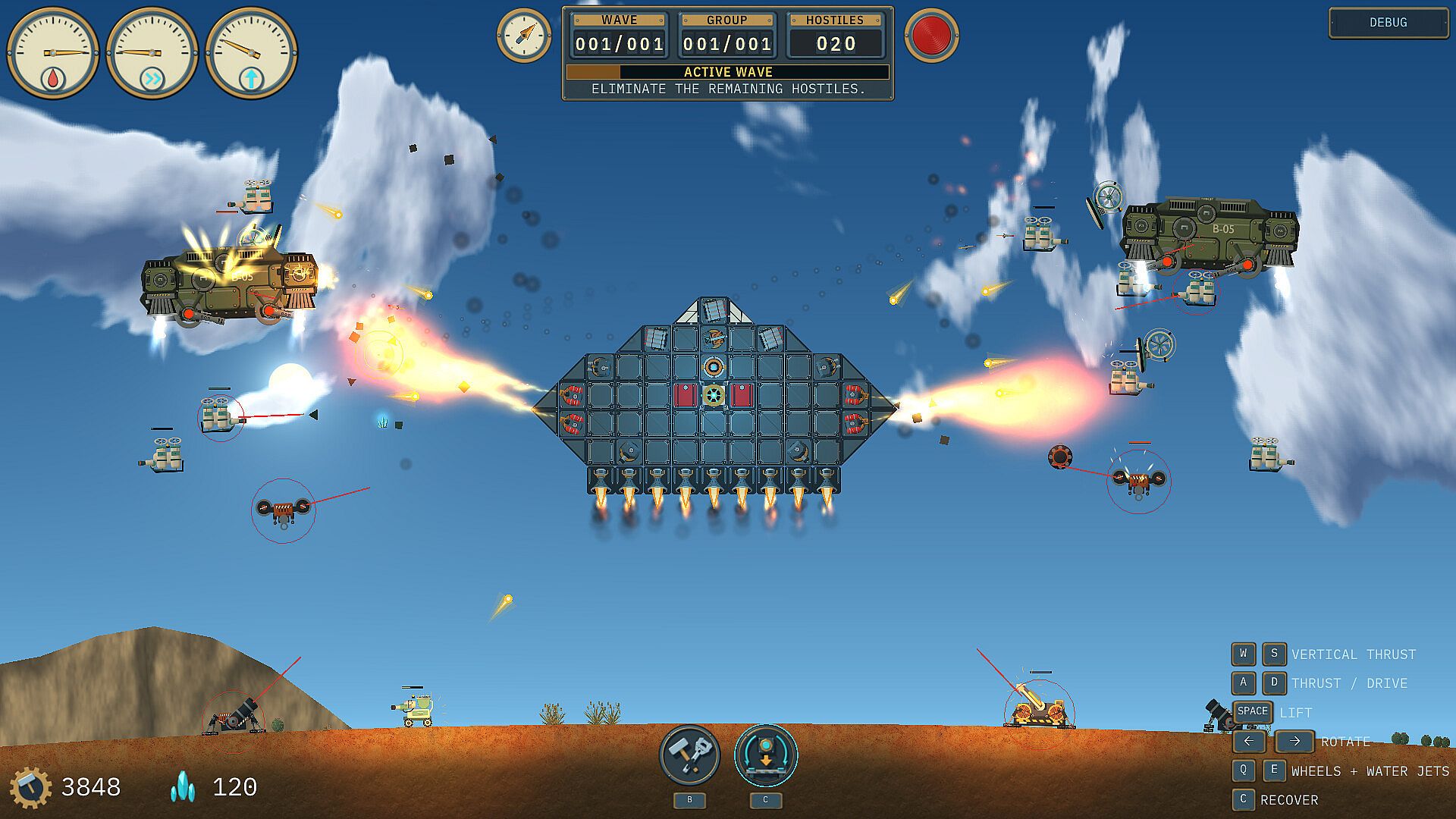
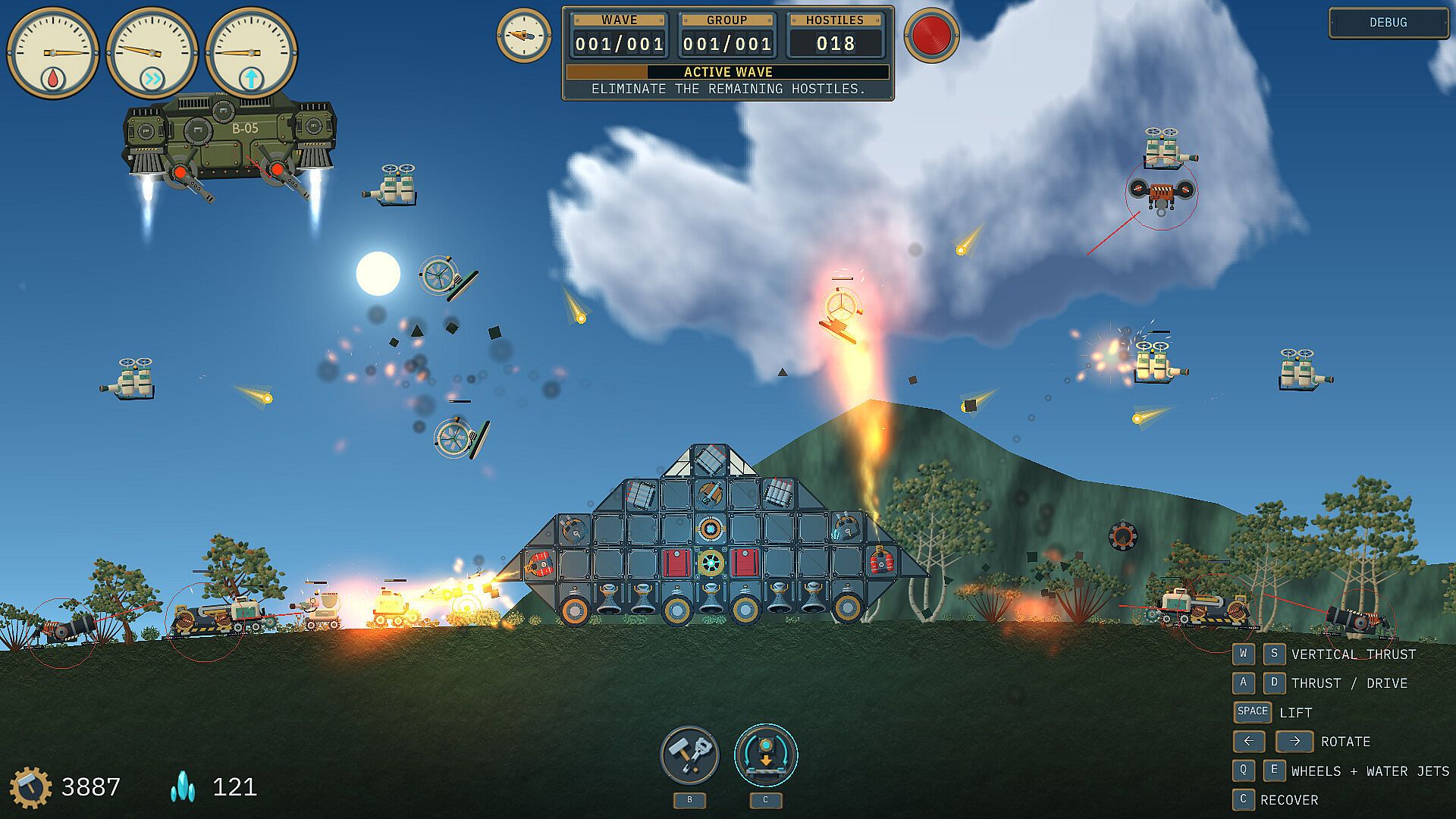
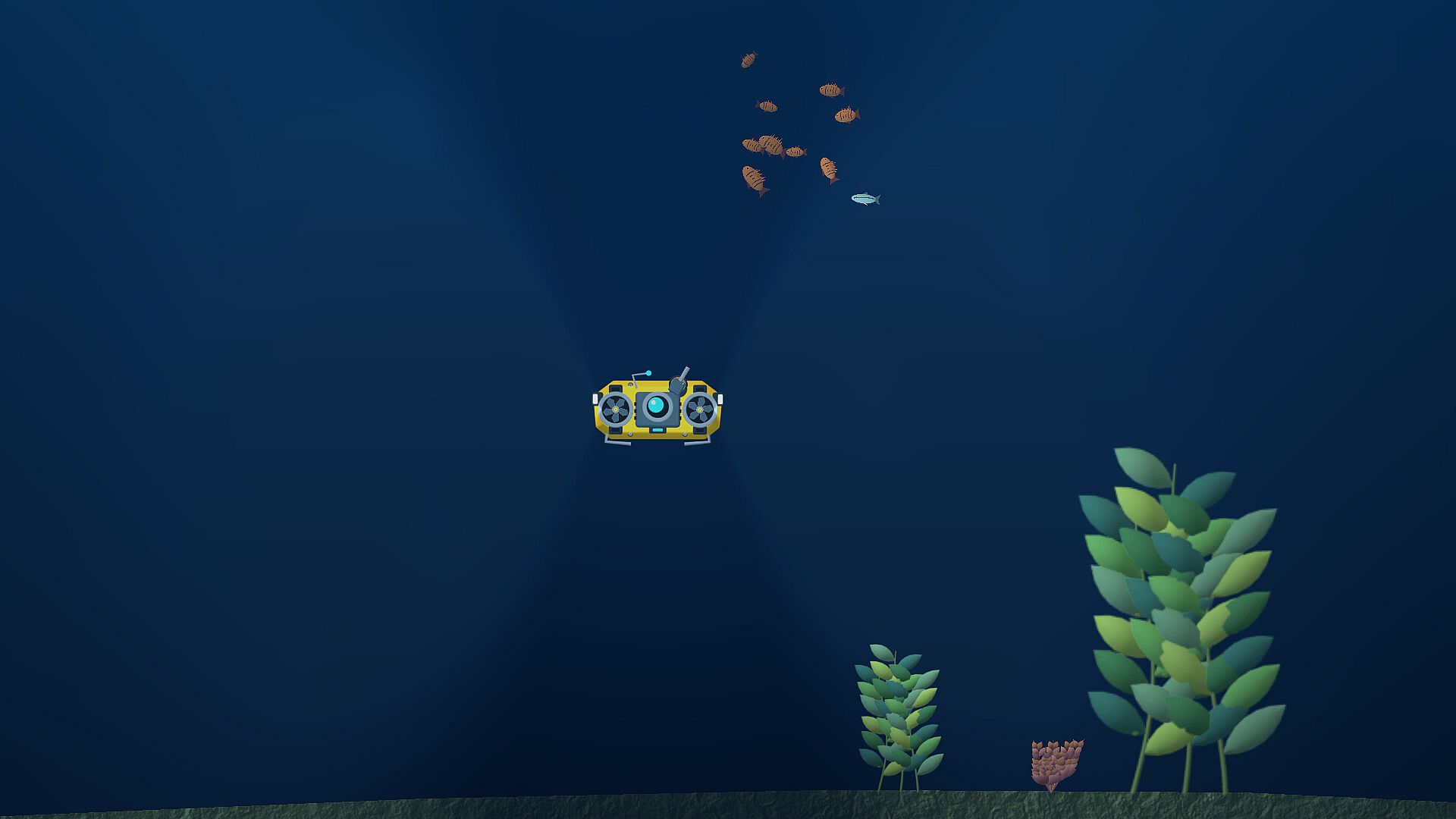
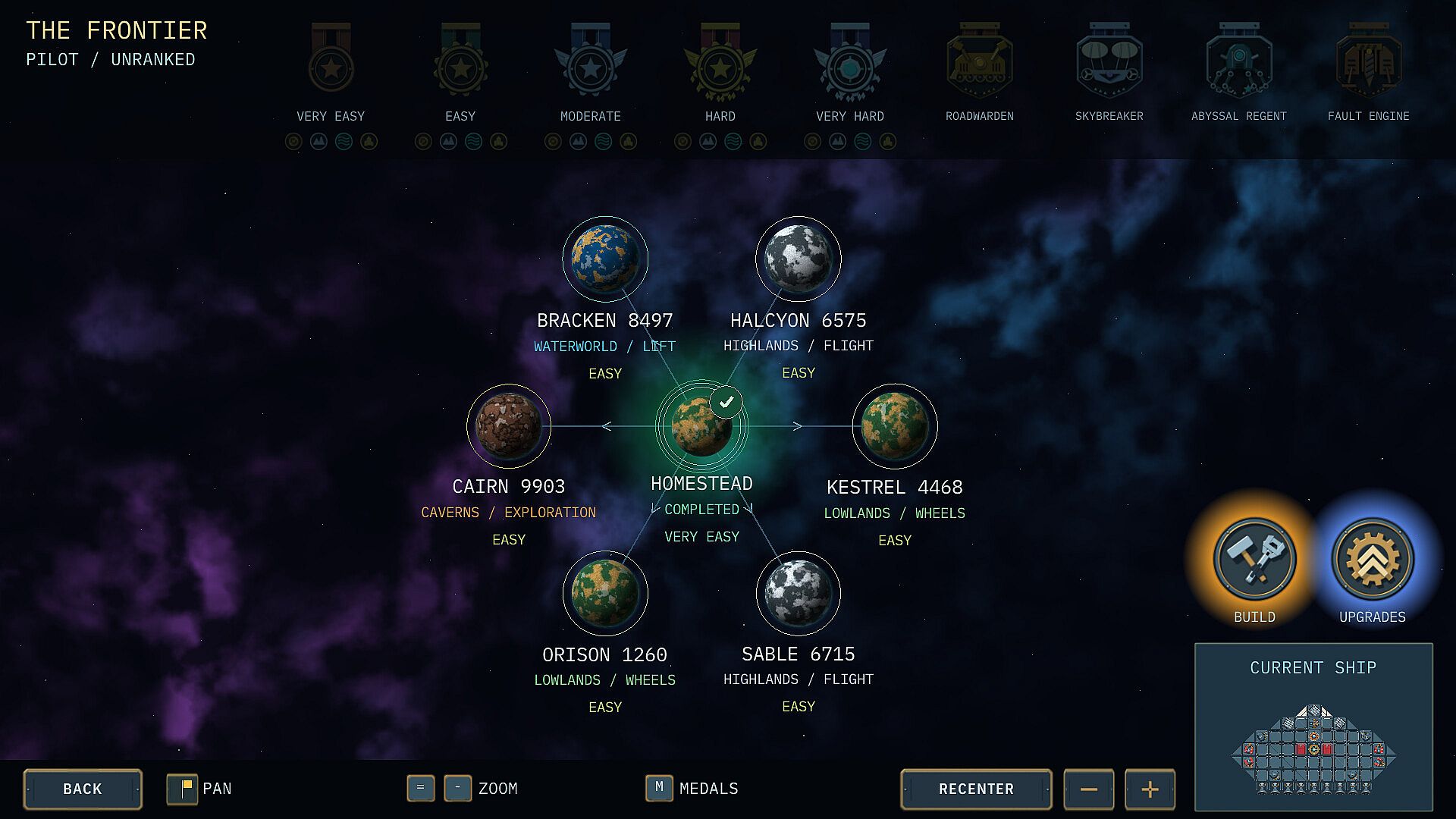
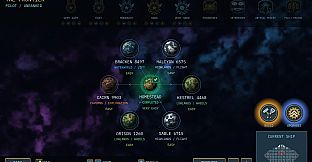
The core loop involves designing a vehicle, accepting contracts on a branching expedition map, and attempting to complete objectives while surviving hostile encounters. Environments range from lowlands and mountain ridges to cave networks and deep water, each presenting distinct challenges based on gravity, momentum, and buoyancy. Mounted weapons automatically engage nearby ground patrols, flying attackers, and heavy industrial enemies, but the command core must remain protected at all costs. Fuel management and part durability add ongoing pressure, as damaged components affect performance until repairs occur at field-service checkpoints.
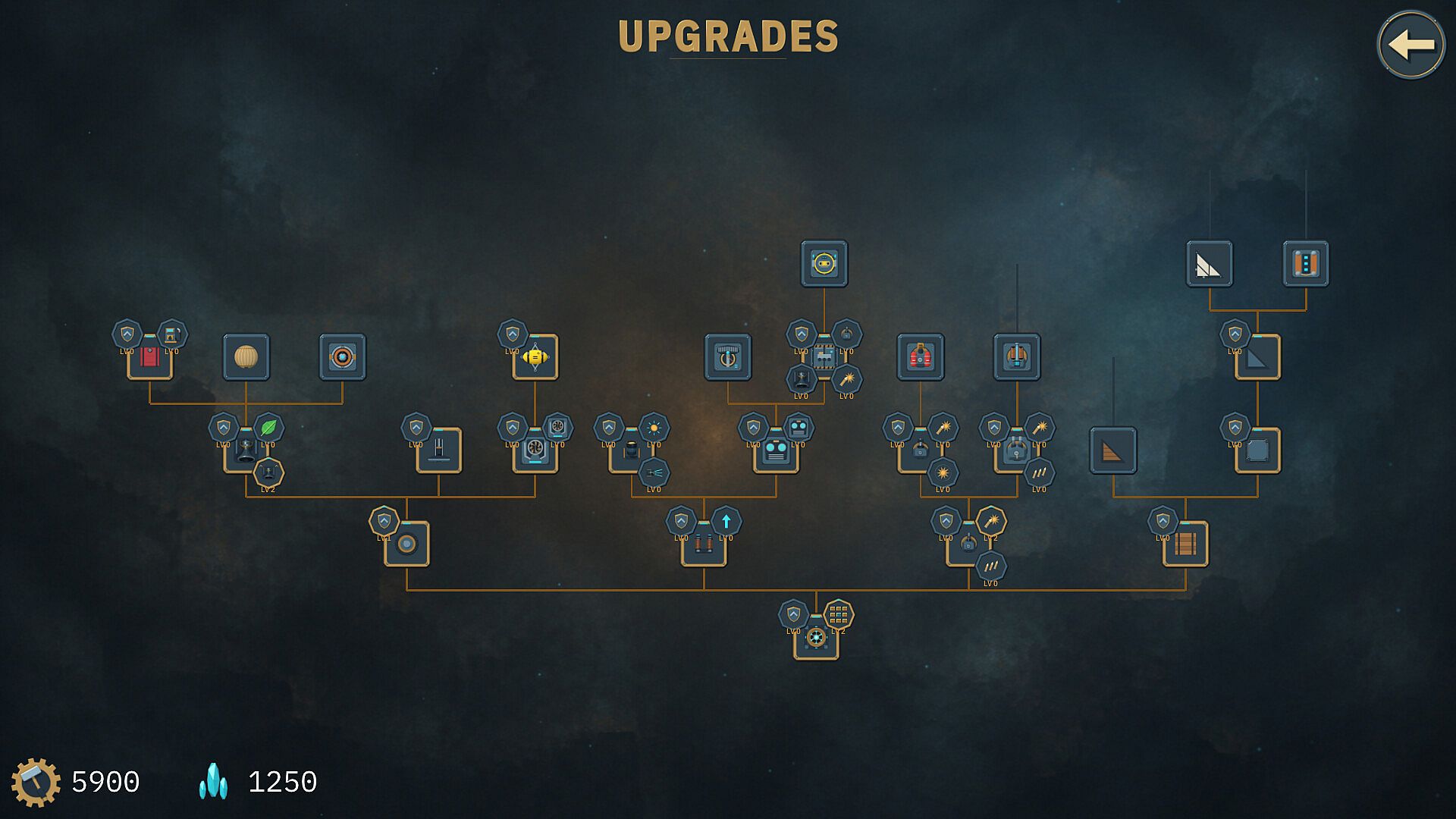
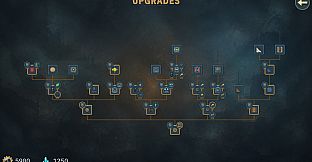
After reaching a checkpoint, players can repair, refuel, and rebuild before spending collected minerals at technology shops to unlock or upgrade equipment. Successful planet clearances open new routes and allow the surviving machine to carry forward into tougher contracts. The physics simulation ensures that every modification produces measurable effects on flight stability, ground traction, and combat effectiveness, rewarding iterative testing and adaptation over repeated attempts.
Game Modes
Plander operates as a single-player experience without separate named modes. Progression follows a contract-based structure on an expedition map where players select destinations and adapt builds accordingly. Each contract involves traversing procedural terrain, managing resources, and engaging enemies while protecting the core. The branching map encourages replay through different route choices and build experiments, with success on one planet unlocking further options and increasing contract difficulty. No cooperative or competitive elements appear in the available details.
Building and Survival Systems
Vehicle construction forms the central activity. Parts combine freely but carry trade-offs in mass, lift, armor, and firepower. Light, nimble designs suit quick traversal, while heavier configurations support sustained combat at the expense of maneuverability. Buoyancy and thrust placement determine whether a machine stays airborne or handles rough ground effectively. Damage to individual components forces on-the-fly decisions about whether to press forward or retreat to a checkpoint for reconstruction.
Resource gathering through contracts funds permanent improvements at shops. Minerals collected during runs translate directly into new parts and upgrades, creating a steady cycle of experimentation. The procedural nature of planets means layouts and enemy placements vary, so no single build guarantees success across all frontiers.
Is It Worth Playing?
Plander suits players who enjoy physics-driven building games combined with exploration and light combat. The emphasis on part placement, environmental adaptation, and iterative rebuilding appeals to those who like testing contraptions rather than following linear stories or competing against others. Without confirmed player counts, review aggregates, or ongoing seasonal updates, the game stands on its described systems alone. Those drawn to indie simulations of vehicle engineering and frontier survival will find the most direct match, while fans of fast-paced action or multiplayer may prefer other titles. Availability remains limited to PC through standard digital storefronts.