

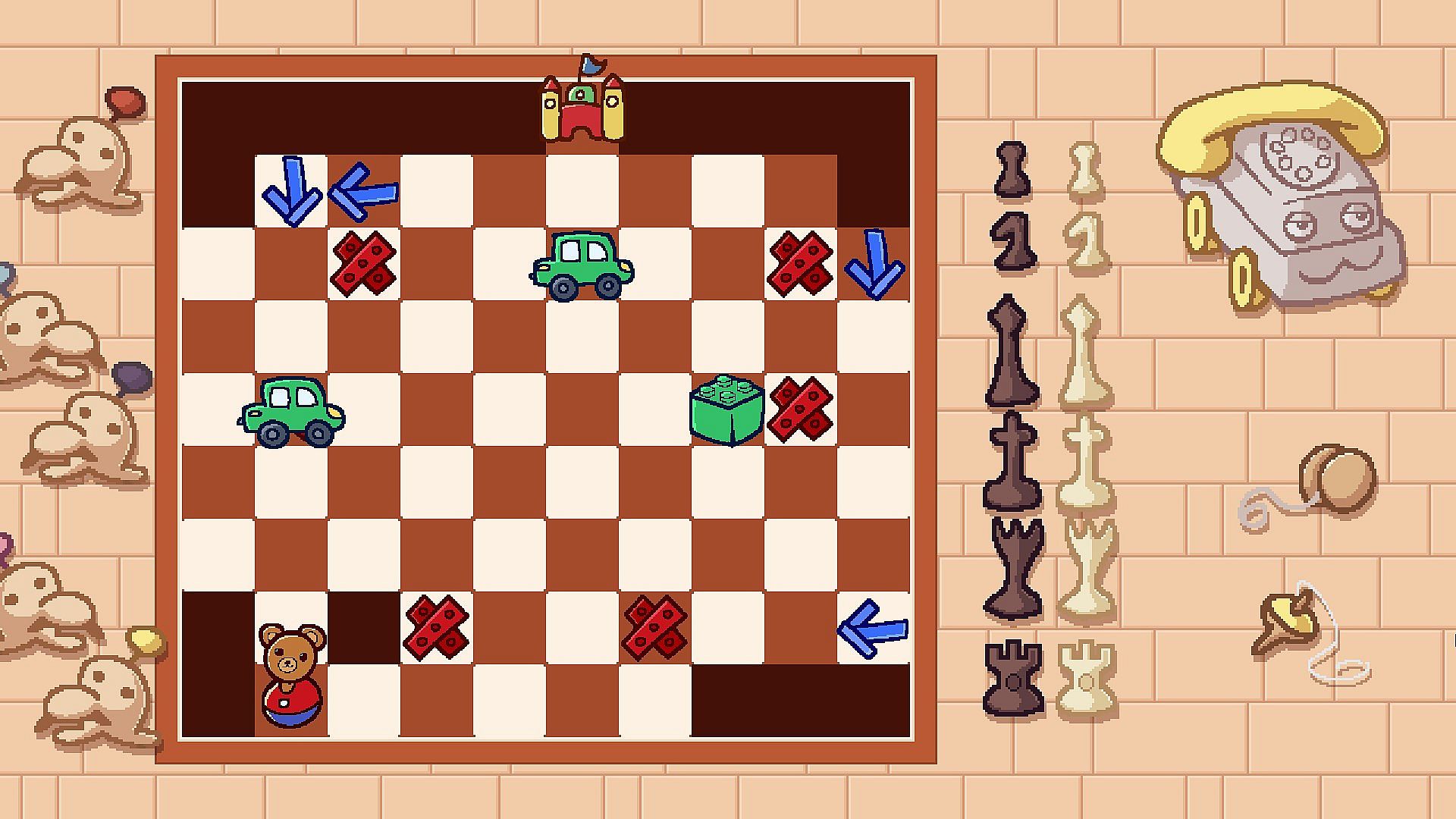
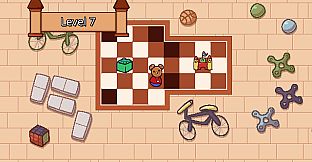
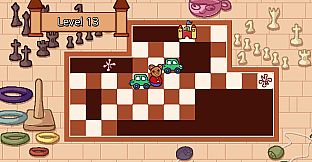
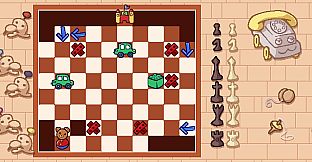
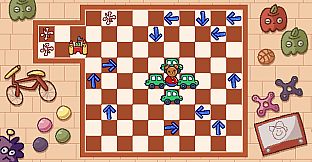
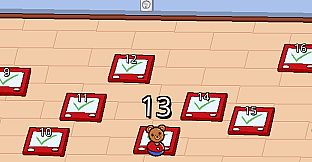
Monty The Play Bear is a casual puzzle game for PC in which players guide a plush bear named Monty through a series of challenges in a toy-filled environment. The goal in each stage is to reach the castle by selecting a direction and committing to continuous movement until an obstacle appears. This core loop demands careful observation because direction cannot be altered mid-travel, forcing players to anticipate paths several moves in advance.
Gameplay
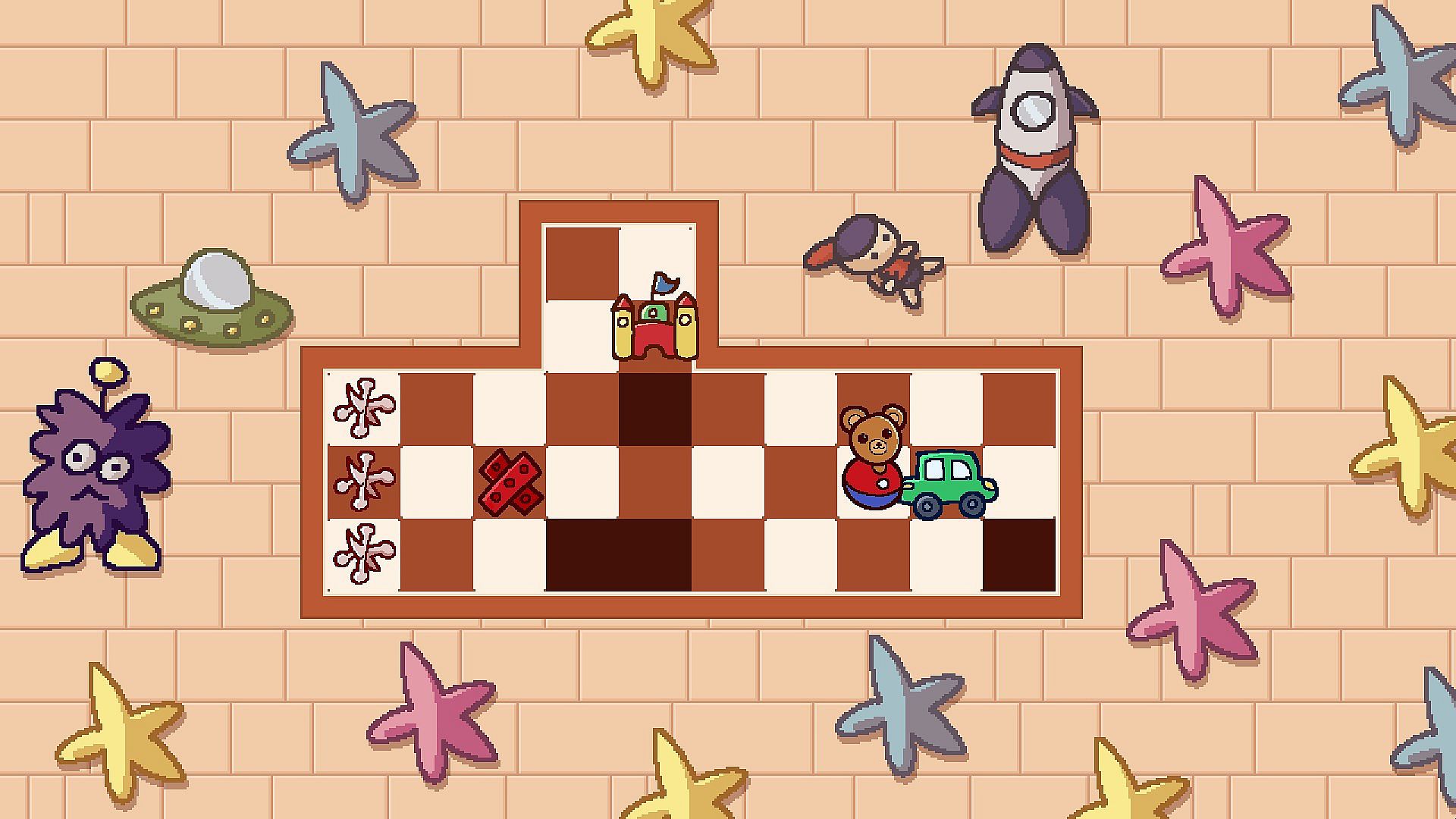
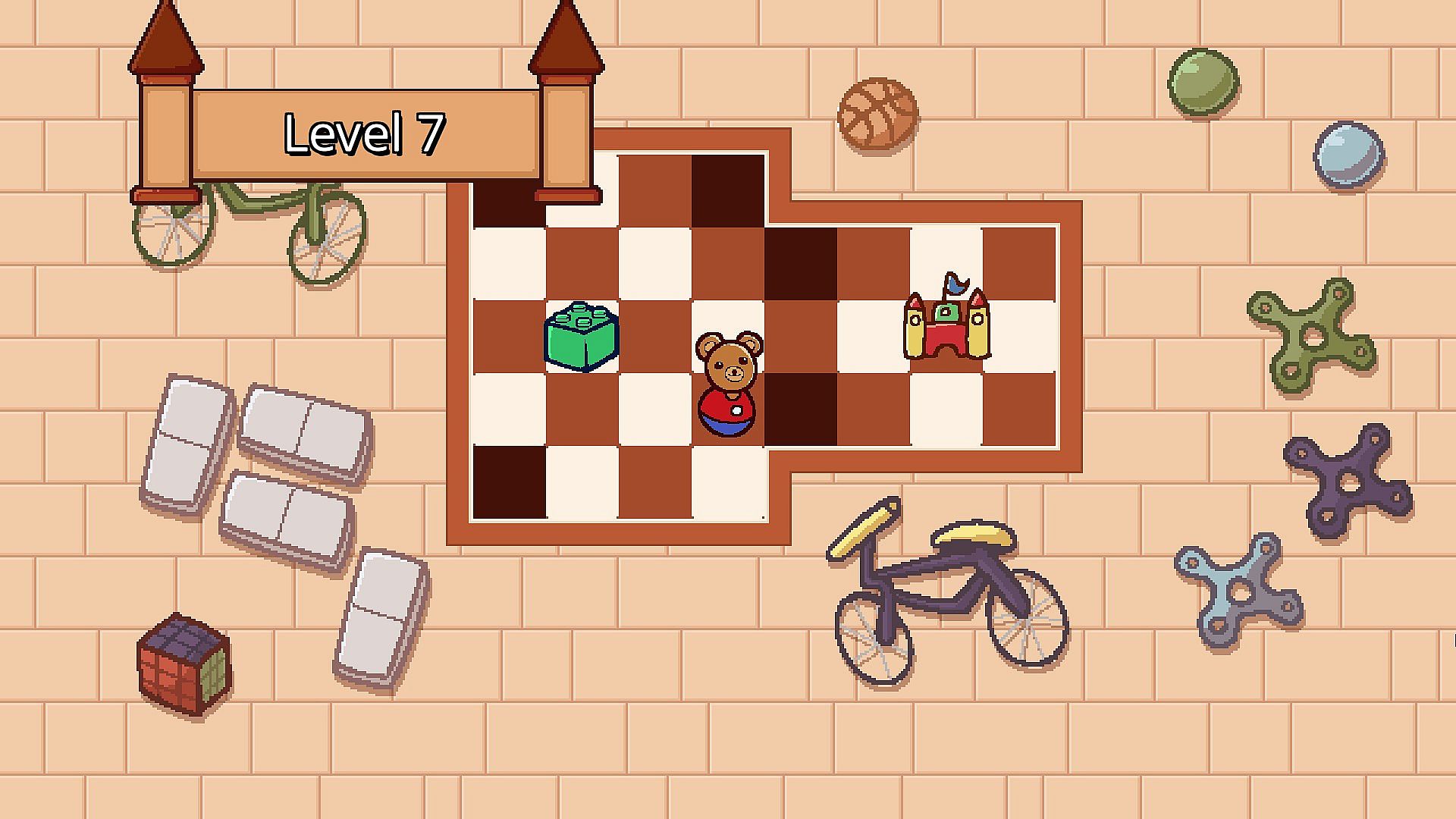
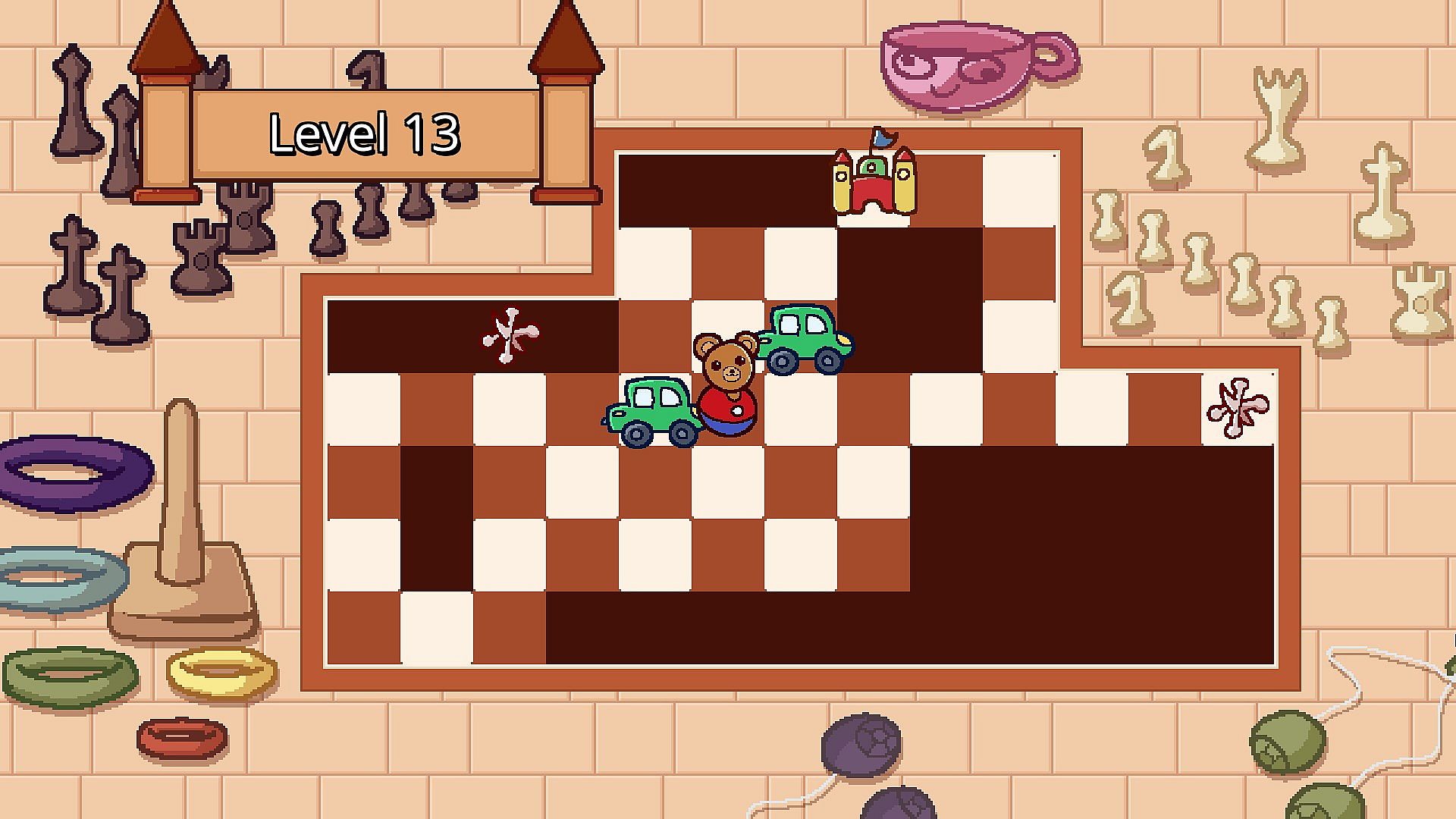
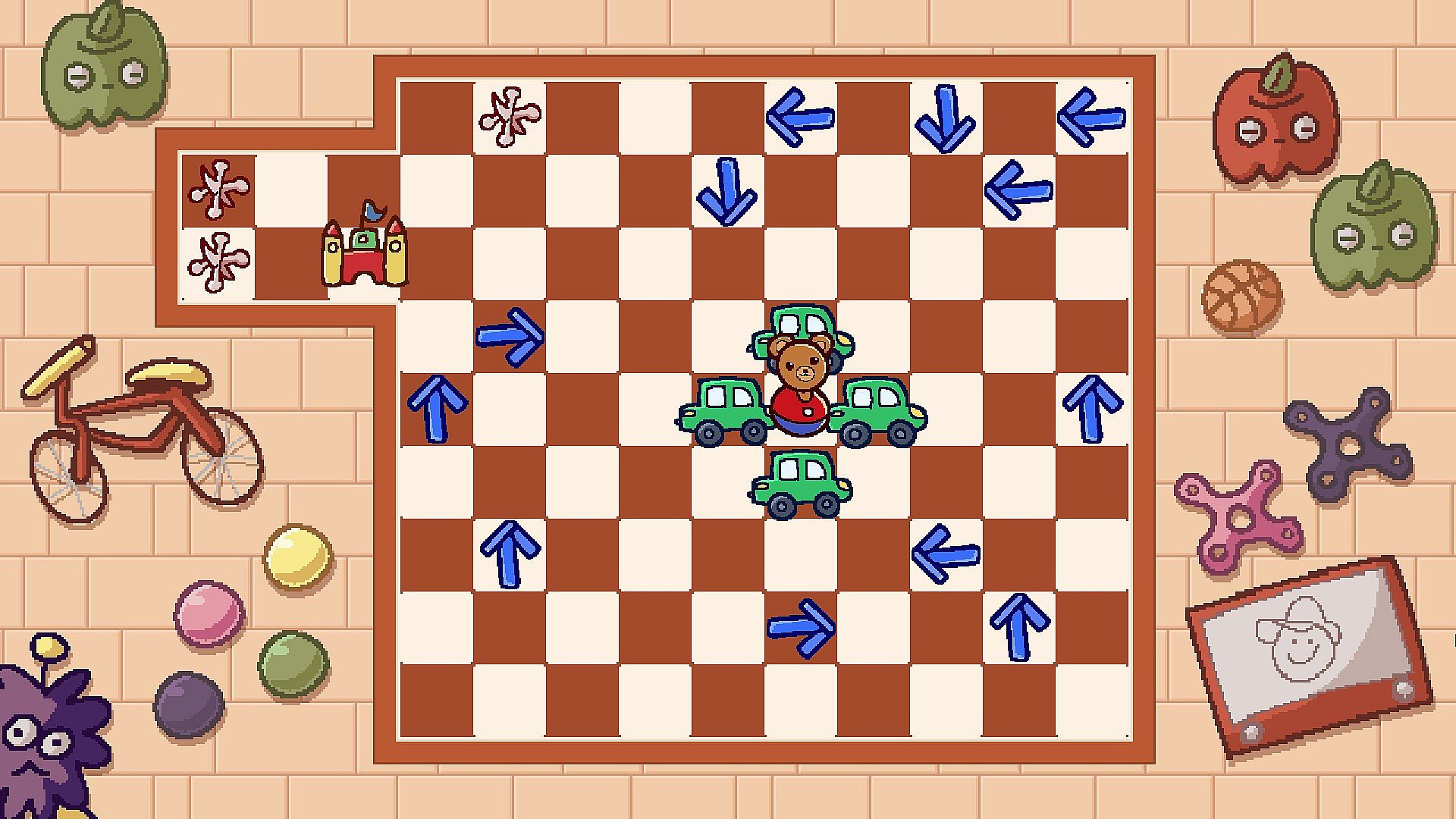
The continuous movement system forms the foundation of every puzzle. Once a direction is chosen, Monty travels in a straight line until he hits a barrier, which means each decision carries permanent consequences for that attempt. Levels incorporate movable pieces that act as both path creators and blockers when pushed into position. Toy cars add another layer, as they can be pushed along routes and redirected using arrows placed on the playfield. These arrows alter trajectories on contact, allowing players to reroute cars to clear paths or seal off areas as needed. Progression builds steadily across the full set of levels, with later stages introducing denser arrangements of pieces, cars, and arrows that require multi-step planning to solve without backtracking or restarts.
Experimentation plays a key role because the same elements can produce different outcomes depending on placement order and timing. A block pushed early might open a route that later becomes an unintended wall, while a car redirected multiple times can serve as a temporary bridge or a permanent obstacle. The design rewards repeated attempts on individual levels to test variations, building familiarity with how each component interacts under the continuous movement rules.
Game Modes
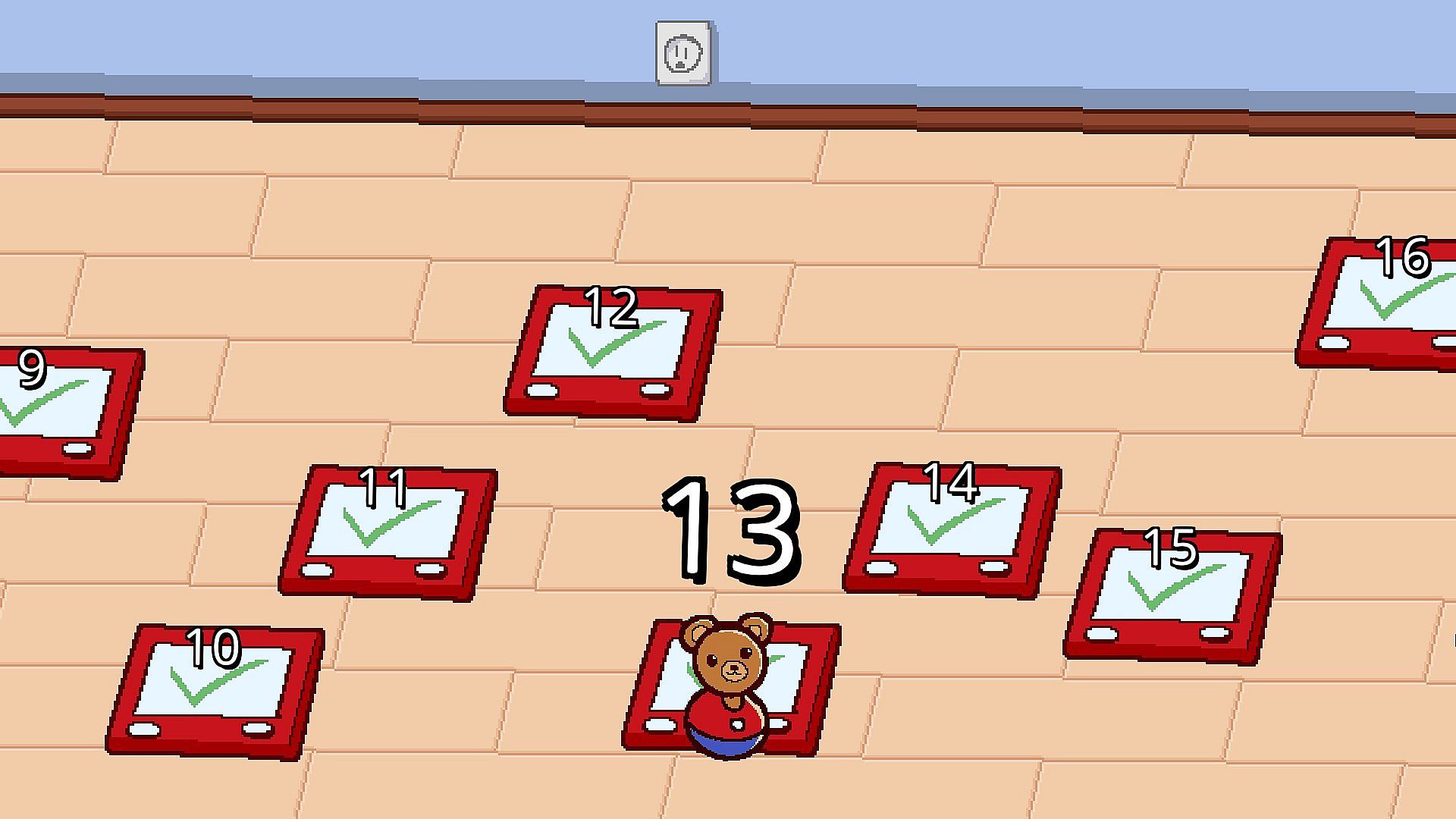
Monty The Play Bear operates as a single-player puzzle experience with no separate multiplayer or alternate modes. All content centers on the 30 levels presented in sequence, each designed around the same continuous movement and redirection mechanics. Players advance by completing stages in order, with difficulty scaling through increased complexity in piece placement, car routing, and arrow usage. There are no time-limited challenges, score attacks, or branching paths; the focus remains on logical progression through the fixed level structure.
Key Mechanics and Level Design
Directional arrows serve as the primary tool for influencing toy car paths, turning what would be fixed routes into flexible systems that players must manage across multiple interactions. Blocks function similarly but remain static once positioned, creating lasting changes to the environment. The combination encourages players to think about chain reactions, where one redirection enables a later push that opens the final path to the castle. Levels maintain a consistent visual style centered on toy-room elements, keeping attention on the spatial relationships and movement patterns rather than decorative distractions.
Thirty stages provide a complete campaign that starts with basic direction choices and gradually layers in simultaneous management of blocks, cars, and arrows. Some stages reward extended observation, as reflected in achievements tied to spending over a minute on a solution without restarting. This structure suits players who enjoy methodical puzzle solving over fast reflexes.
Is It Worth Playing?
Monty The Play Bear suits players who prefer deliberate, logic-driven puzzles that emphasize planning and spatial awareness. The continuous movement mechanic creates a distinct feel compared with traditional grid-based games, turning each level into a test of foresight rather than trial-and-error clicking. With thirty stages and no additional modes or ongoing updates required, the game delivers a self-contained experience focused entirely on its core systems. Those who enjoy titles built around redirection, pushing, and pathfinding will find consistent challenge and clear progression here. The title is available now on PC following its release on August 27, 2026, making it accessible for anyone seeking a compact puzzle package without extraneous features.