





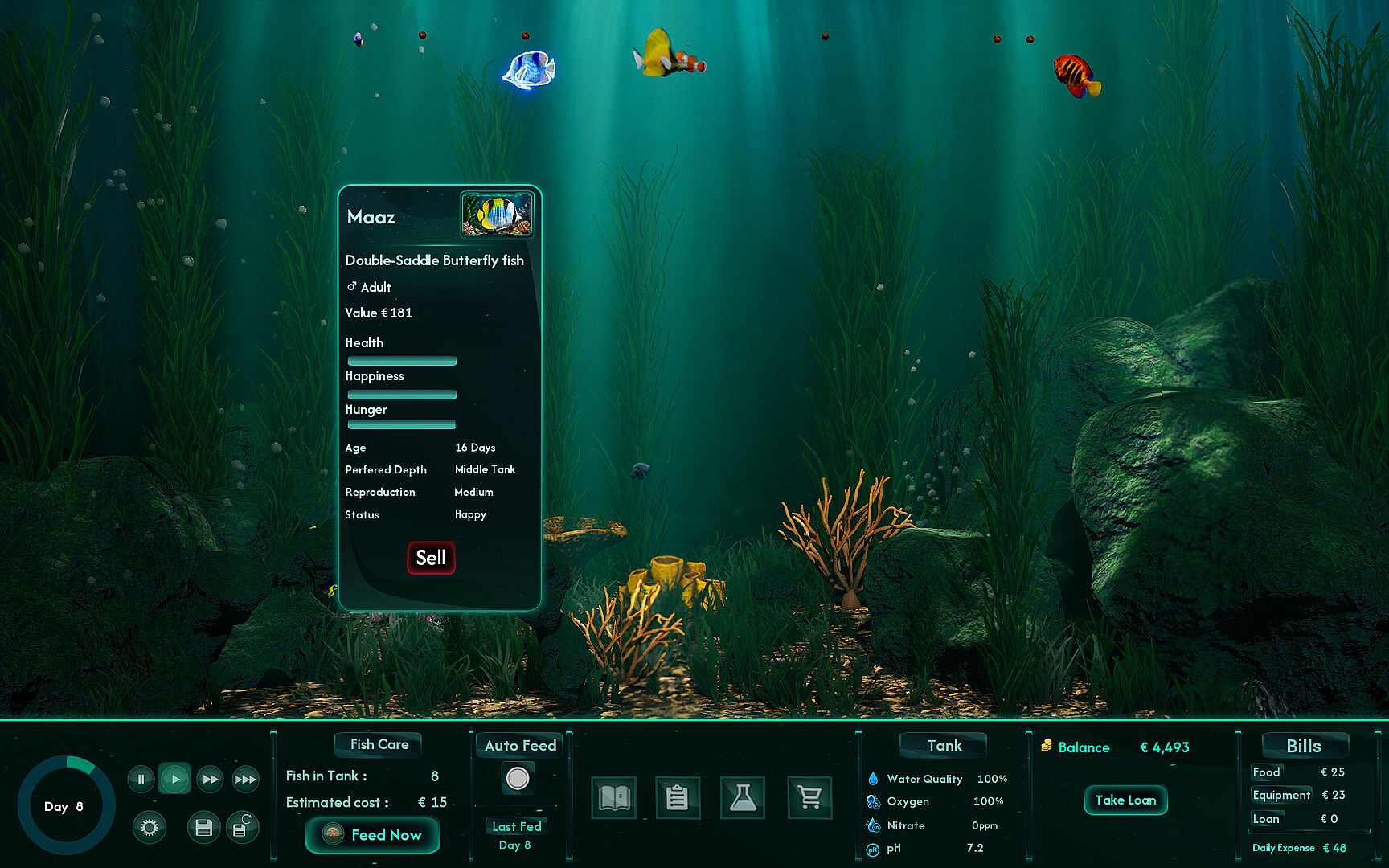
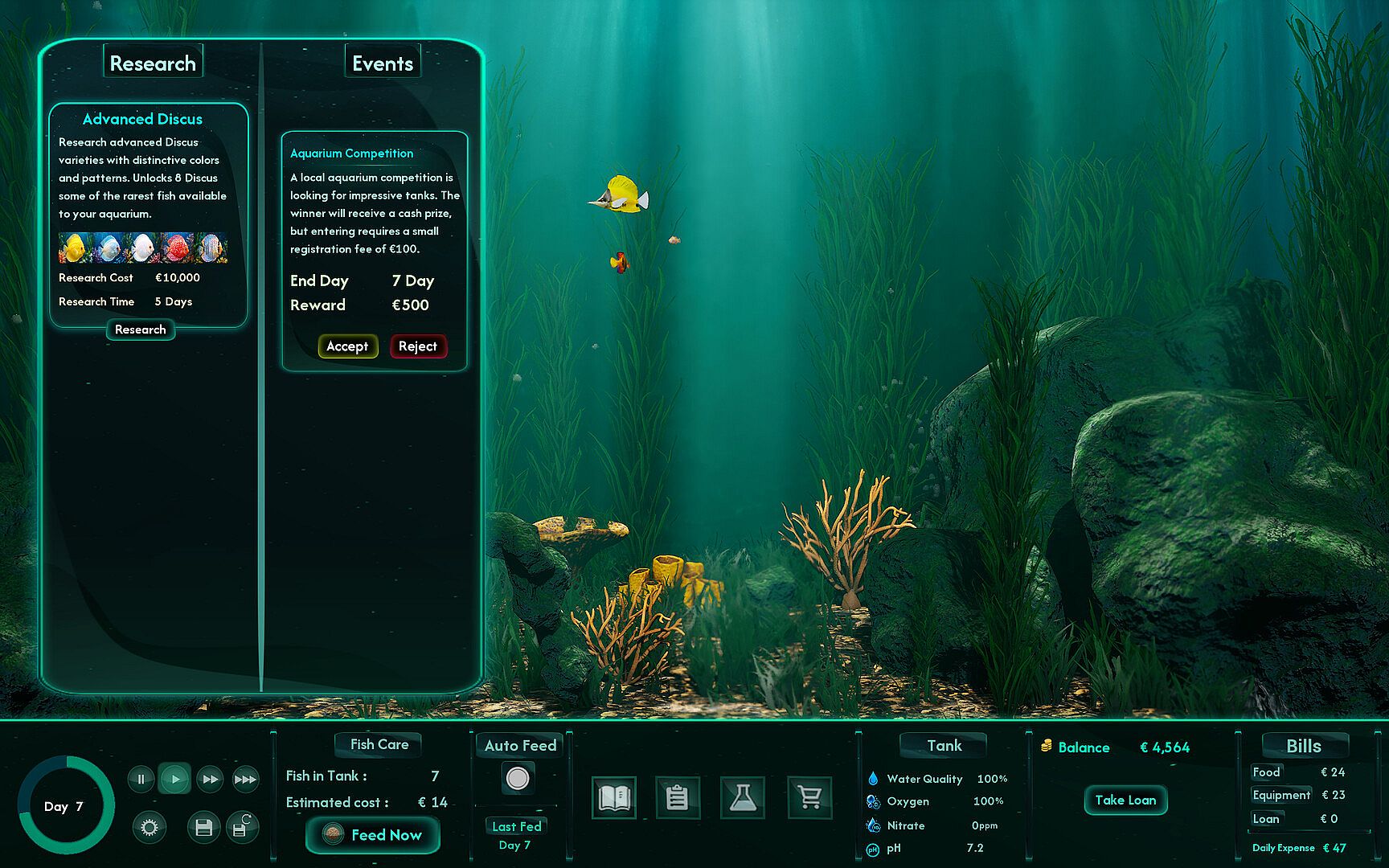
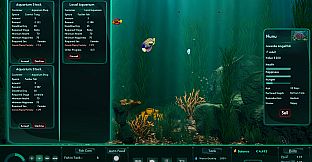
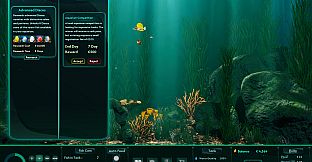
Finistry is an indie casual simulation game for PC in which players oversee a self-contained aquarium while a mysterious pandemic reshapes life beyond the glass. The experience centers on raising fish, maintaining stable conditions, and responding to shifting external demands that affect supplies and research needs. Every choice influences the long-term health of the tank and the stories that emerge from its inhabitants.
Gameplay
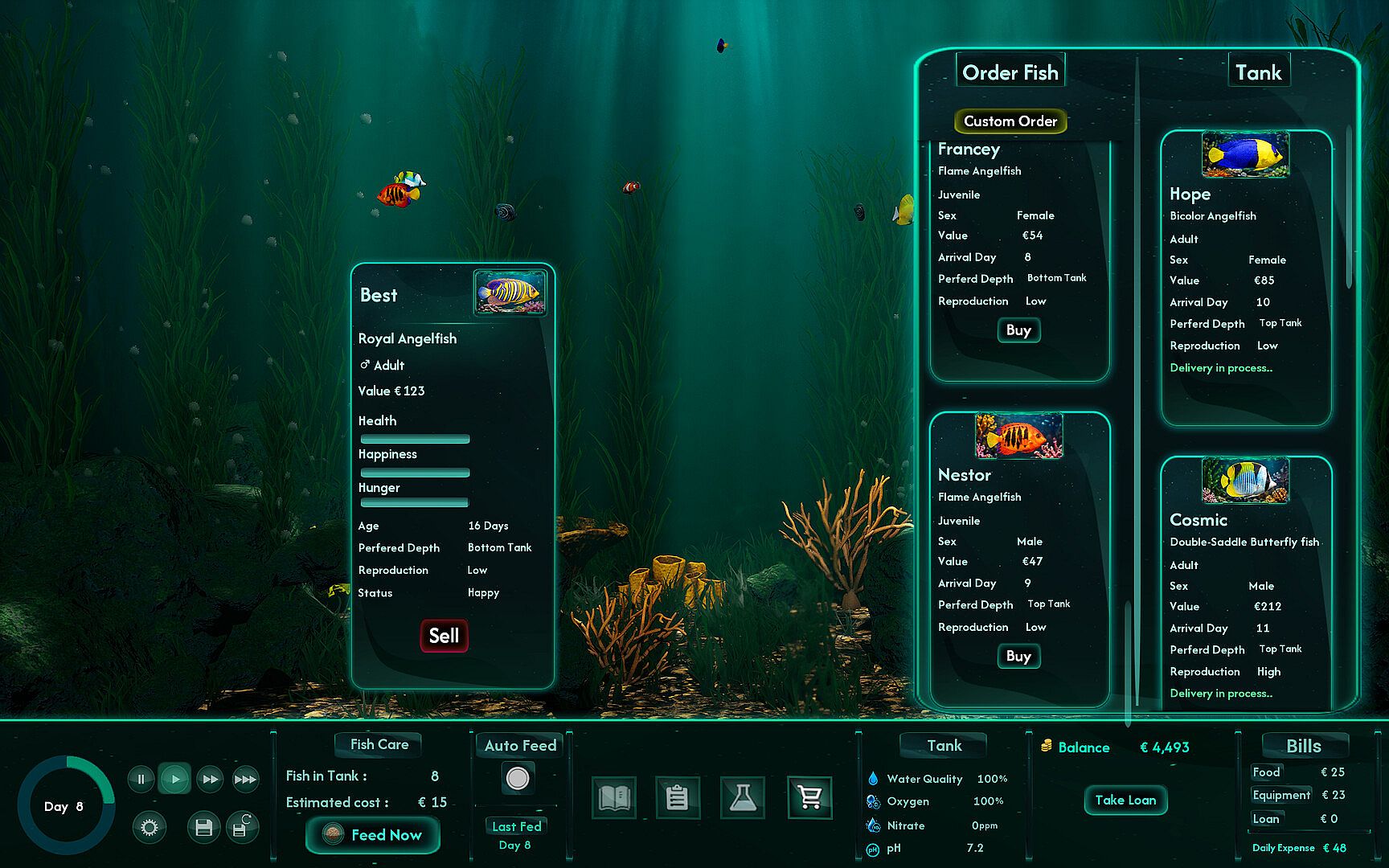
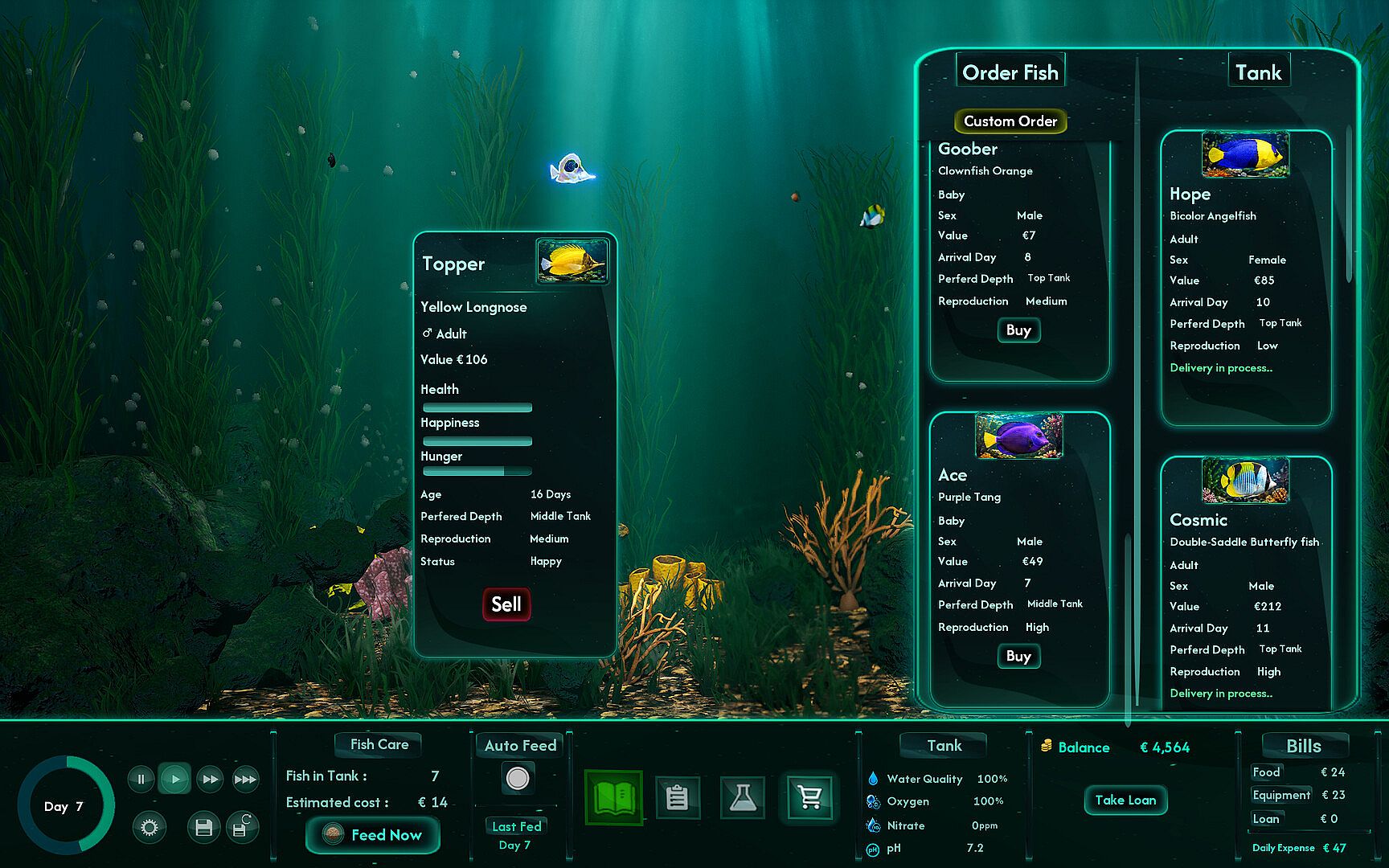
Core play revolves around acquiring fish at various life stages and guiding them through growth into adulthood. Players assign names and track individual histories as generations develop through selective breeding. Attention to water parameters such as quality, oxygen levels, and filtration prevents disease outbreaks that require careful intervention and resource allocation.
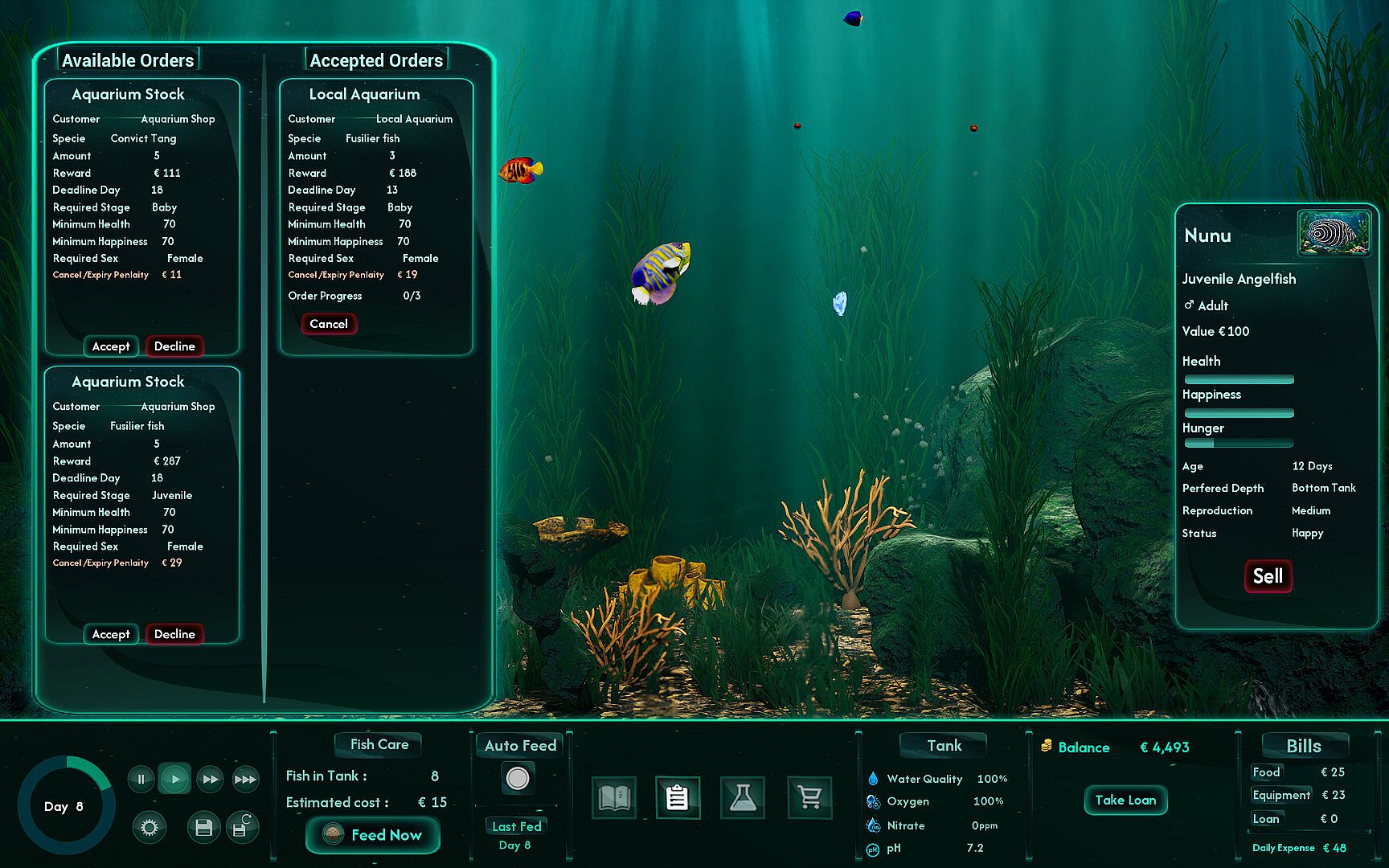
Earnings from sales support further expansion. Research investments unlock additional species and equipment, turning the aquarium into a potential contributor to external scientific efforts. Orders arrive for specific fish, prompting decisions about which specimens to retain for breeding programs and which to supply for income. Resource management remains central, as shortages or new demands can alter priorities mid-session.
Unexpected events drawn from the broader crisis introduce variability. News updates and sudden changes in availability create opportunities alongside constraints, encouraging adaptive strategies rather than fixed routines. The loop rewards patient observation of fish behavior alongside deliberate planning for tank upgrades and population balance.
Game Modes
Finistry presents a unified single-player management experience without separate named modes. Progression occurs through continuous tank development, where players set their own focus areas such as species specialization, scientific contributions, or simple observation of daily fish activity. Event sequences unfold differently across playthroughs due to the procedural influences from the outside world, providing replay variety within the same core structure.
Decisions accumulate over time rather than resetting between sessions. A single aquarium evolves based on cumulative choices about breeding pairs, equipment priorities, and responses to external requests, creating a persistent record of care and adaptation.
The Aquarium as a Living System
Success depends on balancing immediate fish needs with longer-term goals. Healthy conditions support breeding success and growth rates, while neglect can cascade into health issues that demand quick resource shifts. Equipment upgrades improve efficiency, allowing more complex setups that accommodate diverse species and larger populations.
Research serves dual purposes by expanding options and tying the aquarium to broader investigations into the pandemic. Fulfilling targeted orders generates funds while shaping the genetic makeup of remaining stock. This interconnected system means that focusing heavily on one area, such as rapid sales, may limit options in others like sustained breeding programs.
A World That Changes Around the Tank
Events from outside the aquarium introduce dynamic pressure without direct control over the external narrative. Shortages, new research priorities, and fluctuating demands force reevaluation of current strategies. These elements draw from colony-management influences, where external unpredictability affects internal stability and creates branching outcomes based on prior preparations.
Players follow developments through in-game updates that inform choices about which fish to prioritize or which upgrades to pursue next. The separation between the controlled tank environment and the uncertain world beyond adds context to routine maintenance tasks.
Is It Worth Playing?
Finistry suits players who enjoy deliberate simulation gameplay centered on resource oversight, population management, and incremental progress. The combination of fish care mechanics with event-driven external pressures offers a measured pace that rewards consistent attention rather than rapid action. Those drawn to casual management titles with light narrative elements tied to a persistent world will find the systems align closely with that preference. Availability on PC makes it accessible for extended sessions where observation and planning can unfold at a natural rhythm.





