


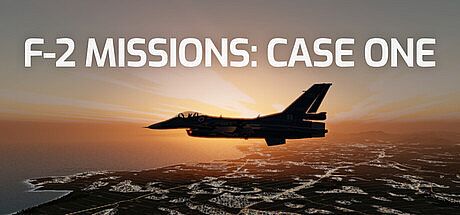


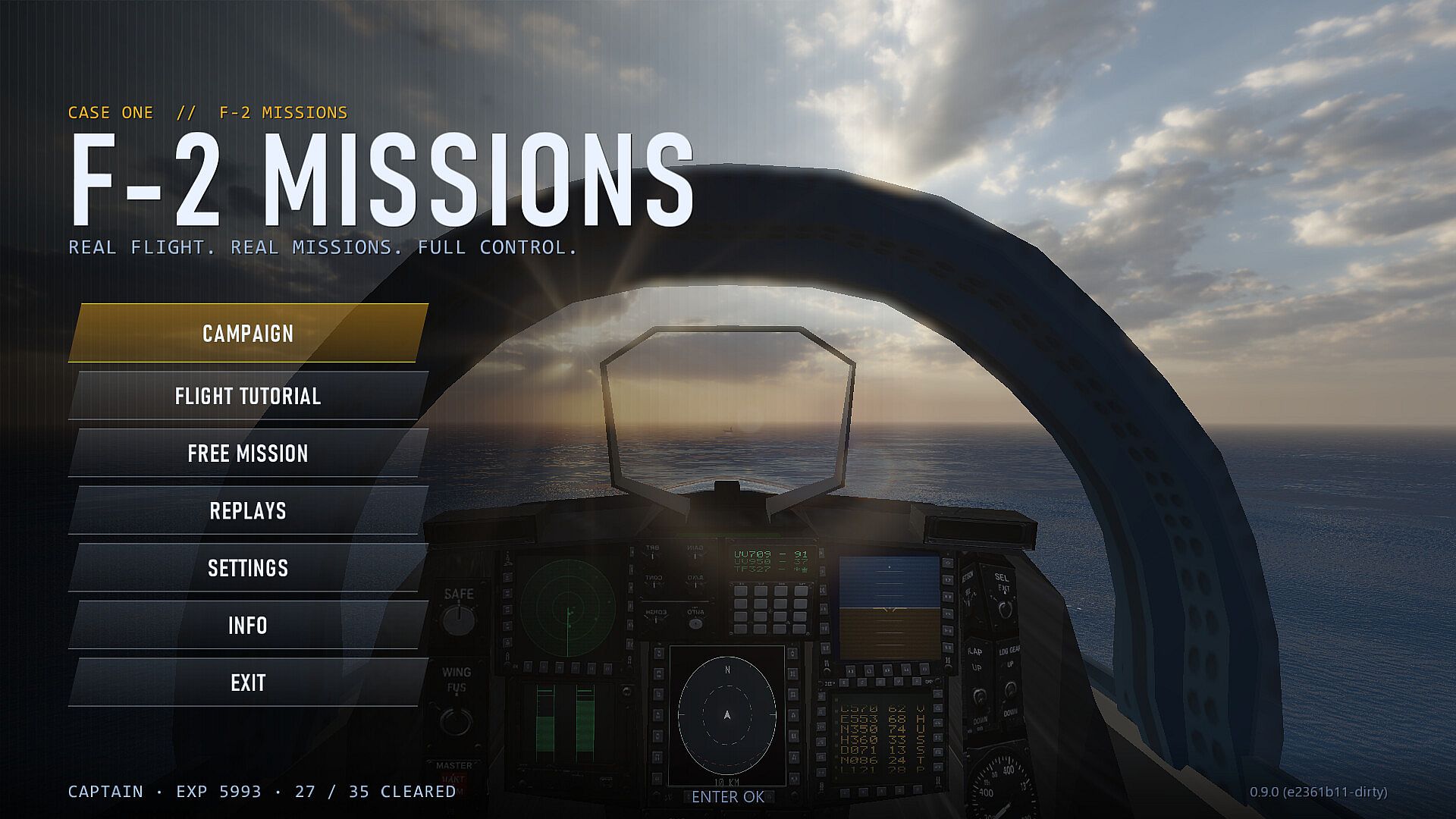
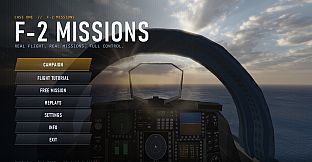
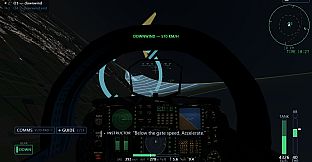
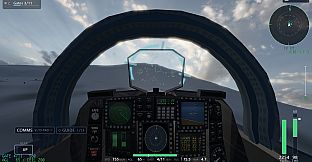
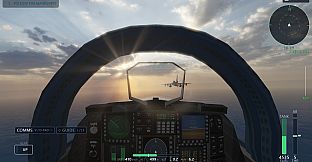
F-2 MISSIONS: CASE ONE is a single-player action simulation that puts players in the cockpit of the JASDF F-2 fighter jet for a focused training experience over a true-to-scale recreation of Japan.
Gameplay
The core loop centers on managing the aircraft through an authentic flight model built on physics calculations. Lift derives from the jet's weight, speed, and angle of attack, while roll and pitch inputs produce realistic turn performance without scripted assists. Rate-command roll allows inverted flight, and control response changes with airspeed so the aircraft feels heavier at lower speeds. Structural g-limits prevent over-stressing the airframe, and a detailed weight model accounts for fuel burn and drop tanks that alter handling as mass decreases.
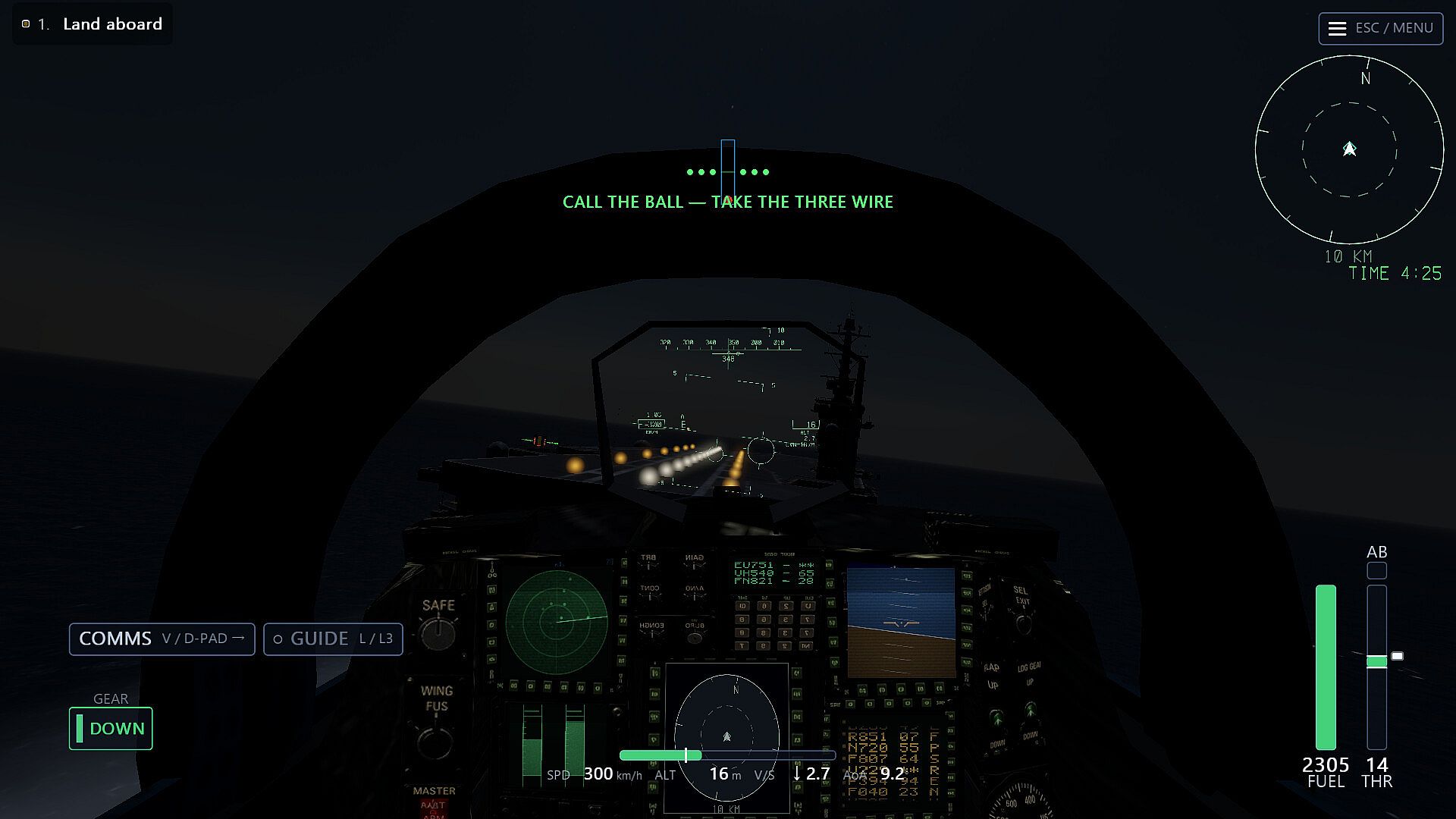
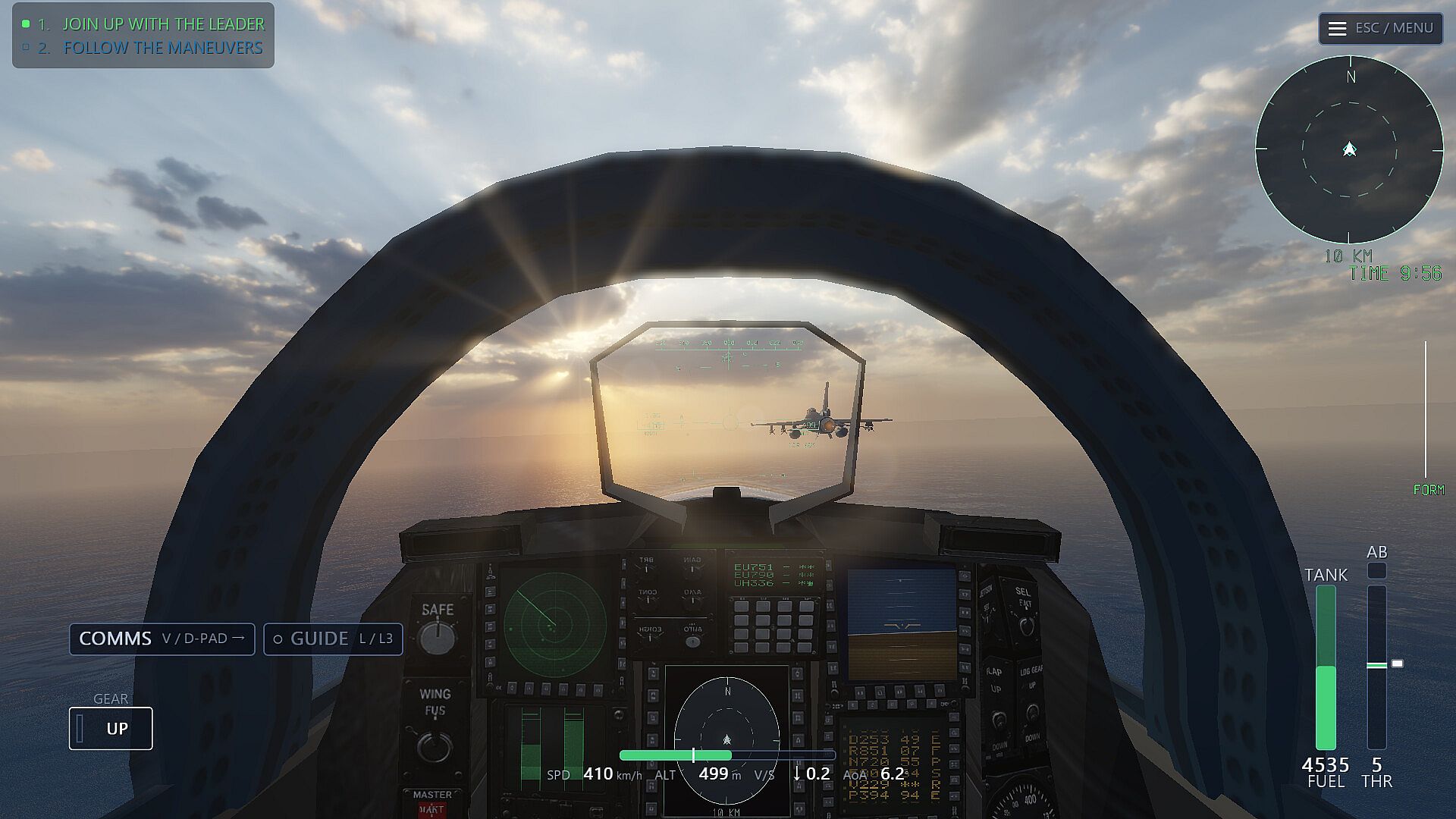
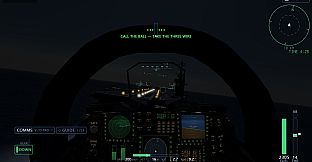
Players handle speed and energy manually using the HUD and instruments, with no stability assists or auto-throttle. The environment uses national survey data for accurate terrain including mountains, valleys, coastlines, and airfields with correct runway layouts. Weather, time of day, clouds, rain, fog, and wind vary each flight, and night missions feature a realistic star field. The fully modeled cockpit projects the HUD onto the combiner glass, with head movement and g-forces affecting the view during maneuvers such as carrier traps.
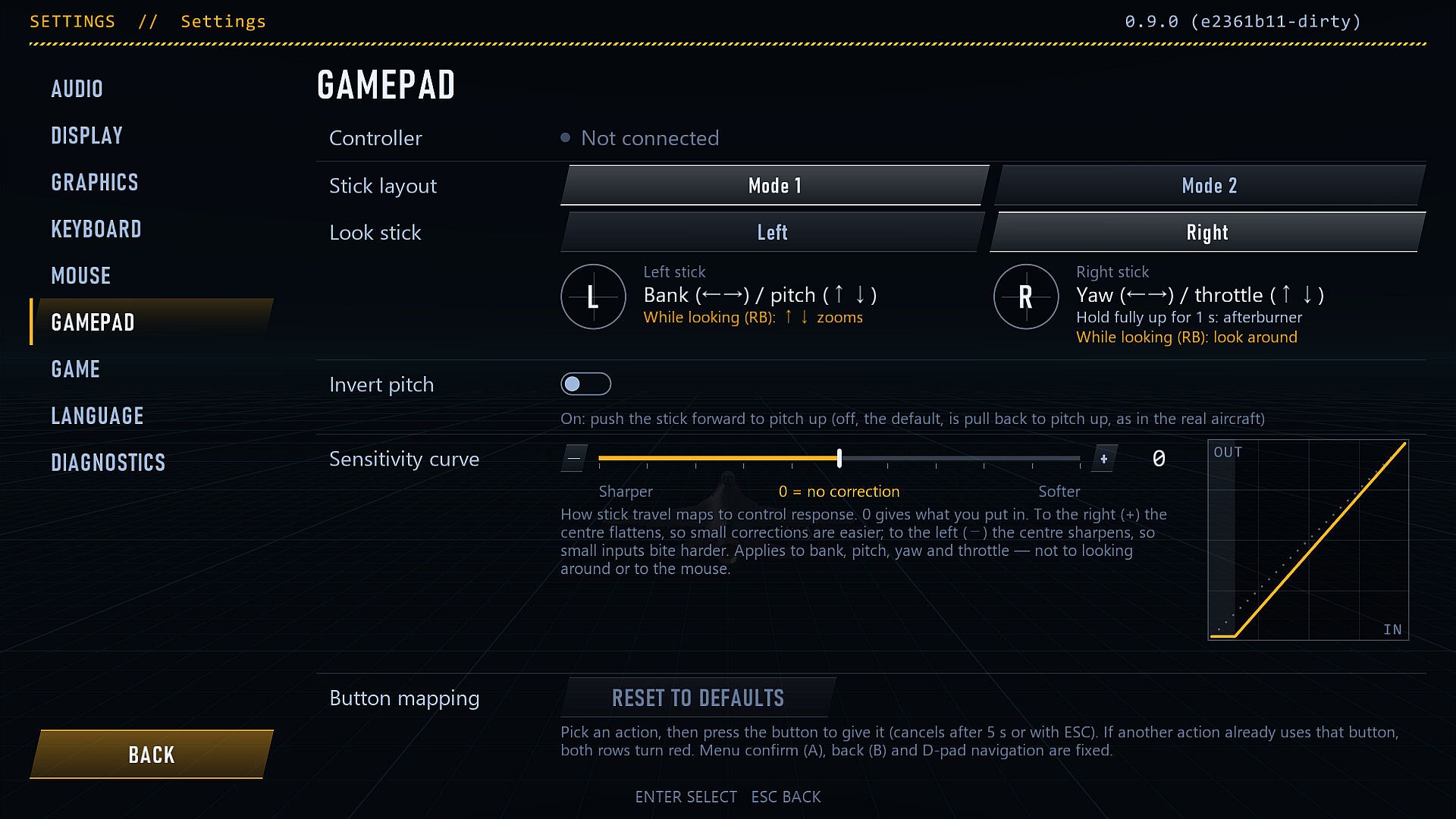
Controls support keyboard, gamepad with Xbox layout, and flight sticks. The game runs on Windows and macOS with Apple Silicon, offering HDR output, uncapped frame rates, and adjustable resolution and quality settings. Every flight records for replay from multiple angles including cockpit, chase, and external views.
Game Modes
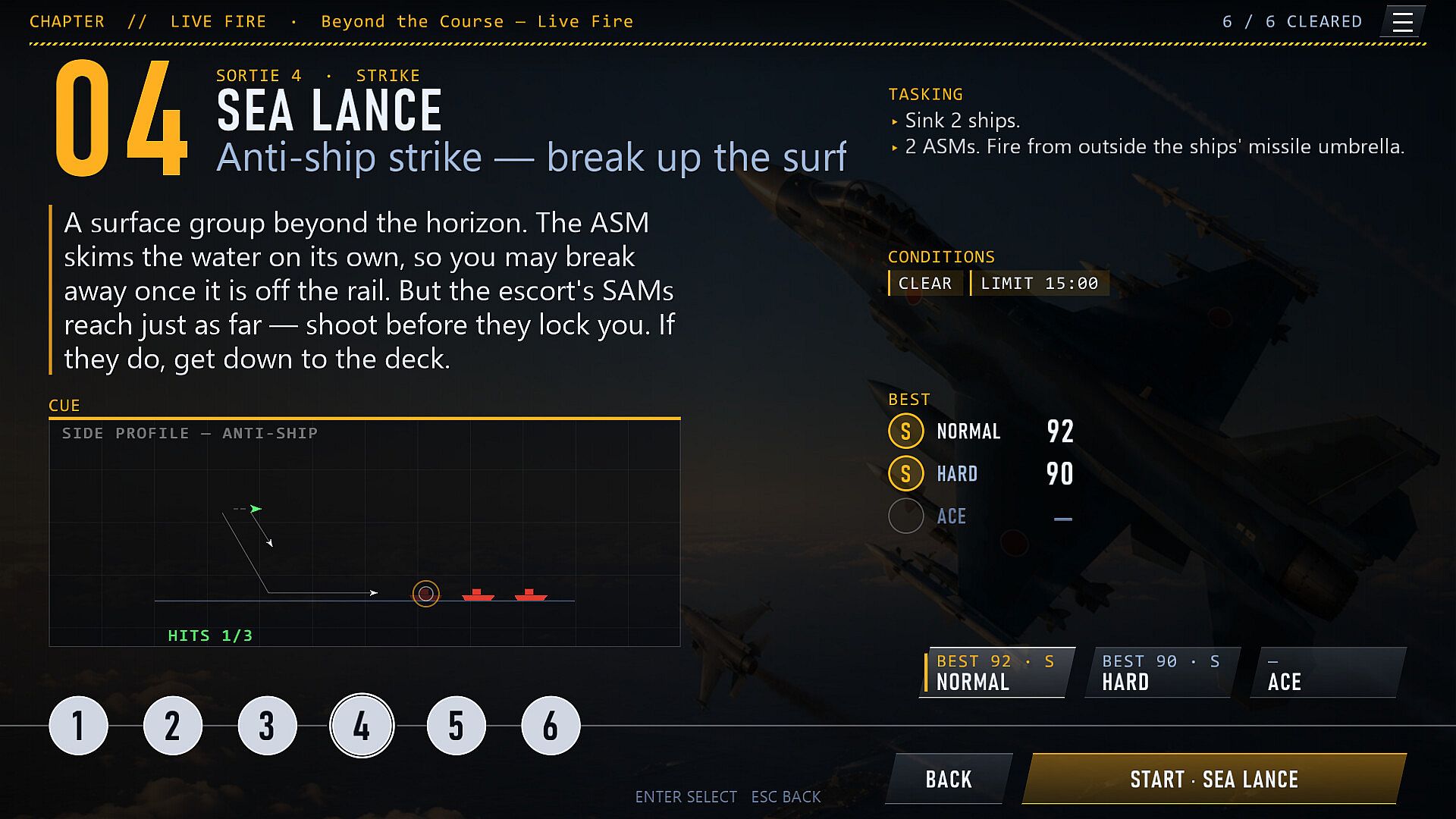
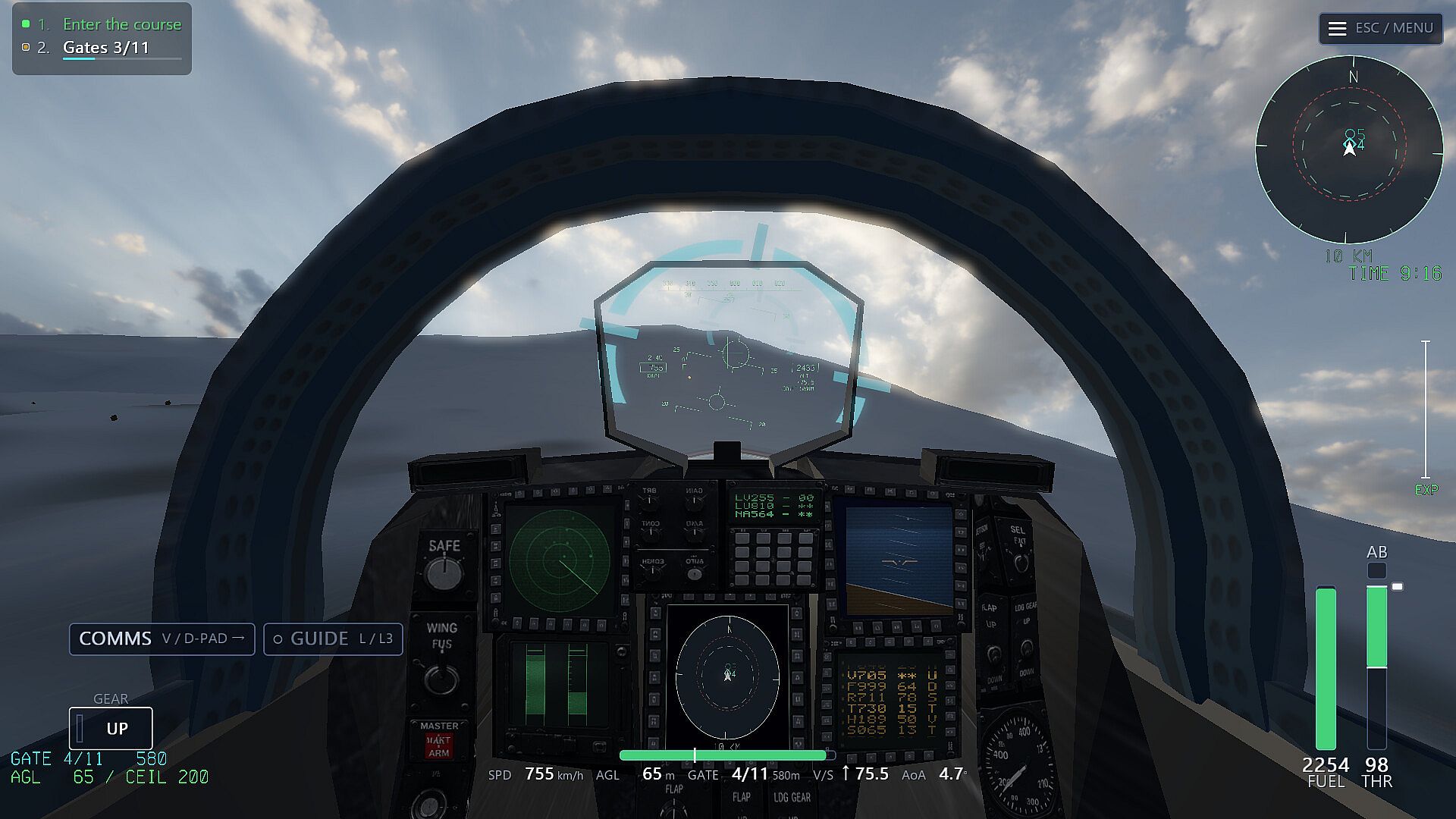
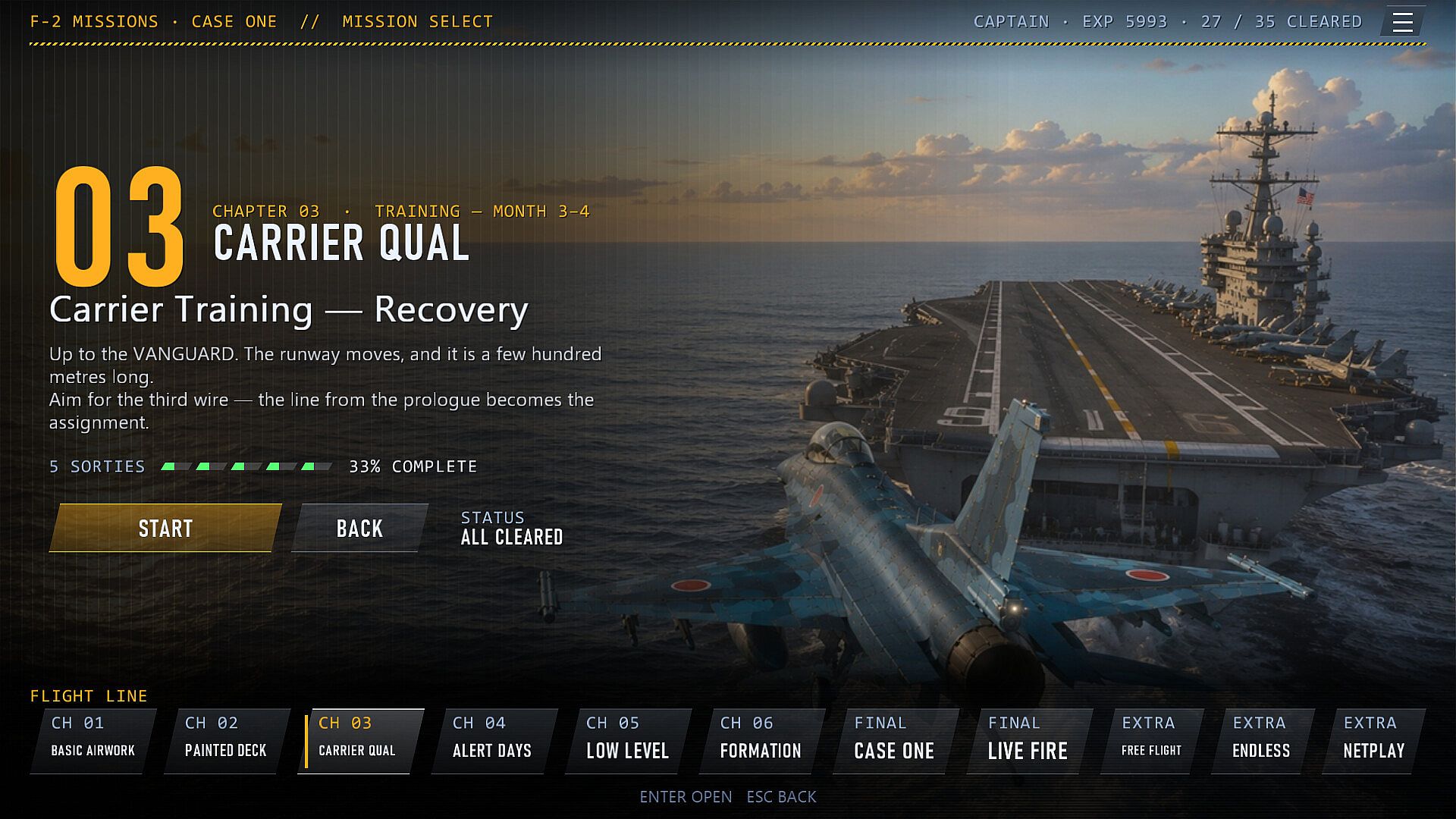
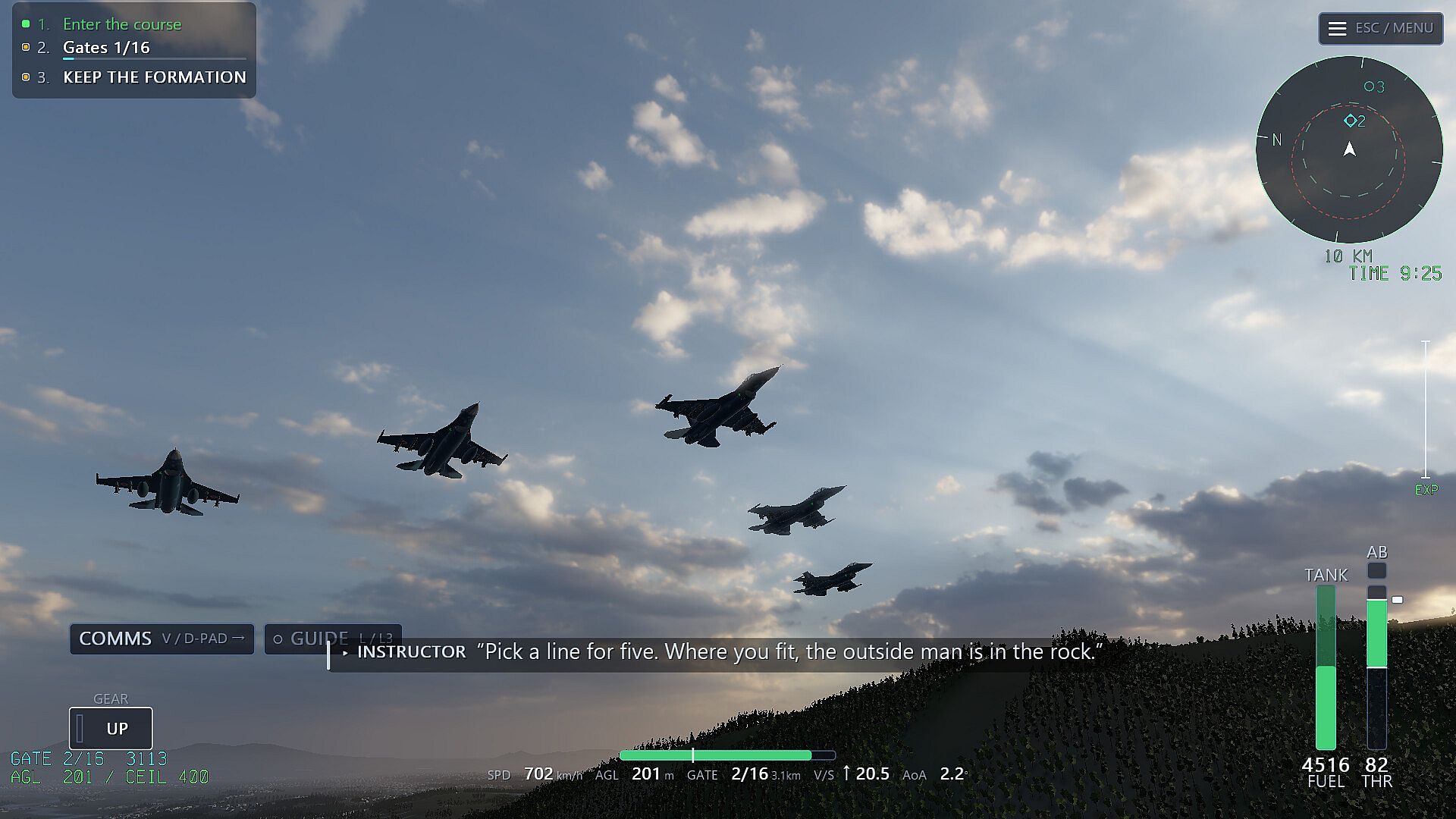
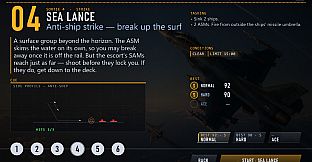
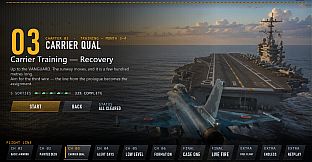
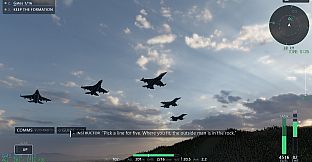
The main experience follows a one-year training program as a rookie pilot based at Matsushima. Missions progress from basic takeoffs, circuits, turns, and landings to low-level valley runs that require terrain masking, formation flying off a leader's wing, aerial refueling, and carrier landings scored on sink rate, centerline, wire, and angle of attack. Scramble alerts send the player to identify and escort unidentified aircraft without engaging. Live-fire segments include gun and missile attacks on fighters, strikes on ground targets, and anti-ship missions where missiles skim the waves and damage affects the player's own aircraft.
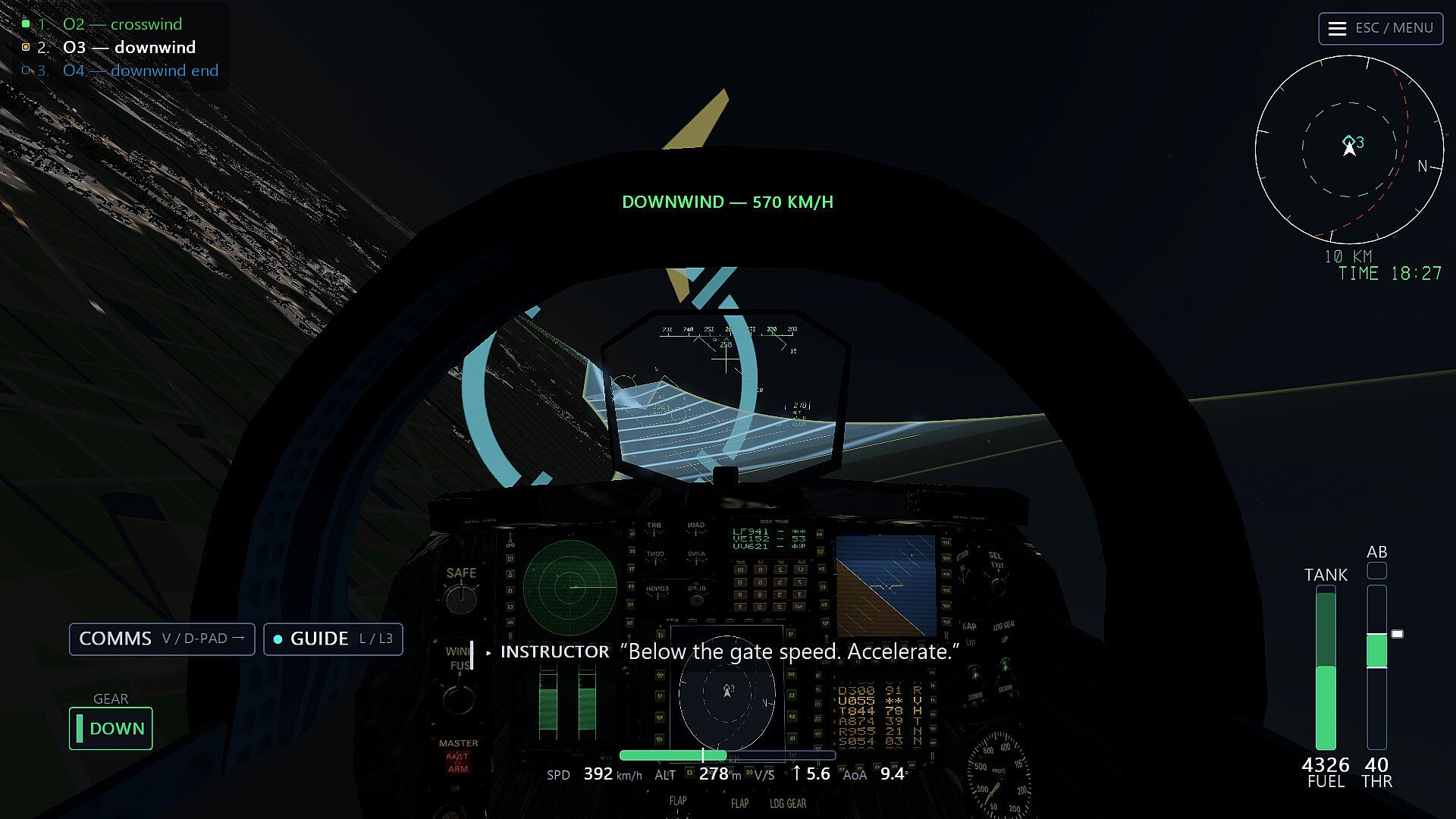
Difficulty settings progress from NORMAL with a guide line and instructor guidance to HARD and ACE, where cues disappear and environmental challenges increase. Clearing NORMAL unlocks HARD, and HARD unlocks ACE. Free Flight becomes available after completing the course, allowing custom sorties with chosen weather, wingmen, and music without timers or scoring.
Training and Progression
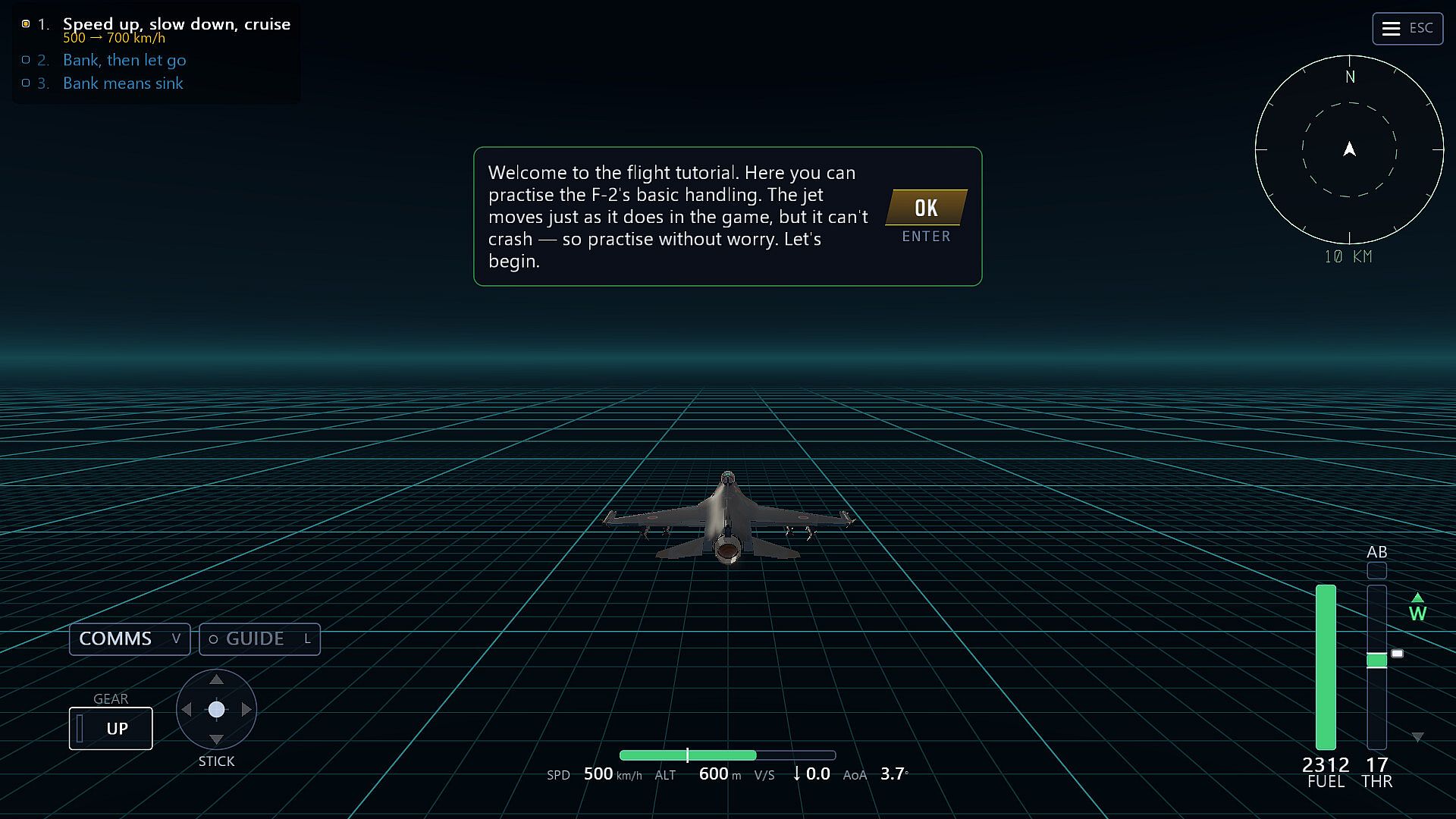
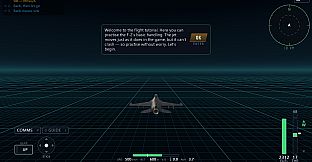
An instructor provides radio guidance throughout the structured course, outlining expectations before each segment. Carrier qualification missions test precision under varying conditions including crosswinds and night approaches. Low-level runs emphasize real terrain features such as the Azusa valley and ridges around Fuji for radar avoidance and navigation. Live-fire training builds on these skills, requiring precise positioning to evade surface-to-air threats while engaging targets.
Replays allow review of carrier approaches from the LSO platform or other perspectives, and clips can be saved. The game emphasizes that assists appear only in displays like steering cues and gate rings, leaving all flight control to the player.
Is It Worth Playing?
This title suits players seeking a demanding single-player flight simulation without assists or simplified handling. The physics-driven model, accurate Japanese terrain, and progression from basic airwork to advanced carrier and combat tasks deliver measurable skill development through scored landings and mission performance. Support for multiple control types and planned free updates including VR expand accessibility over time. Those who enjoy managing energy, reading instruments, and flying without automation will find consistent challenge and replay value in the recorded flights and free flight mode. The independent production focuses on core systems rather than additional content layers, making it a targeted choice for simulation enthusiasts.












