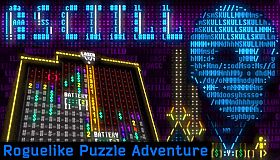


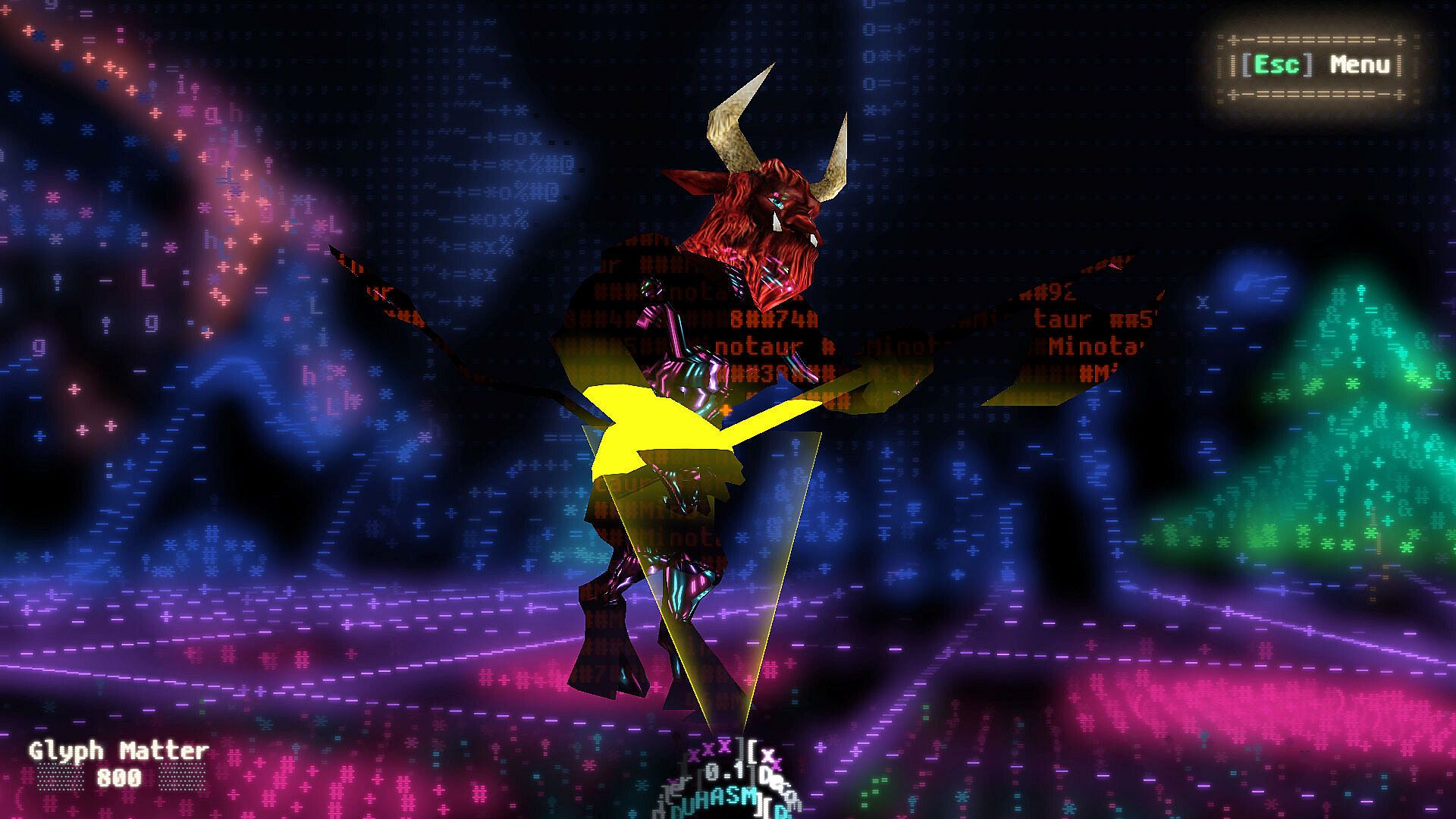
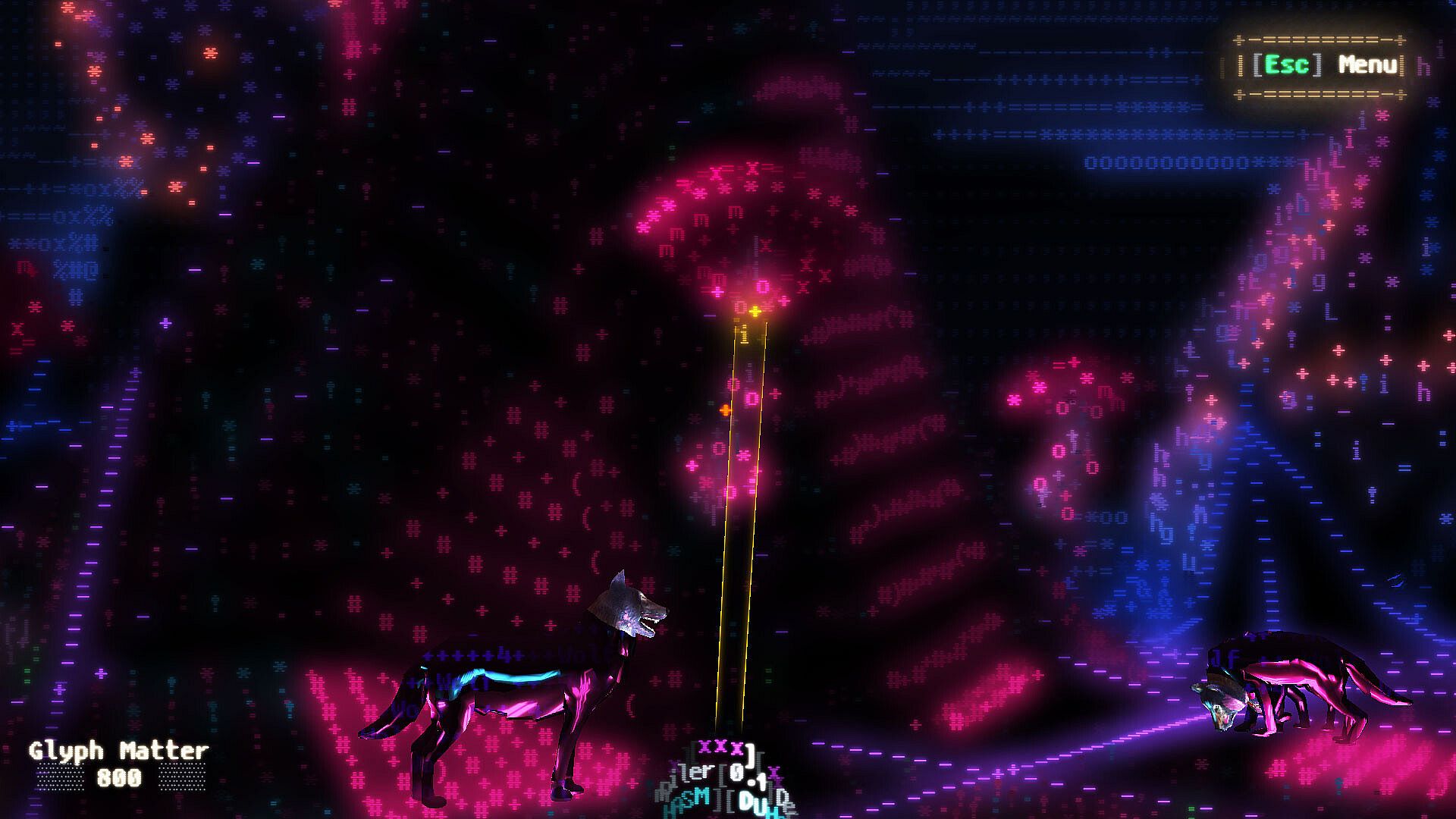
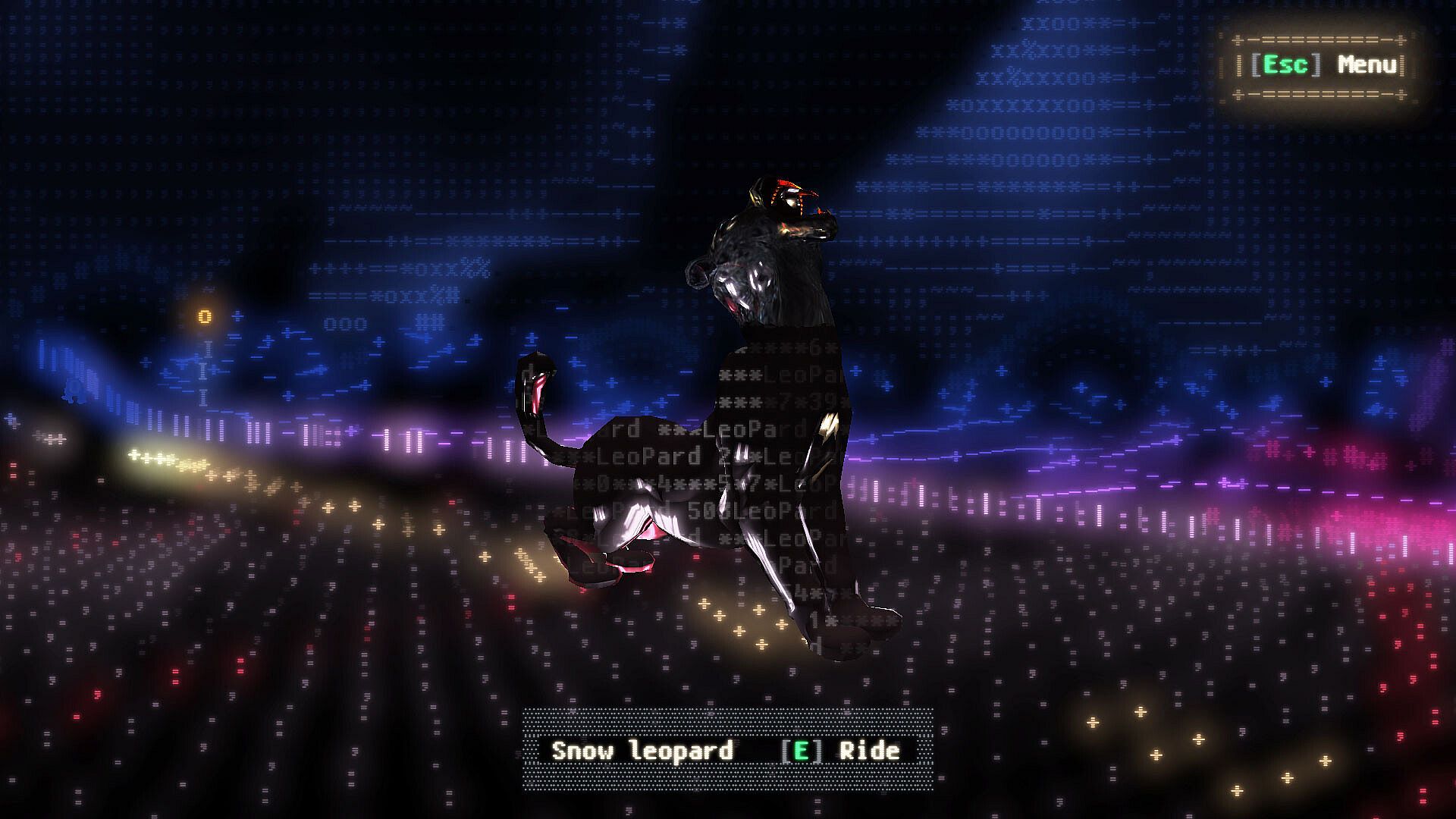
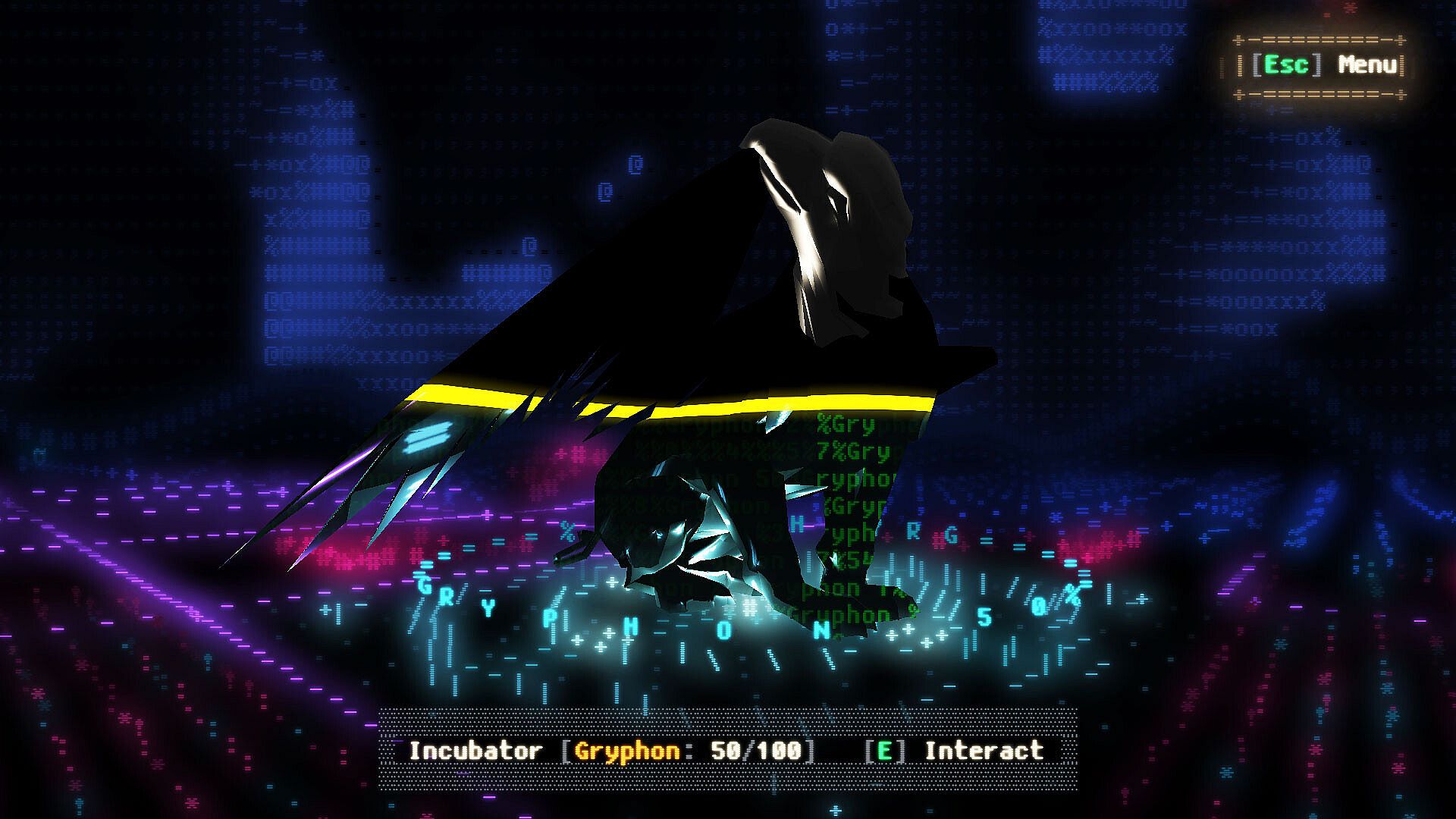
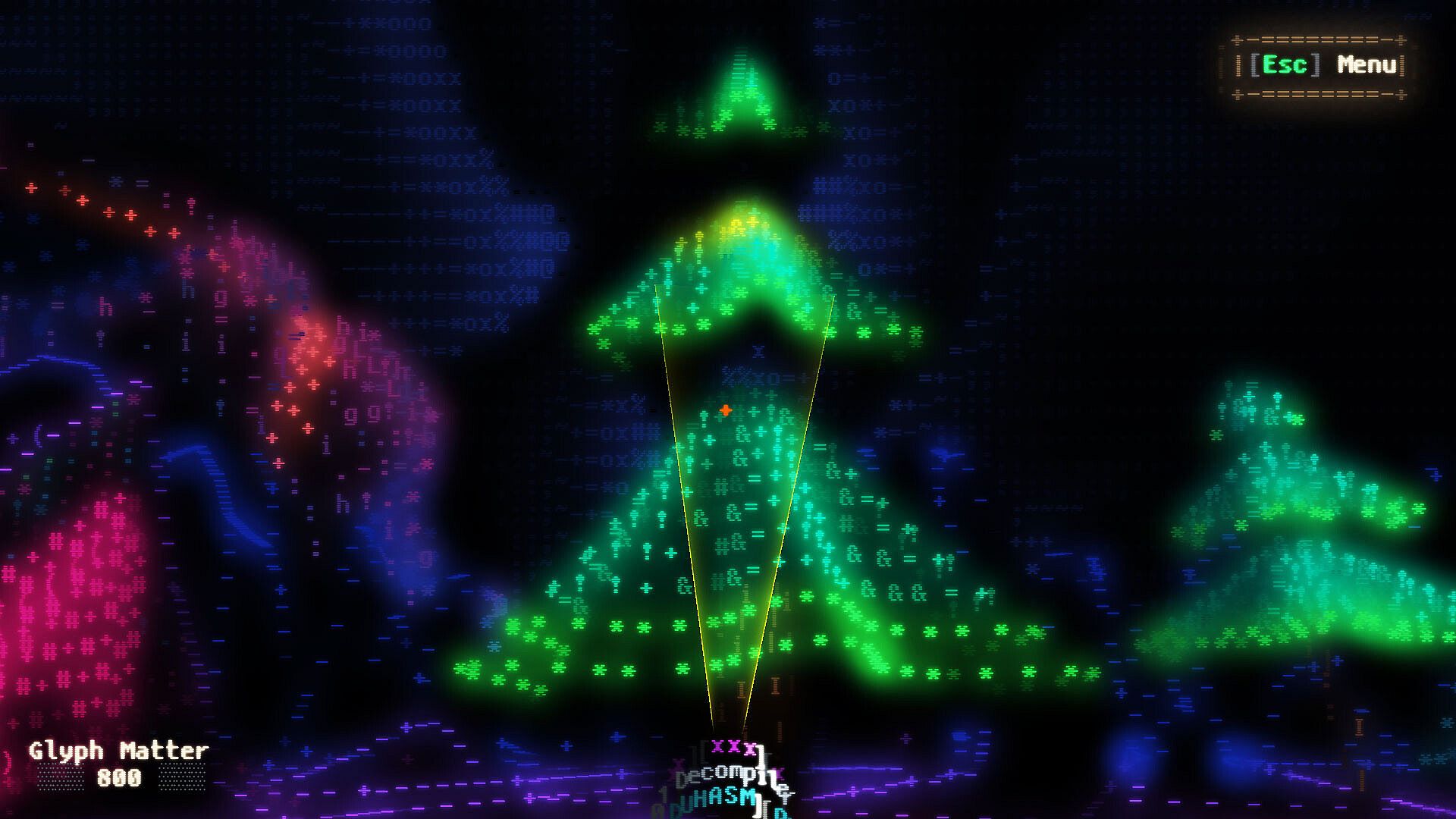
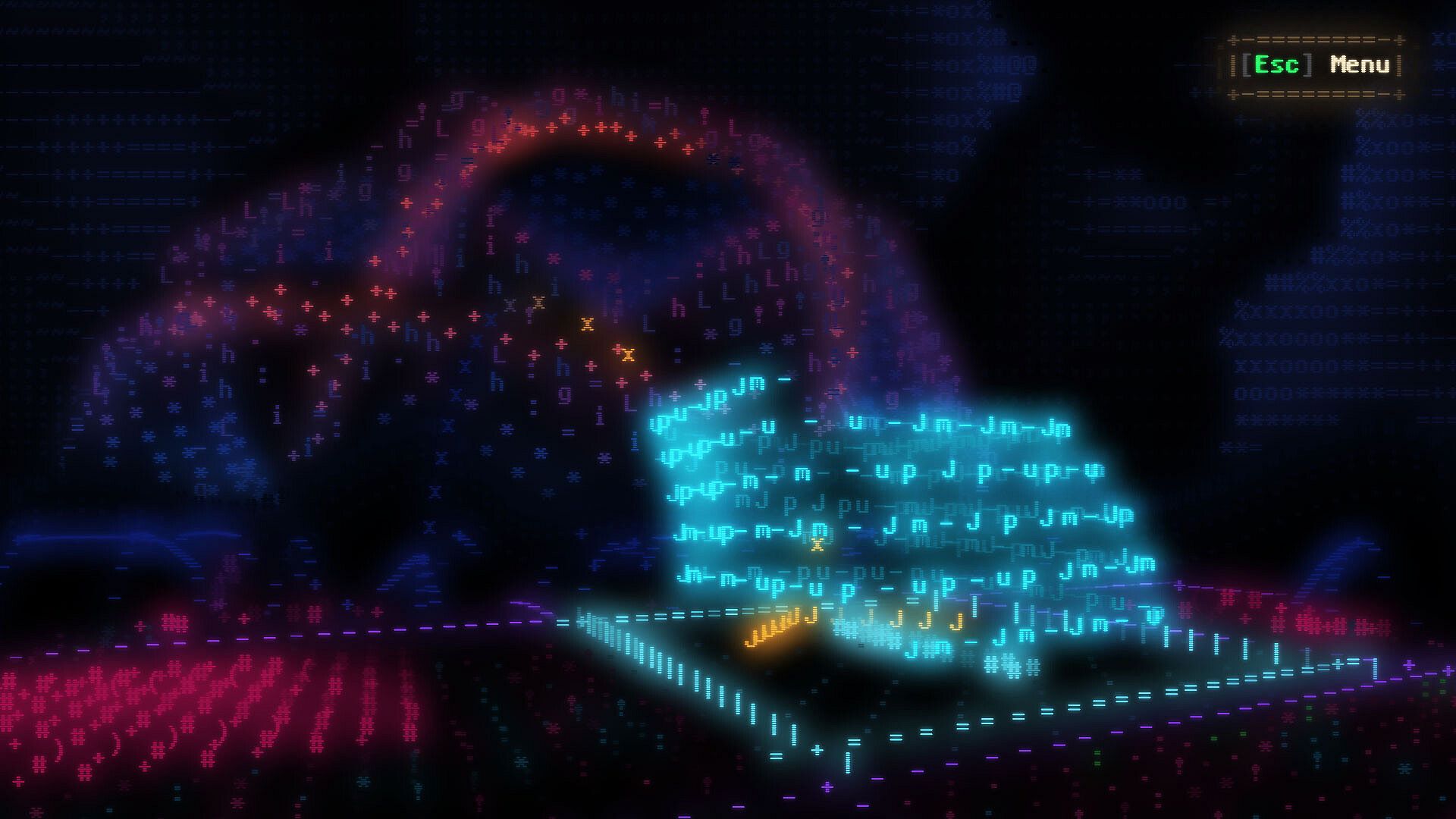
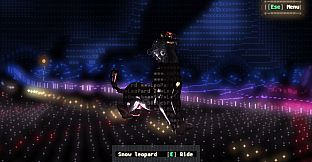
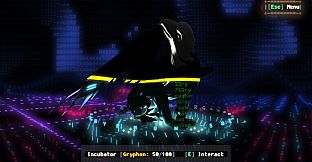
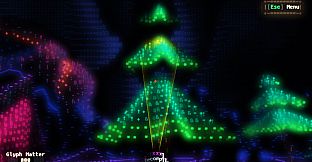

DUHASM is a first-person exploration adventure game set in a three-dimensional world constructed entirely from text symbols. Players navigate forests, open landscapes, and unusual sites where every creature, structure, and mechanism operates under one shared system of symbols. The experience centers on discovery, deconstruction, and reconstruction as the primary means of progress through an interconnected environment.
Gameplay
The core loop revolves around moving through the world while interacting with its symbolic elements. Roads provide one path forward, yet players can also strike out across rivers or into unmarked areas to locate new structures and creatures. Mechanisms respond to player actions, and some locations open only after the environment itself has been altered.
Decompilation serves as the main tool for breaking down encountered elements. Applying the decompiler to a creature or structure reduces it to its base symbols and yields resources. Discovering a new type grants its Pattern, which functions as reusable knowledge for later creation. Choices matter because not all creatures act aggressively, and removing certain ones can shift how the surrounding area behaves.
Compilation uses collected Patterns and resources to build new objects or entities. A constructed bridge can span a gap, a placed structure can redirect movement, or a compiled creature can influence nearby events. These two processes form a single cycle: disassemble to understand, then reassemble in new configurations to solve obstacles or open routes.
Game Modes
DUHASM supports solo play and online co-op for two players. In single-player sessions the focus remains on individual exploration and experimentation with the symbolic systems. Co-op sessions allow both participants to share the same world instance, gathering Patterns, harvesting resources, and applying changes together.
No additional named modes appear in available information. The emphasis stays on cooperative discovery rather than competitive or separate objective-based variants.
World and Systems
Every location ties back to the same underlying symbolic framework. Creatures and objects follow consistent rules, so learning one Pattern often informs how similar elements elsewhere will respond. Progress comes from observing these connections and testing modifications rather than following linear objectives.
Obstacles rarely present as simple barriers. Instead, a blocked path might require compiling a new route, releasing a creature that alters local behavior, or finding an alternate path after decompiling key elements. This approach encourages repeated visits to areas after the world has been reshaped.
Is It Worth Playing?
DUHASM remains listed as coming soon with no user reviews available at this time. The confirmed features center on first-person exploration, decompilation and compilation mechanics, and the option for solo or two-player online co-op. Those drawn to deliberate, system-driven adventure games that reward observation and creative problem solving may find the approach distinctive once the title releases.
Availability is currently limited to a wishlist on its platform page. Players interested in indie titles that blend exploration with constructive mechanics should monitor for the official launch date and any subsequent updates. The absence of released content means any final assessment depends on post-launch performance and community feedback.