




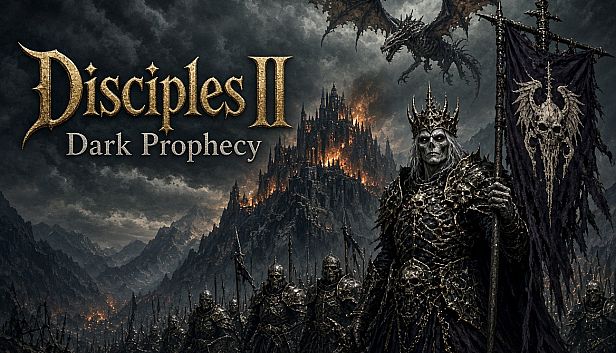


Disciples II: Dark Prophecy is a turn-based strategy game released in 2002 for the PC. Players command one of four distinct factions in the fantasy setting of Nevendaar as they compete for control through resource gathering, army development, and tactical engagements.
Gameplay
The core loop revolves around three interconnected phases. In the capital city, resources fund construction of structures that unlock new unit types and spells. Gold supports unit recruitment and upgrades while mana powers spell research and casting. Each faction draws primarily from its own mana type, with higher spells often requiring combinations of multiple types.
Heroes lead small squads across a hex-based map covered by fog of war. Movement points limit travel each turn, and terrain affects travel costs. Squads claim resource nodes, capture towns, and engage opponents. Captured locations expand the controlling faction's influence and provide ongoing income.
Combat occurs when squads meet on the map. Battles unfold in a separate turn-based arena where up to six units per side take positions in two rows. Initiative determines action order, and players choose attacks, spells, or defensive stances. Unit abilities, positioning, and some random factors shape outcomes. Surviving units gain experience and can upgrade when the required capital structures exist.
Three lord types shape the starting hero and overall focus. Warrior lords emphasize direct combat strength, mage lords gain extra spellcasting options, and guildmaster lords access more espionage and sabotage actions. Five hero archetypes further differentiate leaders through specialized skills.
Game Modes
Four linked campaign sagas allow play from the perspective of each faction. These scenarios advance a shared storyline while presenting faction-specific objectives and challenges. Single scenarios offer standalone maps with varied victory conditions.
Multiplayer supports up to four participants in hotseat or network matches. Players can import custom leaders saved from campaign play into these sessions. A scenario editor enables creation and sharing of additional maps.
Four difficulty levels adjust enemy behavior and resource availability. The default setting provides a capable computer opponent that targets vulnerable or high-value units.
Factions and Mechanics
The Empire fields balanced human forces with strong defensive units and healing magic. Mountain Clans rely on durable dwarven warriors and runic magic suited to attrition and utility effects. Legions of the Damned emphasize high-damage demonic units and deceptive spells. Undead Hordes use resurrection mechanics and debuff-focused magic to wear down opponents over time.
Each faction transforms surrounding land into its signature terrain, which influences movement and resource flow. Neutral sites and creatures appear on maps, adding opportunities for alliances or conflicts beyond the main factions.
Is It Worth Playing?
Critics awarded the game a Metascore of 84, praising its tactical combat depth, faction variety, and campaign structure. Players who enjoy methodical turn-based strategy with emphasis on small-unit tactics rather than large armies find the systems engaging. The deliberate pace and meaningful choices in hero development and spell selection reward careful planning.
The game remains available through digital platforms in editions that bundle expansions. No ongoing seasonal updates exist for the original release, yet its self-contained campaigns and multiplayer options provide complete experiences. Those seeking a classic fantasy strategy title with distinct mechanics from similar games will find it holds up for single-player campaigns and occasional multiplayer sessions.