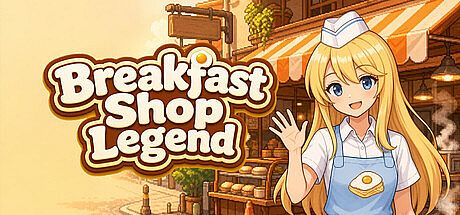



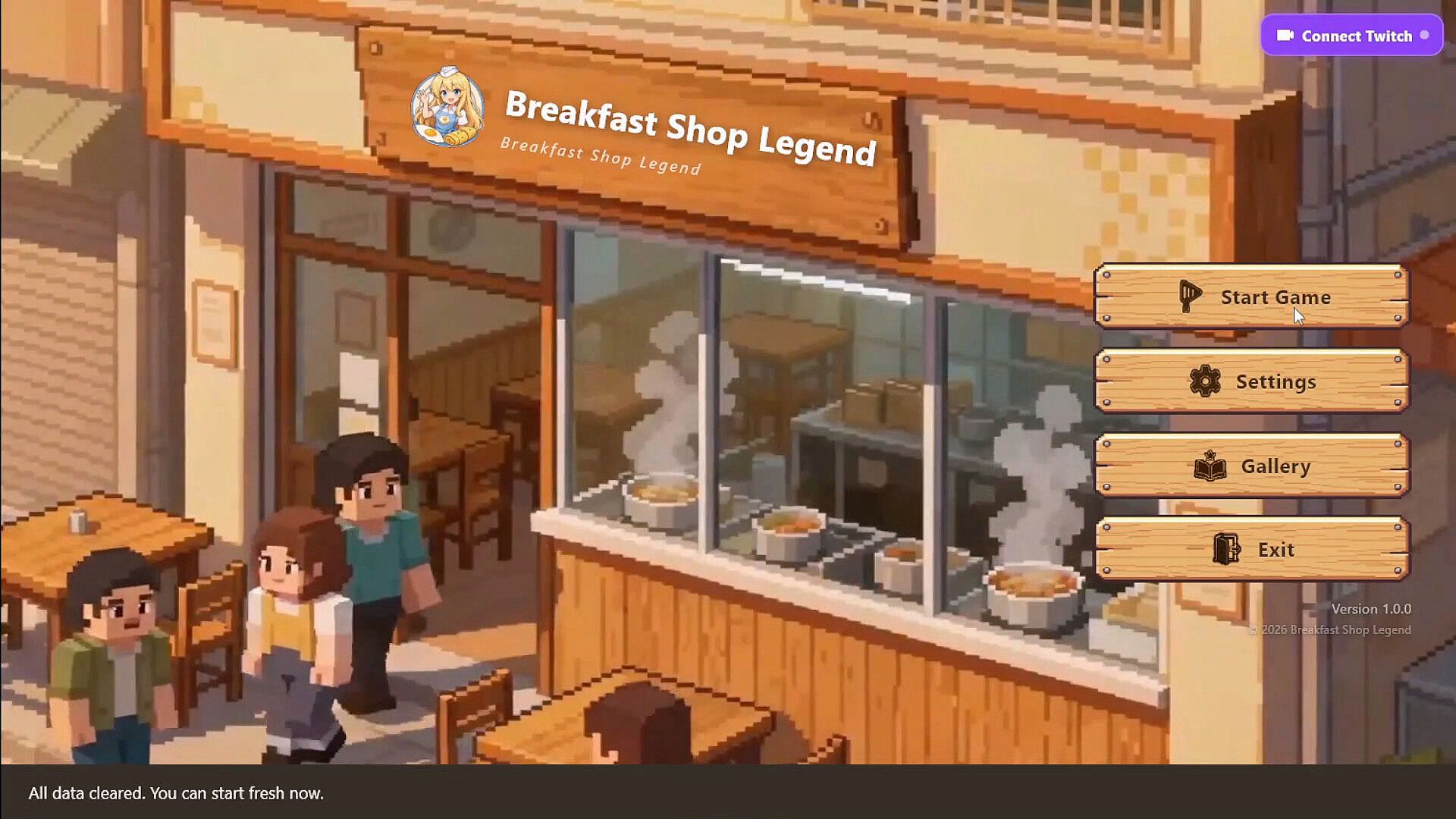
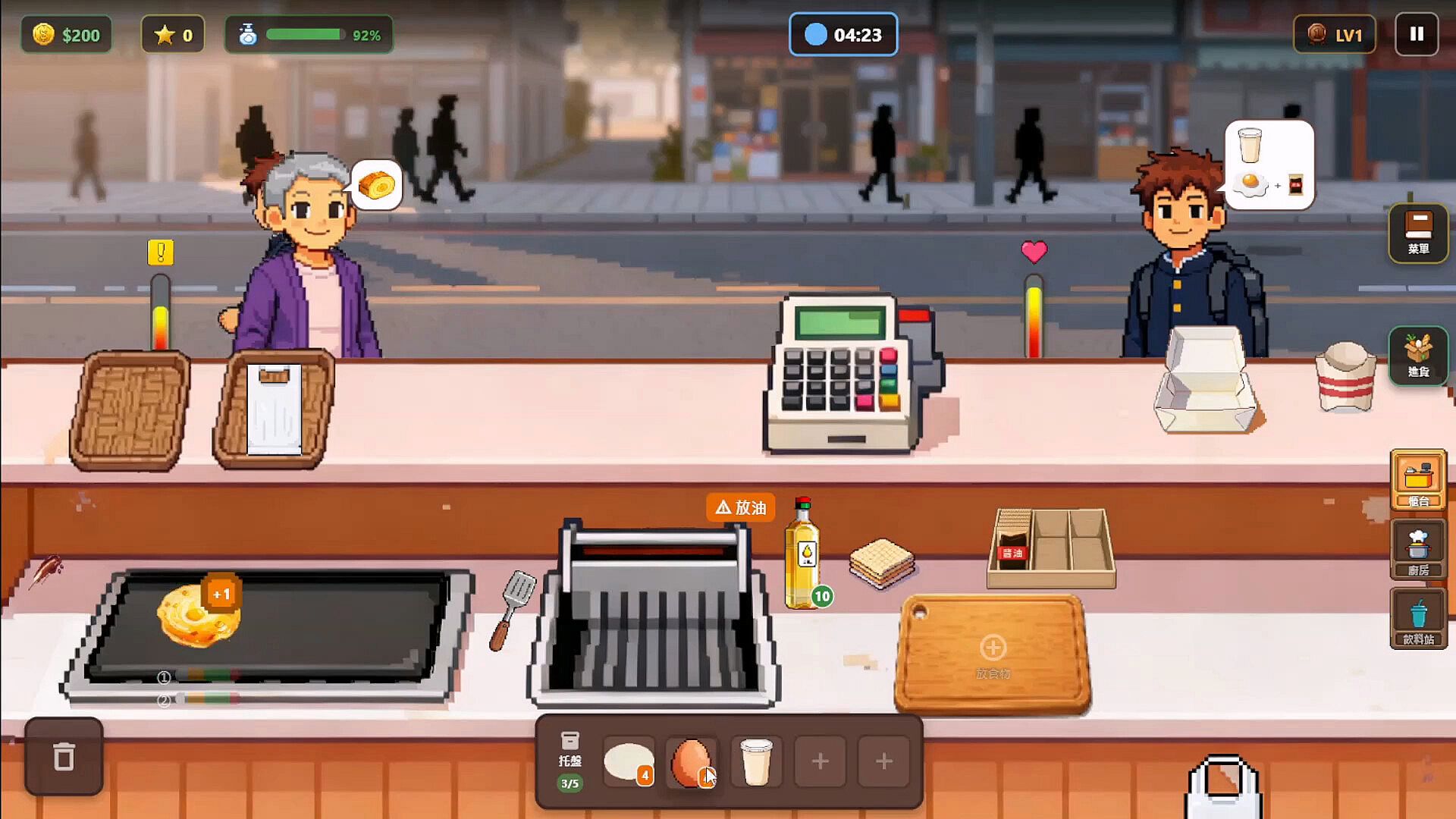
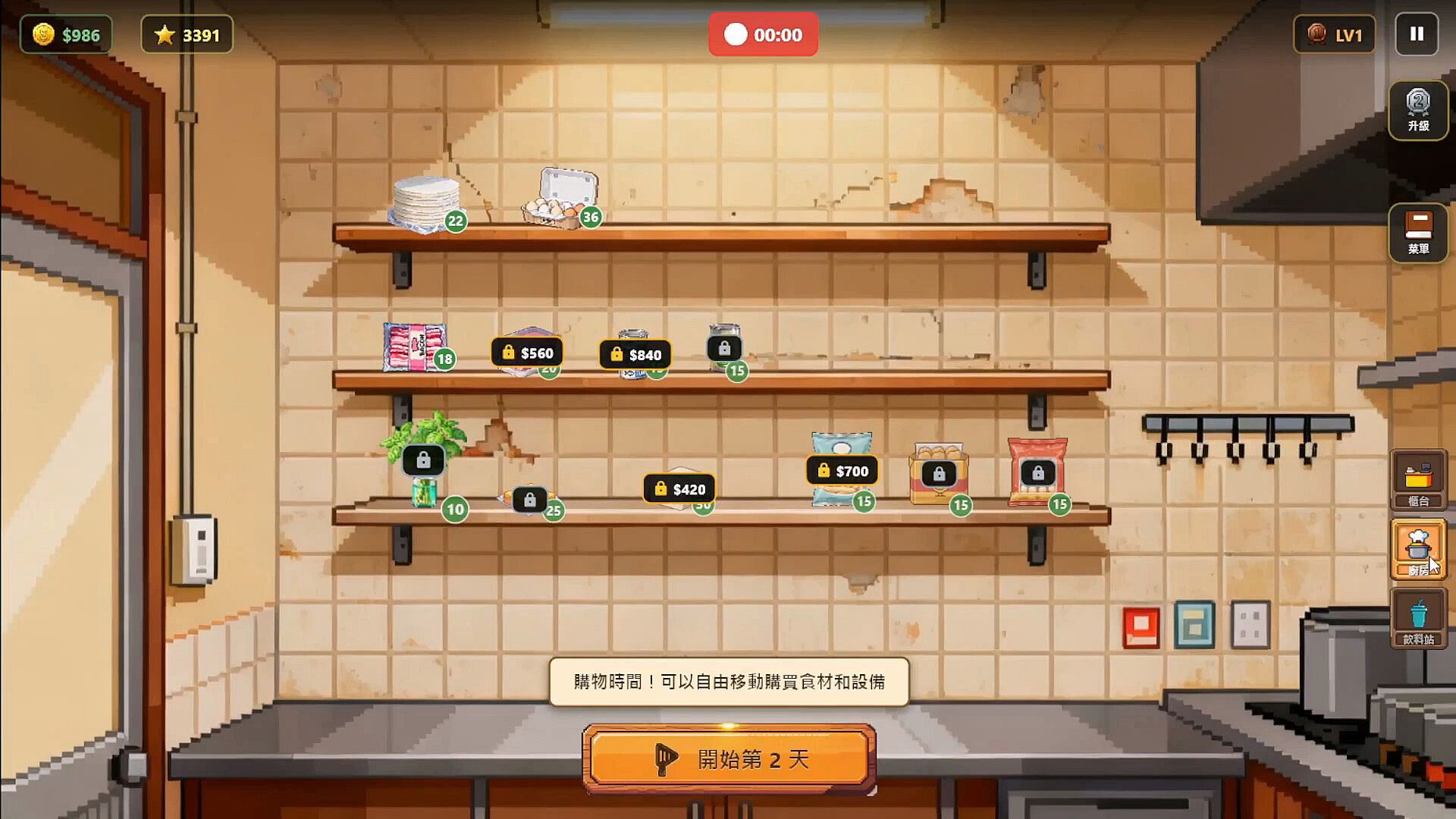
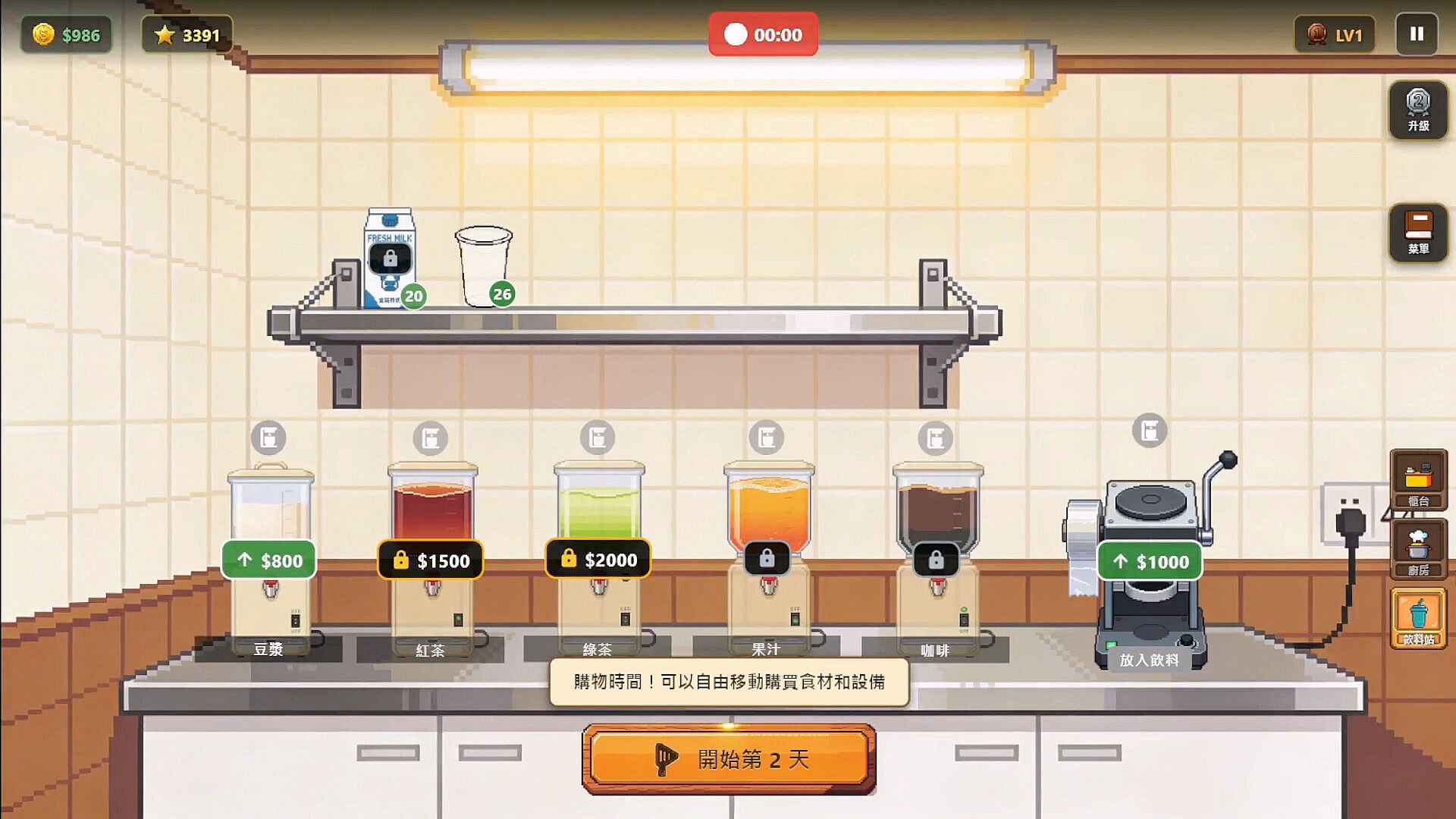
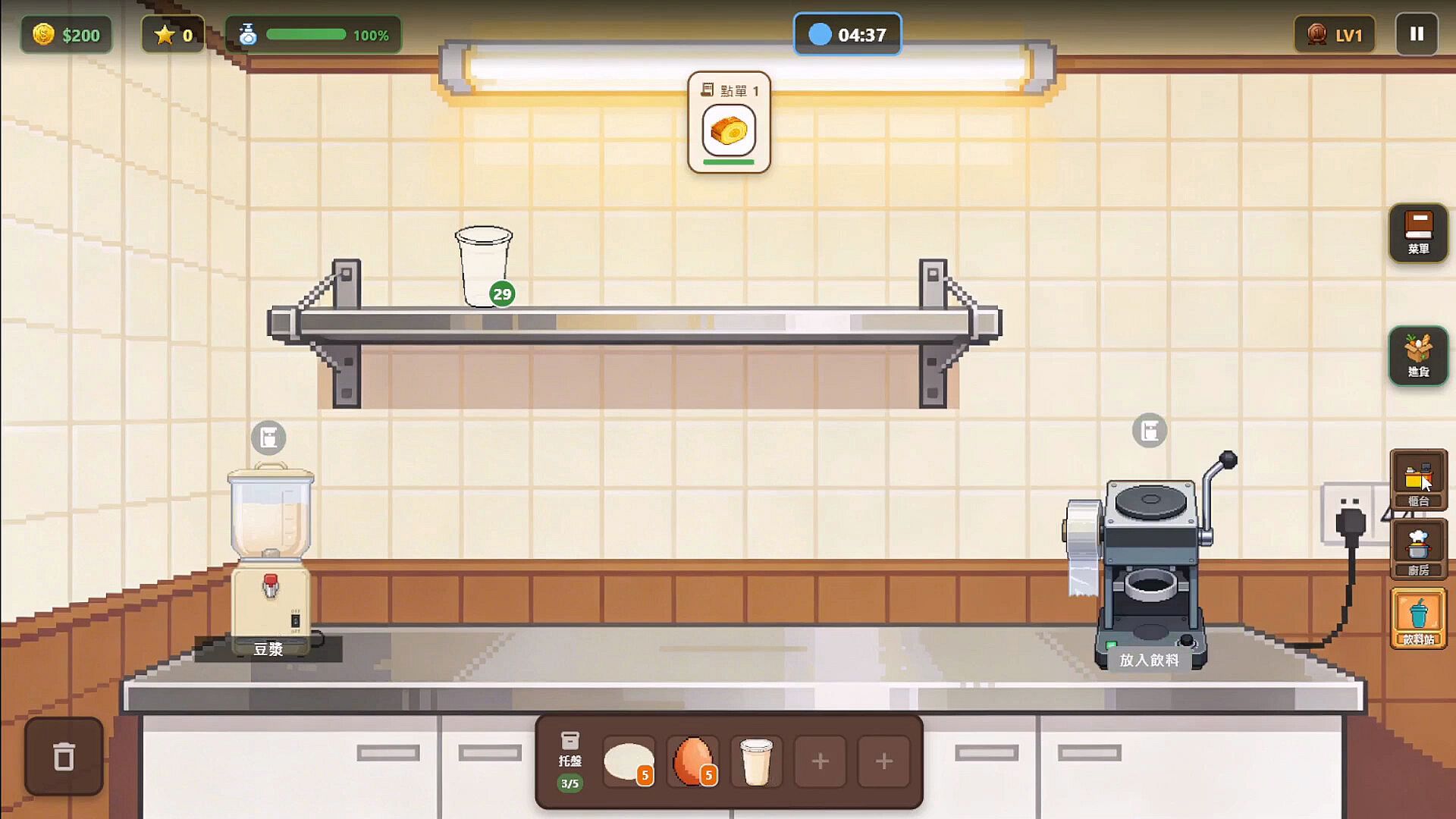
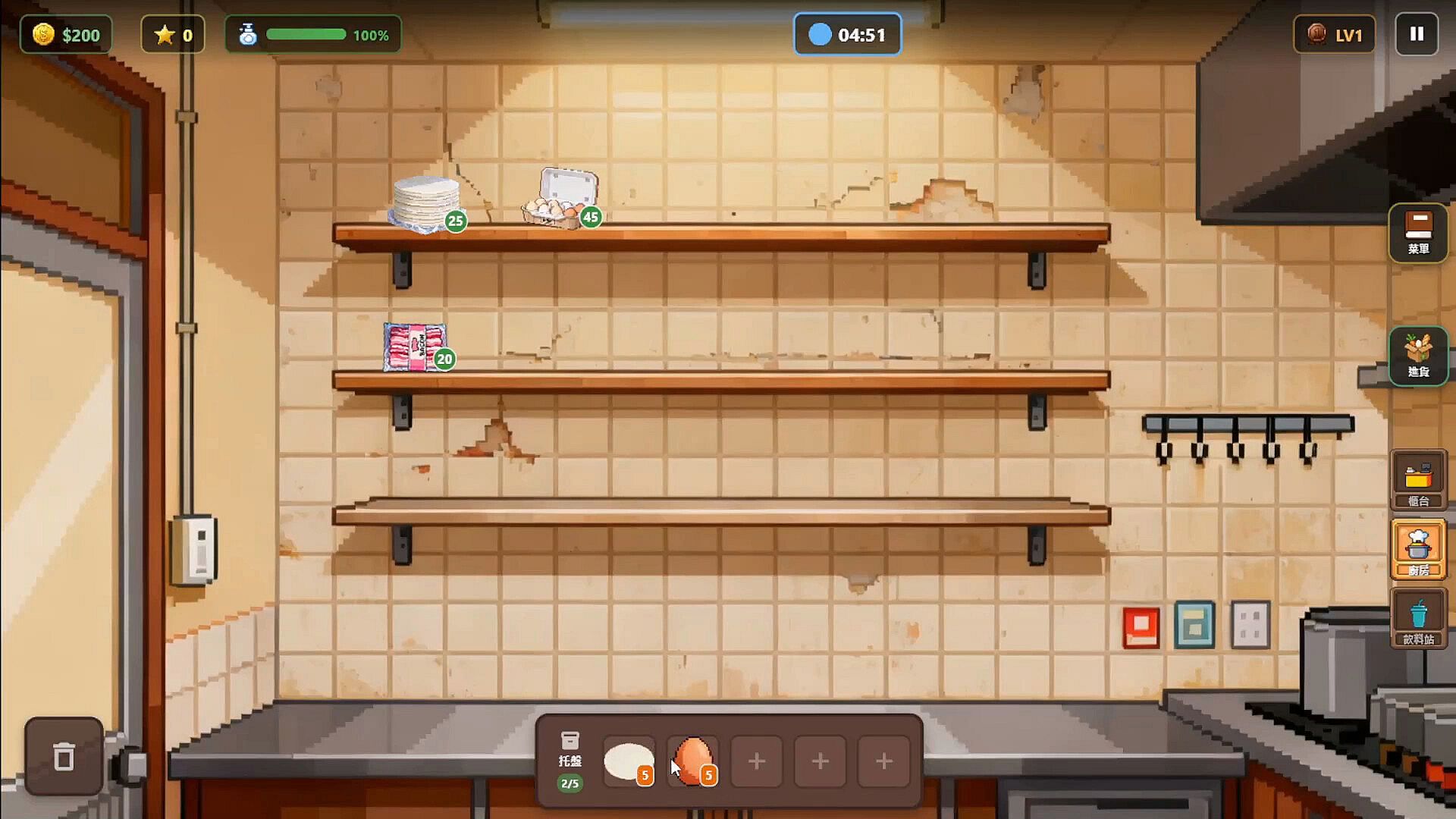
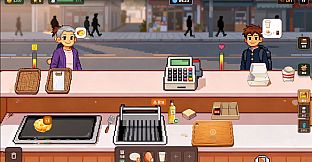
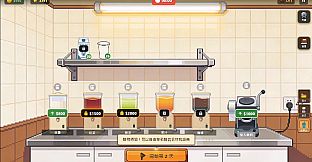
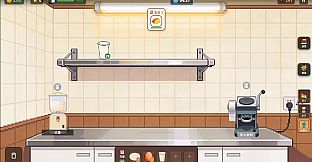
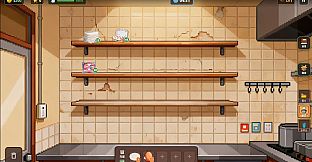
Breakfast Shop Legend es un juego indie de simulación gratuito en el que encarnas a un puesto callejero de desayunos taiwaneses. Combina mecánicas de gestión de tiempo con elementos ligeros de progresión RPG mientras preparas cada plato y atiendes a los clientes de forma manual. Disponible en PC, se centra en partidas cortas e intensas donde el éxito depende de la precisión y de tomar decisiones rápidas.
Gameplay
La jugabilidad gira en torno a cocinar y servir en un espacio reducido junto a la carretera. Arrastras y sueltas ingredientes entre las estaciones, volteas las crepas de huevo en la plancha controlando ambos lados para que queden en su punto antes de añadir los toppings y enrollarlas. En la freidora hay que vigilar la temperatura del aceite para que las patatas, los nuggets o el pollo crujiente no se pasen. Para las bebidas preparas café, té o zumo, añades leche, cierras los vasos y, a niveles más altos, sirves varios pedidos a la vez.
Cada partida dura cinco minutos y culmina en un minuto final de máxima actividad que exige multitarea constante. Los clientes habituales tienen preferencias y niveles de paciencia distintos, mientras que los VIPs dejan propinas más generosas si el servicio es excelente. Los que intentan marcharse sin pagar hay que interceptarlos con un toque rápido, y las inspecciones sanitarias sorpresa ponen a prueba la limpieza para mantener o aumentar el flujo de clientes. Las mejoras se dividen en tres niveles y amplían el equipamiento, los asientos y la capacidad, mientras que la higiene y el reabastecimiento mantienen todo en marcha. Las colecciones registran recetas, ingredientes y clientes, junto con 21 logros y bandas sonoras desbloqueables.
Cuatro niveles de dificultad ajustan la paciencia de los clientes y la presión general, desde Rookie para principiantes hasta Hell para quienes buscan el máximo reto. El arte pixelado dibujado a mano refleja el ambiente animado de un puesto de desayunos taiwanés, acompañado de una mascota amigable que ayuda en las primeras partidas.
Modos de juego
El juego se desarrolla mediante rondas repetidas de la simulación principal de gestión de tiempo, sin modos independientes más allá de las opciones de dificultad integradas. Cada ronda sigue la misma secuencia de estaciones de cocina e interacciones con clientes, adaptada a la dificultad elegida. El modo Rookie ofrece un ritmo más permisivo para aprender el funcionamiento de las estaciones y los patrones de los clientes. Niveles superiores como Hell reducen los tiempos de espera y aumentan el volumen de pedidos simultáneos durante la hora punta.
La progresión está ligada directamente a estas rondas mediante mejoras del local y colecciones que se desbloquean con el tiempo. La estructura invita a repetir partidas para perfeccionar la técnica, desbloquear nuevos niveles de equipamiento y completar logros sin ramificarse en formatos multijugador ni otros estilos de juego.
Progresión y mejoras
El crecimiento del local constituye el bucle principal a largo plazo. Partiendo de un puesto básico en la calle, ganas recursos para comprar mejoras de equipamiento, añadir asientos y atraer más clientes a través de tres niveles distintos. El mantenimiento de la higiene y la gestión del inventario influyen directamente en el tráfico y los ingresos diarios. Las visitas de medios y youtubers pueden modificar la percepción pública según la calidad del servicio, añadiendo otra capa a la construcción de reputación.
Las colecciones crecen junto con las mejoras y catalogan todo, desde recetas concretas hasta tipos de clientes y bandas sonoras. Este sistema premia el rendimiento constante a lo largo de varias rondas en lugar de logros aislados.
¿Merece la pena jugarlo?
Breakfast Shop Legend está pensado para quienes disfrutan de simuladores de gestión de tiempo con bucles de feedback claros y partidas breves. Las estaciones de cocina manual y la variedad de clientes generan un ritmo satisfactorio para quienes valoran la ejecución precisa por encima de la exploración amplia. Los cuatro niveles de dificultad ofrecen un reto escalable que permite dominar el juego de forma gradual antes de enfrentarse a las configuraciones más exigentes.
Estar disponible de forma gratuita en PC reduce la barrera para probar la experiencia principal, y el estilo pixel art ofrece una estética coherente y atractiva sin necesidad de hardware potente. La progresión mediante mejoras y colecciones proporciona objetivos constantes para repetir partidas. Quienes busquen simuladores casuales centrados en el servicio de comida y la toma rápida de decisiones encontrarán aquí una opción ideal, mientras que quienes prefieran narrativas extensas o elementos multijugador pueden buscar otras alternativas.