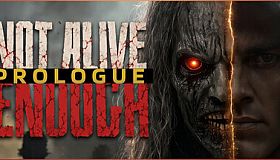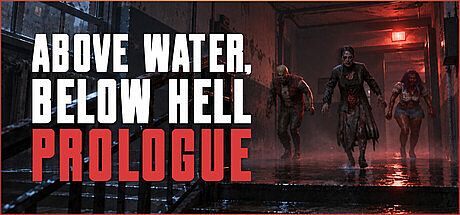


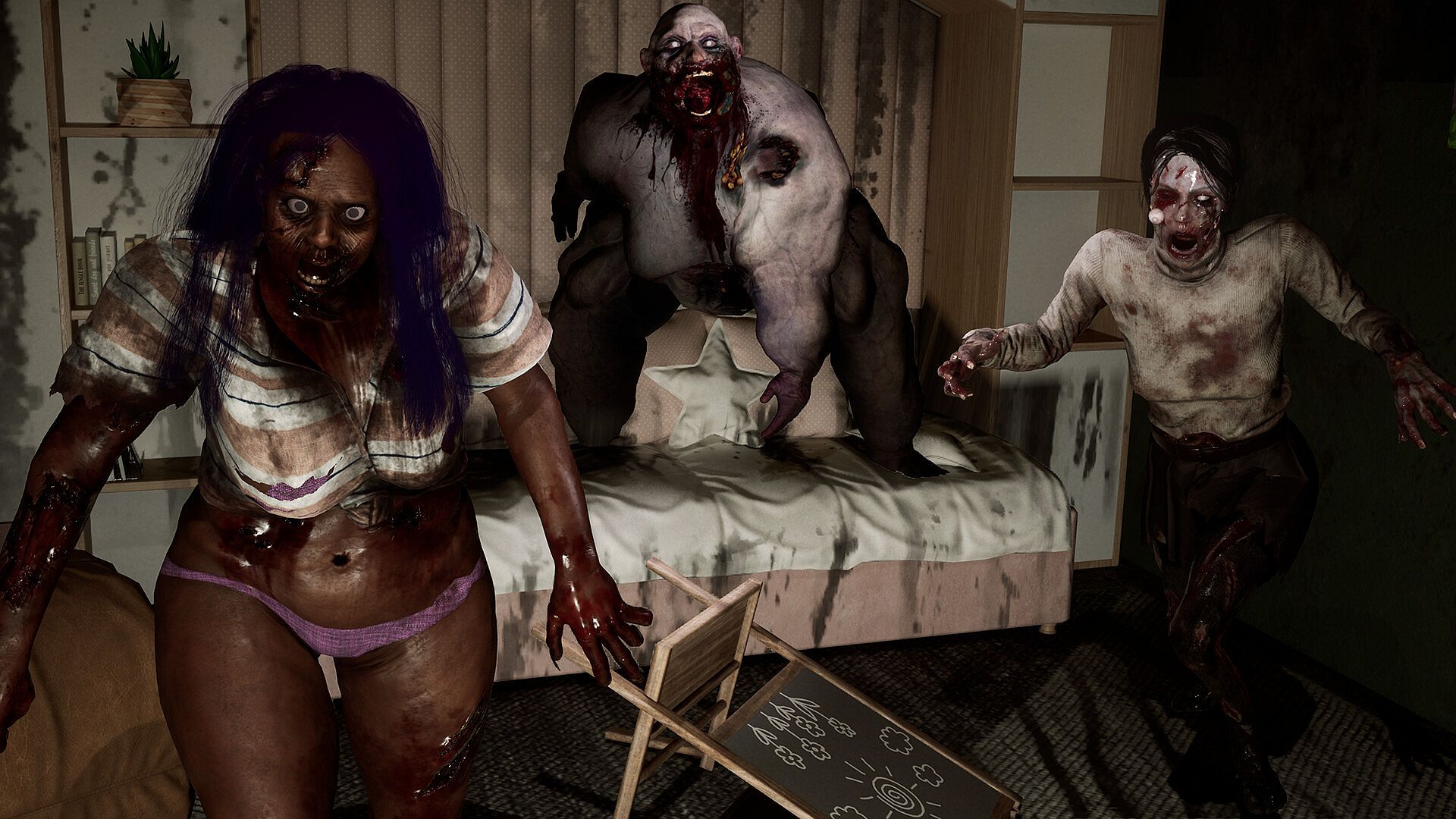
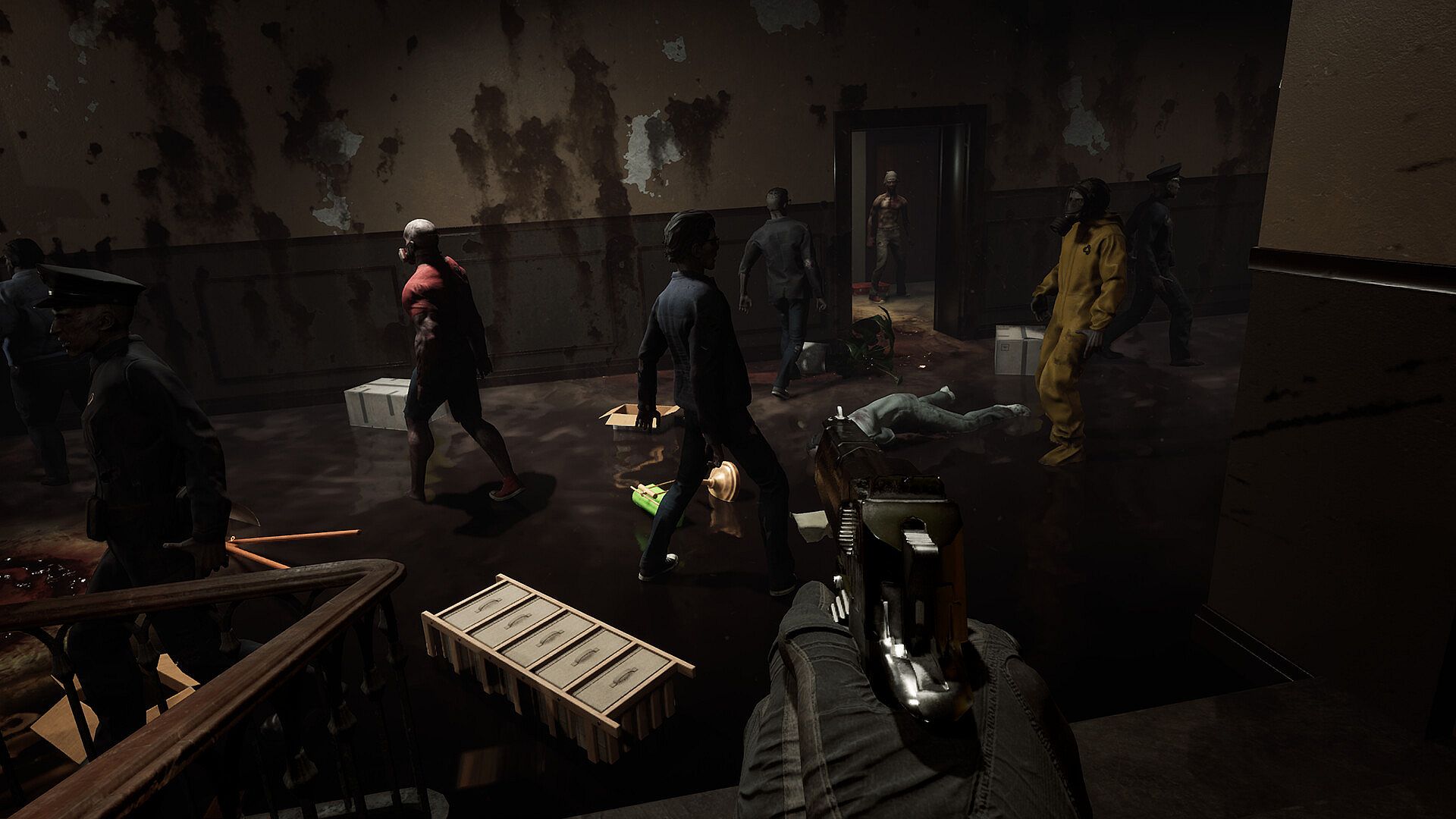
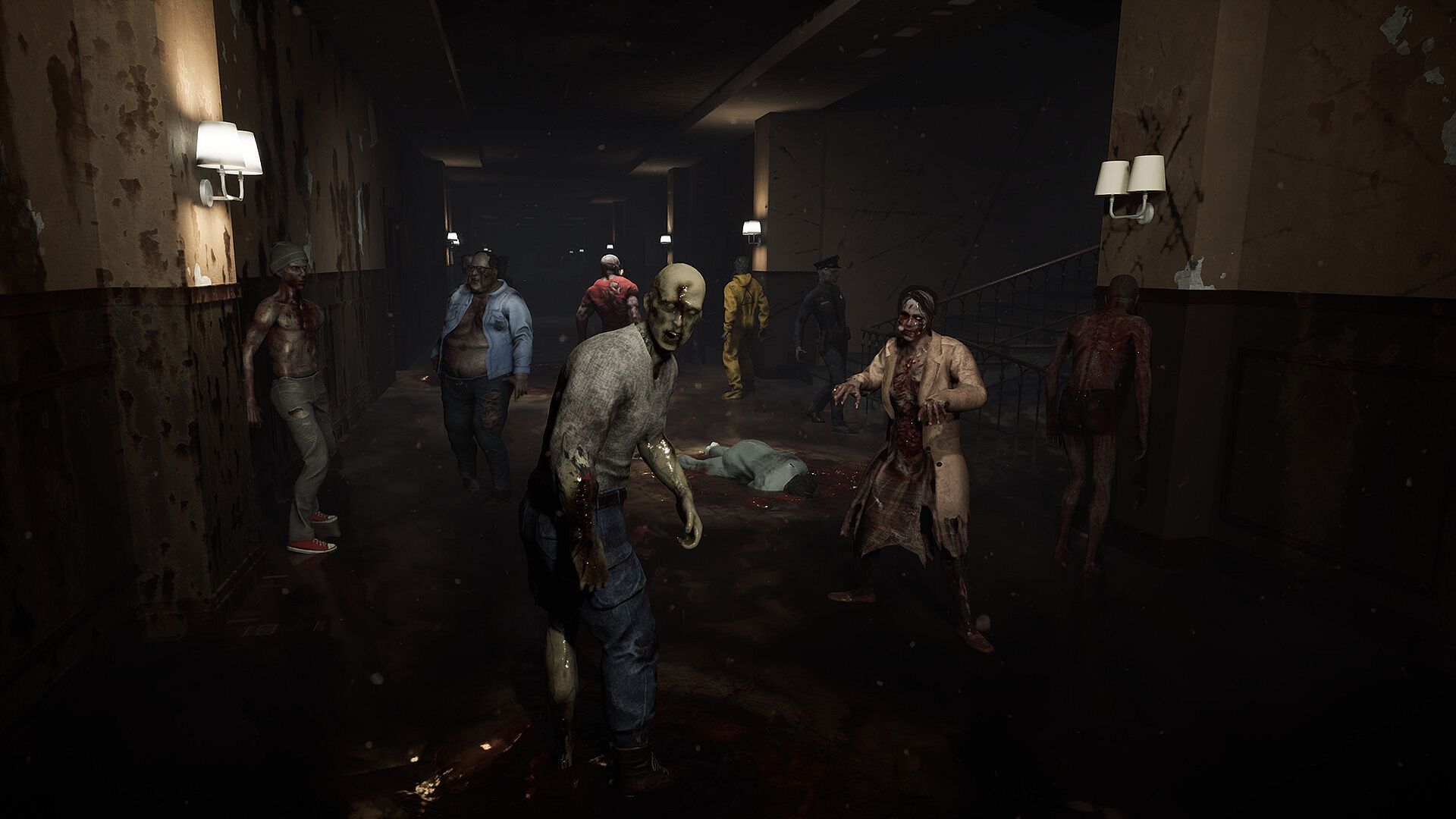
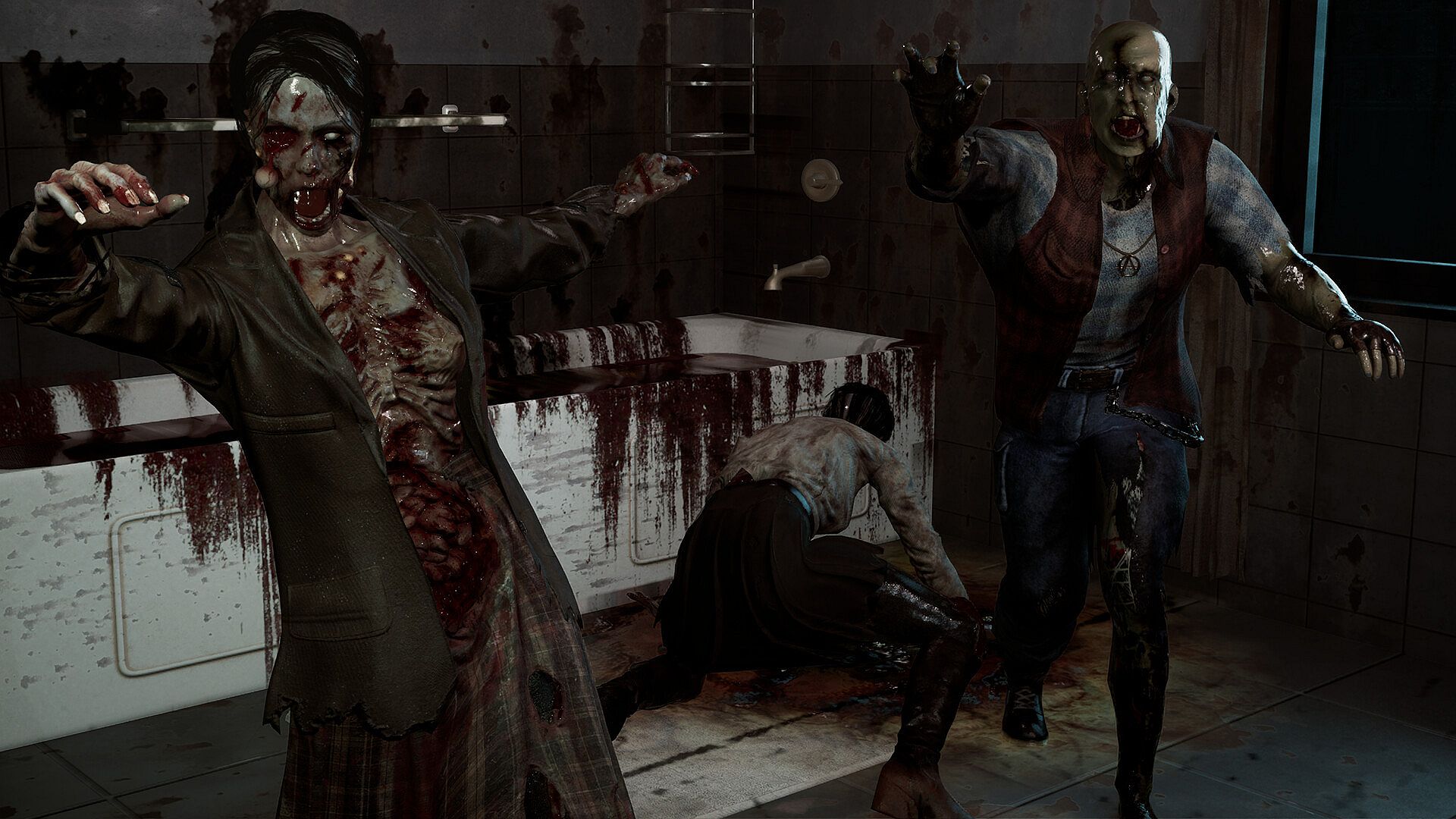
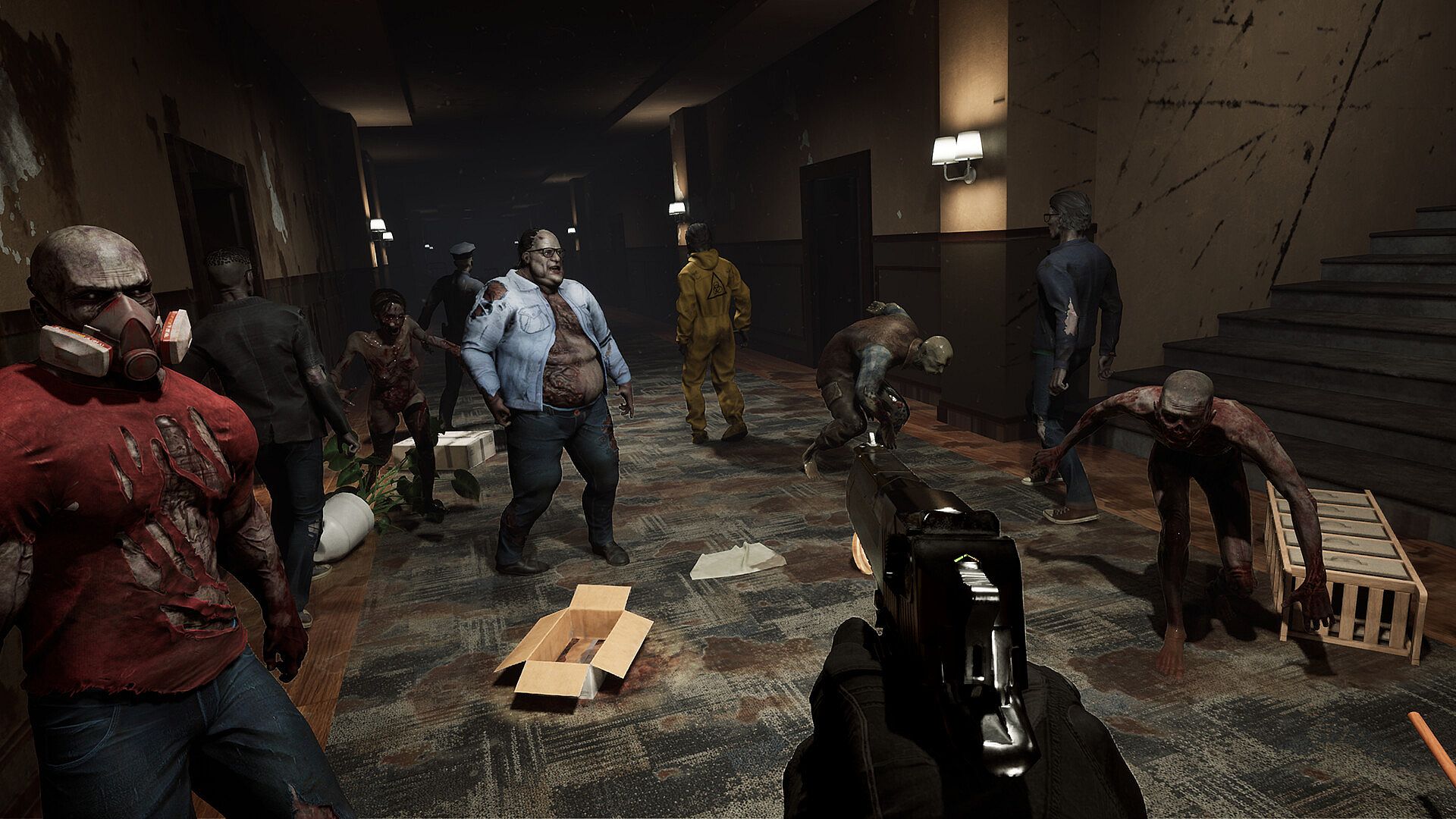


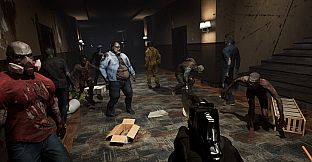
Above Water, Below Hell - Prologue is a single-player first-person horror shooter set in a flooded, zombie-overrun Chicago high-rise. Players take on the role of Hank, a former police officer tasked with locating survivors, inspecting them for signs of infection, and escorting small groups to safety while managing limited resources and constant threats from the undead.
Gameplay
The core loop revolves around methodical floor-by-floor exploration of a damaged skyscraper. Players search rooms for survivors, use specialized inspection tools to record symptoms, and maintain detailed notes on each person's condition across multiple checks. Symptoms can evolve, requiring repeated examinations at designated points to catch changes that indicate infection.
Combat occurs in tight corridors and rooms where zombies target escorted survivors first. Attacks trigger panic that halts progress, forcing players to clear threats quickly with scavenged firearms and melee weapons before resuming the evacuation. Barriers can be repaired using scavenged materials to create safer paths, and experience gained from successful trips unlocks improvements to accuracy, recoil control, and reload speed along with new combat abilities.
Resource management adds tension. Players carry only a limited number of survivors per trip and must decide who waits in secure areas for later retrieval. Scavenging runs between escort missions yield better inspection tools, stronger weapons, and building supplies that improve future attempts. The immune protagonist must prevent any infected individual from reaching the evacuation zone on the fire escape or roof, as a single oversight can lead to a sudden outbreak within the group.
Game Modes
The experience is structured as a focused single-player prologue with no separate multiplayer or competitive modes. All gameplay occurs in one continuous rescue operation across four zombie-infested floors, emphasizing sequential decision-making and repeated trips through the same environment to extract multiple groups.
Progression ties directly to the inspection and escort mechanics. Each successful run improves equipment and abilities for subsequent attempts, while failures from missed infections or overwhelmed groups reset the immediate objective but allow learning from recorded symptoms and route choices. The design centers on personal responsibility for survivor safety rather than open-ended exploration or external objectives.
Key Mechanics and Systems
Survivor inspection forms the central tension. Players examine individuals with tools that reveal symptoms, then compare new findings against prior records at inspection stations. This system demands careful tracking, as healthy people left behind face certain death while infected ones endanger the entire group.
Evacuation under pressure combines combat and logistics. Limited escort capacity means strategic choices about group composition and waiting locations. Zombies prioritize followers, turning every attack into a potential cascade of panic that stops movement until threats are eliminated. Scavenged upgrades directly support these systems by enhancing detection accuracy and combat effectiveness on later runs.
Is It Worth Playing?
This prologue delivers a tense, decision-heavy horror experience built around infection tracking and group protection in confined spaces. The single-player format suits players who enjoy methodical inspection mechanics paired with close-quarters combat and resource trade-offs. With a planned release in December 2026 and no reviews available yet, interest depends on preference for narrative-driven survival scenarios that reward careful observation over fast action. The free-to-play tag and focused scope make it accessible for those drawn to indie horror shooters emphasizing moral and tactical choices during rescues.